Kirjojen hintavertailu. Mukana 11 446 781 kirjaa ja 12 kauppaa.

Kirjahaku

Etsi kirjoja tekijän nimen, kirjan nimen tai ISBN:n perusteella.

1000 tulosta hakusanalla Clive Witham

Homemade Hollywood

Homemade Hollywood

Clive Young

Continuum International Publishing Group Ltd.
2008
sidottu
This is a comprehensive book about fan films, covering the secret history of the burgeoning movement creating the cinema of tomorrow.Who would risk his life swinging six stories above the ground without a net, just for a homemade Spiderman movie? What would drive a young couple with a newborn baby to spend their life savings on a Star Wars film that has been seen by 4 million people - but from which they can never profit? And why would Steven Spielberg praise three nobodies for a home movie they made as teenagers in the Eighties? They're fan filmmakers, creating the cinema of tomorrow: quick, bitesized movies, starring world-famous characters from Superman to Captain Kirk to Lara Croft. The flicks are fun, free and totally illegal.Now, thanks to Internet sites like YouTube and file sharing technologies like Bit Torrent, this controversial filmmaking movement is starting to rise to the surface. Likewise, Hollywood is taking notice: However, there is no comprehensive book about fan films. There's no tome devoted to the controversies surrounding this unlawful brand of filmmaking and how they're already changing today's media. There's no guide that tells you which movies to search out - and which ones to leave hidden under their rocks. "Homemade Hollywood: The Fan Film Phenomenon" can be that book.

Homemade Hollywood

Homemade Hollywood

Clive Young

Continuum International Publishing Group Ltd.
2008
nidottu
This is a comprehensive book about fan films, covering the secret history of the burgeoning movement creating the cinema of tomorrow.Who would risk his life swinging six stories above the ground without a net, just for a homemade Spiderman movie? What would drive a young couple with a newborn baby to spend their life savings on a Star Wars film that has been seen by 4 million people - but from which they can never profit? And why would Steven Spielberg praise three nobodies for a home movie they made as teenagers in the Eighties? They're fan filmmakers, creating the cinema of tomorrow: quick, bite-sized movies, starring world-famous characters from Superman to Captain Kirk to Lara Croft. The flicks are fun, free and totally illegal.Now, thanks to Internet sites like YouTube and file sharing technologies like Bit Torrent, this controversial filmmaking movement is starting to rise to the surface. Likewise, Hollywood is taking notice: However, there is no comprehensive book about fan films. There's no tome devoted to the controversies surrounding this unlawful brand of filmmaking and how they're already changing today's media. There's no guide that tells you which movies to search out - and which ones to leave hidden under their rocks. "Homemade Hollywood: The Fan Film Phenomenon" can be that book.
European Union

European Union

Clive Archer

Continuum International Publishing Group Ltd.
2001
nidottu
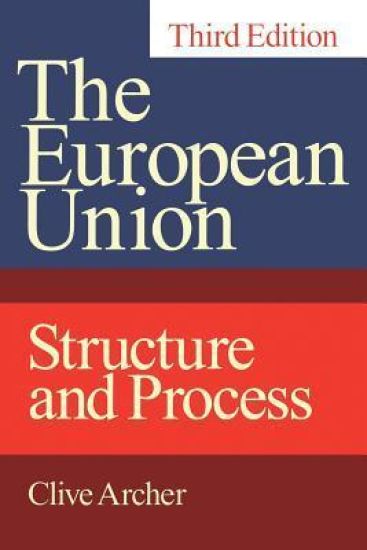
Revised and expanded, this edition provides a comprehensive introduction to all aspects of the European Union. Covering both past developments and future prospects, it outlines the history of European ingegration and the academic debate about its nature. Archer describes and explans the institutions of the EU and the major policies as well as analyzing its external relations. This edition includes an examination of the changes made to EU institutions and practice through the Treaty of Amsterdam, explains the move to Economic and Monetary Union at the end of 1999, and pays particular attention to the plans for and the consequences of enlargement to the East.
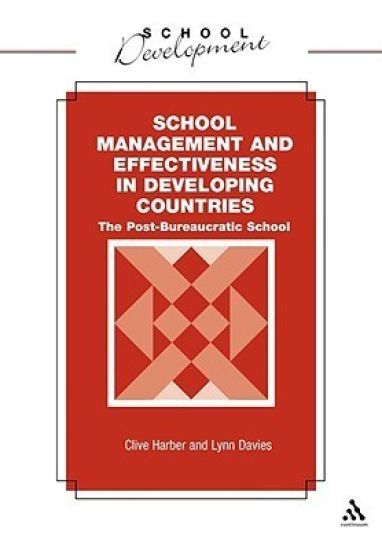
School Management and Effectiveness in Developing Countries

School Management and Effectiveness in Developing Countries

Clive Harber; Lynn Davies

Continuum International Publishing Group Ltd.
2005
nidottu
This book is quite different from existing 'Western' books on school effectiveness. It describes and analyses the way in which schools operate in developing countries and also tries to explain why they are as they are. Examining them at three levels - the macro, the meso and the micro - the authors use a theoretical framework that they have termed 'post-bureaucracy.' The book has four interlinked sections. First the authors examine the existing economic and theoretical contexts around school effectiveness, including an analysis of the causes of economic crisis and its impact on school management. In the second section the analysis of schools as bureaucratic facades is proposed. The reality of school life, from which any theory of school effectiveness must derive, is illustrated by an ethnographic account of the job of the headteacher in developing countries. The third section explores different ways to understand this reality, operating on three levels: global relationships, national and community cultures, and individual agency. In the final section Haber and Davies draw these levels and realities together.They argue for the democratization of schools as the only way forward for effective education fordevelopment.
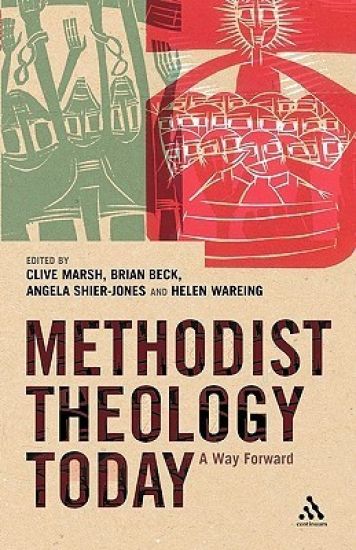
Methodist Theology Today

Methodist Theology Today

Clive Marsh

Continuum International Publishing Group Ltd.
2006
nidottu
British Methodism is reshaping itself. At a time of uncertainty about the future, owing to declining numbers and an ever-closer relationship with the Church of England, a collection of the liveliest theological minds in contemporary Methodism have written a book which shows how recent theology can be a resource for the future. Methodism has always had an active concern with both evangelism and social welfare and by means of its central organization it is able to coordinate efforts in these areas. The book asks challenging questions about how this may develop in the complex post-modern secular world.
Dying to Live

Dying to Live

Clive Calver

Inter-Varsity Press,US
2009
nidottu
Many Christians acknowledge that they love Jesus but are disillusioned about their spiritual condition. They come to Christ to drink from the well of his new life, yet find that their thirst remains. Why has the Christian life not met their expectations for spiritual growth and how can they satisfy this craving for their Christian walk to have a deeper impact? Do you desperately yearn for a deeper relationship with God? Clive Calver pastor, preacher and longtime church statesman can relate. As a young preacher and fairly new Christian, he felt deeply frustrated in his efforts to experience spiritual transformation. Then it dawned on him that Jesus' death on the cross achieved two things: how to die and how to live. Crucified love was God's gift to us; resurrected life with Christ was his purpose for us. For far too long we have been presented with a version of the Christian faith that majors on what we get rather than on what we give. The cross has been portrayed as the place where Jesus died for us and where we receive from him but rarely as the location of our joint crucifixion with him. The uncomfortable truth is that Jesus calls us to share his cross. If anyone would come after me, he must deny himself and take up his cross and follow me (Matthew 16:24). Fortunately, we don't have to be some kind of a Super Christian to allow God's power to work through us. Calver shows how a number of ordinary believers have discovered the paradoxical fulfillment of the crucified life as they die to self and serve God and other people. By dying to live, you too can know the joy of resurrection."
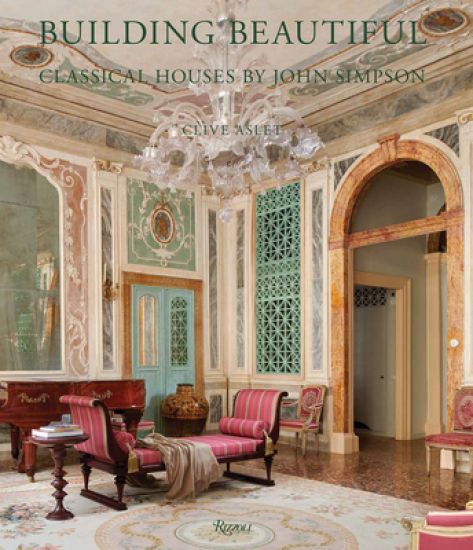
Building Beautiful

Building Beautiful

Clive Aslet; John Simpson

Rizzoli International Publications
2021
sidottu
Inviting, perfect in proportion, exquisite in detail such are a few of the ways to describe homes designed by John Simpson. Well known for his work with the British royal family at Buckingham and Kensington palaces and for his buildings at Eton College in the U.K. and at the University of Notre Dame in the U.S., he is perhaps most brilliant at the level of the house and home. Building Beautiful is an invitation to enter the work of this master designer, as one might visit with a treasured friend. From a dream made real within a Venetian palazzo a former seventeenth-century near-ruin, brought back to glorious, fancifully detailed life to an English countryside cottage with a thatched roof, the featured homes are expressions of Simpson s unerring eye and extraordinary sense of beauty. Here we find drama in contrasts of scale and the seductive effects of light, where a cosy reading nook opens to an expansive living room with a double-height ceiling that nevertheless feels not overly large but rather just right. This is Simpson s subtle art a mastery of scale, balance, and a pervading sense of elegance.
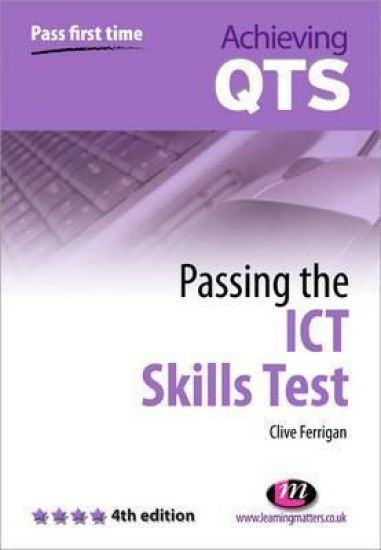
Passing the ICT Skills Test

Passing the ICT Skills Test

Clive Ferrigan

Learning Matters Ltd
2011
nidottu
All trainee teachers hoping to gain Qualified Teacher Status (QTS) need to pass a computerised ICT skills test. The test is designed to ensure all those qualifying as teachers have a sound grasp of fundamental ICT skills such as databases, word processing and the Internet and can apply these in their work both in and out of the classroom. This text outlines the test requirements and explains the basic subject knowledge essential to completing the test. The fourth edition is fully updated to comply with the latest TDA standards and includes new self-assessment questions.
Practical Ethics for Roman Gentlemen

Practical Ethics for Roman Gentlemen

Clive Skidmore

University of Exeter Press
1996
sidottu
A collection of anecdotes written during the reign of Tiberius, this work aims to redefine the significance of the 1st-century work of Valerius Maximus. It also examines earlier forms of exemplary literature, and discusses the way in which Roman literature was communicated to its audience.
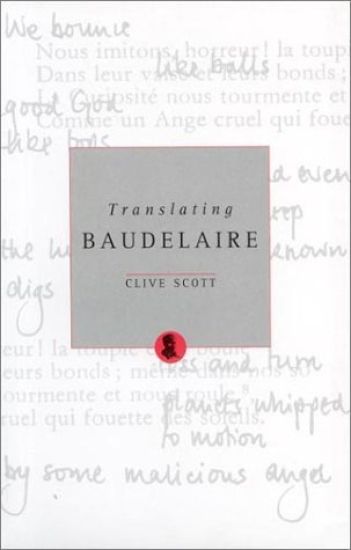
Translating Baudelaire

Translating Baudelaire

Clive Scott

University of Exeter Press
2000
sidottu
This book is the record of an apprenticeship in translating Baudelaire, and in translating poetry more generally. Re-assessing the translator's task and art, Clive Scott explores various theoretical approaches as he goes in search of his own style of translation. In the course of the book, versions of seventeen of Baudelaire's poems are offered, with detailed evaluations of the poems and the translations. Translating Baudelaire considers two neglected questions: What form should the criticism of translation take, if the critic is to do justice to the translator's 'project'? How can a translator persuade readers to respond to a translation as a text with its own creative dynamic and expressive ambitions?
Translating Baudelaire

Translating Baudelaire

Clive Scott

University of Exeter Press
2000
nidottu
This work is the record of an apprenticeship in translating Baudelaire, and in translating poetry more generally. Re-assessing the translator's task and art, Clive Scott explores various theoretical approaches as he goes in search of his own style of translation.
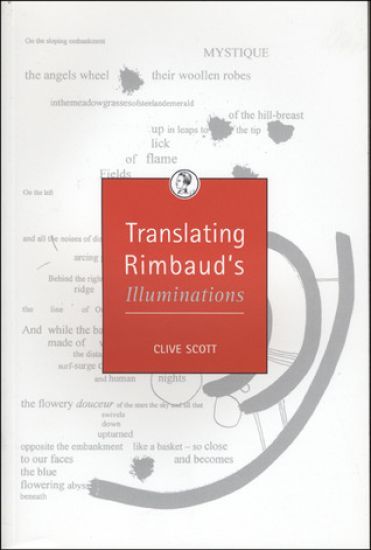
Translating Rimbaud's Illuminations

Translating Rimbaud's Illuminations

Clive Scott

University of Exeter Press
2006
nidottu
Translating Rimbaud’s Illuminations is a critique of the assumptions which currently underlie our thinking on literary translation. It offers an alternative vision; extending the parameters of literary translation by showing that such translation is itself a form of experimental creative writing. It also provides a reassessment of Rimbaud’s creative impulses and specifically his prose poems, the Illuminations. In the expanding field of translation studies, a brilliant and demanding book such as this has a valuable place. In addition, it also provides some fascinating ‘hands on’ translation work of a very practical kind. Published as a sequel to the author’s Translating Baudelaire (UEP, 2000), it will become part of the canon.
Translating Rimbaud's Illuminations

Translating Rimbaud's Illuminations

Clive Scott

University of Exeter Press
2006
sidottu
Translating Rimbaud’s Illuminations is a critique of the assumptions which currently underlie our thinking on literary translation. It offers an alternative vision; extending the parameters of literary translation by showing that such translation is itself a form of experimental creative writing. It also provides a reassessment of Rimbaud’s creative impulses and specifically his prose poems, the Illuminations. In the expanding field of translation studies, a brilliant and demanding book such as this has a valuable place. In addition, it also provides some fascinating ‘hands on’ translation work of a very practical kind. Published as a sequel to the author’s Translating Baudelaire (UEP, 2000), it will become part of the canon.
Translating Apollinaire

Translating Apollinaire

Clive Scott

University of Exeter Press
2014
sidottu
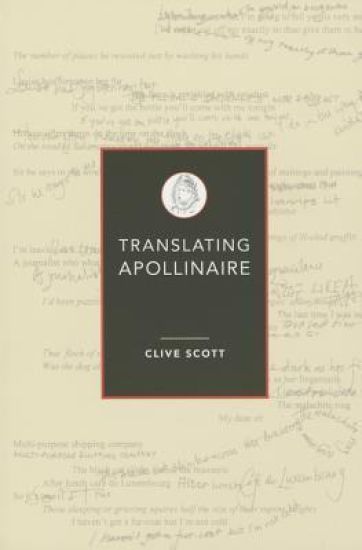
Translating Apollinaire delves into Apollinaire’s poetry and poetics through the challenges and invitations it offers to the process of translation. Besides providing a new appraisal of Apollinaire, the most significant French poet of WWI, Translating Apollinaire aims to put the ordinary reader at the centre of the translational project. It proposes that translation’s primary task is to capture the responses of the reader to the poetic text, and to find ways of writing those responses into the act of translation. Every reader is invited to translate, and to translate with a creativity appropriate to the complexity of their own reading experiences. Throughout, Scott himself consistently uses the creative resource of photography, and more particularly photographic fragments, as a cross-media language used to help capture the activity of the reading consciousness.
Translating Apollinaire

Translating Apollinaire

Clive Scott

University of Exeter Press
2014
nidottu
Translating Apollinaire delves into Apollinaire’s poetry and poetics through the challenges and invitations it offers to the process of translation. Besides providing a new appraisal of Apollinaire, the most significant French poet of WWI, Translating Apollinaire aims to put the ordinary reader at the centre of the translational project. It proposes that translation’s primary task is to capture the responses of the reader to the poetic text, and to find ways of writing those responses into the act of translation. Every reader is invited to translate, and to translate with a creativity appropriate to the complexity of their own reading experiences. Throughout, Scott himself consistently uses the creative resource of photography, and more particularly photographic fragments, as a cross-media language used to help capture the activity of the reading consciousness.