Kirjojen hintavertailu. Mukana 11 699 587 kirjaa ja 12 kauppaa.

Kirjahaku

Etsi kirjoja tekijän nimen, kirjan nimen tai ISBN:n perusteella.

1000 tulosta hakusanalla Constance D. Hamilton

Individualizing Psychological Assessment

Individualizing Psychological Assessment

Constance T. Fischer

Routledge Member of the Taylor and Francis Group
1994
sidottu
Assessments by psychologists, educators, and other human-service professionals too often end with the client being reported in terms of scores, bell-shaped curves, traits, psychodynamic forces, or diagnostic labels. Individualizing Psychological Assessment uses these classification devices in ways that facilitate returning from them to the individual's life, both during the assessment session and in written reports. The book presents an approach and procedures through which a person's actual life becomes the subject matter of assessment. Thoroughly revised from the previous edition, the book presents a wide range of concrete examples and illustrative cases that will serve both students and practicing professionals alike in individualizing assessments.
Live from Medicine Park

Live from Medicine Park

Constance Squires

University of Oklahoma Press
2017
nidottu
Documentary filmmaker Ray Wheeler is down on his luck. Embroiled in a lawsuit, he is reeling from the consequences of a near-fatal shooting on his last film, and has just lost his teaching gig. Broke and beleaguered, he can't afford to be particular about his next project. So when a former student invites him to film the comeback of Lena Wells, an iconic rock-and-roll singer who hit it big in the seventies, more than two decades earlier, he reluctantly agrees - even though he doesn't like her music. When Ray arrives at Lena's hometown of Medicine Park, Oklahoma, a defunct resort community, he is determined to approach his topic with the professional detachment that has guided his career. His work ethic is modeled on the prime directive of Star Trek: never interfere with an alien civilization. But with only five days left before Lena's comeback concert, Ray quickly runs afoul of his subject, who places him on a one-week probation. The terms: impress her or else. It doesn't take long before Ray violates his own ethical standards. Drawn romantically toward Lena, he also fails to prevent himself from interfering with the lives of the people closest to her, including her only son, Gram, whose paternity is a mystery even to himself; her daughter-in-law, Jettie; and the enigmatic guitar player Cyril Dodge. When disaster strikes Ray's set again, this time in Medicine Park, he must face truths he has avoided for too long - about love, relationships, and responsibility. An ode to both southwestern Oklahoma and rock music, Live from Medicine Park is a bittersweet reflection on the search for identity and purpose amid tragedy. As the novel reaches its climax, Ray sets out on one last adventure to set things right. Redemption may be possible - but only on its own terms.
Hit Your Brights

Hit Your Brights

Constance Squires

University of Oklahoma Press
2019
nidottu
Hit Your Brights captures people in tough spots, often of their own making. Fusing humor and tragedy, these thirteen gritty stories keep readers in suspense. Danger lurks, the needle skips, the bomb goes off, and the empties pile up. Outcomes are unpredictable, but the car always starts, and, sometimes, love wins. Constance Squires casts the diminished circumstances of her characters with authentic detail familiar to any reader who has spent time in flyover country - a swath of boom-and-bust middle America that often seems forgotten. Here, marriages, families, and friendships all hit crisis points in a mutable world of army bases, casinos, truck stops, churches, and bars.Hit Your Brights showcases a virtuosic range of styles and perspectives. The title story, told in second person, excavates the rationalizations of an alcoholic stumbling through the inexorable progress of her disease. After downing nine Rolling Rocks and three tequila shots, she races her car to the nearest liquor store before it closes, turning on her high beams to ease her double vision. In ""Dopamine Agonistes,"" a family man, recently diagnosed with Parkinson's, ventures out to a casino and meets a child he tries to help. Other stories focus on people who find themselves in difficult, potentially violent situations. In ""Wounding Radius,"" two young women are checking on their marijuana crop in the Wichita Mountains outside of Fort Sill when they are discovered by a troubled soldier who has gone AWOL. And in ""An Unscheduled Stop,"" a mother traveling with her baby encounters diners at a roadside McDonald's who might - or might not - be child traffickers. Beautifully crafted, with a distinctly modern edge, the stories in Hit Your Brights give voice to women and men, young and old, overlooked and disenfranchised, who inhabit worlds that feel at once strange and familiar.
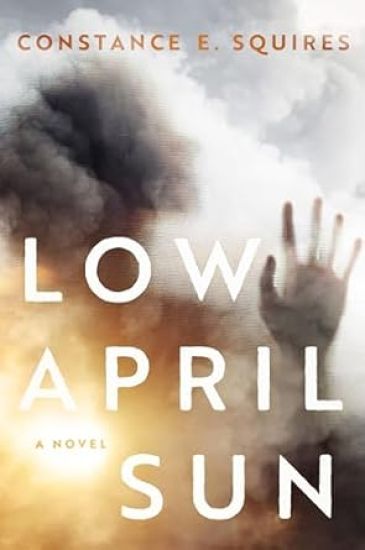
Low April Sun

Low April Sun

Constance E. Squires

UNIVERSITY OF OKLAHOMA PRESS
2025
sidottu
On the morning of April 19, 1995, Delaney Travis steps into the Social Security office in Oklahoma City to obtain an ID for her new job. Moments later, an explosion shatters the Alfred P. Murrah Federal Building into rubble. Her boyfriend Keith and half-sister Edie are left to assume the worst—that Delaney perished in the bombing, despite lack of definitive proof. Twenty years later, now married and bonded by the tragedy, Edie and Keith’s lives are upended when they begin to receive mysterious Facebook messages from someone claiming to be Delaney. Desperate for closure, the couple embarks on separate journeys, each aiming for an artists’ community in New Mexico that may hold answers. Alongside their quest is August, a recovering alcoholic with a haunting connection to the bombing. Raised in the separatist compound of Elohim City, August harbors secrets about Timothy McVeigh, the perpetrator of the attack, and his own possible involvement in the tragedy. When his path crosses with Edie, he must choose whether to tell anyone about his past. As the 20-year anniversary of the bombing approaches, fracking-induced earthquakes shake the ground of Oklahoma City, mirroring the unsettled lives of its residents. In their quest for answers, Edie, Keith, and August seek to understand how the shadows of the past continue to darken the present, as the ground beneath them threatens to give way once again. In Low April Sun, acclaimed author Contance Squires has written the first novel to explore the enduring impact of the Oklahoma City bombing. While masterfully weaving a spellbinding mystery, Squires ultimately offers us a moving meditation on grief and forgiveness.
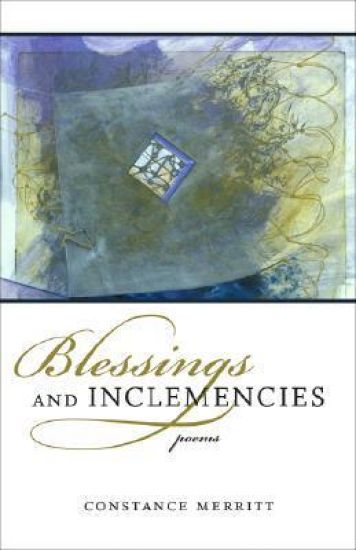
Blessings and Inclemencies

Blessings and Inclemencies

Constance Merritt

Louisiana State University Press
2007
nidottu
Wrested from the coppery, keen claws of existential extremity, Blessings and Inclemencies, Constance Merritt's second collection of poems, is conventional in its forms and radical in its reaching back to the ground of being and to the originality and immediacy of our first encounters with language. Forgoing the common hedge of irony, these poems, without apology, place their bets on elemental language, intentional grace, and tradition in all its fruitfulness and freight. By turns passionate and distant, these poems manage at once to ensnare and elude us, and in their urgent quest for clarity seldom fail to compel us.
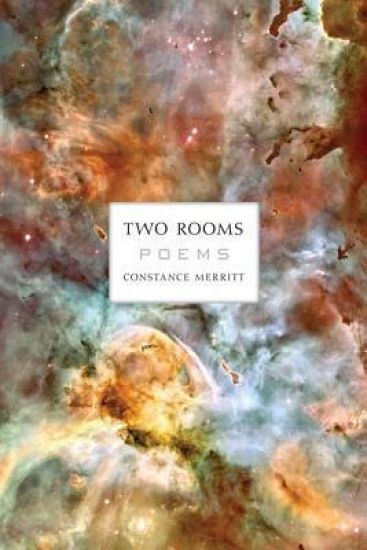
Two Rooms

Two Rooms

Constance Merritt

Louisiana State University Press
2009
nidottu
Relying most heavily on music and metaphor, syntax and diction, Two Rooms explores the conflicting claims of life and art, world and word, cultural heritage and cultural affinities, through the sacral, erotic, and creative imagination. By the light of these dark lyrics, Constance Merritt searches for a path, a sign, a respite -- perhaps love or death or God or insight, perhaps radical transformation or a simple good night's sleep. In these poems, by turns passionate, sinuous, playful and grave, a deep and abiding trust in ""the plain sense of things"" and intractable longing for the ""lush, desire-transfigured world"" meet and wrestle to a dynamic draw
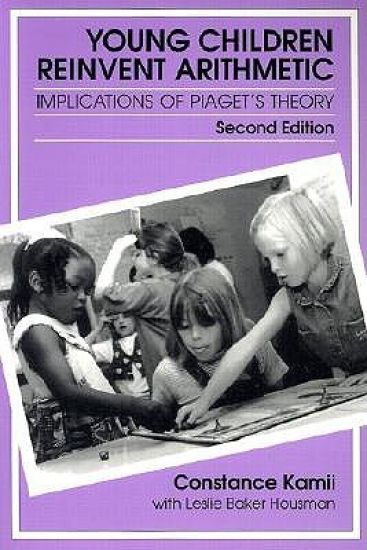
Young Children Reinvent Arithmetic

Young Children Reinvent Arithmetic

Constance Kazuko Kamii

Teachers' College Press
1999
nidottu
In this fully revised second edition of the classic Young Children Reinvent Arithmetic, Constance Kamii describes and develops an innovative program of teaching arithmetic in the early elementary grades. Kamii bases her educational strategies on renowned constructivist Jean Piaget's scientific ideas of how children develop logico-mathematical thinking. Written in collaboration with a classroom teacher, and premised upon the conviction that children are capable of much more than teachers and parents generally realize, the book provides a rich theoretical foundation and a compelling explanation of educational goals and objectives. Kamii calls attention to the ways in which traditional textbook-based teaching can be harmful to children's development of numerical reasoning, and uses extensive research and classroom-tested studies to illuminate the efficacy of the approach. This book is full of practical suggestions and developmentally appropriate activities that can be used to stimulate numerical thinking among students of varying abilities and learning styles, both within and outside of the classroom.
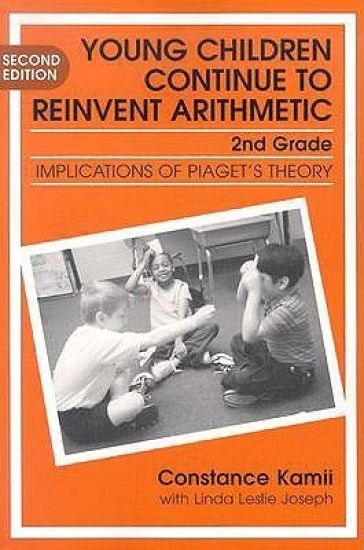
Young Children Continue to Reinvent Arithmetic - 2nd Grade

Young Children Continue to Reinvent Arithmetic - 2nd Grade

Constance Kazuko Kamii; Linda Joseph

Teachers' College Press
2003
nidottu
Responding to their recent research on how children learn mathematics, the authors have revised this bestselling textbook to provide practical advice on what works and what should be avoided when teaching second graders. This volume features important revisions to their groundbreaking program based on Piaget’s theory that children learn arithmetic by constructing it from the inside, through their own natural ability to think. New for the Second Edition! The harmful effects of teaching “carrying” and “borrowing”—compared with the results of encouraging children to invent their own ways of dealing with multidigit numbers. The addition of new games that respond to what has been discovered in recent research. A shift in strategy for doing subtraction with second graders—computational fluency de-emphasized in favor of word problems. The difference between repeated addition and multiplication for this age group and how teachers can respond appropriately. The harmful effects of “testmania” and quick fixes versus teaching based on the most recent scientific explanation of how children learn mathematics.Critical Acclaim for the First Edition!“The book is useful for practicing educators, administrators, and curriculum directors, as well as students of early childhood, cognitive development and mathematics methods.”—Childhood Education“The clear narrative writing style and frequent illustrations make the book easy to read and understand…a useful resource for any primary grade teacher and curriculum specialist.”—Arithmetic Teacher“An encouraging foray into the future of educational research and practice. Although written for teachers, administrators, curriculum developers, and evaluators, Young Children Continue to Reinvent Arithmetic would also be of interest to researchers and psychologists.”—Harvard Educational Review
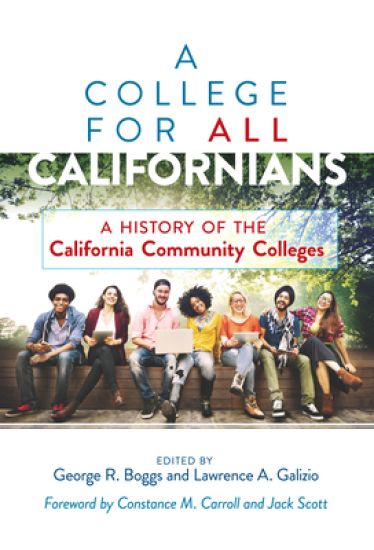
A College for All Californians

A College for All Californians

Constance M. Carroll; Jack Scott

Teachers' College Press
2021
nidottu
This is the first comprehensive and contemporary history of the largest and most diverse public system of higher education in the United States. Serving over 2 million students annually—approximately one-quarter of the nation's community college undergraduates—California's 116 community colleges play an indispensable role in career and transfer education in North America and have maintained an outsized influence on the evolution of postsecondary education nationally. A College for All Californians chronicles the sector's emergence from K–12 institutions, its evolving mission and growth following World War II and the G.I. Bill For Education, the expansion of its ever-broadening mission, and its essential role in the 1960 Master Plan for Higher Education. Chapters cover California's junior and community colleges' development, mission, governance, faculty, finances, athletics, student support services, and more. It also examines the successes and ongoing political, financial, and educational challenges confronting this uniquely American educational experiment. Book Features:Encapsulates the evolution and contemporary status of our nation's largest and most diverse undergraduate education system.Examines how the colleges were influenced by the political, economic, and social issues of the day.Includes new historical information affecting postsecondary education in California.Analyzes some of the most important current and emerging issues that will continue to influence California's community colleges.
A College for All Californians

A College for All Californians

Constance M. Carroll; Jack Scott

Teachers' College Press
2021
sidottu
This is the first comprehensive and contemporary history of the largest and most diverse public system of higher education in the United States. Serving over 2 million students annually—approximately one-quarter of the nation's community college undergraduates—California's 116 community colleges play an indispensable role in career and transfer education in North America and have maintained an outsized influence on the evolution of postsecondary education nationally. A College for All Californians chronicles the sector's emergence from K–12 institutions, its evolving mission and growth following World War II and the G.I. Bill For Education, the expansion of its ever-broadening mission, and its essential role in the 1960 Master Plan for Higher Education. Chapters cover California's junior and community colleges' development, mission, governance, faculty, finances, athletics, student support services, and more. It also examines the successes and ongoing political, financial, and educational challenges confronting this uniquely American educational experiment. Book Features:Encapsulates the evolution and contemporary status of our nation's largest and most diverse undergraduate education system.Examines how the colleges were influenced by the political, economic, and social issues of the day.Includes new historical information affecting postsecondary education in California.Analyzes some of the most important current and emerging issues that will continue to influence California's community colleges.
The Spirits of Bad Men Made Perfect

The Spirits of Bad Men Made Perfect

Constance Hall Jones

Southern Illinois University Press
2019
nidottu
This remarkable biography and edited diary tell the story of William Ellis Jones (1838–1910), an artillerist in the Army of Northern Virginia. One of the few extant diaries by a Confederate artillerist, Jones’s articulate writings cover camp life as well as many of the key military events of 1862, including the Peninsula Campaign, the Second Battle of Manassas, the Maryland Campaign, and the Battle of Fredericksburg.In 1865 Jones returned to his prewar printing trade in Richmond, and his lasting reputation stems from his namesake publishing company’s role in the creation and dissemination of much of the Lost Cause ideology. Unlike the pro-Confederate books and pamphlets Jones published—primary among them the Southern Historical Society Papers—his diary shows the mindset of an unenthusiastic soldier. In a model of contextualization, Constance Hall Jones shows how her ancestor came to embrace an uncritical veneration of the army's leadership and to promulgate a mythology created by veterans and their descendants who refused to face the amorality of their cause.Jones brackets the soldier’s diary with rich, biographical detail, profiling his friends and relatives and providing insight into his childhood and post-war years. In doing so, she offers one of the first serious investigations into the experience of a Welsh immigrant family loyal to the Confederacy and makes a significant contribution to our understanding of Civil War–era Richmond and the nineteenth-century publishing industry. Invitingly written, The Spirits of Bad Men Made Perfect is an engaging life-and-times story that will appeal to historians and general readers alike.
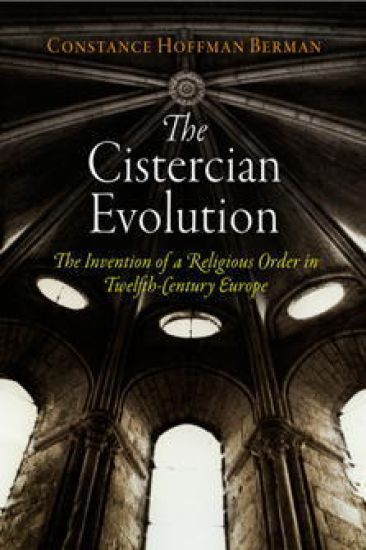
The Cistercian Evolution

The Cistercian Evolution

Constance Hoffman Berman

University of Pennsylvania Press
2010
pokkari
According to the received history, the Cistercian order was founded in Cîteaux, France, in 1098 by a group of Benedictine monks who wished for a stricter community. They sought a monastic life that called for extreme asceticism, rejection of feudal revenues, and manual labor for monks. Their third leader, Stephen Harding, issued a constitution, the Carta Caritatis, that called for the uniformity of custom in all Cistercian monasteries and the establishment of an annual general chapter meeting at Cîteaux. The Cistercian order grew phenomenally in the mid-twelfth century, reaching beyond France to Portugal in the west, Sweden in the north, and the eastern Mediterranean, ostensibly through a process of apostolic gestation, whereby members of a motherhouse would go forth to establish a new house. The abbey at Clairvaux, founded by Bernard in 1115, was alone responsible for founding 68 of the 338 Cistercian abbeys in existence by 1153. But this well-established view of a centrally organized order whose founders envisioned the shape and form of a religious order at its prime is not borne out in the historical record. Through an investigation of early Cistercian documents, Constance Hoffman Berman proves that no reliable reference to Stephen's Carta Caritatis appears before the mid-twelfth century, and that the document is more likely to date from 1165 than from 1119. The implications of this fact are profound. Instead of being a charter by which more than 300 Cistercian houses were set up by a central authority, the document becomes a means of bringing under centralized administrative control a large number of loosely affiliated and already existing monastic houses of monks as well as nuns who shared Cistercian customs. The likely reason for this administrative structuring was to check the influence of the overdominant house of Clairvaux, which threatened the authority of Cîteaux through Bernard's highly successful creation of new monastic communities. For centuries the growth of the Cistercian order has been presented as a spontaneous spirituality that swept western Europe through the power of the first house at Cîteaux. Berman suggests instead that the creation of the religious order was a collaborative activity, less driven by centralized institutions; its formation was intended to solve practical problems about monastic administration. With the publication of The Cistercian Evolution, for the first time the mechanisms are revealed by which the monks of Cîteaux reshaped fact to build and administer one of the most powerful and influential religious orders of the Middle Ages.
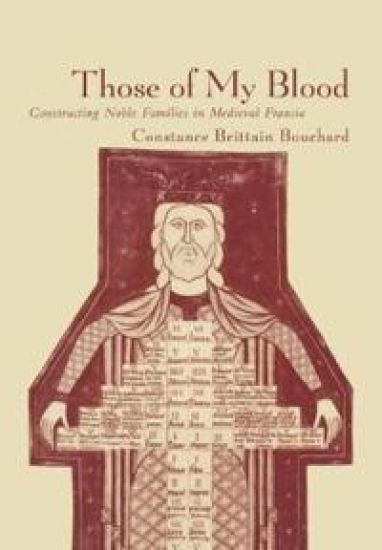
Those of My Blood

Those of My Blood

Constance Brittain Bouchard

University of Pennsylvania Press
2001
sidottu
For those who ruled medieval society, the family was the crucial social unit, made up of those from whom property and authority were inherited and those to whom it passed. One's kin could be one's closest political and military allies or one's fiercest enemies. While the general term used to describe family members was consanguinei mei, "those of my blood," not all of those relations-parents, siblings, children, distant cousins, maternal relatives, paternal ancestors, and so on-counted as true family in any given time, place, or circumstance. In the early and high Middle Ages, the "family" was a very different group than it is in modern society, and the ways in which medieval men and women conceptualized and structured the family unit changed markedly over time. Focusing on the Frankish realm between the eighth and twelfth centuries, Constance Brittain Bouchard outlines the operative definitions of "family" in this period when there existed various and flexible ways by which individuals were or were not incorporated into the family group. Even in medieval patriarchal society, women of the aristocracy, who were considered outsiders by their husbands and their husbands' siblings and elders, were never completely marginalized and paradoxically represented the very essence of "family" to their male children. Bouchard also engages in the ongoing scholarly debate about the nobility around the year 1000, arguing that there was no clear point of transition from amorphous family units to agnatically structured kindred. Instead, she points out that great noble families always privileged the male line of descent, even if most did not establish father-son inheritance until the eleventh or twelfth century. Those of My Blood clarifies the complex meanings of medieval family structure and family consciousness and shows the many ways in which negotiations of power within the noble family can help explain early medieval politics.
Rewriting Saints and Ancestors

Rewriting Saints and Ancestors

Constance Brittain Bouchard

University of Pennsylvania Press
2014
sidottu
Thinkers in medieval France constantly reconceptualized what had come before, interpreting past events to give validity to the present and help control the future. The long-dead saints who presided over churches and the ancestors of established dynasties were an especially crucial part of creative memory, Constance Brittain Bouchard contends. In Rewriting Saints and Ancestors she examines how such ex post facto accounts are less an impediment to the writing of accurate history than a crucial tool for understanding the Middle Ages. Working backward through time, Bouchard discusses twelfth-century scribes contemplating the ninth-century documents they copied into cartularies or reworked into narratives of disaster and triumph, ninth-century churchmen deliberately forging supposedly late antique documents as weapons against both kings and other churchmen, and sixth- and seventh-century Gallic writers coming to terms with an early Christianity that had neither the saints nor the monasteries that would become fundamental to religious practice. As they met with political change and social upheaval, each generation decided which events of the past were worth remembering and which were to be reinterpreted or quietly forgotten. By considering memory as an analytic tool, Bouchard not only reveals the ways early medieval writers constructed a useful past but also provides new insights into the nature of record keeping, the changing ways dynasties were conceptualized, the relationships of the Merovingian and Carolingian kings to the church, and the discovery (or invention) of Gaul's earliest martyrs.
The White Nuns

The White Nuns

Constance Hoffman Berman

University of Pennsylvania Press
2018
sidottu
Modern studies of the religious reform movement of the central Middle Ages have often relied on contemporary accounts penned by Cistercian monks, who routinely exaggerated the importance of their own institutions while paying scant attention to the remarkable expansion of abbeys of Cistercian women. Yet by the end of the thirteenth century, Constance Hoffman Berman contends, there were more houses of Cistercian nuns across Europe than of monks. In The White Nuns, she charts the stages in the nuns' gradual acceptance by the abbots of the Cistercian Order's General Chapter and describes the expansion of the nuns' communities and their adaptation to a variety of economic circumstances in France and throughout Europe. While some sought contemplative lives of prayer, the ambition of many of these religious women was to serve the poor, the sick, and the elderly. Focusing in particular on Cistercian nuns' abbeys founded between 1190 and 1250 in the northern French archdiocese of Sens, Berman reveals the frequency with which communities of Cistercian nuns were founded by rich and powerful women, including Queen Blanche of Castile, heiresses Countess Matilda of Courtenay and Countess Isabelle of Chartres, and esteemed ladies such as Agnes of Cressonessart. She shows how these founders and early patrons assisted early abbesses, nuns, and lay sisters by using written documents to secure rights and create endowments, and it is on the records of their considerable economic achievements that she centers her analysis. The White Nuns considers Cistercian women and the women who were their patrons in a clear-eyed reading of narrative texts in their contexts. It challenges conventional scholarship that accepts the words of medieval monastic writers as literal truth, as if they were written without rhetorical skill, bias, or self-interest. In its identification of long-accepted misogynies, its search for their origins, and its struggle to reject such misreadings, The White Nuns provides a robust model for historians writing against received traditions.
Italo Calvino

Italo Calvino

Constance Markey

University Press of Florida
1999
sidottu
Concerned with the work of Italo Calvino, this text looks at the author in English translation, appraises his place in world literature and traces his development as a post-modern writer from the start of his writing career during World War II to his death in 1985.
Freedomways Reader

Freedomways Reader

Constance Pohl; Esther Jackson

Basic Books
2001
pokkari
From 1961 to 1985, a period of massive social change for African Americans, Freedomways Quarterly published the leaders and artists of the black freedom movement. Figures of towering historical stature wrote for the journal, among them Paul Robeson, W.E.B. Du Bois, President Kwame Nkrumah and Julius Nyerere. Three Nobel Prize laureates appeared in its pages,Dr. Martin Luther King, Pablo Neruda, and Derek Walcott,and several Pulitzer Prize winners,Alice Walker and Gwendolyn Brooks. No other journal could boast such a long list of names from the civil rights movement: Freedomways was like no other journal. It was unique.Yet despite the well-known names, few Americans have heard of this national treasure. Why? Simply put, the United States was not ready for this journal in 1961. Today, many Americans cannot remember a United States where racial segregation was legal, but in 1961, many of the battles for integration were still to be won.This book is subtitled Prophets in their Own Country because the editors and contributors to Freedomways were not honored at the journal's inception. Eventually, however, much of their vision did come to pass. Until now, these documents, which show the depth and breadth of the struggle for democracy, had been lost to the public. The publication of the Freedomways Reader restores this lost treasury. It contains what amounts to an oral history of the liberation movements of the 1960s through the 1980s. Through the reports of the Freedom Riders, the early articles against the Vietnam War and South African apartheid, the short stories and poems of Alice Walker, and the memoirs of black organizers in the Jim Crow south of the Thirties, one can walk in the footsteps of these pioneers.
Digital Television

Digital Television

Constance Ledoux Book

Iowa State University Press
2004
nidottu
Dozens of books currently available address some aspect of digital television, yet almost all of these texts deal exclusively with engineering and production issues associated with implementing new hardware and software. Digital Television: DTV and the Consumer offers a pragmatic, more socially oriented basis for understanding digital television. Beginning with a basic summary of how digital television works and how it evolved into its present state in the different television viewing environments (over-the-air, cable and satellite), author and researcher Book then offers the reader a more practical understanding of how digital television is currently being consumed in the household. Additionally, the text presents a summary of what consumers are saying regarding their digital television experience and what this data suggests for the future development of digital television business models. Unique to this volume are numerous Innovator Essays by some of the industry’s digital television pioneers. These insightful essays – from significant DTV innovators such as Jim Goodmon, president and CEO of Capitol Broadcasting, home of the first commercial digital television broadcast – give brief snapshots of critical moments in the transition and rollout of DTV, while focusing on what the future holds for consumers and the broadcast and electronics industries. The latest entry in Blackwell Publishing’s Media and Technology series, Digital Television: DTV and the Consumer provides media students, scholars, and professionals a compelling perspective of the social and cultural presence of this emerging technological phenomenon.