The 18th century was a wealth of knowledge, exploration and rapidly growing technology and expanding record-keeping made possible by advances in the printing press. In its determination to preserve the century of revolution, Gale initiated a revolution of its own: digitization of epic proportions to preserve these invaluable works in the largest archive of its kind. Now for the first time these high-quality digital copies of original 18th century manuscripts are available in print, making them highly accessible to libraries, undergraduate students, and independent scholars.Western literary study flows out of eighteenth-century works by Alexander Pope, Daniel Defoe, Henry Fielding, Frances Burney, Denis Diderot, Johann Gottfried Herder, Johann Wolfgang von Goethe, and others. Experience the birth of the modern novel, or compare the development of language using dictionaries and grammar discourses. ++++The below data was compiled from various identification fields in the bibliographic record of this title. This data is provided as an additional tool in helping to insure edition identification: ++++British LibraryW008134"Pursuits of literature," a satirical poem, was written by Thomas James Mathias. "Peter Pindar" was a pseudonym used by John Wolcot. pi1,2,3 A-C{9} D{6}.New-York: Re-printed by Wm. Cobbett, 1800. vi, 1],4-68p.; 18
The 18th century was a wealth of knowledge, exploration and rapidly growing technology and expanding record-keeping made possible by advances in the printing press. In its determination to preserve the century of revolution, Gale initiated a revolution of its own: digitization of epic proportions to preserve these invaluable works in the largest archive of its kind. Now for the first time these high-quality digital copies of original 18th century manuscripts are available in print, making them highly accessible to libraries, undergraduate students, and independent scholars.The Age of Enlightenment profoundly enriched religious and philosophical understanding and continues to influence present-day thinking. Works collected here include masterpieces by David Hume, Immanuel Kant, and Jean-Jacques Rousseau, as well as religious sermons and moral debates on the issues of the day, such as the slave trade. The Age of Reason saw conflict between Protestantism and Catholicism transformed into one between faith and logic -- a debate that continues in the twenty-first century.++++The below data was compiled from various identification fields in the bibliographic record of this title. This data is provided as an additional tool in helping to insure edition identification: ++++British LibraryT087172Londres: de l'imprimerie de Jaques Phillips. Et se trouve Paris chez Le Gras, 1790. 2],115, 1]p.; 24
The 18th century was a wealth of knowledge, exploration and rapidly growing technology and expanding record-keeping made possible by advances in the printing press. In its determination to preserve the century of revolution, Gale initiated a revolution of its own: digitization of epic proportions to preserve these invaluable works in the largest archive of its kind. Now for the first time these high-quality digital copies of original 18th century manuscripts are available in print, making them highly accessible to libraries, undergraduate students, and independent scholars.Western literary study flows out of eighteenth-century works by Alexander Pope, Daniel Defoe, Henry Fielding, Frances Burney, Denis Diderot, Johann Gottfried Herder, Johann Wolfgang von Goethe, and others. Experience the birth of the modern novel, or compare the development of language using dictionaries and grammar discourses. ++++The below data was compiled from various identification fields in the bibliographic record of this title. This data is provided as an additional tool in helping to insure edition identification: ++++Bodleian Library (Oxford)T228838'The works' titlepage is over the uncancelled 1742 titlepage, which reads 'Volume I. of the author's works. Containing miscellanies in prose'; a reissue of the 1742 vol. 1.Dublin: printed by George Faulkner, 1751. 6],318p., plate: port.; 8
Follow Civil War Union Army Sergeant, Arthur P. McCullough, of Company "D", 81st Illinois Volunteer Infantry Regiment. Embark upon dozens of river steamboats plying the Mississippi, Ohio, Tennessee, Cumberland, Red and White Rivers in search of the rebel armies. Fight alongside the boys in blue at the battles of Port Gibson, Raymond, Jackson, Champion Hill, Big Black River Bridge, Vicksburg, Red River, Brice's Crossroads, and Nashville. Revel at the Mardi Gras in old New Orleans. Sail across the Gulf of Mexico and into Mobile Bay. Drive the rebels out of Spanish Fort and Fort Blakely then capture the city of Mobile. Complete the circle by occupying Montgomery, the first capitol of the Confederate States of America. Here is a never before published history showing the bravery, perseverance and strength of a frontline Union Infantry soldier fighting in the western theater of the Civil War. Based on a recently discovered diary written by his great-grand-uncle, the author adds text, maps and illustrations to position the reader at the camp sites and on the battle lines. Then the diarist takes over to transport us back in time to the daily life of a Union soldier fighting to preserve the United States of America. This diary is a primary history source written by Sergeant McCullough over a three year period from 1862 until 1865. His final entry was made three days before he died. This is not a memoir written years after the war. This is as it happened.
C'EST POUR LA GLOIRE DE MON P RE, QUE VOUS PORTIEZ BEAUCOUP DE FRUITS, ET QUE VOUS SOYEZ MES DISCIPLES. J SUS D LICES DAND LE P RE DE GLOIRE est un guide d' tude biblique de sept le ons con u pour des individus ou groupe de disciples. Dieu est Amour... P re de Gloire... Recevez l'Instruction... tre difi ...D lices dans le Tout- Puissant...Levez Votre Face vers le P re...Priez au P re... GABRIELE GILPIN - Auteur, Pr dicatrice, Instructrice, Conf renci re, et Pr sidente de SOARING EAGLE MINISTRIES. Gabriele voyage les nations pour impacter le monde avec la Gloire de Dieu et un feu renouvel . Elle se concentre quiper, entra ner, lib rer et activer les saints pour le travail du minist re (voir ph siens 4) ainsi qu' d velopper des leaders internationaux.
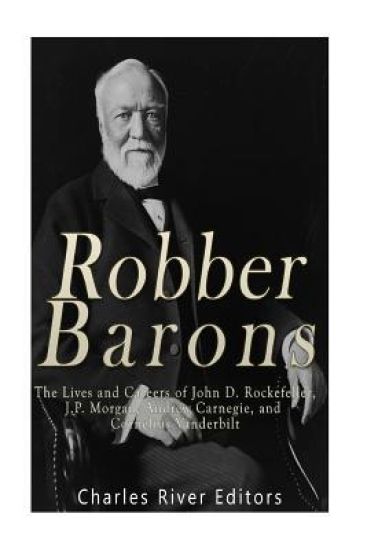
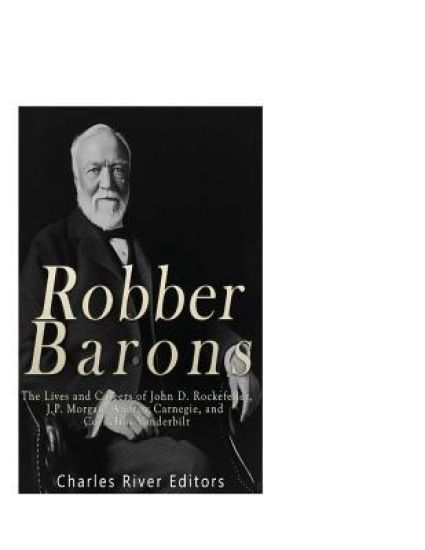
*Includes pictures *Includes the business magnates' quotes about life and work *Includes online resources and a bibliography for further reading The Gilded Age and the dawn of the 20th century are often remembered as an era full of monopolies, trusts, and economic giants in heavy industries like oil and steel. Men like Andrew Carnegie built empires like Carnegie Steel, and financiers like J.P. Morgan merged and consolidated them. The era also made names like Astor, Cooke, and Vanderbilt instantly recognizable across the globe. Over time, the unfathomable wealth generated by the businesses made the individuals on top incredibly rich, and that in turn led to immense criticism and an infamous epithet used to rail against them: robber barons. Dozens of men were called "robber barons", but few of them were as notorious as Cornelius Vanderbilt, who also happened to be one of the nation's first business titans. Vanderbilt was a railroad and shipping magnate at a time that the industry was almost brand new, but he rode his success to become one of the richest and most powerful men in American history. When historians are asked to name the richest man in history, a name that often pops up is that of John D. Rockefeller, who co-founded Standard Oil and turned it into the first real trust in the United States. Rockefeller had been groomed ambitiously by a huckster father nicknamed "Devil Bill", who was just as willing to cheat his son as an unsuspecting public, and John certainly chased his dreams of living long and large. Rockefeller forged his empire in the first few decades of his life and nearly worked himself to death by the time he was 50, which helped compel him to retire for the last several decades of his life. At one point, Rockefeller's wealth was worth more than 1.5% of the entire country's gross domestic product, and by adjusting for inflation, he is arguably the richest man in American history if not world history. When robber barons across America took the reins of vast industries, they needed financing, and many of them turned to the most famous banker of all: John Pierpont Morgan. It was J.P. Morgan who bankrolled the consolidation of behemoth corporations across various industries, including the merging of Edison General Electric and Thomson-Houston Electric Company, which subsequently became General Electric, still known simply as GE across the world today. Similarly, he financed Federal Steel Company and consolidated various other steel businesses to help form the United States Steel Corporation. While critics complained about the outsized influence that these gigantic businesses had, Morgan's massive wealth also gave him unprecedented power in the financial sector and the ability to deal with politicians. In fact, Morgan played an important part in the Panic of 1907 and the subsequent decision to create the Federal Reserve as a monetary oversight. Ironically, one of America's most famous robber barons, Andrew Carnegie, epitomized the American Dream, migrating with his poor family to America in the mid-19th century and rising to the top of the business world in his adopted country. A prodigious writer in addition to his keen sense of business, Carnegie was one of the most outspoken champions of capitalism at a time when there was pushback among lower social classes who witnessed the great disparities in wealth; as he once put it, "Upon the sacredness of property civilization itself depends-the right of the laborer to his hundred dollars in the savings bank, and equally the legal right of the millionaire to his millions." In a similar vein, he said, "Those who would administer wisely must, indeed, be wise, for one of the serious obstacles to the improvement of our race is indiscriminate charity."
*Includes pictures *Includes the business magnates' quotes about life and work *Includes online resources and a bibliography for further reading The Gilded Age and the dawn of the 20th century are often remembered as an era full of monopolies, trusts, and economic giants in heavy industries like oil and steel. Men like Andrew Carnegie built empires like Carnegie Steel, and financiers like J.P. Morgan merged and consolidated them. The era also made names like Astor, Cooke, and Vanderbilt instantly recognizable across the globe. Over time, the unfathomable wealth generated by the businesses made the individuals on top incredibly rich, and that in turn led to immense criticism and an infamous epithet used to rail against them: robber barons. Dozens of men were called "robber barons", but few of them were as notorious as Cornelius Vanderbilt, who also happened to be one of the nation's first business titans. Vanderbilt was a railroad and shipping magnate at a time that the industry was almost brand new, but he rode his success to become one of the richest and most powerful men in American history. When historians are asked to name the richest man in history, a name that often pops up is that of John D. Rockefeller, who co-founded Standard Oil and turned it into the first real trust in the United States. Rockefeller had been groomed ambitiously by a huckster father nicknamed "Devil Bill", who was just as willing to cheat his son as an unsuspecting public, and John certainly chased his dreams of living long and large. Rockefeller forged his empire in the first few decades of his life and nearly worked himself to death by the time he was 50, which helped compel him to retire for the last several decades of his life. At one point, Rockefeller's wealth was worth more than 1.5% of the entire country's gross domestic product, and by adjusting for inflation, he is arguably the richest man in American history if not world history. When robber barons across America took the reins of vast industries, they needed financing, and many of them turned to the most famous banker of all: John Pierpont Morgan. It was J.P. Morgan who bankrolled the consolidation of behemoth corporations across various industries, including the merging of Edison General Electric and Thomson-Houston Electric Company, which subsequently became General Electric, still known simply as GE across the world today. Similarly, he financed Federal Steel Company and consolidated various other steel businesses to help form the United States Steel Corporation. While critics complained about the outsized influence that these gigantic businesses had, Morgan's massive wealth also gave him unprecedented power in the financial sector and the ability to deal with politicians. In fact, Morgan played an important part in the Panic of 1907 and the subsequent decision to create the Federal Reserve as a monetary oversight. Ironically, one of America's most famous robber barons, Andrew Carnegie, epitomized the American Dream, migrating with his poor family to America in the mid-19th century and rising to the top of the business world in his adopted country. A prodigious writer in addition to his keen sense of business, Carnegie was one of the most outspoken champions of capitalism at a time when there was pushback among lower social classes who witnessed the great disparities in wealth; as he once put it, "Upon the sacredness of property civilization itself depends-the right of the laborer to his hundred dollars in the savings bank, and equally the legal right of the millionaire to his millions." In a similar vein, he said, "Those who would administer wisely must, indeed, be wise, for one of the serious obstacles to the improvement of our race is indiscriminate charity."
Cuốn s ch m độc giả đang cầm tr n tay l một Tuyển tập về t nh bạn. Nhiều người n i về một người bạn chung của m nh. Kh ng c một "ban chủ trương" đứng ra k u gọi bạn b viết về một nh n vật hay một t c phẩm, tất cả b i vở trong s ch n y đều l sưu tầm những b i viết đ c , xuất ph t từ tấm l ng của mỗi t c giả trong nhiều thời điểm kh c nhau, nơi chốn kh c nhau, trường hợp xuất hiện kh c nhau. Duy chỉ một điều giống nhau: t nh cảm v suy nghĩ rất ch n th nh. V đều hướng về một người: nh thơ Th nh-T n. Nh thơ Th nh-T n bắt đầu l m thơ c lẽ v o khoảng đầu thập ni n 1960, c thể sớm hơn. V anh đ xuất bản một tập thơ, Thắp T nh, v o cuối thập ni n 1960, m ch ng t i xin ph p t c giả được in lại trong quyển s ch n y để lưu giữ như một kỷ niệm qu b u chung với bạn b . Nhiều b i trong tuyển tập n y đ n i về tập thơ duy nhất đ của Th nh-T n. Nhiều b i kh c n i về ch nh t c giả, với những đặc t nh tốt đẹp m bạn b muốn ghi lại. Đ l những điều m ch ng t i, đại diện cho một số anh em bạn g p để l m ra Tuyển tập n y, tr nh b y ngắn gọn để giới thiệu với người đọc. V nh n đ , theo gương c c bạn kh c ch ng t i cũng xin ghi lại đ i điều biết được về Th nh-T n từ c i nh n ch n th nh của c nh n m nh. ....