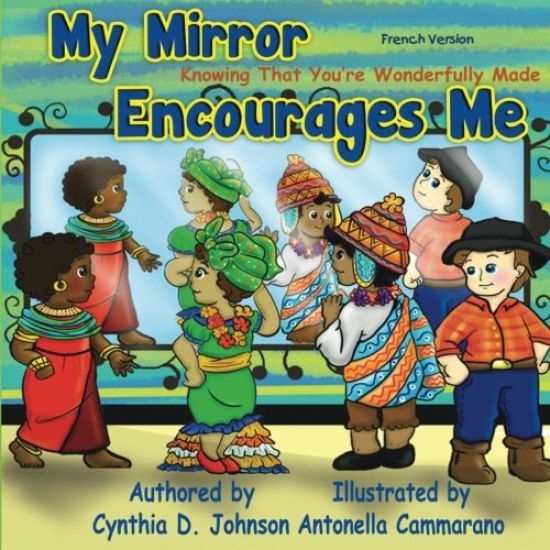
Tous les enfants ont besoin d'une forme de mots encourageants d'un moment l'autre. Ce livre a l'intention de faire exactement cela. Quand les enfants se rendent compte de qui ils sont et qui ils servent, ils d couvriront que l'encouragement ne vient parfois pas de l'ext rieur, mais de l'int rieur. Tout ce qu'ils ont faire est de jeter un regard dans le miroir.
Libraries are exploring new roles and new partnerships on college campuses in order to improve students’ experiences and enable learning outside the classroom. But other than faculty members, who are librarians’ potential partners? The student affairs professionals are responsible for everything from residence halls to service learning to career exploration and make up one of the fastest growing groups in higher education - they are the experts in student development and the student experience. However, librarians and student affairs professionals are largely unfamiliar with each other's roles in student learning. By using multiple focus groups, Long describes the experiences and perceptions of librarians and student affairs professionals at several four-year, residential colleges and universities. He identifies ways librarians and student affairs professionals share common values and can approach partnerships successfully – but also the barriers that result when these two groups don’t fully understand each other’s roles in student learning. This book is the perfect road map for librarians and student affairs professionals alike who are seeking partners for campus collaborations.
Libraries are exploring new roles and new partnerships on college campuses in order to improve students’ experiences and enable learning outside the classroom. But other than faculty members, who are librarians’ potential partners? The student affairs professionals are responsible for everything from residence halls to service learning to career exploration and make up one of the fastest growing groups in higher education - they are the experts in student development and the student experience.However, librarians and student affairs professionals are largely unfamiliar with each other's roles in student learning. By using multiple focus groups, Long describes the experiences and perceptions of librarians and student affairs professionals at several four-year, residential colleges and universities. He identifies ways librarians and student affairs professionals share common values and can approach partnerships successfully – but also the barriers that result when these two groups don’t fully understand each other’s roles in student learning. This book is the perfect road map for librarians and student affairs professionals alike who are seeking partners for campus collaborations.
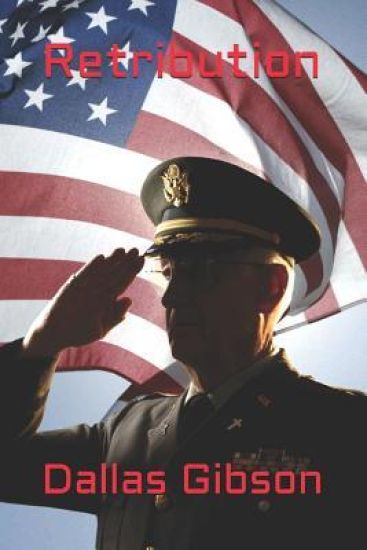
"Retribution" is the story of CIA agent Jackson Smith, a man tasked with a mission that could help secure the nation's border from its biggest threat to date, the Rancon Cartel. Along the way he meets fellow CIA agent Jason Bond, a man who uses his name to his advantage, who joins him on his mission to secure the border. Using a CIA safe house in Juarez they strategize their options on how to proceed. After a reconnaissance mission goes wrong where Jackson realizes that his friend from the Navy, Hidalgo Ortiz, is working with the Cartel the Cartel responds the only way they know how, with violence. Vanessa Lane, Jackson's fianc is kidnapped in their hometown of Washington D.C. and to get Jackson's attention they leave a calling card, Vanessa's ring finger. Jackson then enlists the help of his boss, CIA Director Ron Derman, along with a U.S. Army quick reaction force to take action against the Cartel. Jesus Don Rancon is the treacherous leader of the Rancon Cartel who is more concerned with his cash flow than the repercussions coming his way. Hidalgo takes it upon himself to atone for his sins and deliver his own form of Retribution.
At least he'd got far enough to wind up with a personal interview. It's one thing doing up an application and seeing it go onto an endless tape and be fed into the maw of a machine and then to receive, in a matter of moments, a neatly printed rejection. It's another thing to receive an appointment to be interviewed by a placement officer in the Commissariat of Interplanetary Affairs, Department of Personnel. Ronny Bronston was under no illusions. Nine out of ten men of his age annually made the same application. Almost all were annually rejected. Statistically speaking practically nobody ever got an interplanetary position. But he'd made step one along the path of a lifetime ambition. He stood at easy attention immediately inside the door. At the desk at the far side of the room the placement officer was going through a sheaf of papers. He looked up and said, "Ronald Bronston? Sit down. You'd like an interplanetary assignment, eh? So would I." Ronny took the chair. For a moment he tried to appear alert, earnest, ambitious but not too ambitious, fearless, devoted to the cause, and indispensable. For a moment. Then he gave it up and looked like Ronny Bronston. The other looked up and took him in. The personnel official saw a man of averages. In the late twenties. Average height, weight and breadth. Pleasant of face in an average sort of way, but not handsome. Less than sharp in dress, hair inclined to be on the undisciplined side. Brown of hair, dark of eye. In a crowd, inconspicuous. In short, Ronny Bronston. The personnel officer grunted. He pushed a button, said something into his order box. A card slid into the slot and he took it out and stared gloomily at it.
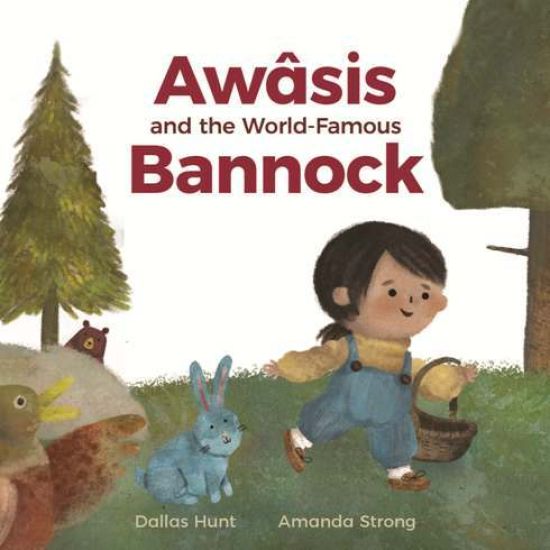
During an unfortunate mishap, young Awasis loses Kohkum's freshly baked world-famous bannock. Not knowing what to do, Awasis seeks out a variety of other-than-human relatives willing to help. What adventures are in store for Awasis?
Dallas Brauninger offers all who plan Sunday services of worship rich varieties of uses of one lectionary passage for every Sunday: a variety of voices and groupings of voices, and a variety of settings within the service of worship itself, from calls to worship to benedictions. Each arrangement can help worshipers hear the Word of God with new appreciation. Arthur M. Field Editor, These Days In The Beginning Was The Word allows every person of whatever age who can read and speak to become a leader in worship. The clear, ringing voice of children, and the aging voices of older members help make Sunday worship part of everyone's joy. Dallas Brauninger takes one lectionary reading for each Sunday and other special days in the life of the church and develops it into a choral reading. Readings are based on the New Revised Standard Version texts and the Revised Common Lectionary texts. This is part of a three-book cycle on lectionary readings. Dallas A. Brauninger, a graduate of Albion College, received her master of divinity degree and an honorary doctor of divinity degree from the Chicago Theological Seminary. A full-time writer, Brauninger has served churches in Colorado and Nebraska. She and her husband, also an ordained minister in the United Church of Christ, live in West Point, Nebraska.
With easy-to-understand examples, review questions, and keyword explanations, learn how to understand one of the most complicated and important lessons of life: putting on the character of Christ.
Deep Family chronicles several generations of the famous Read, Baldwin, and Craik families of Montgomery, Alabama. Dubbed the “deep family” by a black servant—who himself became part of the family, long before blacks and whites had equal rights—the dynamic personalities in this volume stretch from the American Revolution to World War II and beyond. Many Montgomerians will still remember the legendary Hazel Hedge, the gorgeous family estate and site of famous Montgomery parties, or will have heard tales of this family that included revolutionaries, Confederates, communists, diplomats, journalists, artists, grande dames, and eccentrics. Readers not from Montgomery will wish that they were. Brimming with colorful cameos—from George Washington to William Lowndes Yancey to Greta Garbo to Rosa Parks—Deep Family combines history, gossip, name-dropping, and personal lore in a scandalous, ripping good read.
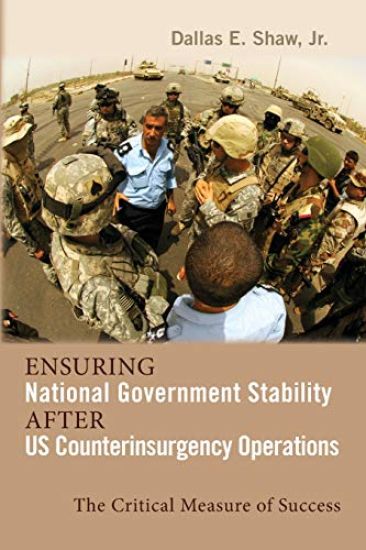
The use of American combat formations to assist another state in killing its own rebellious citizens is an immense departure from normal international interactions between the US and states the US supports. In fact, the US has only used conventional combat formations on ten occasions to assist a foreign state in defeating their own insurgencies--in nine of these cases, the US was the lead. The employment of US combat formations in the COIN operations of another state is indicative of how dire US policy makers perceived the situation and their certitude that the host-nation could not defeat the insurgency and/or protect its people on its own. Much of the debate regarding US COIN operations since 1950 in Vietnam, Iraq, and Afghanistan has centered around discussions of population-centric COIN or enemy-centric COIN. But how do we explain how the US was successful at population-centric and enemy-centric COIN in Vietnam but failed to produce a state that was able to survive longer than 3.5 years on average after US combat formations departed. Or conversely, how do we explain how the US failed in population-centric and enemy-centric COIN in Nicaragua, but succeeded in producing a state that lasted over four decades? In this first longitudinal and latitudinal study of all US foreign COIN interventions using combat formations, Dallas Shaw examines the variables involved in increasing state longevity after withdrawal (SLAW). This book proposes a theory of state-centric COIN such that state longevity increases after US withdrawal when the US employs institution inhabiting strategies to develop host-nation governance and security in the course of COIN interventions. This book uses small-N qualitative case-study methodologies to both develop and to test his theory of state-centric COIN. He relies on process tracing, contextually constrained historical comparison, and hoop tests to both infer a theory of state-centric counterinsurgency and test it alongside competing hypotheses.This study examines four key detailed case studies and then combines this with qualitative methodologies to identify the variables most associated with increases in SLAW. Shaw compares two cases where the US intervened and created tabula rasa conditions of governance and security and in essence started from scratch to create a new state during a COIN intervention. He then pairs two other cases of US COIN intervention in existing host-nations. The result is a latitudinal comparison of all four cases to determine which variables are most closely related to increasing SLAW.Ensuring National Government Stability After US Counterinsurgency Operations is an important volume for all security studies, political science, and professional military education collections. It will address how the US defines success in large-scale COIN and helps to create states that are able to long endure after US withdrawal. This book will help policy makers think about how to intervene, when it chooses to, and how to describe the goals of intervention in foreign COIN.
The use of American combat formations to assist another state in killing its own rebellious citizens is an immense departure from normal international interactions between the US and states the US supports. In fact, the US has only used conventional combat formations on ten occasions to assist a foreign state in defeating their own insurgencies--in nine of these cases, the US was the lead. The employment of US combat formations in the COIN operations of another state is indicative of how dire US policy makers perceived the situation and their certitude that the host-nation could not defeat the insurgency and/or protect its people on its own. Much of the debate regarding US COIN operations since 1950 in Vietnam, Iraq, and Afghanistan has centered around discussions of population-centric COIN or enemy-centric COIN. But how do we explain how the US was successful at population-centric and enemy-centric COIN in Vietnam but failed to produce a state that was able to survive longer than 3.5 years on average after US combat formations departed. Or conversely, how do we explain how the US failed in population-centric and enemy-centric COIN in Nicaragua, but succeeded in producing a state that lasted over four decades? In this first longitudinal and latitudinal study of all US foreign COIN interventions using combat formations, Dallas Shaw examines the variables involved in increasing state longevity after withdrawal (SLAW). This book proposes a theory of state-centric COIN such that state longevity increases after US withdrawal when the US employs institution inhabiting strategies to develop host-nation governance and security in the course of COIN interventions. This book uses small-N qualitative case-study methodologies to both develop and to test his theory of state-centric COIN. He relies on process tracing, contextually constrained historical comparison, and hoop tests to both infer a theory of state-centric counterinsurgency and test it alongside competing hypotheses.This study examines four key detailed case studies and then combines this with qualitative methodologies to identify the variables most associated with increases in SLAW. Shaw compares two cases where the US intervened and created tabula rasa conditions of governance and security and in essence started from scratch to create a new state during a COIN intervention. He then pairs two other cases of US COIN intervention in existing host-nations. The result is a latitudinal comparison of all four cases to determine which variables are most closely related to increasing SLAW.Ensuring National Government Stability After US Counterinsurgency Operations is an important volume for all security studies, political science, and professional military education collections. It will address how the US defines success in large-scale COIN and helps to create states that are able to long endure after US withdrawal. This book will help policy makers think about how to intervene, when it chooses to, and how to describe the goals of intervention in foreign COIN.