

Kirjahaku
Etsi kirjoja tekijän nimen, kirjan nimen tai ISBN:n perusteella.
1000 tulosta hakusanalla Daniel P

This title guides the reader around an always-plausible, always-sane, always-sceptical tour of the psychedelic horizon, from tribal rites in West Africa and Mexico, to other tribal rites in Brooklyn apartments and at the Burning Man festival in the Nevada desert.
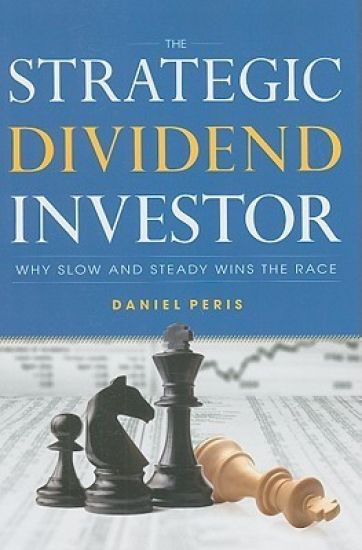
TIRED OF THE STOCK MARKET'S UPS AND DOWNS?Get off the Wall Street roller coaster with strategic dividend investing!There's a big difference between investing in the stock market and investing in companies through the stock market.The Strategic Dividend Investor shows you why, over the long run, investing in companies with high and rising distributions is far superior to "playing the market."Responsible for $4.5 billion in dividend-anchored portfolios, Daniel Peris demonstrates that, for most investors, buying a stock in the hope of making a quick buck by selling it in a few weeks or months is far from the best way to create wealth. Instead, you should use the stock market as a means of receiving a share of excess profits—dividends—from corporations in which you own stock. Over time, those payments—and the growth of those payments—represent the vast majority of stock market returns.The Strategic Dividend Investor outlines the key issues you need to address in order to create a solid dividend portfolio, including how to:View the stock market as a business venture rather than as a platform for speculationStrike the right balance between current yield and dividend growthLearn to assess the ability and inclination of a company to pay and increase its dividends over timeThe real key to mastering the stock market is to take the stock out of the equation and treat your outlay as you would any other business investment—with an eye to the long term and to cash returns.By contrast, the "buy low, sell high, repeat frequently" philosophy foisted on the investing public has been wrecking portfolios on Main Street for decades, all the while generating big profits for Wall Street. But after a decade of mediocre returns from the stock market—highlighted by two dramatic crashes—now is the time to refocus your portfolio on dividends, and The Strategic Dividend Investor will show you how.Praise for The Strategic Dividend Investor"Peris is way out in front of the Wall Street pack. His book makes a case for dividend-driven investing that no one in this back-to-basics era should ignore."Josh Peters, Editor, The Morningstar Dividend Investor"Peris is a leading portfolio manager in the dividend investing space, and his results and insights add tremendous value to any portfolio. Whether you're an individual investor or an institution portfolio manager, The Strategic Dividend Investor is an absolute must read in this challenging market environment."Don Dion, President, Dion Money Management, and Editor, The Fidelity Independent Adviser"In this lively and persuasive polemic, Daniel Peris forcefully reminds us what equity investing is really all about: SHOW ME THE MONEY!"Ian Kennedy, former Director of Research, Cambridge Associates"[Makes] the strongest cases I've ever seen for relentlessly investing in dividend stocks and funds that own them."Kiplinger's

The Dividend Imperative: How Dividends Can Narrow the Gap between Main Street and Wall Street
Daniel Peris
McGraw-Hill Professional
2013
sidottu
IF YOU'RE INVESTED IN THE FUTURE OF THE STOCK MARKET, THIS IS YOUR WAKE-UP CALL. DIVIDENDS ARE NOT THE PROBLEM. THEY'RE PART OF THE SOLUTION.Forget the Great Recession. According to fund manager and author Daniel Peris, the real threat to investment returns from stocks is the Great Retreat--a 30-year drop in the dividend payout ratio of the leading corporationsin the United States that has rendered the U.S. stock market a grand casino rather than a business investment platform. Peris believes that profit distributions--the dividends of publicly traded corporations--are the greatest indicators of a business's success. Investors and company executives should focus on them.This is The Dividend Imperative, a bold new vision for anyone interested in having a stronger, broader, and healthier stock market for everyone.If you're a personal investor … this book will show you how to identify and invest incompanies that value shareholders by rewarding them with ample, growing dividends.If you're a portfolio manager … this book willhelp you shift your focus from near-term earnings to long-term dividends--even if it goes against conventional wisdom.If you’re a business leader … this book willshow you how to restore trust and confidence in the corporate world, the stock market, and the future of investing.This is no get-rich-quick scheme or one-size-fits-allmoney guide. It is a realistic, tightly reasoned approach to dividend investing that could have far-reaching effects on Main Street and Wall Street alike. Using real-world case studies and analytic models, Peris shows investors andcompanies that concentrating on dividend generation and growth can lead to mutually rewarding results.You'll learn why stocks go up when dividends go up--and what it means to a company's bottom line. You'll discover practical financial tools for assessing the value of higher dividend payouts and determining the value of a dividend growth trajectory. Even if your direct stock market experience has been disappointing or your mutual funds have performed poorly in recent years, refocusing your efforts on dividend strategies can provide just thevision you need to achieve long-term success with your investments.This is what business is all about. This is howinvestors and companies can share profi ts, build trust, and create opportunities for the future. This is The Dividend Imperative.You've seen the markets swing from bubble to scandal and back again. You’ve watched the divide between Wall Street and Main Street grow larger each year. You've wished there was a strategic approach to investing that strengthened portfolios, benefited companies, and bolstered the economy as well.The answer, according to business investor Daniel Peris, is simple. You need to focus on dividends. Investors need to demand bigger dividends, and U.S. corporations need to pay out more of theirprofits as dividends.This is THE DIVIDEND IMPERATIVE--a powerful new call to action for investors and corporate leaders by the acclaimed author of The Strategic Dividend Investor."[Peris's] ideas about aligning interests through higher dividend payments may be counter to current Wall Street wisdom, but savvy investors should trust Peris to guide them toward a strategy that focuses on generating strong long-term returns." -- JOHN EADE, President, Argus Research"Peris makes a compelling case that investors and companies need to focus more on dividends, which have accounted for the lion’s share of stock market returns." -- JOHN HEINZL, Toronto's The Globe and Mail"If you’re a shareholder, and not a near-term 'shareseller,' you deserve a better deal. Most companies can afford to pay higher dividends. Here's why they should. Investors who like cash should cheer for Peris." -- JEFFREY KOSNETT, editor of Kiplinger's Investing for Income"The book is a rallying cry for long-term investors to regain their rightful position using a simple but very powerful tool that they have at their disposal--demand for increased dividends." -- WILLIAM LYONS, CFO, CONSOL Energy
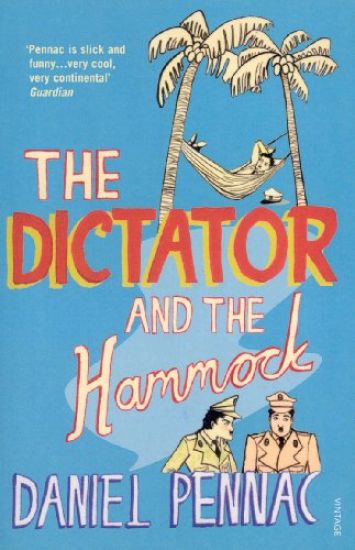
Manuel Pereira da Ponte Martins, beloved dictator of the state of Teresina in Brazil, develops agoraphobia the day a fortune-teller predicts he will die being torn limb from limb by an angry mob. His life becomes unbearable and he decides to hire a double to stand in while he set off to enjoy himself in the fleshpots of Europe.A few years later, the barber-turned-dictator also grows tired of running the country and employs the same trick as his predecessor to leave for Hollywood. On the boat there, he introduces himself as Charlie Chaplin. But everyone is convinced that he is none other than Rudolph Valentino disguised as Chaplin. When he arrives in New York, both the real actors are waiting for him.Back in Teresina, the doubles follow one another, fooling the people with ease. Then Pereira comes back. He is astonished to discover that his stand-in doesn't look anything like him and reacts in a way that can only precipitate his meeting with Fate.The Dictator and The Hammock is wildly original and extremely funny.

Benjamin Malaussene is a downtrodden publisher at Vendetta Press. Treated as a scapegoat by Queen Zabo, doyenne of publishing, he finally resigns, only for Zabo to offer him a starring role. All he has to do is to impersonate the world's best-loved, but hitherto anonymous author, J.L.B.

Statistical Methods for Categorical Data Analysis
Daniel Powers; Yu Xie
Elsevier Science Publishing Co Inc
2008
sidottu
This book provides a comprehensive introduction to methods and models for categorical data analysis and their applications in social science research. An explicit aim of the book is to integrate the transformational and the latent variable approach, two diverse but complementary traditions dealing with the analysis of categorical data. This is the first introductory text to cover models and methods for discrete dependent variables, cross-classifications, and longitudinal data in a rigorous, yet accessible, manner in a single volume.The second edition of this book includes new material on multilevel models for categorical data. Several chapters have undergone extensive revisions and extensions to include new applications and examples. Highlights of the 2nd edition include a detailed discussion of classical and Bayesian estimation techniques for hierarchical/multilevel models, extensive coverage of discrete-time hazard models and Cox regression models, and methods for evaluating and accommodating departures from model assumptions. The accompanying website contains programming scripts to replicate each example using various statistical packages, which has proven to be an invaluable resource for instructors, students, and researchers. This book presents the essential methods and models that form the core of contemporary social statistics. The book covers a remarkable range of models that have applications in sociology, demography, psychometrics, econometrics, political science, biostatistics, and other fields. It will be especially useful as a graduate textbook for students in advanced social statistics courses and as a reference book for applied researchers. Companion website also available, at https://webspace.utexas.edu/dpowers/www/

From Midwestern bars to Brooklyn apartments, narrative poems that find millennials adrift--in political upheaval and personal crisis--and trying to find their way back to one another Winner of the 2018 National Poetry Series competition, selected by Brenda Shaughnessy These poems tell the story of a generation in crisis: at odds with its own ideals, precariously (or just un-) employed, and absolutely terrified of seeing itself in the planet's future. Is our contemporary moment pure tragedy, or a dark joke? Can it be both? Cutting back and forth in time and ranging between elegiac lyrics and autobiographical accounts of a group of poets moving from Iowa to Brooklyn in the years just before and after the 2016 election, Fear of Description reinvigorates the prose poem, exploring the slippery terrain between grief and friendship, artifice and technology, writing and ritual, hauntings and obsessions--searching for joy in art but instead finding it in pitch darkness.

Since at least the attacks of September 11, 2001, one of the most pressing political questions of the age has been whether Islam is hostile to religious freedom. Daniel Philpott examines conditions on the ground in forty-seven Muslim-majority countries today and offers an honest, clear-eyed answer to this urgent question. It is not, however, a simple answer. From a satellite view, the Muslim world looks unfree. But, Philpott shows, the truth is much more complex. Some one-fourth of Muslim-majority countries are in fact religiously free. Of the other countries, about forty percent are governed not by Islamists but by a hostile secularism imported from the West, while the other sixty percent are Islamist. The picture that emerges is both honest and hopeful. Yes, most Muslim-majority countries are lacking in religious freedom. But, Philpott argues, the Islamic tradition carries within it "seeds of freedom," and he offers guidance for how to cultivate those seeds in order to expand religious freedom in the Muslim world and the world at large. It is an urgent project. Religious freedom promotes goods like democracy and the advancement of women that are lacking in the Muslim-majority world and reduces ills like civil war, terrorism, and violence. Further, religious freedom is simply a matter of justice--not an exclusively Western value, but rather a universal right rooted in human nature. Its realization is critical to the aspirations of religious minorities and dissenters in Muslim countries, to Muslims living in non-Muslim countries or under secular dictatorships, and to relations between the West and the Muslim world. In this thoughtful book, Philpott seeks to establish a constructive middle ground in a fiery and long-lasting debate over Islam.

Why do human beings believe in divinities? Why do some seek eternal life, while others seek escape from recurring lives? Why do the beliefs and behaviors we typically call “religious” so deeply affect the human personality and so subtly weave their way through human society? Ideal as a supplementary text in introductory religion courses or as the main text in theory and method in religious studies or in sociology of religion courses, Ten Theories of Religion, Fourth Edition, offers an illuminating treatment of this controversial and fascinating subject.

In every domain of reasoning-from time and space, to mental states and physical illness-humans deploy an exceedingly diverse range of intuitive 'theories' about how the world works. Children from diverse cultures always seem to arrive at a few, common folk theories as they hone their developing brains against roughly similar interactions with people and objects. The result is an impressive panoply of folk notions that the human species uses to explain, predict, and just plain talk about everything from why the sky is blue, to why we catch a cold when we stand out in the rain. Unquestionably, all of this "higher-order" reasoning rests upon a diverse and complex tool-kit of "lower-order" neural and bodily mechanisms, much of which humans share in common with other species (and which, collectively, are quite clever in their right). But this book asks a different question: Are humans alone in trying to make sense of the world by postulating theoretical entities to explain how the world works? Povinelli and his colleagues approach this highly controversial territory by investigating the seemingly prosaic topic whether chimpanzees wield roughly the same commonsense ideas about weight that human do. When it comes to the physical world, they ask if chimpanzees reinterpret a broad range of primary experiences-lifting objects, seeing objects fall or collide, observing the differential effort others exert when they move objects-in terms of a common, causal mechanism which, in our everyday parlance, we refer to as 'weight.' The question is not whether chimpanzees have a theory about weight that's any better or worse than preschool children or Einstein or modern string theorists. The question is whether chimpanzees have any theories at all. And the answer comes in the form of over 30 never-before-published experiments from a decade-long research project involving seven adult chimpanzees and one hundred and twenty preschool children. Povinelli's work encourages us to stand back and adopt a different perspective on even our closest living relatives. Rather than seeing chimpanzees as watered-down versions of ourselves, this book challenges us to see our joint encounter for what it is: a meeting of alien minds.

Osteoarthritis: The Facts
Daniel Prieto-Alhambra; Nigel Arden; David J. Hunter
Oxford University Press
2014
nidottu
Osteoarthritis: The Facts helps patients and their carers better understand the condition, empowering patients with the knowledge and skills to actively take charge of their own health by knowing as much as they can about osteoarthritis, and finding out how this can be best managed. Part 1 details what osteoarthritis is, what causes it, who it affects, what the main symptoms are, how it is diagnosed, and what the long-term outcome is. Part 2 explains the potential aspects of management that can be used for osteoarthritis, including self-management strategies, exercise, diet, medications, surgical treatments, and alternative therapies. Osteoarthritis: The Facts also includes a useful resources section, including information on support groups and websites, providing the reader with an opportunity to educate and empower themselves with tools that will help reduce their suffering.

Literatures of small nations represent a minuscule portion of the global literary marketplace, where books written in English outnumber translated works. The struggle for visibility in relation to dominant languages and cultures is not new in Slovakia, a nation of five million whose literary history has been shaped by the influence of more widely spoken languages including Hungarian, Czech, and Russian. Home and the World in Slovak Writing brings Slovak literature out of this isolation to tell the story of how a nation's literature can survive and thrive despite a small domestic audience and relatively limited circulation in English translation. The book demonstrates how historic events such as the post-Stalin Thaw, the Prague Spring, and the Velvet Revolution moulded the Slovak canon and situates contemporary Slovak literature in broader regional and global contexts. Through case studies of the transformations and adaptations of Slovak literature, contributors examine the changing social roles of writers, the tensions between tradition and innovation, and the dynamic interactions between influences from the outside world and domestic sources of inspiration. Home and the World in Slovak Writing maps the relationship between geopolitical destiny and literary production at a critical moment. As relations between the East and the West are destabilized by war, the question of cultural identity has again become a matter of national survival in Central Europe.

A sweeping visual history of the iconic figure of the Old West — and the present west. Cattle were introduced to North America as early as the 1680s. But the true era of the cowboy required an intersection of inventions and conditions that finally happened about 1860. The east of North America was thickly forested. Modern cattle thrive in grasslands, and when white Europeans made their way to Texas, Kansas and Missouri they found a bonanza of grasslands that were being connected to the big markets of the East by the first railways across the plains. Abilene, Kansas became a destination for cattle drives from Texas, that sent vast shipments to Omaha and the meat packers of Chicago. For a period of 50 years, the cowboy of legend had a vital role in the economy of America. This is the story, in photos, texts and illustrations of who the cowboys were, what their lives and culture were, famous cowboys, outlaws and lawmen, cattle and horses — in short, the whole world of the cowboy from early days to now. Packed with archival photos, posters, sidebars and museum-worthy artifacts, Cowboy includes: Cowboys of the Old West: America’s early explorers and settlers; Westward expansion, wars with Native peoples; Wagon trains and the first railroads; The creation of cattle ranches; The vaqueros, the first cowboys; What is a cow? Bovine biology; Cowboy clothing and saddles; Hazards of the trail; The cattle drives: major railheads; The last roundup (1910); Outlaws, rustlers and lawmen; Cowboy-style entertainers (Annie Oakley, Kit Carson, Buffalo Bill Cody). The Modern Cowboy: The up-to-date cowhand; Seasons of the ranch; Modern horse breeds: mustangs and quarter-horses; Rodeos, and their future; The cowboy legacy in art, film, TV and song; Cowboy fashion: blue jeans and bolo ties; The cowboy story: from Zane Grey to Cormac McCarthy. Throughout, spectacular images and well-researched photographs designed in a “period” style make this a useful resource and a fascinating gift for anyone with a fondness for the real cowboy story.

Nineteenth-century Japanese literary discourse and narrative developed a striking preoccupation with ninjo—literally “human emotion,” but often used in reference to amorous feeling and erotic desire. For many writers and critics, fiction’s capacity to foster both licentiousness and didactic values stood out as a crucial source of ambivalence. Simultaneously capable of inspiring exemplary behavior and a dangerous force transgressing social norms, ninjo became a focal point for debates about the role of the novel and a key motor propelling narrative plots.In Licentious Fictions, Daniel Poch investigates the significance of ninjo in defining the literary modernity of nineteenth-century Japan. He explores how cultural anxieties about the power of literature in mediating emotions and desire shaped Japanese narrative from the late Edo through the Meiji period. Poch argues that the Meiji novel, instead of superseding earlier discourses and narrative practices surrounding ninjo, complicated them by integrating them into new cultural and literary concepts. He offers close readings of a broad array of late Edo- and Meiji-period narrative and critical sources, examining how they shed light on the great intensification of the concern surrounding ninjo. In addition to proposing a new theoretical outlook on emotion, Licentious Fictions challenges the divide between early modern and modern Japanese literary studies by conceptualizing the nineteenth century as a continuous literary-historical space.
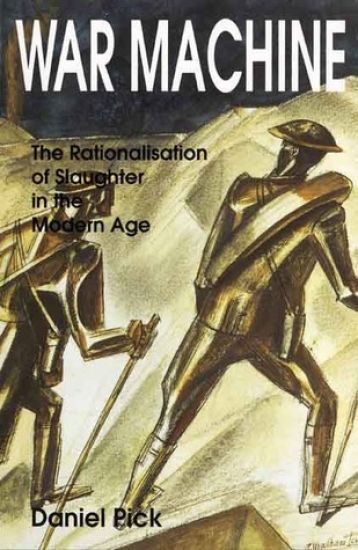
This fascinating book examines Western perceptions of war in and beyond the nineteenth century, surveying the writings of novelists, anthropologists, psychiatrists, poets, natural scientists, and journalists to trace the origins of modern philosophies about the nature of war and conflict.Daniel Pick compares philosophical and historical models of conflict with fictions of invasion and biological speculation about the nature and value of conquest. He discusses the work of such familiar commentators on war as Clausewitz, Engels, and von Bernhardi, and examines little-known writings by Proudhon, De Quincey, Ruskin, Valery, and many others. He explores nineteenth-century English fears of French contamination through the Channel Tunnel and the widespread continuing dread of German domination. And he analyzes the history of the widely-shared European belief that war is beneficial or at least functionally necessary.A central theme of the book is the disturbing relationship between machinery and destruction. According to Pick, relentless technological progress and the irresistible rise of the military-industrial complex risks turning conflict into little more than a sophisticated game played out by high-precision automata. Shorn of human agency or responsibility, war could become technologically unstoppable, a flawless mechanism for human slaughter.

Senator Daniel Patrick Moynihan, chairman of the bipartisan Commission on Protecting and Reducing Government Secrecy, here presents an eloquent and fascinating account of the development of secrecy as a mode of regulation in American government since World War I—how it was born, how world events shaped it, how it has adversely affected momentous political decisions and events, and how it has eluded efforts to curtail or end it. Senator Moynihan begins by recounting the astonishing story of the Venona project, in which Soviet cables sent to the United States during World War II were decrypted by the U.S. Army—but were never passed on to President Truman. The divisive Hiss perjury trial and the McCarthy era of suspicion might have had a far different impact on American society, says Moynihan, if government agencies had not kept secrets from one another as a means of shoring up their power. Moynihan points to many other examples of how government bureaucracies used secrecy to avoid public scrutiny and got into trouble as a result. He discusses the Bay of Pigs, Watergate, the Iran-Contra affair, and, finally, the failure to forecast the collapse of the Soviet Union, suggesting that many of the tragedies resulting from these events could have been averted had the issues been clarified in an open exchange of ideas. America must lead the way to an era of openness, says Moynihan in this vitally important book. It is time to dismantle the excesses of government secrecy and share information with our citizens and with the world. Analysis, far more than secrecy, is the key to national security.

Svengali, the malevolent hypnotist in a sensationally successful novel published by George du Maurier in 1894, became such a well-known character in the culture of the period that his name entered the dictionary as one who exerts a malign persuasiveness on another. This book explores the origins and impact of Svengali and his helplessly mesmerized female victim Trilby in an age already rife with discussions of race, influence, and the unconscious mind.Daniel Pick points out that Svengali was a Jew as well as a dangerous hypnotist; his depiction struck a chord not only with pervasive nineteenth-century forebodings about irrational interpersonal forces and psychic contacts but also with prevalent anti-Semitic assumptions. He shows how Svengali became the quintessential dark hypnotist of the fin de siècle, whose image was recycled in pictures, drama, verse, and films. Pick not only discusses the work of mesmerists, hypnotists, and critics of entrancement but also relates tales of surrogate passion and psychological foreboding that feature opera singer Jenny Lind, composer Richard Wagner, politician Benjamin Disraeli, novelist Henry James, and others. The book identifies and illuminates a psychological and historical preoccupation—a cluster of Victorian ideas and images, fears and fantasies of psychic invasion and racial hypnosis that crystallized in the figure and phenomenon of Svengali.

Drug dealers, hustlers, brothels, dirty politics, corrupt cops . . . and sorcery. Welcome to Low Town. In the forgotten back alleys and flophouses that lie in the shadows of Rigus, the finest city of the Thirteen Lands, you will find Low Town. It is an ugly place, and its champion is an ugly man. Disgraced intelligence agent. Forgotten war hero. Independent drug dealer. After a fall from grace five years ago, a man known as the Warden leads a life of crime, addicted to cheap violence and expensive drugs. Every day is a constant hustle to find new customers and protect his turf from low-life competition like Tancred the Harelip and Ling Chi, the enigmatic crime lord of the heathens. The Warden's life of drugged iniquity is shaken by his discovery of a murdered child down a dead-end street . . . setting him on a collision course with the life he left behind. As a former agent with Black House--the secret police--he knows better than anyone that murder in Low Town is an everyday thing, the kind of crime that doesn't get investigated. To protect his home, he will take part in a dangerous game of deception between underworld bosses and the psychotic head of Black House, but the truth is far darker than he imagines. In Low Town, no one can be trusted. Daniel Polansky has crafted a thrilling novel steeped in noir sensibilities and relentless action, and set in an original world of stunning imagination, leading to a gut-wrenching, unforeseeable conclusion. Low Town is an attention-grabbing debut that will leave readers riveted . . . and hungry for more.

At a time when the environment is of growing concern to students and general readers, nature writing is especially meaningful. This book profiles the literary careers of 52 early American nature writers, such as John James Audubon, Ralph Waldo Emerson, Caroline Stansbury Kirkland, Thomas Jefferson, Henry David Thoreau, and Mabel Osgood Wright. Each entry is written by an expert contributor and discusses the writer's life and works. Entries close with primary and secondary bibliographies, and the encyclopedia ends with suggestions for further reading.Global warming, pollution, and other issues have made the environment a topic of constant discussion these days. Many environmental concerns were treated by early American nature writers, who recognized the beauty of the natural world in an age of commercial expansion. Some of the most famous writers of the 18th and 19th centuries wrote about nature, and their works are stylistic masterpieces. At a time when students are being encouraged to read and write about nonfiction, these masterworks of early American nature writing are all the more important. This book gives students and general readers a welcome introduction to early American nature writers.The volume begins with an introductory essay on the history of early American nature writing and its anticipation of present day concerns. The book then provides alphabetically arranged entries on 52 writers, including:Elizabeth Agassiz, John James Audubon, Ralph Waldo Emerson, Caroline Stansbury Kirkland, Thomas Jefferson, Meriwether Lewis, Edith M. Thomas, Henry David Thoreau, Bradford Torrey, and Mabel Osgood Wright.