Our intrepid boy hero Zach, is inquiring of the Almighty again, after a trip to a History Museum exposes him to racial inequity.And also why adults are such flaming hypocrites.
Picking up where Isis Rising left off, Jed's family is struggling to keep up.Six people die, a girl disappears and a child is born but there's so much more to this world than living and dying.Jed teaches and learns every day while he tries to keep his family safe. Unfortunately others are doing the same and for them to be happy, Jed's family must suffer in unimaginable ways.The reader knows how Jed deals with people who make his loved ones suffer...Give him an hour to plan and a handful of tools and Jed will rain down terminal vengeance with a fury borne of his own sense of justice.Injure a family member or friend and Jed will stop at nothing to make certain justice is served.For some, death comes for them. For others, Jed brings it with him.
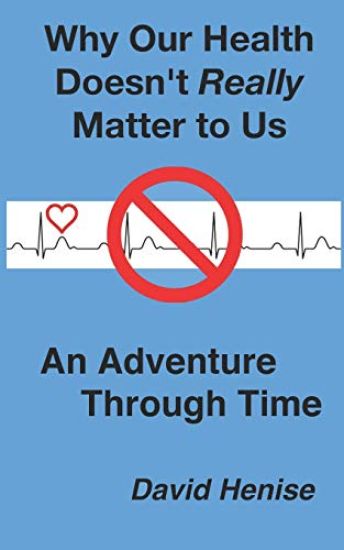
David explains why we set out to "be healthier" but then contradict ourselves by serving systems, people, and ideas which are supposedly more important than ourselves or our health. In order to do this, he also has to explain how it's possible for civilization to simultaneously be our savior and our captor. Along the way, he answers questions such as: Why do we sometimes feel uncomfortable with our complex societies - the very things that give us our modern conveniences? Are we slaves to "the system"? In what way? Is it possible to become voluntarily enslaved? Join David on both an intellectual and a hearty journey through time, across cultural boundaries, and into your - and everyone else's - human mind From the back cover: David Henise is a detailed thinker and adventurer whose main credential is that he spent the first years of his adult life obsessing over why people seem to share common misgivings in their modern lives. He set out to come up with a theory for what is causing these misgivings. Like any adventurer, he was bold enough to not agree with people who told him he was wasting his time. He discovered that our deepest misgivings come from how we mis-perceive our health, i.e., how we mis-perceive the connections within ourselves and to everything around us. He also discovered that many of our mis-perceptions are side-effects of recent human history - the history of civilization.When David is not busy exploring his thoughts, he is exploring the world or trying new experiences. Whether you enjoy reading ideas from gallant adventurers who dare to go where no one has gone before, you happen to be looking for something new, or you just want to understand the world a little better, crack open the cover and go on an adventure through our human past and the effects that past has left on our minds. What's the worst that can happen? Adventures can be scary However, like a caring guide, David personally guarantees you won't become less healthy from reading this book.
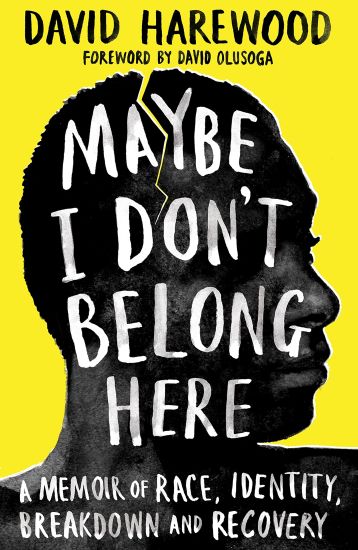
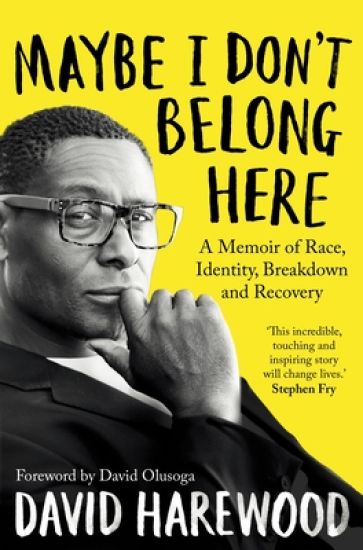
One of the Observer's Best Memoirs of the Year and The Times Best Film and Theatre Books of the Year.'As a Black British man I believe it is vital that I tell this story. It may be just one account from the perspective of a person of colour who has experienced this system, but it may be enough to potentially change an opinion or, more importantly, stop someone else from spinning completely out of control.' – David HarewoodIs it possible to be Black and British and feel welcome and whole?In this powerful and provocative account of a life lived after psychosis, critically acclaimed actor, David Harewood, uncovers devastating family history and investigates the very real impact of racism on Black mental health.Maybe I Don't Belong Here is a deeply personal exploration of the duality of growing up both Black and British, recovery from crisis and a rallying cry to examine the systems and biases that continue to shape our society.When David Harewood was twenty-three, his acting career beginning to take flight, he had what he now understands to be a psychotic breakdown and was sectioned under the Mental Health Act. He was physically restrained by six police officers, sedated, then hospitalized and transferred to a locked ward. Only now, thirty years later, has he been able to process what he went through.What was it that caused this breakdown and how did David recover to become a successful and critically acclaimed actor? How did his experiences growing up Black and British contribute to a rupture in his sense of his place in the world?'Such a powerful and necessary read . . . Don't wait until Black History Month to pick up this book, it's a must-read just now.' - Candice Brathwaite, author of I Am Not Your Baby Mother'David Harewood writes with rare honesty and fearless self-analysis about his experiences of racism and what ultimately led to his descent into psychosis . . . This book is, in itself, a physical manifestation of that hopeful journey.' - David Olusoga, author of Black and British
A groundbreaking account of the effects of everyday racism on the identity and mental health of Black British men, explored through the lens of Homeland and Supergirl actor David Harewood's personal experience.
A Book of the Year in The Observer and The Times and winner of the Visionary Honours Award.'David Harewood writes with rare honesty and fearless self-analysis about his experiences of racism and what ultimately led to his descent into psychosis . . . This book is, in itself, a physical manifestation of that hopeful journey.' - David Olusoga, author of Black and BritishThis powerful and provocative memoir charts critically acclaimed actor David Harewood’s life from working class Birmingham to the bright lights of Hollywood. He shares insights from his recovery after an experience of psychosis and uncovers devastating family history. Maybe I Don't Belong Here is a groundbreaking account of the impact of everyday racism on Black mental health and a rallying cry to examine the biases that shape our society.As a young actor, David had a psychotic breakdown and was sectioned under the Mental Health Act. He was physically restrained by six police officers, sedated, then hospitalized and transferred to a locked ward. Only now, thirty years later, has he been able to process what he went through.What caused this breakdown and how did David recover to become a successful actor? How did his experiences growing up contribute to a rupture in his sense of his place in the world? David’s compelling story poses the question: Is it possible to be Black and British and feel welcome and whole?'One of the best books on mental health, race, Britain and the thrill of acting I have ever read.' – Stephen Fry
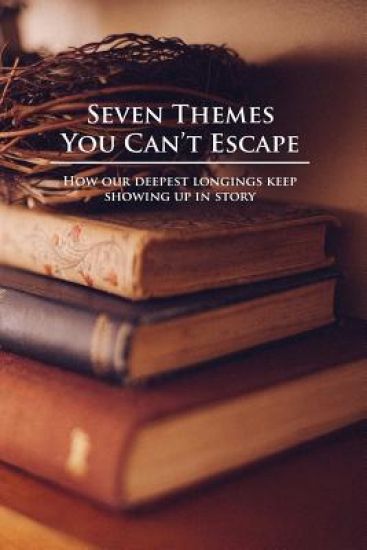
What do Sherlock Holmes, Star Wars, A Christmas Carol, and Charlotte's Web have in common? Seven identical and profound themes. Actually we only use these four stories as examples of seven inescapable themes, found in whole or in part in every story of every medium from books to movies. I believe these themes are inescapable, not because our culture imposes them upon creators, but because they reflect our deepest longings. As I suggested earlier, even in our current climate of deconstruction, any story which truly denies all these themes at once does so only with the clear intention of ignoring these very themes, thus providing greater support for the inherent expectation for and love of these concepts in us. We would really like to believe this is real: this longing for meaning, for plot and design and divine appointment, for redemption, for justice. I have come to believe the good news that our desire for meaning arises from the truth that there is meaning. There is a story behind the universe which makes it all makes sense.Every story we write, draw, compose, or perform is a seeking after that one true story of the universe. This is why the themes continue to pop up in story after story.
Table of Contents: About the Founder, David L. Sgro Task 9: Alex Entry, Shoulder Throw, Body Wrap Task 10: Striking in regards to the M4 Task 11: Flex Cuffing, Duel Foot Sweep Task 12: Panther Roll (Mount Bottom in full kit) Task 13: 3 man Team, Car Extraction Task 14: Come alongs Task 15: Standing Rear Naked Choke Task 16: Knife (Or Stick, ASP) Strikes #1 - 12 Task 17: Knife Fighting Combinations #1-4 What is F.I.G.H.T. C.U.T.? F.I.G.H.T. C.U.T. (Fully Integrated Grappling and Hitting Techniques, Close Up Techniques) is a Military Combatives Course. The standing joint locks, take downs and throws are based on techniques that draw from Japanese Ju-Jitsu; the striking techniques draw from Tang Soo Do (Karate); the ground fighting techniques draw from Brazilian Jiu-jitsu; and the knife fighting techniques are drawn from Filipino Arnis, Kali, and Escrima. F.I.G.H.T. C.U.T. is designed to teach the greatest amount of knowledge in the shortest period of time. There is a tremendous need for military personnel to train in Combatives, especially in the fol-lowing areas: 1) Striking 2) Throws and take downs 3) Grappling 4) Wrist locks, arm bars, joint dislocations 5) M4 and SAW Gunner techniques (when the M4 or SAW malfunctions) 6) Knife/Stick Fighting 7) Non-lethal Force Protection/Human Rights (ASP) 8) Tomahawk F.I.G.H.T. C.U.T. was specifically developed for military personnel. The techniques were selected for their simplicity, effectiveness, and adaptability, to increase combat readiness and survivability. F.I.G.H.T. C.U.T. teaches how to fight, when the situation dictates, both unarmed or with weapons such as the knife, stick, or M4. Often this is done with "Live" (unrehearsed) realistic scenarios. Sections of training include LBE or the full kit. Safety measures are incorporated into the training to sustain high intensity. Students learn quickly with ample time for "skill and drill". F.I.G.H.T. C.U.T. Instructor Trainer Courses available. www.COMBATIVEARTS.net
Marilyn Warner looked exactly like the young, beautiful, white woman that she wanted to be; however, because of the genetic contamination that flowed through her veins of her father's cursed blackness, had caused Marilyn to come into this world a 'High Yellow' female; as were her female siblings, which also included an effeminate brother, although they were all to a lesser degree whiteness than that their older sister, Marilyn. Although the siblings were still quite often mistaken as being of the white race, but not as quickly as Marilyn; and this is what changed the entire direction of Marilyn's life forever, and turning her into the monster that she was.
Marilyn Warner looked exactly like the young, beautiful, white woman that she wanted to be; however, because of the genetic contamination that flowed through her veins of her father's cursed blackness, had caused Marilyn to come into this world a 'High Yellow' female; as were her female siblings, which also included an effeminate brother, although they were all to a lesser degree whiteness than that their older sister, Marilyn. Although the siblings were still quite often mistaken as being of the white race, but not as quickly as Marilyn; and this is what changed the entire direction of Marilyn's life forever, and turning her into the monster that she was.
This book is a collection of original poetry from a Vietnam War veteran suffering with PTSD. The author utilized his poetry and other writing as a means of coping for his PTSD condition.Also you will find in this book, a paper that the author co-wrote about his PTSD for a professional psychology journal. Additionally there are many cartoons written by the author depicting the doctor/patient setting in the mental health department of the Veterans Administration.This book is not for everybody. The appropriate reader for this book might be another PTSD sufferer or a family member who needs to learn more about the plight of the post-war PTSD warrior."I had trouble for years describing to my wife how I feel with this PTSD. I sat my wife down one evening and read her this book out loud cover the cover. We laughed and we cried together. At the end of the book, I handed her the book and said, This is the way I feel. She said, I get it now. Thank you. This book has improved our relationship and our quality of life." Captain MW, Chaplain Retired
What if we could love the planet as much as we love one another?"Warm, wise, and overflowing with generosity, this is a love story so epic it embraces all of creation. Yet another reminder of how blessed we are to be in the struggle with elders like David and Tara.” – Naomi Klein and Avi LewisWhat You Won’t Do for Love is an inspiring conversation about love and the environment. When artist Miriam Fernandes approached the legendary eco-pioneer David Suzuki to create a theatre piece about climate change, she expected to write about David’s perspective as a scientist. Instead, she discovered the boundless vision and efforts of Tara Cullis, a literature scholar, climate organizer, and David’s life partner. Miriam realized that David and Tara’s decades-long love for each other, and for family and friends, has only clarified and strengthened their resolve to fight for the planet.What You Won’t Do for Love transforms real-life conversations between David, Tara, Miriam, and her husband Sturla into a charmingly novel and poetic work. Over one idyllic day in British Columbia, Miriam and Sturla take in a lifetime of David and Tara’s adventures, inspiration, and love, and in turn reflect on their own relationships to each other and the planet. Revealing David Suzuki and Tara Cullis in an affable, conversational, and often comedic light, What You Won’t Do For Love asks if we can love our planet the same way we love one another.
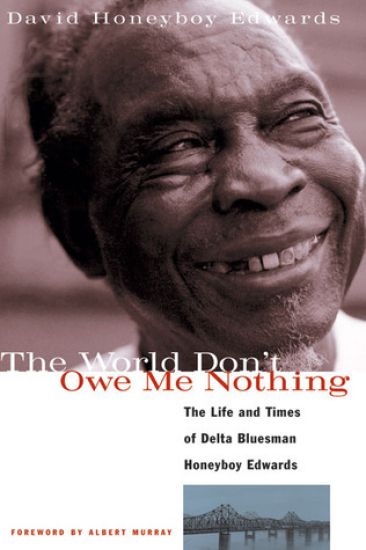
This vivid oral snapshot of an America that planted the blues is full of rhythmic grace. From the son of a sharecropper to an itinerant bluesman, Honeyboy’s stories of good friends Charlie Patton, Big Walter Horton, Little Walter Jacobs, and Robert Johnson are a godsend to blues fans. History buffs will marvel at his unique perspective and firsthand accounts of the 1927 Mississippi River flood, vagrancy laws, makeshift courts in the back of seed stores, plantation life, and the Depression.
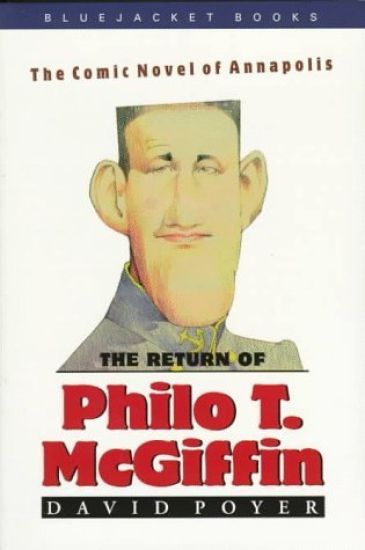
In this comic and irreverent novel, author and naval officer David Poyer--famous for such bestsellers as The Med, The Gulf, The Circle, and The Passage--brilliantly re-creates the hothouse world of the U.S. Naval Academy. When the book was first published in 1983 Roger Staubach, class of 1965, wrote, "Anyone who has attended a service academy will recognize Philo T. McGiffin and his classmates. However, anyone who has ever had a dream or a goal will feel a special kinship with Philo. This is a book worth reading."Poyer's Philo, burdened with the name of Annapolis's legendary prankster of the class of 1882, attracts attention from the day he reports for Plebe Summer, and the upperclassmen soon make his life a living hell. Stoop-shouldered and meek, he seems an unlikely candidate to carry on the tradition of the original Philo, whose outrageous escapades had served as a symbol of subversive individualism to generations of midshipmen. At first Philo nearly buckles under from the strain, but gradually "The Mouse" learns to roar and ultimately to triumph in the grand style of his predecessor. Funny, touching, and enormously realistic, this madcap novel will bring back to everyone what it was like to be 17--and in deep trouble.
Kentucky horse-racing journalist David Alexander wrote fifteen mystery novels (as well as short stories and other books) between 1951 and 1962. This volume collects his first two mysteries, which introduce hefty (and eccentric) millionaire Tommy Twotoes, penguin fancier and former bootlegger, and Terence R. Rooke, aka Soldier, fresh from a military hospital and starting out as a private investigator in the Big Apple.Most Men Don't Kill: Working for an Army buddy who has set up a detective agency, Soldier finds himself in a pickle when his stakeout of a married woman's tryst ends with the discovery of a corpse. Lying low in the Bowery, Soldier attracts the attention of millionaire Tommy Twotoes, who decides to do some investigating of his own.Murder in Black and White: Soldier is visiting a funeral parlor at the behest of Tommy Twotoes when a small albino man crashes the party and shoots up the corpse. This is only the beginning, as Soldier encounters more bodies, more crazy characters, and a loud-mouthed parrot.Additional classic mysteries can be found at CoachwhipBooks.com.
The stories in The Guy We Didn’t Invite to the Orgy— funny, surprising, compassionate, true to life— are about people navigating the trickiest of landscapes: a world full of other people. Each of these characters wants to know, in her or his own way, given the crazy ups and downs and ins and outs of relationships, is it better to go it alone, or is it better to try to carve out a place for yourself, whatever it takes?