Kirjojen hintavertailu. Mukana 11 627 067 kirjaa ja 12 kauppaa.

Kirjahaku

Etsi kirjoja tekijän nimen, kirjan nimen tai ISBN:n perusteella.

1000 tulosta hakusanalla David a McIntee

Calico Pennants

Calico Pennants

David A Ross

Open Books Publishing (UK)
2013
pokkari
Recently divorced and made redundant from his job, Julian Crosby needs a break from reality. That's why he's gone to Hawaii...If his personal circumstances had been different-if he were simply on a two-week vacation in Maui with his now former wife-then he surely would have laughed and said "no" to the outrageous offer from the funny-looking Hawaiian wearing a loud tropical shirt with an equally loud, not to mention obnoxious, blue and yellow parrot named Buenaventura perched upon his shoulder to buy a rundown boat called Scoundrel.But that was then and this is now... Or is it?Meanwhile, sixty years ago, Amelia Earhart is getting ready for her much publicized flight around the world. Is this daring adventure to be her final flight, her swan song? Or is she actually on a reconnaissance mission for President Roosevelt? And what does her ill-fated flight have to do with Julian, his innocent Hawaiian holiday and his newly-acquired boat? As Buenaventura reveals, "Only time will tell" as their two worlds unexpectedly and impossibly collide.In this award-winning novel a weekend sailor shipwrecked on an uncharted atoll in the South Seas eventually discovers the island's only other human inhabitant-a woman who bears an uncanny resemblance to 1930s lost flying ace Amelia Earhart.
PTCB Exam Simplified Pharmacy Technician Certification Exam Study Guide
When it comes to investing in a PTCB exam review book, you have a lot of options. To help you make your decision easier, we have created a list of the top 5 factors you should consider when choosing a study guide. Top 5 factors to consider when selecting a PTCB exam study guide: #1 --Up To Date-- Standardized exams are always evolving. Make sure you prepare yourself with a study guide that is up to date with current information and current laws. #2 --Practice Questions-- You can read until you're blue in the face, but the best way to learn is to do it yourself That is why PTCB Exam Simplified is packed full of examples and practice problems. #3 --Manageable Size-- You really need to consider how much content you can reasonably review before the exam. You need a study guide that gives you just the right balance of information, not too much and not too little. PTCB Exam Simplified provides just the right amount of information. Though I did not obtain her endorsement personally, I am pretty certain Goldilocks would choose PTCB Exam Simplified if she were preparing to take the PTCE. #4 --A Substantial Review of Pharmacy Calculations-- Math problems make up a large portion of the PTCB exam, and you need to be prepared in order to be successful. Many of the best-selling PTCB exam study guides fail to prepare students adequately in this category, but PTCB Exam Simplified provides a thorough review of pharmacy calculations. #5 --Study and Quiz Yourself at the Same Time-- You want a study guide that can equip you with exam-relevant knowledge as quickly as possible. PTCB Exam Simplified does this by providing you with questions and answers that allow you to quiz yourself as you study.
The First Total War: Napoleon's Europe and the Birth of Warfare as We Know It
A distinguished historian describes how the Enlightenment and the French Revolution led to the first total war in history during the age of Napoleon, when such embodiments of modern-day warfare--conscription, guerrilla warfare, unconditional surrender, disregard for the rules of combat, civilian mobilization, and more--made their first appearance. Reprint.
The Diaspora Student and Youth Front

The Diaspora Student and Youth Front

David A Mayom

Africa World Books Pty Ltd
2022
pokkari
This book is motivated by the desire to have young diaspora people grow up with exposure and attachment to their countries and continents of origin through participation in cultures, languages, and impact-oriented activities. - This is because a typical diaspora parent likes to see their child valuing both roots: their current country of residency and their country of origin. To do this, the author explores those academic, career-related, volunteering, and investment activities that diaspora students and youth can participate in overseas, either in their country of origin or any country of their choosing. On the other hand, for a student or youth who do not wish to travel but are interested in helping support a cause in their country of origin or any developing country, the book provides them with other options. Participation in an overseas program allows a young person to improve their language skills, immerse in cultural experience, explore the country, connect with relatives, establish a sense of resilience and self-reliance, and volunteer for a disadvantaged community. - The bottom line benefits are enhanced college admission chances, job application success, and career perspective.
The Will of God: Good and Acceptable and Always Perfect: Discovered by Peace
The title of this book is an expression of the following: Therefore, I urge you, brothers and sisters, in view of God's mercy, to offer your bodies as a living sacrifice, holy and pleasing to God-this is your true and proper worship. Do not conform to the pattern of this world, but be transformed by the renewing of your mind. Then you will be able to test and approve what God's will is-his good, pleasing (acceptable) and perfect will.Romans 12:1-2, emphases added.The question that is paramount, is, "How do we discover this good and acceptable and perfect will?"And let the peace (soul harmony which comes) from the Christ rule (act as umpire continually) in your hearts - deciding and settling with finality all questions that arise in your minds ...Colossians 3:15 (Amplified), emphases added.This verse expresses in a quite convincing way, the last word on discovering the will of God: Let the peace of God continually act as umpire in your hearts, deciding and settling with finality all questions that arise in your minds (Colossians 3:15, adapted).But this is not a privilege for anyone, as if it were some semi-magic trick to discover God's will.It is premised upon a deep and meaningful personal relationship with Christ. That relationship is the result of the conversion experience, and results in a life of growing into Christ's likeness-the process of sanctification. The expression of that life is then found in true Christian worship, with its commitment to God and the desire to live in obedience to Him-doing His will.That is the theme of this book.
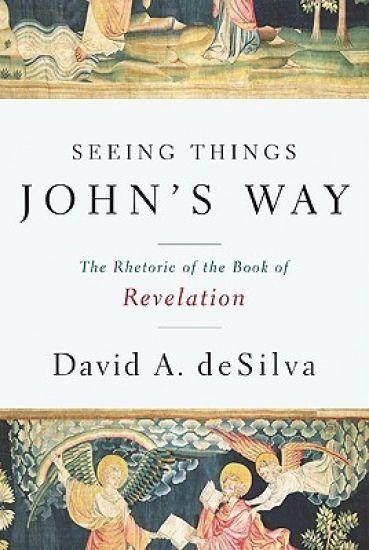
Seeing Things John's Way

Seeing Things John's Way

David A. DeSilva

Westminster/John Knox Press,U.S.
2009
nidottu
The emotionally evocative power of the book of Revelation has been often noted and experienced by interpreters, but until now it has never been systematically explored. The strange visions of the book of Revelation provide some of the most difficult passages of the New Testament, yet Christians have long been fascinated by its power and provocative pronouncements. David deSilva analyzes how the book argues and persuades us to see the world through the eyes of John, and suggests that the study of ancient rhetoric is particularly valuable in understanding the book of Revelation. deSilva interprets the book of Revelation as a rhetorical and communicative strategy to persuade a particular audience for specific goals. Throughout this analysis, he pursues John's construction of his own authority, John's use of emotion and logic, and his attempt to shape the formation of the reader. Despite the complexities of Revelation, deSilva has produced a remarkably clear text sure to cause readers to rethink their view of Revelation.
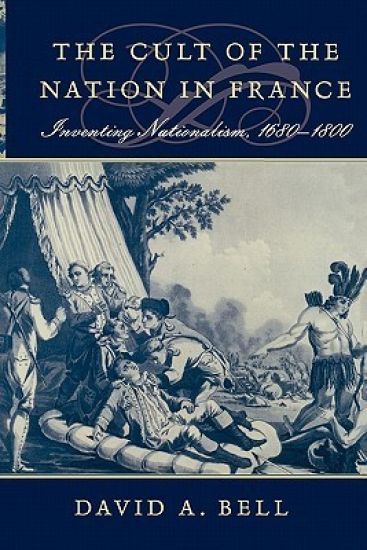
The Cult of the Nation in France

The Cult of the Nation in France

David A. Bell

Harvard University Press
2003
nidottu
Using eighteenth-century France as a case study, David Bell offers an important new argument about the origins of nationalism. Before the eighteenth century, the very idea of nation-building—a central component of nationalism—did not exist. During this period, leading French intellectual and political figures came to see perfect national unity as a critical priority, and so sought ways to endow all French people with the same language, laws, customs, and values. The period thus gave rise to the first large-scale nationalist program in history.
When All Else Fails

When All Else Fails

David A. Moss

Harvard University Press
2004
nidottu
One of the most important functions of government—risk management—is one of the least well understood. Moving beyond the most familiar public functions—spending, taxation, and regulation—When All Else Fails spotlights the government’s pivotal role as a risk manager. It reveals, as never before, the nature and extent of this governmental function, which touches almost every aspect of economic life.In policies as diverse as limited liability, deposit insurance, Social Security, and federal disaster relief, American lawmakers have managed a wide array of private-sector risks, transforming both the government and countless private actors into insurers of last resort. Drawing on history and economic theory, David Moss investigates these risk-management policies, focusing in particular on the original logic of their enactment. The nation’s lawmakers, he finds, have long believed that pervasive imperfections in private markets for risk necessitate a substantial government role. It remains puzzling, though, why such a large number of the resulting policies have proven so popular in a country famous for its anti-statism. Moss suggests that the answer may lie in the nature of the policies themselves, since publicly mandated risk shifting often requires little in the way of invasive bureaucracy. Well suited to a society suspicious of government activism, public risk management has emerged as a critical form of government intervention in the United States.
Is It Me or My Meds?

Is It Me or My Meds?

David A. Karp

Harvard University Press
2007
nidottu
By the millennium Americans were spending more than 12 billion dollars yearly on antidepressant medications. Currently, millions of people in the U.S. routinely use these pills. Are these miracle drugs, quickly curing depression? Or is their popularity a sign that we now inappropriately redefine normal life problems as diseases? Are they prescribed too often or too seldom? How do they affect self-images?David Karp approaches these questions from the inside, having suffered from clinical depression for most of his adult life. In this book he explores the relationship between pills and personhood by listening to a group of experts who rarely get the chance to speak on the matter--those who are taking the medications. Their voices, extracted from interviews Karp conducted, color the pages with their experiences and reactions--humor, gratitude, frustration, hope, and puzzlement. Here, the patients themselves articulate their impressions of what drugs do to them and for them. They reflect on difficult issues, such as the process of becoming committed to medication, quandaries about personal authenticity, and relations with family and friends. The stories are honest and vivid, from a distraught teenager who shuns antidepressants while regularly using street drugs to a woman who still yearns for a spiritual solution to depression even after telling intimates "I'm on Prozac and it's saving me." The book provides unflinching portraits of people attempting to make sense of a process far more complex and mysterious than doctors or pharmaceutical companies generally admit.
The Yellow River

The Yellow River

David A. Pietz

Harvard University Press
2015
sidottu
Flowing through the heart of the North China Plain—home to 200 million people—the Yellow River sustains one of China’s core regions. Yet this vital water supply has become highly vulnerable in recent decades, with potentially serious repercussions for China’s economic, social, and political stability. The Yellow River is an investigative expedition to the source of China’s contemporary water crisis, mapping the confluence of forces that have shaped the predicament that the world’s most populous nation now faces in managing its water reserves.Chinese governments have long struggled to maintain ecological stability along the Yellow River, undertaking ambitious programs of canal and dike construction to mitigate the effects of recurrent droughts and floods. But particularly during the Maoist years the North China Plain was radically re-engineered to utilize every drop of water for irrigation and hydroelectric generation. As David A. Pietz shows, Maoist water management from 1949 to 1976 cast a long shadow over the reform period, beginning in 1978. Rapid urban growth, industrial expansion, and agricultural intensification over the past three decades of China’s economic boom have been realized on a water resource base that was acutely compromised, with effects that have been more difficult and costly to overcome with each passing decade. Chronicling this complex legacy, The Yellow River provides important insight into how water challenges will affect China’s course as a twenty-first-century global power.
Democracy

Democracy

David A. Moss

The Belknap Press
2019
nidottu
A Foreign Affairs Best Book of the Year“This absolutely splendid book is a triumph on every level. A first-rate history of the United States, it is beautifully written, deeply researched, and filled with entertaining stories. For anyone who wants to see our democracy flourish, this is the book to read.”—Doris Kearns GoodwinTo all who say our democracy is broken—riven by partisanship, undermined by extremism, corrupted by wealth—history offers hope. Democracy’s nineteen cases, honed in David Moss’s popular course at Harvard and taught at the Library of Congress, in state capitols, and at hundreds of high schools across the country, take us from Alexander Hamilton’s debates in the run up to the Constitutional Convention to Citizens United. Each one presents a pivotal moment in U.S. history and raises questions facing key decision makers at the time: Should the delegates support Madison’s proposal for a congressional veto over state laws? Should Lincoln resupply Fort Sumter? Should Florida lawmakers approve or reject the Equal Rights Amendment? Should corporations have a right to free speech? Moss invites us to engage in the passionate debates that are crucial to a healthy society.“Engagingly written, well researched, rich in content and context…Moss believes that fierce political conflicts can be constructive if they are mediated by shared ideals.”—Glenn C. Altschuler, Huffington Post“Gives us the facts of key controversies in our history—from the adoption of the constitution to Citizens United—and invites readers to decide for themselves…A valuable resource for civic education.”—Michael Sandel, author of Justice
The Dynamics of Learning in Early Modern Italy

The Dynamics of Learning in Early Modern Italy

David A. Lines

HARVARD UNIVERSITY PRESS
2023
sidottu
A pathbreaking history of early modern education argues that Europe’s oldest university, often seen as a bastion of traditionalism, was in fact a vibrant site of intellectual innovation and cultural exchange.The University of Bologna was among the premier universities in medieval Europe and an international magnet for students of law. However, a long-standing historiographical tradition holds that Bologna—and Italian university education more broadly—foundered in the early modern period. On this view, Bologna’s curriculum ossified and its prestige crumbled, due at least in part to political and religious pressure from Rome. Meanwhile, new ways of thinking flourished instead in humanist academies, scientific societies, and northern European universities.David Lines offers a powerful counternarrative. While Bologna did decline as a center for the study of law, he argues, the arts and medicine at the university rose to new heights from 1400 to 1750. Archival records show that the curriculum underwent constant revision to incorporate contemporary research and theories, developed by the likes of René Descartes and Isaac Newton. From the humanities to philosophy, astronomy, mathematics, and medicine, teaching became more systematic and less tied to canonical texts and authors. Theology, meanwhile, achieved increasing prominence across the university. Although this religious turn reflected the priorities and values of the Catholic Reformation, it did not halt the creation of new scientific chairs or the discussion of new theories and discoveries. To the contrary, science and theology formed a new alliance at Bologna.The University of Bologna remained a lively hub of cultural exchange in the early modern period, animated by connections not only to local colleges, academies, and libraries, but also to scholars, institutions, and ideas throughout Europe.
Criminal Justice in Divided America

Criminal Justice in Divided America

David A. Sklansky

HARVARD UNIVERSITY PRESS
2025
sidottu
How a broken criminal justice system has fueled the crisis of American democracy, and how we can address both problems together.American criminal justice is in crisis. Prisons are swollen, confidence in police has plummeted, and race- and class-based biases distort every aspect of the system. American democracy is in crisis, too, as the chasm of loathing and incomprehension that divides political factions grows ever wider and deeper. Legal scholar and former prosecutor David A. Sklansky argues that these crises are deeply intertwined. And if the failures of American criminal justice are near the heart of our political divides, then reforming the system is essential for repairing our democracy.Criminal Justice in Divided America shows how police, courts, and prisons helped to break American democracy and how better approaches to public safety and criminal accountability can help to repair it. Engaging critically with concerns from both the left and the right, Sklansky lays out a clear and deeply researched agenda for reforming police departments, prosecutors’ offices, criminal trials, and punishment. Sklansky seeks pragmatic solutions that take account of political realities: the lofty ideal of empowering “the people” or “the community” can mean little when members of the public or the community disagree. While efforts to “defund” the police have exacerbated political conflicts without addressing the underlying problem of how and when force should be used to protect public safety, reforms aimed at improving police accountability, restraining prosecutorial power, and expanding the role of juries can bring together warring parties who share a concern for justice.Ultimately, Sklansky argues, reform must be rooted in a strong commitment to pluralism—bridging political divides rather than worsening them, strengthening democracy, and securing the broad support that enables durable change.
Socializing Security

Socializing Security

David A. Moss

Harvard University Press
1995
sidottu
Socializing Security examines the early movement for worker-security legislation in the United States. It focuses on a group of academic economists who became leading proponents of social insurance and protective labor legislation during the first decades of the twentieth century. These economists—including John R. Commons and Richard T. Ely—founded the American Association for Labor Legislation (AALL). As intellectuals and political activists, they theorized about the social efficiency of security legislation, proposed policies, and drafted model bills. They campaigned vigorously for industrial safety laws, workers’ compensation, unemployment insurance, and compulsory health insurance.The AALL reformers were successful in some of their legislative campaigns, but failed in two of their most important ones, those for unemployment insurance and health insurance. In examining the obstacles that the reformers faced, David Moss highlights a variety of political and institutional constraints, including the constitutional doctrine of federalism and gender-biased judicial decisions.The goal of the AALL reformers, Moss demonstrates, was not to relieve the poor, but rather to prevent workers and their families from falling into poverty as a result of accidents or illness. In favoring security over relief, economists in the progressive era defined and confirmed what has remained, for some eighty years, one of the essential values of American social policy. In concluding, Moss suggests that new policies may now be necessary in an economy in which falling wages and fewer jobs, rather than industrial hazards, are increasingly to blame for the precarious situation of the American worker.