

Kirjahaku
Etsi kirjoja tekijän nimen, kirjan nimen tai ISBN:n perusteella.
1000 tulosta hakusanalla Debra Reid






Christians are called to be good stewards - to use our money, our time and our abilities to benefit God's kingdom. The implications of this are far reaching. Not only should we not squander the finances that God has given us, but we should also be seeking to invest them and make them grow so that we can sow them back into Christian ministries. This book demonstrates money management techniques and shows how to set goals, take control of your finances and start investing. It explains how a combination of using Good Debt to buy properties and then allowing Compounding to do its work is one of the most effective ways for creating wealth over a 10 to 20 year period. It explains how to build a portfolio of investment properties and the various strategies that can be used for property investing, which suit different people depending on their current income or financial position. It demonstrates how to effectively utilise the power of leveraging and the tax advantages available to property investors.

A collection of spiritual devotionals that permit glimpses into God's divine person, purpose, nature, intent, desires, love, and capacity to teach by parallel and/or comparative experiences. Each "glimpse" brings forth a dynamic of understanding, revelation, illumination, enlightenment, a flash of Light ...a glimmer. As such, each devotional is a glimpse that exposes a glimmer of God the Father, Jesus Christ the Son and/or the Holy Spirit. The book subdivides into seven different "glimpses": 1. A Glimpse of Garden Reflections 2. Glimpse of Enduring Hope 3. Glimpse of the Progressions of Battle to Victories 4. Glimpsing Cataclysmic Parallels of Storms 5. A Glimpse of the Righteousness of Faith 6. Glimpse of the Awareness of Self and Self-Defining Paradigms 7. Glimpse into Knowing God






This book is an examination of how American mass media, including advertising, presents Otherness – anyone or anything constructed as different from an established norm – in terms of gender, race, sex, disabilities, and other markers of difference. Using a mythological lens, the book looks below the surface of media content to explore the psychological, social, and economic underpinnings of a system of beliefs that result in prejudice, discrimination, and oppression. Designed to raise awareness of the foundations of historically-based inequities in the American social, cultural, and economic milieu, the author shows how inequalities are maintained, at least in part, by mass media, popular culture, and advertising representations of Otherness. The book aims to increase awareness of stereotyping in the media, and expose how the construction of people as Others contributes to their marginalization. Written in an accessible and engaging style, with student-friendly discussion questions and resources, this book is suitable for upper-level undergraduate and postgraduate courses.
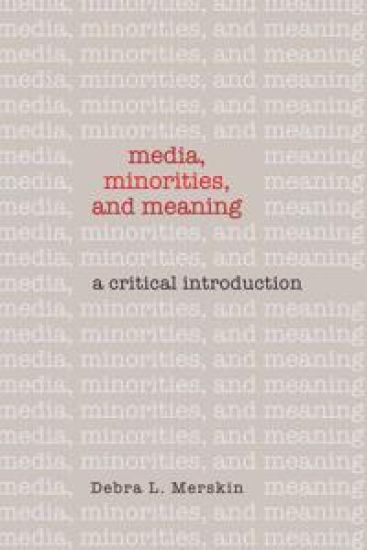
This book is an examination of how American mass media, including advertising, presents Otherness – anyone or anything constructed as different from an established norm – in terms of gender, race, sex, disabilities, and other markers of difference. Using a mythological lens, the book looks below the surface of media content to explore the psychological, social, and economic underpinnings of a system of beliefs that result in prejudice, discrimination, and oppression. Designed to raise awareness of the foundations of historically-based inequities in the American social, cultural, and economic milieu, the author shows how inequalities are maintained, at least in part, by mass media, popular culture, and advertising representations of Otherness. The book aims to increase awareness of stereotyping in the media, and expose how the construction of people as Others contributes to their marginalization. Written in an accessible and engaging style, with student-friendly discussion questions and resources, this book is suitable for upper-level undergraduate and postgraduate courses.
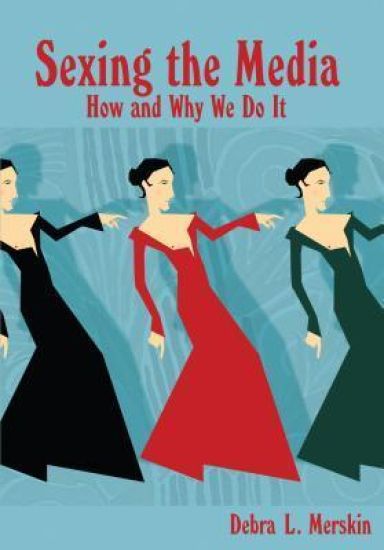
Sex in the media is one of the hottest topics of the day. We know that advertising, television, cinema, and other forms of communication use sex to sell us products and pump up story lines. The question is: why are sex and sexuality such effective tools for getting our attention? Sexing the Media: How and Why We Do It is a textbook that explores answers to this question through historical, sociological, psychological, and ideological perspectives. It explores how media and other social institutions use sex and sexuality (the capacity to have erotic experiences and responses) to advance economic and ideological interests.Cinema, music, music videos, television programs, advertising, and the Internet are discussed as carriers of deliberately constructed messages that contribute to and support a master narrative that privileges heterosexuality and monogamy. This interdisciplinary text includes contemporary case studies as examples that would be useful in courses in media, cultural studies, sociology, and psychology.
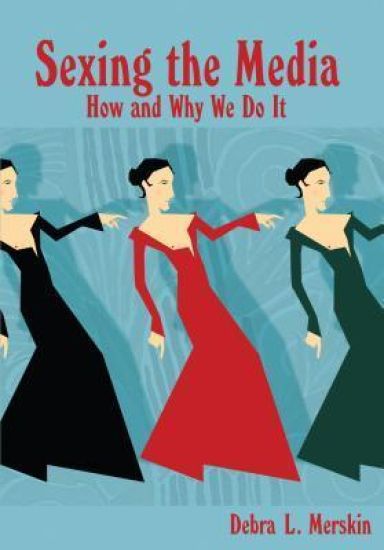
Sex in the media is one of the hottest topics of the day. We know that advertising, television, cinema, and other forms of communication use sex to sell us products and pump up story lines. The question is: why are sex and sexuality such effective tools for getting our attention? Sexing the Media: How and Why We Do It is a textbook that explores answers to this question through historical, sociological, psychological, and ideological perspectives. It explores how media and other social institutions use sex and sexuality (the capacity to have erotic experiences and responses) to advance economic and ideological interests.Cinema, music, music videos, television programs, advertising, and the Internet are discussed as carriers of deliberately constructed messages that contribute to and support a master narrative that privileges heterosexuality and monogamy. This interdisciplinary text includes contemporary case studies as examples that would be useful in courses in media, cultural studies, sociology, and psychology.

The Confederate Press in the Crucible of the American Civil War
Debra van Tuyll
Peter Lang Publishing Inc
2012
sidottu
Previous histories of the press in the American Civil War have focused on how journalists covered military operations. Taking a cultural approach, this book is unique in its focus on the press as a social, political, and economic institution that both shaped and was shaped by the Confederacy’s experience in the Civil War. It expertly documents how the press changed, how it stayed the same, and how it evolved by examining the role of the press in Confederate society, social and demographic characteristics of journalists and their audiences, legal regulation of the industry, and how the war influenced the business side of journalism as well as the editorial. The story of the Confederate press provides a prime opportunity to study how a domestic war affects the American press. By examining the actors as well as the roles, it is possible to draw a more complete picture of the place of the press in the Confederacy and how the war influenced Southern newspapers.
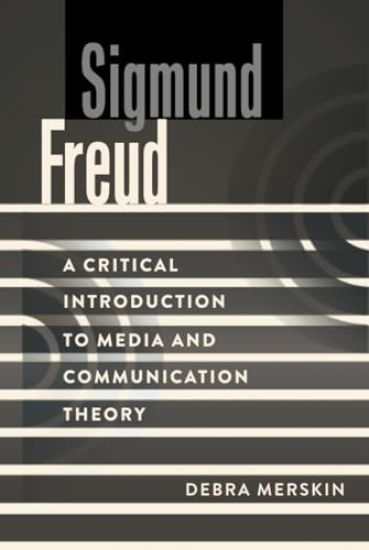
Sigmund Freud’s theories and clinical practices focused primarily on individuals. As such, they are rarely considered when critiquing collective behavior or symbolic re-presentations. However, as the founder of depth psychology – a field of study that considers how unconscious components of the human experience influence psychological conditions – Freud understood the collective nature of thought and behavior. While his ideas are not typically a perspective applied to the study of media and popular culture, of audiences, or of content creation, once unpacked through a psychoanalytic lens, Freud’s theories shine a bright light on human motivation and expression. This book is the first presentation of his ideas within this context. It is primarily an introduction to Freud and his theories intended for a communication studies audience. In addition to summarizing Freud’s major concepts, how/when/if they are taught in psychology programs, and the resultant "Freud Wars," this book offers examples of application of his ideas to cinema, advertising, public relations, and other forms of expression and recommendations for future research. There are implications and applications to the everyday world as well for anyone interested in how theories of human development, beginning with childhood personality construction through adult sexuality, repression, and expression, can be understood through a contemporary lens. "Of all of the contentious and oft-misconstrued figures in the history of ideas, few provide such a thorny and frustrating subject as Sigmund Freud. In this short-butsubstantial book, Deb Merskin gives us a considerate and approachable understanding of Freud’s work. She begins with a biographical sketch of Freud, builds on this foundation to outline the full spectrum of Freud’s theoretical interventions. With the basic rhythms and motifs established, Merskin then combines all of these elements to develop a symphonic sense of what Freud’s ideas can contribute to communication and media studies, with emphases on social theory, film theory, advertising, political communication, media psychology, and cultural studies. Here is a true introduction to Freud’s ideas as they relate to communication and media studies." —David W. Park, Lake Forest College
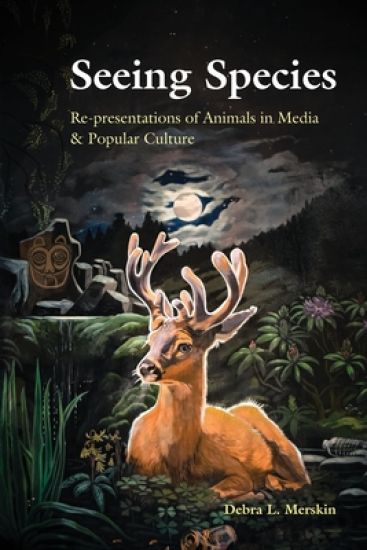
Animals are everywhere. They inhabit our forests, our fields, our imaginations, our dreams, and our stories. Making appearances in advertisements, television programs, movies, books, Internet memes, and art, symbolic animals do tremendous work for us selling goods, services, and ideas, as well as acting as stand-ins for our interests and ideas. Yet, does knowing animals only symbolically impact their lived experiences? Seeing Species: Re-presentations of Animals in Media & Popular Culture examines the use of animals in media, tracking species from appearances in rock art and picture books to contemporary portrayals in television programs and movies. Primary questions explored include: Where does thinking of other beings in a detached, impersonal, and objectified way come from? Do the mass media contribute to this distancing? When did humans first think about animals as other others? Main themes include examining the persistence of the human-animal divide, parallels in the treatment of otherized human beings and animals, and the role of media in either liberating or limiting real animals. This book brings together sociological, psychological, historical, cultural, and environmental ways of thinking about nonhuman animals and our relationships with them. In particular, ecopsychological thinking locates and identifies the connections between how we re-present animals and the impact on their lived experiences in terms of distancing, generating a false sense of intimacy, and stereotyping. Re-presentations of animals are discussed in terms of the role the media do or do not play in perpetuating status quo beliefs about them and their relationship with humans. This includes theories and methods such as phenomenology, semiotics, textual analysis, and pragmatism, with the goal of unpacking re-presentations of animals in order to learn not only what they say about human beings but also how we regard members of other species.