Kirjojen hintavertailu. Mukana 11 715 317 kirjaa ja 12 kauppaa.

Kirjahaku

Etsi kirjoja tekijän nimen, kirjan nimen tai ISBN:n perusteella.

1000 tulosta hakusanalla Dennis R. Perry

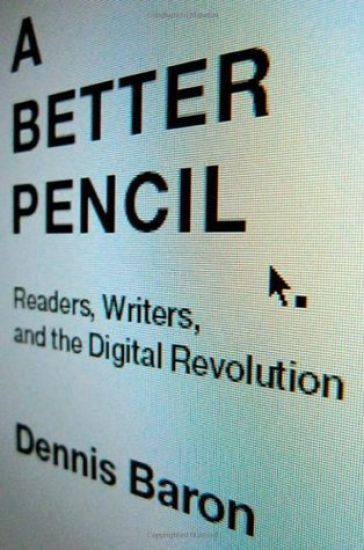
A Better Pencil

A Better Pencil

Dennis Baron

Oxford University Press Inc
2009
sidottu
A Better Pencil examines the digital revolution in light of the history of writing technology. Baron looks at how we love, fear, actually use our writing machines-not just computers but typewriters, pencils, and clay tablets-how we deploy them to replicate the old ways of doing things while actively generating new modes of mass expression; how we learn to trust new technology and the new and strange sorts of texts that it produces; hwo we expand the notion of who can write and who can't; and how we free our readers and writers while at the same time trying to regulate their activities.
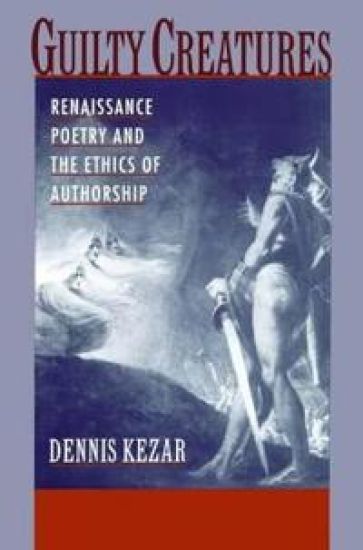
Guilty Creatures

Guilty Creatures

Dennis Kezar

Oxford University Press Inc
2011
nidottu
This study examines how Renaissance poets conceive the theme of killing as a specifically representational and interpretive form of violence. Closely reading both major poets and lesser known authors, Dennis Kezar explores the ethical self-consciousness and accountability that attend literary killing, paying particular attention to the ways in which this reflection indicates the poet's understanding of his audience. Kezar explores the concept of authorial guilt elicited by violent representation in poems including Skelton's Phyllyp Sparowe, Spenser's Faerie Queene, Shakespeare's Julius Caesar, the multi-authored Witch of Edmonton, and Milton's Samson Agonistes. In each case, he reflects on the poetic process and explores the ethical ramifications for both author and audience. In emphasizing the social, literary, and historical consequences of 'killing poems,' this volume further advances scholarship in historicist and speech-act theories of the early modern period.
A Concise History of Canadian Painting, third edition

A Concise History of Canadian Painting, third edition

Dennis Reid

Oxford University Press, Canada
2012
sidottu
For more than 30 years, Dennis Reid's A Concise History of Canadian Painting has been the definitive volume on the art of a nation. This narrative history begins in the late seventeenth century with the European-influenced masters of New France. From there, Reid traces the development of distinctive movements, techniques, and subjects that would come to define Canadian art in the twentieth century, and its continuous evolution in form and style in the years beyond. Reid's masterful critical eye, eloquent voice, and unrivalled historical perspective create a wide-ranging account praised by critics and readers alike. The highly anticipated third edition, fully revised throughout, brings the work up to date with a new chapter on significant artists and movements since 1980. Redesigned in full-colour, with over 220 illustrations, this attractive new edition is an indispensible guide and compelling read.
The Ugaritic Texts and the Origins of West-Semitic Literary Composition
The discovery and decryption of Ugaritic cuneiform tablets in the 1920s has given scholars an insight into the development of alphabetic writing and the origins of biblical poetry. In this book, based on his Schweich Lectures given in 2007, Professor Dennis Pardee describes the origins of the cuneiform alphabetic writing system developed in Ugarit some time before 1250 BC, the use of alphabetic writing at Ugarit, and gives a comparison of Ugaritic and Hebrew literatures
Explaining Research

Explaining Research

Dennis Meredith

Oxford University Press Inc
2021
nidottu
Explaining Research is the ultimate guide for scientists, engineers, and other professionals seeking to share their life's work effectively with important lay and scientific audiences. It offers a multitude of practical communication tools and techniques for writing, giving talks, creating visuals, using social media, and publicizing research advances. Career success depends on more than conducting incisive experiments and publishing papers in top journals. Researchers must also know how to explain their work to key audiences, such as colleagues, potential collaborators, officers in funding agencies and from foundations, donors, institutional leaders, corporate partners, students, legislators, journalists, and the general public. Explaining Research is the most comprehensive guide for science and engineering communication. In this new edition, leading research communicator Dennis Meredith provides readers with the practical tools and techniques scientists and engineers need to reach their audiences effectively. The updated and expanded chapters include a wealth of insights from leading science journalists and research communicators.
Choral Repertoire

Choral Repertoire

Dennis Shrock

OXFORD UNIVERSITY PRESS INC
2023
sidottu
Now in its second edition, Choral Repertoire is the definitive and comprehensive one-volume presentation of the canon of the Western choral tradition. Designed for conductors and directors, students and teachers of choral music, amateur and professional singers, scholars, and interested vocal enthusiasts alike, it is an account of the complete choral output of the most significant composers of this genre throughout recorded history. Organized by era (Medieval, Renaissance, Baroque, Classical, Romantic, and Modern), Choral Repertoire covers general characteristics of each historical era; trends and styles unique to various countries; biographical sketches of over 500 composers; and performance annotations of more than 5,000 individual works. This book has been an essential guide to programming, a reference tool for program notes and other research, and, most importantly, a key resource for conductors, instructors, scholars, and students of choral music. This new edition features dozens of additional composers, updated biographical data, and broadly expanded scholarship that brings new life to this essential text.
Survival of the Virtuous

Survival of the Virtuous

Dennis L. Krebs

OXFORD UNIVERSITY PRESS INC
2023
sidottu
Do good guys finish last? Did we evolve to look out for number one? Are we bad by nature? At first glance, the theory of evolution seems to imply that all organisms are evolved to be selfish. In this book, evolutionary psychologist Dennis Krebs explains how virtuous behaviors such as altruism, justice, honesty, loyalty, self-control, purity, and respect for authority, have evolved in humans and other species. He argues that the key to solving puzzles of morality--such as what it is, how we acquire moral traits, why we sometimes behave badly, and how we make moral decisions--lies in figuring out what adaptive functions moral traits served in early human environments and how they are influenced by social learning, culture, and strategic social interactions in the modern world. Arguing that the primary function of virtuous behaviors is to enable individuals to advance their own interests and examining the moral decision-making mechanisms that evolved to serve these functions, this book considers the "new brain" mechanisms that are unique to humans and "old brain" mechanisms that we share with other species, illuminating how these work in conjunction with each other to guide our moral choices. Survival of the Virtuous is accessibly written for academic and scholarly readers interested in understanding how moral traits evolved in the human species.
Campaigns, Elections, and the Threat to Democracy

Campaigns, Elections, and the Threat to Democracy

Dennis W. Johnson

OXFORD UNIVERSITY PRESS INC
2023
sidottu
Frequent and fair elections, open to all, are fundamental elements of a democracy. The United States, through its local, state, and national contests, holds more elections, more often, than any other democracy in the world. But in recent years, there have been troubling signs that our system of campaigns and elections has become much more fragile and vulnerable. More specifically, in the past twenty years, campaigns have changed profoundly: social media and viral messaging compete with traditional media, races once considered local in nature have become nationalized, Supreme Court decisions on campaign finance law now encourage mega-donors, voters are more polarized, party affiliation has waned, and the middle ideological ground has given way to extremist language and voter rage. Twice in sixteen years we have seen winning presidential candidates gaining fewer popular votes than their opponents. The fundamental right of every citizen to vote has been impeded by state legislatures demanding tighter access, more identification, and accusations of voter fraud. And we have faced the real threat of foreign influence in our national elections. This new edition of Campaigns, Elections, and the Threat to Democracy: What Everyone Needs to Know® offers the most up-to-date examination of campaigns, elections, and future threats to voting and democracy. It addresses the 2020 US presidential election, the "Stop the Steal" movement, election interference and cyber threats to voting, voting by mail (and the backlash against it), voting reforms and ranked-choice voting, and the Supreme Court 2019 ruling on gerrymandering. It will also include new data on voter participation, voter fraud, reapportionment post-2020 census, party polarization, campaign finance, and more. Given the fragility of our election process, what are the threats to a healthy American democracy? Do the candidates with the most money always win? This is not simply a book on how campaigns are run, but why campaigns and elections are integral components of American democracy and how those fundamental elements may be vulnerable to misuse.
Campaigns, Elections, and the Threat to Democracy

Campaigns, Elections, and the Threat to Democracy

Dennis W. Johnson

OXFORD UNIVERSITY PRESS INC
2023
nidottu
Frequent and fair elections, open to all, are fundamental elements of a democracy. The United States, through its local, state, and national contests, holds more elections, more often, than any other democracy in the world. But in recent years, there have been troubling signs that our system of campaigns and elections has become much more fragile and vulnerable. More specifically, in the past twenty years, campaigns have changed profoundly: social media and viral messaging compete with traditional media, races once considered local in nature have become nationalized, Supreme Court decisions on campaign finance law now encourage mega-donors, voters are more polarized, party affiliation has waned, and the middle ideological ground has given way to extremist language and voter rage. Twice in sixteen years we have seen winning presidential candidates gaining fewer popular votes than their opponents. The fundamental right of every citizen to vote has been impeded by state legislatures demanding tighter access, more identification, and accusations of voter fraud. And we have faced the real threat of foreign influence in our national elections. This new edition of Campaigns, Elections, and the Threat to Democracy: What Everyone Needs to Know® offers the most up-to-date examination of campaigns, elections, and future threats to voting and democracy. It addresses the 2020 US presidential election, the "Stop the Steal" movement, election interference and cyber threats to voting, voting by mail (and the backlash against it), voting reforms and ranked-choice voting, and the Supreme Court 2019 ruling on gerrymandering. It will also include new data on voter participation, voter fraud, reapportionment post-2020 census, party polarization, campaign finance, and more. Given the fragility of our election process, what are the threats to a healthy American democracy? Do the candidates with the most money always win? This is not simply a book on how campaigns are run, but why campaigns and elections are integral components of American democracy and how those fundamental elements may be vulnerable to misuse.
Caring for Caregivers to Be

Caring for Caregivers to Be

Dennis S. Charney

OXFORD UNIVERSITY PRESS INC
2023
sidottu
Caring for Caregivers to Be provides evidence-based insights and solutions to reduce burnout and improve well-being among medical learners, particularly students and graduate medical trainees. It provides a scoping review of the research related to the well-being of the health care learner and offers a suite of current and emerging tools and strategies believed to reduce medical burnout and foster resilience. Chapters identify the major drivers of both burnout and flourishing and explore the consequences of sub-optimal well-being for performance and patient care. The volume ends with practical considerations that medical education leaders can use for solutions-based well-being program development and tips for medical learners seeking to improve their own well-being within a professional environment. Caring for Caregivers to Be is the comprehensive guide to promoting the development of a resilient and professionally fulfilled physician workforce.
Statecraft 2.0

Statecraft 2.0

Dennis Ross

OXFORD UNIVERSITY PRESS INC
2025
sidottu
In a world that is multipolar and America has less relative power, the United States no longer has the luxury to practice statecraft badly. The United States may still be the world's strongest country, but it now faces real challenges at both a global and regional level. The unipolar world which was dominated by America after the Cold War is gone. Unlike the Soviet Union, China is both a military and economic competitor and it is actively challenging the norms and institutions that the US used to shape an international order during and after the Cold War. Directly and indirectly, it has partners trying to undo the American-dominated order, with Russia seeking to extinguish Ukraine, and Iran trying to undermine American presence, influence, and any set of rules for the Middle East that it does not dominate. The failures of American policy in Afghanistan and Iraq have weakened the domestic consensus for a US leadership role internationally. Traditions in US foreign policy, especially the American sense of exceptionalism, have at different points justified both withdrawal and international activism. Iraq and Afghanistan fed the instinct to withdraw and to end the "forever wars." But the folly of these US interventions did not necessarily mean that all use of force to back diplomacy or specific political ends was wrong; rather it meant in these cases, the Bush Administration failed in the most basic task of good statecraft: namely, marrying objectives and means. Nothing more clearly defines effective statecraft than identifying well-considered goals and then knowing how to use all the tools of statecraft--diplomatic, economic, military, intelligence, information, cyber, scientific, education--to achieve them. But all too often American presidents have adopted goals that were poorly defined and not thought through. In Statecraft 2.0, Dennis Ross explains why failing to marry objectives and means has happened so often in American foreign policy. He uses historical examples to illustrate the factors that account for this, including political pressures, weak understanding of the countries where the US has intervened, changing objectives before achieving those that have been established, relying too much on ourselves and too little on allies and partners. To be fair, there have not only been failures, there have been successes as well. Ross uses case studies to look more closely at the circumstances in which Administrations have succeeded and failed in marrying objectives and means. He distills the lessons from good cases of statecraft--German unification in NATO, the first Gulf War, the surge in Iraq 2007-8--and bad cases of statecraft--going to war in Iraq 2003, and the Obama policy toward Syria. Based on those lessons, he develops a framework for applying today a statecraft approach to our policy toward China, Iran, and the Israeli-Palestinian conflict. The book concludes with how a smart statecraft approach would shape policy toward the new national security challenges of climate, pandemics, and cyber.
Statecraft 2.0

Statecraft 2.0

Dennis Ross

OXFORD UNIVERSITY PRESS INC
2025
nidottu
In a world that is multipolar and America has less relative power, the United States no longer has the luxury to practice statecraft badly. The United States may still be the world's strongest country, but it now faces real challenges at both a global and regional level. The unipolar world which was dominated by America after the Cold War is gone. Unlike the Soviet Union, China is both a military and economic competitor and it is actively challenging the norms and institutions that the US used to shape an international order during and after the Cold War. Directly and indirectly, it has partners trying to undo the American-dominated order, with Russia seeking to extinguish Ukraine, and Iran trying to undermine American presence, influence, and any set of rules for the Middle East that it does not dominate. The failures of American policy in Afghanistan and Iraq have weakened the domestic consensus for a US leadership role internationally. Traditions in US foreign policy, especially the American sense of exceptionalism, have at different points justified both withdrawal and international activism. Iraq and Afghanistan fed the instinct to withdraw and to end the "forever wars." But the folly of these US interventions did not necessarily mean that all use of force to back diplomacy or specific political ends was wrong; rather it meant in these cases, the Bush Administration failed in the most basic task of good statecraft: namely, marrying objectives and means. Nothing more clearly defines effective statecraft than identifying well-considered goals and then knowing how to use all the tools of statecraft--diplomatic, economic, military, intelligence, information, cyber, scientific, education--to achieve them. But all too often American presidents have adopted goals that were poorly defined and not thought through. In Statecraft 2.0, Dennis Ross explains why failing to marry objectives and means has happened so often in American foreign policy. He uses historical examples to illustrate the factors that account for this, including political pressures, weak understanding of the countries where the US has intervened, changing objectives before achieving those that have been established, relying too much on ourselves and too little on allies and partners. To be fair, there have not only been failures, there have been successes as well. Ross uses case studies to look more closely at the circumstances in which Administrations have succeeded and failed in marrying objectives and means. He distills the lessons from good cases of statecraft--German unification in NATO, the first Gulf War, the surge in Iraq 2007-8--and bad cases of statecraft--going to war in Iraq 2003, and the Obama policy toward Syria. Based on those lessons, he develops a framework for applying today a statecraft approach to our policy toward China, Iran, and the Israeli-Palestinian conflict. The book concludes with how a smart statecraft approach would shape policy toward the new national security challenges of climate, pandemics, and cyber.
A Universe of Earths

A Universe of Earths

Dennis Danielson; Christopher M. Graney

OXFORD UNIVERSITY PRESS INC
2026
sidottu
Planet Earth has been a familiar concept for a mere fraction of recorded history. Until about the mid-1600s, most humans thought of Earth as immobile, likely either dim or simply invisible from the Moon or anywhere else in the heavens, and not (like the planets) participating in what Galileo called "the dance of the stars." A Universe of Earths: Our Planet and Other Worlds, from Copernicus to NASA retraces the exhilarating story of how all that changed, and how we came to perceive the Earth as a "wandering star." It's a story that has vastly augmented and enriched our understanding of how Earth and its inhabitants fit into the big picture of the Cosmos. But almost as soon as humans started to grasp that Earth is a planet, many also began wondering if perhaps the other planets might be earths. This bold conjecture ignited the whole gripping history and literature of space travel, of extraterrestrials, of other worlds. And yet the thesis that the Universe is full of other worlds like Earth has from the start been fuelled more by imagination than by scientific evidence. For all its appeal, it has consistently been undermined by observations of the actual Universe. A Universe of Earths offers a surprising alternative to that "other worlds" account, one that releases humans not only from the pre-Copernican view of Earth as low, lowly, dark, a cosmic sump, but also from the persistent modern aspersion of Earth as cosmically ordinary, "mediocre," "dethroned." Instead, from Copernicus to the present, we are confronted with the bracing realization that Earth is in the classical sense a star, a dynamically wandering one, and a bright, maybe even peerless participant in the dance of the stars.
Melodious Tears

Melodious Tears

Dennis Kay

Clarendon Press
1990
sidottu
The funeral elegy is in some important ways the quintessential English Renaissance genre. This book demonstrates how it developed into a kind of laboratory in which writers could put theories of composition into practice. The hospitality of elegy to different styles and modes together with its primary formal obligation to fit the poem decorously to the subject, gave a special value to ingenuity, to virtuosity. Melodious Tears charts the history of the elegy from the time in the mid-sixteenth century when it was exclusively the province of professional writers, the balladeers and chroniclers, up to the 1630s, by which time the fashion for the vernacular elegy had spread throughout the literate classes. Detailed studies of the works of major elegists, particularly Spenser, Sidney, Donne, and Milton are combined with full examination of the range and variety of elegies generated in response to the deaths of Sidney (1586), Queen Elizabeth I (1603), and Prince Henry (1612). A series of appendices contains texts of a number of elegies which survive only in manuscript.
Hardy's Literary Language and Victorian Philology
Hardy's Literary Language and Victorian Philology is the first detailed exploration of Hardy's linguistic `awkwardness', a subject that has long puzzled critics. Dennis Taylor's pioneering study shows that Hardy's language must be understood as a distinctive response to the philological and literary issues of his time. Deeply influenced by the Victorian historical study of language, Hardy deliberately incorporated into his own writing a sense of language's recent and hidden history, its multiple stages and classes, and its arbitrary motivations. Indeed, Taylor argues, Hardy provides an example of how a writer `purifies the dialect of the tribe' by inclusiveness, by heterogeniety, and by a sense of history which distinguishes Hardy from a more ahistorical, synchronic modernist aesthetic and which constitutes an ongoing challenge to literary language. In what is the first major treatment of a writer's relation to the Oxford English Dictionary, the author also examines the influence on Hardy's language of the founding and development in this period of the OED.
Thatcherism and British Politics

Thatcherism and British Politics

Dennis Kavanagh

Oxford University Press
1987
nidottu
Mrs Thatcher has cited the breaking of the post-war political consensus, established with the support of dominant groups in the Conservative and Labour parties, as one of her objectives. In this penetrating study of her style and performance, she emerges as both the midwife and the product of the collapse of consensus. Mrs Thatcher has cited the breaking of the post-war political consensus, established with the support of dominant groups in the Conservative and Labour parties, as one of her objectives. In this penetrating study of her style and performance, she emerges both as the midwife of the collapse of consensus and also as its product.
Dealing with the Threat of Cruise Missiles

Dealing with the Threat of Cruise Missiles

Dennis M Gormley

Oxford University Press Inc
2005
nidottu
How can the core transatlantic Allies make coalitions more effective? One year on from Kosovo, disparities in the capabilities of the coalition partners, as well as uneven levels of prior coordination, persist. To address these problems will require much greater force planning in peacetime. This stimulating and influential work offers one of the most comprehensive independent assessments to date of the Kosovo campaign, and of the performance of the NATO allies. An important subject area in which there is a great deal of international interest.
Crystals, X-rays and Proteins

Crystals, X-rays and Proteins

Dennis Sherwood; Jon Cooper

Oxford University Press
2015
nidottu
A complete account of the theory of the diffraction of X-rays by crystals, with particular reference to the processes of determining the structures of protein molecules. This book is aimed primarily at structural biologists and biochemists but will also be valuable to those entering the field with a background in physical sciences or chemistry. It may be used at any post-school level, and develops from first principles all relevant mathematics, diffraction and wave theory, assuming no mathematical knowledge beyond integral calculus. The book covers a host of important topics in the area, including: - The practical aspects of sample preparation and X-ray data collection, using both laboratory and synchrotron sources - Data analysis at both theoretical and practical levels - The important role played by the Patterson function in structure analysis, by both molecular replacement and experimental phasing approaches - Methods for improving the resulting electron density map - The theoretical basis of methods used in refinement of protein crystal structures - In-depth explanation of the crucial task of defining the binding sites of ligands and drug molecules - The complementary roles of other diffraction methods: these reveal further detail of great functional importance in a crystal structure.
Damasus of Rome

Damasus of Rome

Dennis Trout

Oxford University Press
2015
sidottu
Damasus of Rome makes available in English the epigraphic poetry of Damasus, bishop of Rome from 366 to 384. The translations are accompanied by the Latin text as well as by commentary on the literary, topographic, and archaeological features of Damasus' inscribed epigrams. Antonio Ferrua published the last critical edition of Damasus' poetry in 1942. Since Ferrua's ground-breaking edition, however, much has changed. Recent scholarship has challenged the Damasan authorship of several epigrams, other pieces have been reinstated as Damasan, and archaeology has added fragments that were not known in 1942. Moreover in recent years new ways of appreciating Late Latin poetry have revolutionized thinking about many poets contemporary with Damasus. Damasus of Rome, therefore, not only offers new translations but updates the corpus and criticism of Damasus' poetry. A full introduction situates Damasus in his times by considering his troubled election and the issues that dominated Rome and his papacy. The introduction also sets the poems within the broader sweep of the history of epigraphic poetry at Rome and relates them both to the development of the Christian catacombs and to the emergence of the cults of the Roman saints. Modern scholarship readily acknowledges that the years of Damasus' episcopacy were pivotal ones in the transformation of Rome into a late antique Christian city. His poetry, much of it inscribed at the suburban tombs of the Roman saints and martyrs, played an incalculable but significant role in the redefinition of both Roman and Christian identity in this remarkable age. Damasus of Rome now makes that poetry more readily available to scholars and students alike.
The Reordering of British Politics

The Reordering of British Politics

Dennis Kavanagh

Oxford University Press
1997
nidottu
The Reordering of British Politics clarifies for the new student the terrain of British politics today. Building on Dennis Kavanagh's classic Thatcherism and British Politics: The End of Consensus? , this clear and engaging text assesses the influence of the Thatcher era and the reordering of British politics that has occurred in her wake. Covering the transition to Majorism and the impact of John Major on the Conservative Party and British politics, it also tracks the development of a new consensus in post-Thatcher and post-Socialism Britain, and the evolution of Labour without Socialism. The author has also included a Postscript on the impact of the 1997 General Election results.