

Kirjahaku
Etsi kirjoja tekijän nimen, kirjan nimen tai ISBN:n perusteella.
1000 tulosta hakusanalla Dmitri Mereschkowski

Templar Solution: Edited second edition
Dimitri Flynn
Createspace Independent Publishing Platform
2014
nidottu
ISI Gambit (edited second printing)
Dimitri Flynn
Createspace Independent Publishing Platform
2014
nidottu

Leaving Active Duty: Real-life Stories and Advice for Junior Military Officers
Dmitry Rukhlin
Createspace Independent Publishing Platform
2015
nidottu

Chaos Capers: Benghazi and ISI
Dimitri Flynn
Createspace Independent Publishing Platform
2014
nidottu
The Chaos Team was formed and funded by the New Knights Templar to confront the nefarious forces of evil in the 21st Century. The TEAM responds to current events and resolves them in ways they only can do. This Caper book addresses the Benghazi Episode and the ISI Gambit, the hijacked Malaysian jetliner.

Templar Series: I Solution, II Rendition, III Smoke
Dimitri Flynn
Createspace Independent Publishing Platform
2014
nidottu
Templar Series is a compilation of all three Templar novels, The Templar Solution, The Templar Rendition, The Smoke of Satan and is a prelude to a new organization, CHAOS, that continues the Templar fight into the 21st Century.
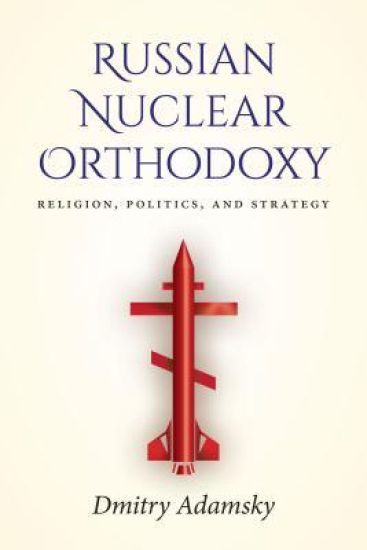
A nuclear priesthood has arisen in Russia. From portable churches to the consecration of weapons systems, the Russian Orthodox Church has been integrated into every facet of the armed forces to become a vital part of Russian national security, politics, and identity. This extraordinary intertwining of church and military is nowhere more visible than in the nuclear weapons community, where the priesthood has penetrated all levels of command and the Church has positioned itself as a guardian of the state's nuclear potential. Russian Nuclear Orthodoxy considers how, since the Soviet collapse in 1991, the Church has worked its way into the nuclear forces, the most significant wing of one of the world's most powerful military organizations. Dmitry Adamsky describes how the Orthodox faith has merged with Russian national identity as the Church continues to expand its influence on foreign and domestic politics. The Church both legitimizes and influences Moscow's assertive national security strategy in the twenty-first century. This book sheds light on the role of faith in modern militaries and highlights the implications of this phenomenon for international security. Ultimately, Russian Nuclear Orthodoxy interrogates the implications of the confluence of religion and security for other members of the nuclear club, beyond Russia.

A nuclear priesthood has arisen in Russia. From portable churches to the consecration of weapons systems, the Russian Orthodox Church has been integrated into every facet of the armed forces to become a vital part of Russian national security, politics, and identity. This extraordinary intertwining of church and military is nowhere more visible than in the nuclear weapons community, where the priesthood has penetrated all levels of command and the Church has positioned itself as a guardian of the state's nuclear potential. Russian Nuclear Orthodoxy considers how, since the Soviet collapse in 1991, the Church has worked its way into the nuclear forces, the most significant wing of one of the world's most powerful military organizations. Dmitry Adamsky describes how the Orthodox faith has merged with Russian national identity as the Church continues to expand its influence on foreign and domestic politics. The Church both legitimizes and influences Moscow's assertive national security strategy in the twenty-first century. This book sheds light on the role of faith in modern militaries and highlights the implications of this phenomenon for international security. Ultimately, Russian Nuclear Orthodoxy interrogates the implications of the confluence of religion and security for other members of the nuclear club, beyond Russia.

Selected among Foreign Affairs's "Best of Books 2024" From a globally renowned expert on Russian military strategy and national security, The Russian Way of Deterrence investigates Russia's approach to coercion (both deterrence and compellence), comparing and contrasting it with the Western conceptualization of this strategy. Strategic deterrence, or what Dmitry (Dima) Adamsky calls deterrence à la Russe, is one of the main tools of Russian statecraft. Adamsky deftly describes the genealogy of the Russian approach to coercion and highlights the cultural, ideational, and historical factors that have shaped it in the nuclear, conventional, and informational domains. Drawing on extensive research on Russian strategic culture, Adamsky highlights several empirical and theoretical peculiarities of the Russian coercion strategy, including how this strategy relates to the war in Ukraine. Exploring the evolution of strategic deterrence, along with its sources and prospective avenues of development, Adamsky provides a comprehensive intellectual history that makes it possible to understand the deep mechanics of this Russian stratagem, the current and prospective patterns of the Kremlin's coercive conduct, and the implications for policymakers on both sides of the Atlantic.

Selected among Foreign Affairs's "Best of Books 2024" From a globally renowned expert on Russian military strategy and national security, The Russian Way of Deterrence investigates Russia's approach to coercion (both deterrence and compellence), comparing and contrasting it with the Western conceptualization of this strategy. Strategic deterrence, or what Dmitry (Dima) Adamsky calls deterrence à la Russe, is one of the main tools of Russian statecraft. Adamsky deftly describes the genealogy of the Russian approach to coercion and highlights the cultural, ideational, and historical factors that have shaped it in the nuclear, conventional, and informational domains. Drawing on extensive research on Russian strategic culture, Adamsky highlights several empirical and theoretical peculiarities of the Russian coercion strategy, including how this strategy relates to the war in Ukraine. Exploring the evolution of strategic deterrence, along with its sources and prospective avenues of development, Adamsky provides a comprehensive intellectual history that makes it possible to understand the deep mechanics of this Russian stratagem, the current and prospective patterns of the Kremlin's coercive conduct, and the implications for policymakers on both sides of the Atlantic.
Treasure Island
Dmitry Orlov; Robert Lewis Stevenson
Createspace Independent Publishing Platform
2014
nidottu
Unspelled Edition of a classic of English literature.

Unspelled edition of English children's classic.

CRIME AND PUNISHMENT read and understood by robots: World Classics translated and brought to you by machines
Dmitry Glukhovsky; Fyodor Dostoevsky
Createspace Independent Publishing Platform
2015
nidottu
Once robots finally take over the humanity, they will inherit all the innumerable treasures of human culture, including literature. And the new masters of Earth will surely have one hell of a trouble understanding their predecessors. Our feelings, our emotions, the affinities of our relations, our existential dilemmas - all that makes us human - will be damn difficult for them to understand. RobotsRead brings you the world literary classics as it is machine translated and mis/understood by AI. It feels awfully wrong - and yet suspiciously hilarious. In the first and opening volume of our series, Robots Read Fyodor Dostoevsky's Crime and Punishment - the cult philosophical novel on the boundaries of human and godly, of what's permitted and what's prohibited to a man, the definitions of freedom, the sin, and the atonement. IDEAL READING FOR RESTROOM

Russian bestseller about self-defence and street fighting. More than 800 photographies and very detail training programs. 'RSF' - real street fight system - the art of self-defense and survival in society, in prison, in the army, in the street. In this book such a person is called the Warrior. Being guided only by this book you will be able: 1) to get in life the position you are dreaming of; 2) to learn simple but very effective means of self-defense; 3) to get all the necessary information about bodybuilding (fitness), and power preparation of a hand-to-hand fighter; 4) to become a really healthy person both physically and psychologically; 5) to learn to survive in any extreme situation; 6) to avoid many mistakes on the way of the Warrior. There is nothing superfluous in this book, only precise training programs, phenomenal effect of which is confirmed by Russian speaking readers from the United States of America, Great Britain, Germany and many other countries. In the book there are numerous examples of survival in extreme situations taken from real life.

From the Ural Steppes: 1914-1920
Dmitry N. Borodin
Createspace Independent Publishing Platform
2016
nidottu
This six year memoir provides an intimate and fully illustrated eyewitness account of a country first at War with Germany, and then with itself. Battles in Poland, a brief interlude of peace and then all out war in the hills, valleys, and steppes of the Ural are brought to life. This is mainly a story of the last struggle on the Ural Steppes that more than nine generations of Borodins fought nature and nomads to tame.Readers will thrill to this remembrance of war, peace, revolutions, and civil war. The story is told with scores of original period and autobiographical illustrations all seen here for the first time. These compliment and transport the reader to a unique and once beautiful realm as it is transformed by a brutal Civil War. Dmitry Nikol yevich Borodin was a 2nd generation graduate of St. Petersbourg University. At the height of the Russian Civil War he commanded 1,500 men. Before the War he worked closely with B. P. Uvarov later Knight of the British Empire and in America he worked for the renowned geneticist N. I. Vavilov as a fluraculturalist, and geobotanist. Later in the 1930's he researched M-Rays, and vernalization as an American citizen.

This book describes the practice of building modern light microscopes, their components, and nodes, based on optical design methodology. Examples of practical applications of this approach are presented, including numerous real design parameters of systems. Original concepts in the construction of existing and new microscope systems are provided to give readers a foundation for microscope design. Full-color micrographs illustrate the high level of image quality found in current systems.


Rescue from Evil, a CHAOS II, novella written about current events woven into a fictional narrative about a mission to rescue Hostages held by ISIS in Syria conducted by a clandestine organization, CHAOS, along with volunteers from U.S. Special Forces. The heroes of CHAOS, the Major, Sailor, Doc and the Commander risk their lives in this daring rescue.