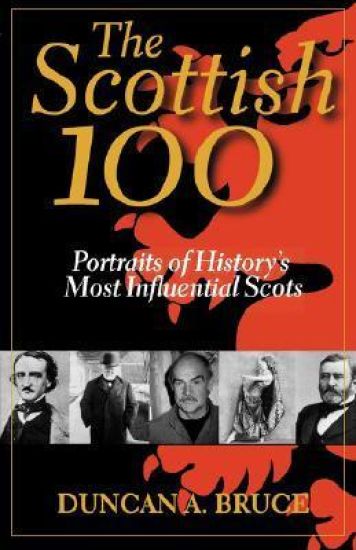
This compendium of biographical portraits includes names like Robert the Bruce, Andrew Carnegie, John Knox, John Marshall, Ulysses S. Grant, Edvard Grieg, Martha Graham, Jackson Pollock, and Thomas Edison, whose achievements have won national freedom, built empires, reformed religion, defined justice, become presidents, composed music, revolutionized dance, redefined art, made pictures move, and built engines run by steam,along with ninety more Scots worldwide who have altered the way all of us live our lives.
Originally presented as the author's thesis (doctoral)--Universitat Tubingen, 1992, under the title: Die Lehre von den ungeschaffenen Energien: Ihre Bedeutung fuer die oekumenische Theologie.
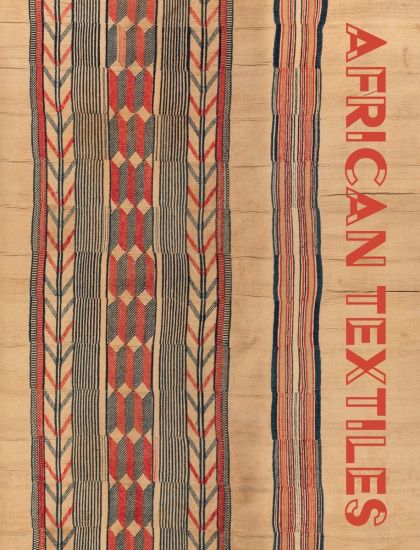
The African continent is home to numerous outstanding textile traditions, many dating to antiquity and all playing a multifaceted role in their respective societies: these eye-catching fabrics proclaim wealth and status, convey symbolic meanings, and of course serve a practical function in garments both ordinary and exceptional. This magnificent book conveys the amazing diversity of African textiles, from the geometric-patterned kente cloths of Ghana, to the multicolour raffia skirts of the Democratic Republic of Congo, to the beaded barkcloths once reserved for Ugandan royalty. The authors, all leading experts in the field, examine each region of sub-Saharan Africa and Madagascar in turn, elucidating the aesthetic qualities, cultural significance, and production methods of the most important textile traditions. Their authoritative text is illustrated with over 300 superlative textiles from public and private collections, many reproduced as full-page plates that allow the reader to appreciate each individual fibre. This impressive clothbound volume will be a key reference for students and scholars, an essential sourcebook for designers, and a delight for all art lovers.
Since January 2004, a violent separatist insurgency has raged in southern Thailand, resulting in more than three thousand deaths. Though largely unnoticed outside Southeast Asia, the rebellion in Pattani and neighboring provinces and the Thai government's harsh crackdown have resulted in a full-scale crisis. Tearing Apart the Land by Duncan McCargo, one of the world's leading scholars of contemporary Thai politics, is the first fieldwork-based book about this conflict. Drawing on his extensive knowledge of the region, hundreds of interviews conducted during a year's research in the troubled area, and unpublished Thai- language sources that range from anonymous leaflets to confessions extracted by Thai security forces, McCargo locates the roots of the conflict in the context of the troubled power relations between Bangkok and the Muslim-majority "deep South." McCargo describes how Bangkok tried to establish legitimacy by co-opting local religious and political elites. This successful strategy was upset when Thaksin Shinawatra became prime minister in 2001 and set out to reorganize power in the region. Before Thaksin was overthrown in a 2006 military coup, his repressive policies had exposed the precariousness of the Bangkok government's influence. A rejuvenated militant movement had emerged, invoking Islamic rhetoric to challenge the authority of local leaders obedient to Bangkok. For readers interested in contemporary Southeast Asia, insurgency and counterinsurgency, Islam, politics, and questions of political violence, Tearing Apart the Land is a powerful account of the changing nature of Islam on the Malay peninsula, the legitimacy of the central Thai government and the failures of its security policy, the composition of the militant movement, and the conflict's disastrous impact on daily life in the deep South. Carefully distinguishing the uprising in southern Thailand from other Muslim rebellions, McCargo suggests that the conflict can be ended only if a more participatory mode of governance is adopted in the region.
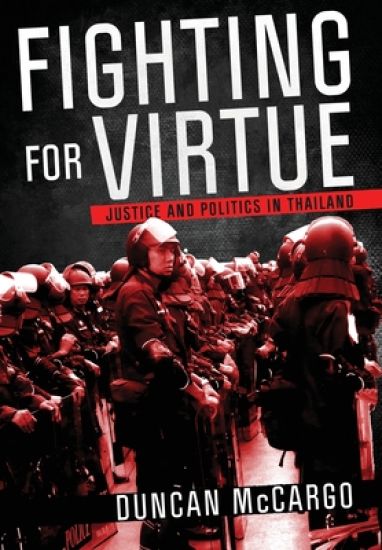
Fighting for Virtue investigates how Thailand's judges were tasked by the late King Bhumibol Adulyadej (Rama IX) in 2006 with helping to solve the country's intractable political problems—and what happened next. Across the last decade of Rama IX's rule, Duncan McCargo examines the world of Thai judges: how they were recruited, trained, and promoted, and how they were socialized into a conservative world view that emphasized the proximity between the judiciary and the monarchy. McCargo delves into three pivotal freedom of expression cases that illuminate Thai legal and cultural understandings of sedition and treason, before examining the ways in which accusations of disloyalty made against controversial former prime minister Thaksin Shinawatra came to occupy a central place in the political life of a deeply polarized nation. The author navigates the highly contentious role of the Constitutional Court as a key player in overseeing and regulating Thailand's political order before concluding with reflections on the significance of the Bhumibol era of "judicialization" in Thailand. In the end, posits McCargo, under a new king, who appears far less reluctant to assert his own power and authority, the Thai courts may now assume somewhat less significance as a tool of the monarchical network.
Since January 2004, a violent separatist insurgency has raged in southern Thailand, resulting in more than three thousand deaths. Though largely unnoticed outside Southeast Asia, the rebellion in Pattani and neighboring provinces and the Thai government's harsh crackdown have resulted in a full-scale crisis. Tearing Apart the Land by Duncan McCargo, one of the world's leading scholars of contemporary Thai politics, is the first fieldwork-based book about this conflict. Drawing on his extensive knowledge of the region, hundreds of interviews conducted during a year's research in the troubled area, and unpublished Thai- language sources that range from anonymous leaflets to confessions extracted by Thai security forces, McCargo locates the roots of the conflict in the context of the troubled power relations between Bangkok and the Muslim-majority "deep South." McCargo describes how Bangkok tried to establish legitimacy by co-opting local religious and political elites. This successful strategy was upset when Thaksin Shinawatra became prime minister in 2001 and set out to reorganize power in the region. Before Thaksin was overthrown in a 2006 military coup, his repressive policies had exposed the precariousness of the Bangkok government's influence. A rejuvenated militant movement had emerged, invoking Islamic rhetoric to challenge the authority of local leaders obedient to Bangkok. For readers interested in contemporary Southeast Asia, insurgency and counterinsurgency, Islam, politics, and questions of political violence, Tearing Apart the Land is a powerful account of the changing nature of Islam on the Malay peninsula, the legitimacy of the central Thai government and the failures of its security policy, the composition of the militant movement, and the conflict's disastrous impact on daily life in the deep South. Carefully distinguishing the uprising in southern Thailand from other Muslim rebellions, McCargo suggests that the conflict can be ended only if a more participatory mode of governance is adopted in the region.
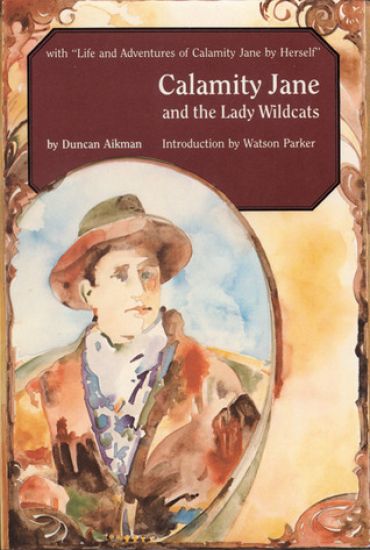
When Calamity Jane and the Lady Wildcats was first published in 1927, Thomas Beer, with tongue in cheek if not in check, noted the book's underlying theory: ""The women of the pioneer epoch--say, from 1840 to 1890--had their feet planted on a resonant drum of man's sexual necessity. They could choose the measure of the dance and the amount of noise to be exacted from creatures in a state of animal tension. Wifehood, polyandry, and an excused rapacity were open to the shrewd."" Arguments and assents to that theory aside, Aikman's book is still good fun. Our fascination with Calamity Jane has, if anything, increased since Aikman exploded her pretensions and revealed her genius for publicity.Other ladies of noisy repute featured in these pages are Cattle Kate Maxwell, a cattle rustler headed for a noose; Belle Starr, brainy for a desperado; Lola Montez, the tempestuous dancer and courtesan; Pearl Hart, the last lady road agent; Madame Moustache, a polite presence of gambling hells; Poker Alice Tubbs, a cigar-smoking card sharp who looked like Winston Churchill; Carry Nation, the saloon smasher; and Bridget Grant, Portland's queen of the shanghai gangs.Special features of this edition are the ""Life and Adventures of Calamity Jane by Herself"" and an introduction by Watson Parker, author of Deadwood: The Golden Years.
This sensible, balanced work provides a clear overview of biblical hermeneutics: its history, method, and implementation. Duncan Ferguson combines several topics not usually found in a single volume: crucial theological issues and historical-philological questions, the complexities of interpreting the various types of biblical literature, ways to use the Bible in the life of the church, and examples of how the Bible has been and is interpreted. Ferguson's well-organized introduction is an impressive resource for understanding and performing the task of biblical interpretation. A comprehensive survey, Biblical Hermeneutics covers the field with an openness of perspective.
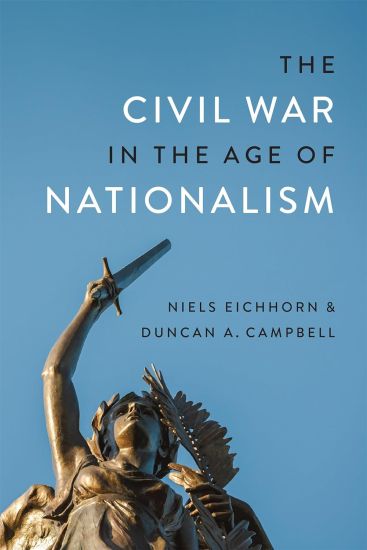
While historians have acknowledged that the issues of race, slavery, and emancipation were not unique to the American Civil War, they have less frequently recognized the conflict's similarities to other global events. As renowned historian Carl Degler pointed out, the Civil War was "one among many" such conflicts during the mid-nineteenth century. Understanding the Civil War's place in world history requires placing it within a global context of other mid-nineteenth-century political, social, and cultural issues and events. In The Civil War in the Age of Nationalism, Niels Eichhorn and Duncan A. Campbell explore the conflict from this perspective, taking a transnational and comparative approach, with a particular focus on the period from the 1830s to the 1870s.Eichhorn and Campbell examine the development of nationalism and its frequent manifestation, secession, by comparing the American experience with that of several other nations, including Germany, Hungary, and Brazil. They compare the Civil War to the Crimean and Franco-German wars to determine whether the American conflict was the first modern war. To gauge the potential of foreign intervention in the Civil War, they look to the time's developing international debate on the legality of intercession and mediation in other nations' insurgencies. Using the experiences of Indigenous peoples in the Americas, Africa, and the Antipodes, Eichhorn and Campbell suggest the extent to which the United States was an imperial project. To examine realpolitik, they study four vastly different practitioners—Otto von Bismarck, Louis Napoleon, Count Cavour, and Abraham Lincoln. Finally, they compare emancipation in the United States to that in Peru and the end of forced servitude in Russia, closing with a comparison of the memorialization of the Civil War with the experiences of other post-emancipation societies and an examination of how other nations mythologized their past conflicts and ignored uncomfortable truths in the pursuit of reconciliation.The Civil War in the Age of Nationalism avoids the limitations of American exceptionalism, making it the first genuine comparative and transnational study of the Civil War in an international context.
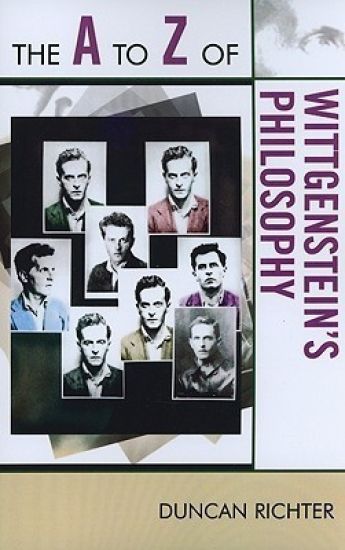
Ludwig Wittgenstein (1889-1951) was undoubtedly one of the most important philosophers of the 20th century, and perhaps of any century. He was also a fascinating, charismatic, and irritating man. His philosophical ability was recognized almost immediately by Bertrand Russell, and during his lifetime his work influenced first logical positivism and then ordinary language philosophy. Since then it has also become central in post-analytical philosophical thought. Beyond the world of academic philosophy it has inspired playwrights, poets, novelists, architects, filmmakers, and biographers. The A to Z of Wittgenstein's Philosophy is intended for anyone who wants to know more about the philosophy and the life of this enigmatic thinker. The book contains an introductory overview of his life and work, a timeline of the major relevant events in and after his life, an extensive bibliography, and, above all, an A-Z of ideas, people, and places that have been involved in his philosophy and its reception. The dictionary is written with no particular agenda and includes entries on philosophers (and others) who influenced Wittgenstein, those he influenced in turn, and some of the main figures in contemporary Wittgenstein scholarship. Suggestions for further reading are also included, as well as a guide to the literature on Wittgenstein and a bibliography broken down by subject area.
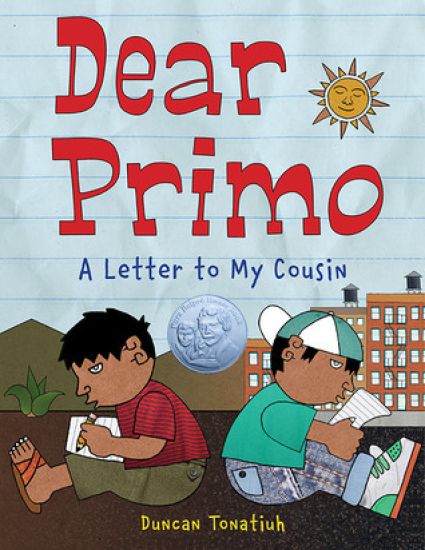
From first-time Mexican author and illustrator Duncan Tonatiuh comes the story of two cousins, one in America and one in Mexico, and how their daily lives are different yet similar. Charlie takes the subway to school; Carlitos rides his bike. Charlie plays in fallen leaves; Carlitos plays among the local cacti. Dear Primo covers the sights, sounds, smells, and tastes of two very different childhoods, while also emphasizing how alike Charlie and Carlitos are at heart. Spanish words are scattered among the English text, providing a wonderful way to introduce the language and culture of Mexico to young children.Inspired by the ancient art of the Mixtecs and other cultures of Mexico, Tonatiuh incorporates their stylized forms into his own artwork.F&P Level: MF&P Genre: RF
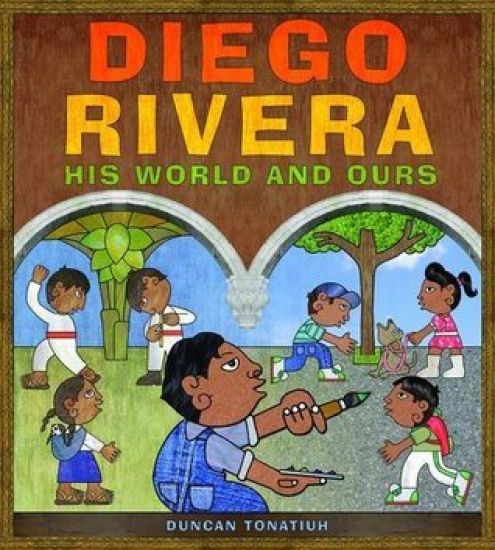
This charming book introduces one of the most popular artists of the twentieth century, Diego Rivera, to young readers. It tells the story of Diego as a young, mischievous boy who demonstrated a clear passion for art and then went on to become one of the most famous painters in the world. Duncan Tonatiuh also prompts readers to think about what Diego would paint today. Just as Diego's murals depicted great historical events in Mexican culture or celebrated native peoples, if Diego were painting today, what would his artwork depict? How would his paintings reflect today's culture?Diego Rivera: His World and Ours is a wonderful introduction to this great artist.Praise for Diego Rivera« “By establishing a link between modern readers and Rivera and challenging them to "make our own murals," the author makes art both aspiration and action. Both solid introduction and exhortation, this book will thrill budding artists.” –Kirkus Reviews, starred review “Kids will want to talk about the great painter, and young artists will find inspiration for their own creations.” –Booklist
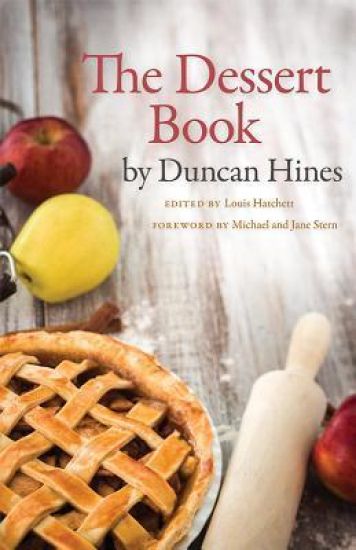
Kentucky native and national tastemaker Duncan Hines (1880--1959) published his first cookbook, Adventures in Good Cooking, in 1939 at the age of 59. This best-selling collection featured recipes from select restaurants across the country as well as crowd-pleasing family favorites, and it helped to raise the standard for home cooking in America. Following the success of this debut, Hines penned The Dessert Book in 1955. Filled with decadent treats, from homemade ice cream royale to fried apple pie to praline fudge frosting, this book inspired the recipes for the earliest boxed cake mixes and baked goods that carried the Duncan Hines name.Featuring a new introduction by Hines biographer Louis Hatchett, this classic cookbook serves up a satisfying slice of twentieth-century Americana, direct from the kitchen of one of the nation's most trusted names in food. Now a new generation of cooks can enjoy and share these delectable dishes with family and friends.
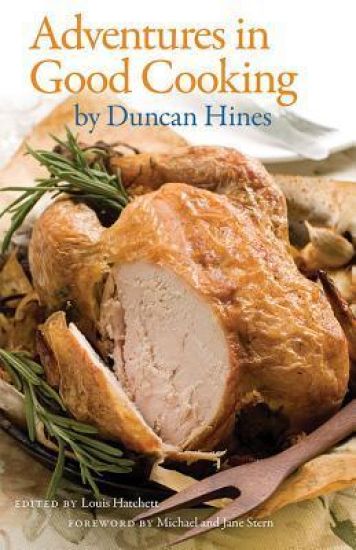
Kentucky native and national tastemaker Duncan Hines (1880--1959) published his first cookbook, Adventures in Good Cooking, in 1939 at the age of fifty-nine. This best-selling collection featured recipes from select restaurants across the country as well as crowd-pleasing family favorites, and it helped to raise the standard for home cooking in America. Filled with succulent treats, from the Waldorf-Astoria's Chicken Fricassee to the Oeufs a la Russe served at Antoine's Restaurant in New Orleans to Mrs. Hines's own Christmas Nut Cake, this book includes classic recipes from top chefs and home cooks alike.Featuring a new introduction by Hines biographer Louis Hatchett and a valuable guide to the art of carving, this classic cookbook serves up a satisfying slice of twentieth-century Americana, direct from the kitchen of one of the nation's most trusted names in food. Now a new generation of cooks can enjoy and share these delectable dishes with family and friends.
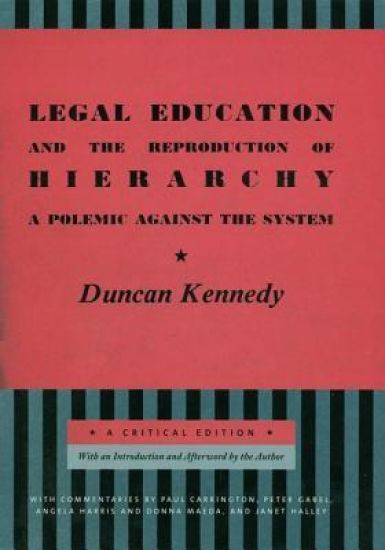
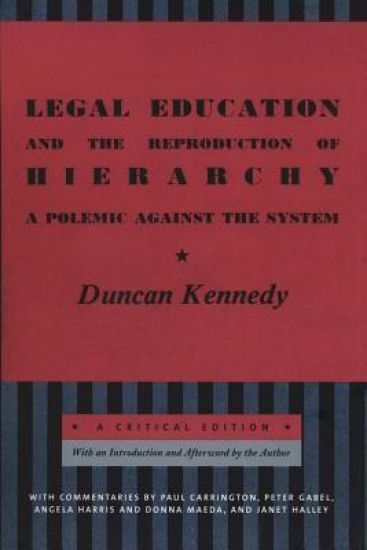
In 1983 Harvard law professor Duncan Kennedy self-published a biting critique of the law school system called Legal Education and the Reproduction of Hierarchy. This controversial booklet was reviewed in several major law journals—unprecedented for a self-published work—and influenced a generation of law students and teachers. In this well-known critique, Duncan Kennedy argues that legal education reinforces class, race, and gender inequality in our society. However, Kennedy proposes a radical egalitarian alternative vision of what legal education should become, and a strategy, starting from the anarchist idea of workplace organizing, for struggle in that direction. Legal Education and the Reproduction of Hierarchy is comprehensive, covering everything about law school from the first day to moot court to job placement to life after law school. Kennedy's book remains one of the most cited works on American legal education. The visually striking original text is reprinted here, making it available to a new generation. The text is buttressed by commentaries by five prominent legal scholars who consider its meaning for today, as well as by an introduction and afterword by the author that describes the context in which Kennedy wrote the book, including a brief history of critical legal studies.
In 1983 Harvard law professor Duncan Kennedy self-published a biting critique of the law school system called Legal Education and the Reproduction of Hierarchy. This controversial booklet was reviewed in several major law journals—unprecedented for a self-published work—and influenced a generation of law students and teachers. In this well-known critique, Duncan Kennedy argues that legal education reinforces class, race, and gender inequality in our society. However, Kennedy proposes a radical egalitarian alternative vision of what legal education should become, and a strategy, starting from the anarchist idea of workplace organizing, for struggle in that direction. Legal Education and the Reproduction of Hierarchy is comprehensive, covering everything about law school from the first day to moot court to job placement to life after law school. Kennedy's book remains one of the most cited works on American legal education. The visually striking original text is reprinted here, making it available to a new generation. The text is buttressed by commentaries by five prominent legal scholars who consider its meaning for today, as well as by an introduction and afterword by the author that describes the context in which Kennedy wrote the book, including a brief history of critical legal studies.
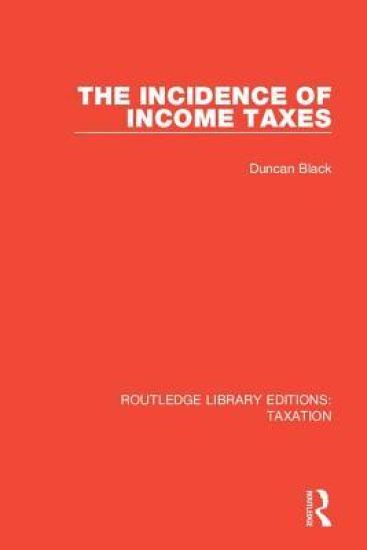
In this book, first published in 1939, an analysis is given of the incidence both of partial income taxes, that is of income taxes which are levied on the incomes arising from particular lines of industry, and of a general income tax.
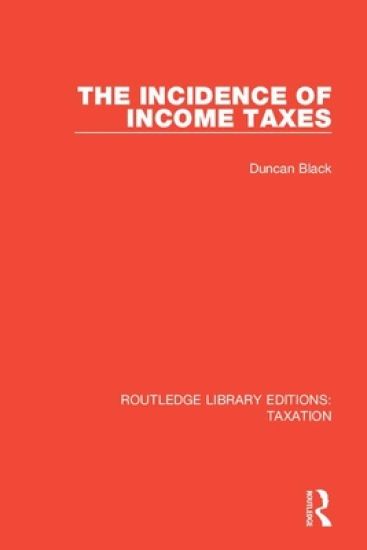
In this book, first published in 1939, an analysis is given of the incidence both of partial income taxes, that is of income taxes which are levied on the incomes arising from particular lines of industry, and of a general income tax.