

Kirjahaku
Etsi kirjoja tekijän nimen, kirjan nimen tai ISBN:n perusteella.
1000 tulosta hakusanalla Francisco Coreal

San Francisco During the Eventful Days of April 1906
Antigonos Verlag
2025
sidottu


San Francisco Street Directory and Guide
Antigonos Verlag
2025
sidottu

Annual Report of J. L. Meares, M. D. Health Officer of the City and County of San Francisco for the Fiscal Year Ending June 30, 1885
San Francisco Health Dept
Antigonos Verlag
2025
nidottu

Annual Report of J. L. Meares, M. D. Health Officer of the City and County of San Francisco for The Fiscal Year Ending June 30, 1887
San Francisco Health Dept
Antigonos Verlag
2025
nidottu

San Francisco
FlipFlop
2025
kalenteri
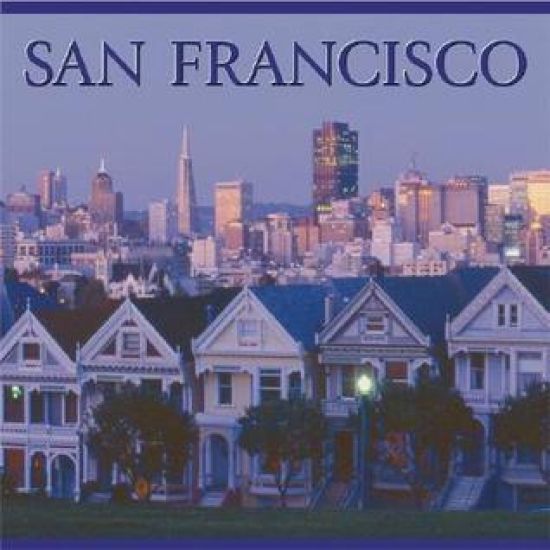
The North America Series captures outstanding views, landscapes, cityscapes and picturesque communities from the every region of the continent and feature 70 photographs by North America's best photographers and captions filled with interesting facts.

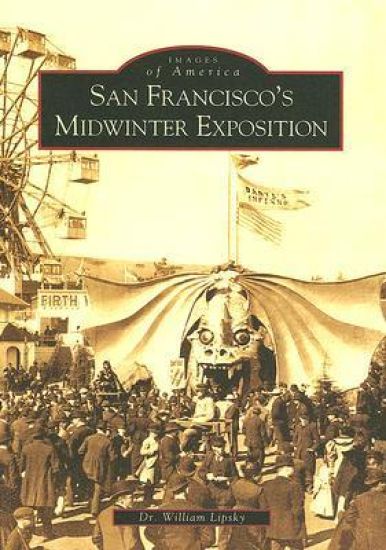
On January 27, 1894, as the rest of the country bundled up against the winter weather, the people of San Francisco opened the California Midwinter International Exposition and invited the world to enjoy The Land of Sunshine, Fruit and Flowers. The San Francisco Fair, held in the burgeoning city's Golden Gate Park, was the first U.S. hosted Exposition west of the Mississippi River. When the Fair closed in June of 1894, more than two million people had seen its incredible exhibits as well as this promising new land. The Fair celebrated a city that less than 50 years before had been a village of fewer than 250 people, a city that now was the commercial, financial, and social capital of the West. In San Francisco's Midwinter Exposition 1894, author William Lipsky presents the history, creation, and people of the Fair in over 200 vintage images. From the exotic exhibits on the Fair's midway, to the structures and architectural wonders presented at the Fair, Dr. Lipsky presents a striking visual history of this influential moment in San Francisco and California history.
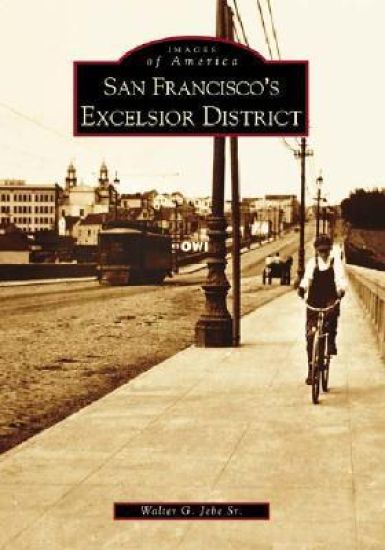
The Excelsior District traditionally has not been among San Francisco's spotlight neighborhoods, yet this area is an important residential and commercial zone that is home to some 30,000 residents. These rolling hills south of San Francisco's better-known districts are now covered with row upon row of houses, streets, and apartments. But places like the Excelsior were once sparsely populated, agrarian, and even rural. This volume of vintage photographs chronicles the Excelsior's intriguing journey from rugged swamp and farmland to the busy cosmopolitan neighborhood we know today. It is a tale of determined immigrant families putting down roots in a challenging locale and overcoming adversity to stake out a permanent enclave in this famed city. It is also a story of large-scale construction and reclamation to tame the rugged outskirts of San Francisco.
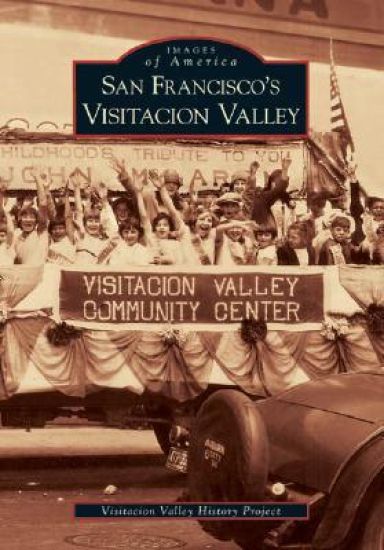
San Francisco's Visitacion Valley
Visitacion Valley History (A)
Arcadia Publishing (SC)
2005
nidottu
Rancho Ca ada de Guadalupe, La Visitacion y Rodeo Viejo was named in July 1777 by a party of Spanish priests and soldiers who lost their way in heavy fog while en route to the Presidio. Now called Visitacion Valley, this area was the only Mexican land grant within San Francisco deeded to an Anglo. Windmills pumped water to irrigate the fields of early settlers' cattle farms, nurseries, and vegetable gardens, leading to the nickname Valley of the Windmills. Over the years, however, the pastoral scenery gave way to a mix of housing and commerce, and today Visitacion Valley is one of the city's most ethnically diverse neighborhoods.
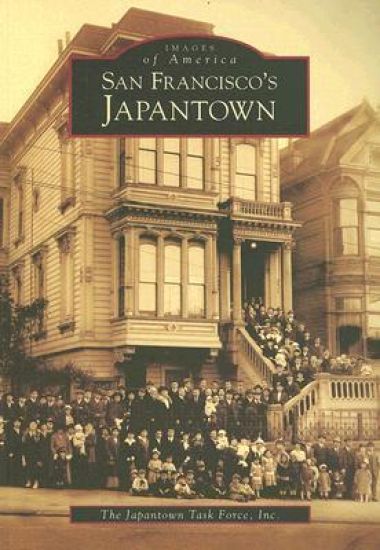
Many people driving by elegant Japantown appreciate the graceful architecture of the pagodas and fountains but do not know much about the Japanese community that has long been a vibrant part of San Francisco. Japantown--one of only three left in this country--began as Nihonjinmachi, or Japanese People's Town, after the first Japanese arrived here in 1869. As their numbers increased, institutions arose to serve them, including churches, schools, and various civic and social organizations. The population drifted through various parts of the city and finally settled in the Western Addition after the 1906 earthquake.
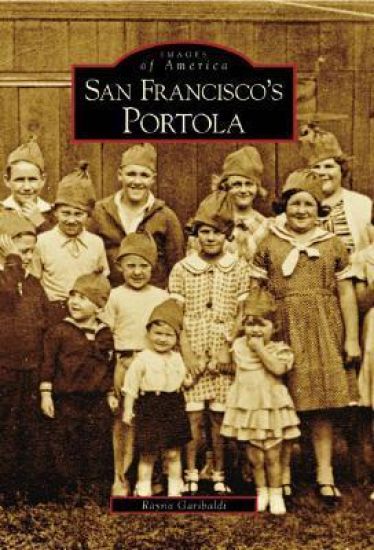
The Portola has a long and unique history dating back to the late 1800s. Too often misidentified with neighboring districts, it has its own story to reveal. Originally settled by Jewish immigrants, the area evolved into a community populated by nurserymen and their families who grew much of the city's flowers. The Road, as San Bruno Avenue was affectionately referred to by the locals, hosted businesses that included bakeries, grocery stores, pharmacies, and a theatre. In recent years, the Portola has undergone changes as community leaders have enacted programs to beautify the neighborhood and attract new businesses and families to this locale.
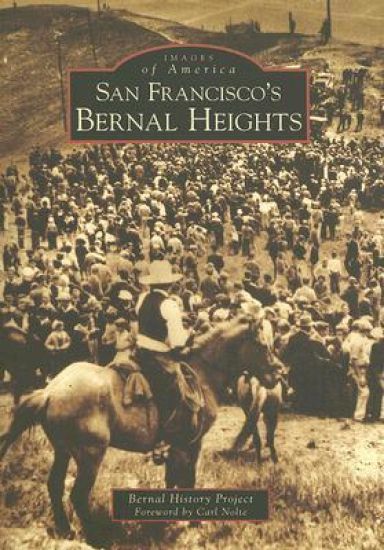
San Francisco's Bernal Heights is a hilltop village tucked away in the southern part of the city. Freeways and urban thoroughfares now bound the neighborhood, once defined by the swamps and creeks of the original Mexican land grant. The legacy of Potrero Viejo, or old pasture, and the farms of the 19th and 20th centuries have developed into today's passion for the preservation of open space. From the 1860s legend of Widow O'Brien's cow to the 1970s fight that saved the hill's crest from development, Bernal residents have tirelessly guarded their environment. An unofficial coyote mascot reigns over one of San Francisco's few remaining wild areas.
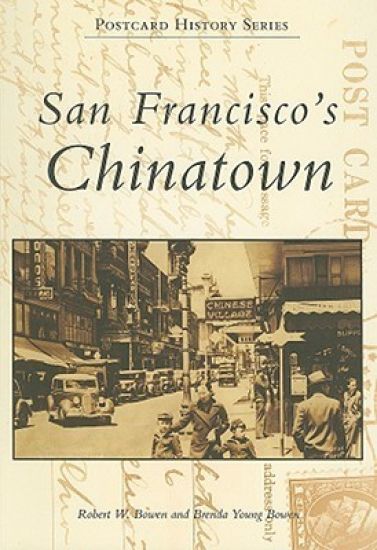
Since the Gold Rush, San Francisco's Chinatown has been a destination for sojourners, immigrants, locals, and tourists. Despite laws restricting Chinese immigration, Chinatown has thrived as a residential and commercial center. Designed for tourists and bearing little resemblance to real Chinese cityscapes, the streets and buildings have nonetheless been extensively documented in picture postcards, as have the residents, particularly from the 1890s to 1930s, the Golden Age of Postcards. The cards, relatively few of which survive, were kept as visual souvenirs and mementos, or were mailed to family and friends.
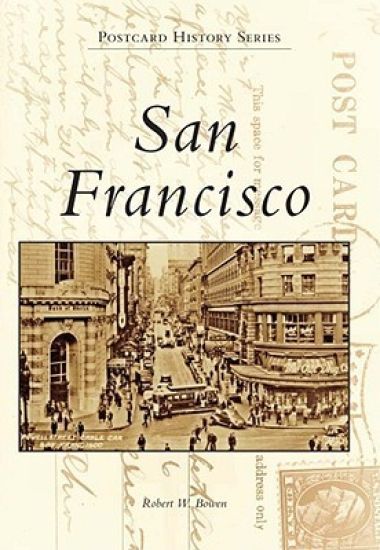
The golden age of postcards coincided with several momentous events in San Francisco history, including a major earthquake and fire destroying over one third of the city, rapid reconstruction, strikes, political upheaval, parades, festivals, and a world's fair. From World War I through World War II, jazz-age San Francisco experienced a building boom of houses, skyscrapers, and engineering marvels such as the Bay Bridge and Golden Gate Bridge, creating a marvelous Bay Area landscape documented on thousands of ubiquitous, inexpensive picture postcards popular with both visiting tourists and local residents.
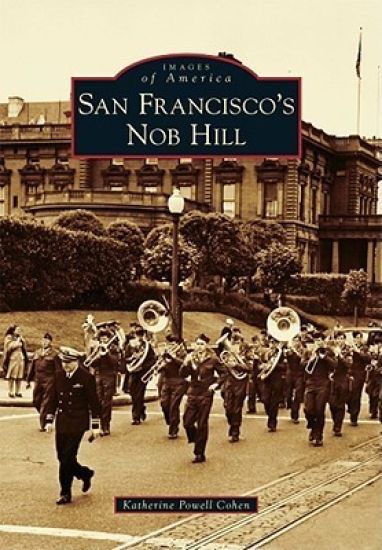
More than a neighborhood, San Francisco's Nob Hill encapsulates some of the major elements of the city's history. Early European settlers' cattle grazed on the windy hill, and with the Gold Rush of 1849, it became a lookout point as ships arrived daily, bringing thousands to San Francisco. Within the next 40 years, the moguls of the Central Pacific Railroad, along with other magnates, built spectacular residences atop Nob Hill, which became a focal point of San Francisco. Today Nob Hill is home to elegant hotels, a cathedral, and a variety of residents. It remains a center of activity in a legendary city.