Kirjojen hintavertailu. Mukana 11 699 587 kirjaa ja 12 kauppaa.

Kirjahaku

Etsi kirjoja tekijän nimen, kirjan nimen tai ISBN:n perusteella.

1000 tulosta hakusanalla Fredrick P. Sam

Frederick Kiesler

Frederick Kiesler

Mark Wasiuta

MIT PRESS LTD
2026
sidottu
An in-depth exploration of the work of Frederick Kiesler, the visionary architect, with a special focus on his Mobile Home Library. Frederick Kiesler: Vision Machines explores the work of Austrian architect, theater designer, and theorist Frederick Kiesler (1890 1965). The book s centerpiece is a close examination of Kiesler s iconic but unrealized Mobile Home Library, which will be fabricated for the first time and photographed for the publication. Built around a speculative essay by Mark Wasiuta, tracing Kiesler s visionary, even obsessive interest in sight, dreams, looking, and reading, the book covers Kiesler s research and teaching at Columbia University s School of Architecture in the late 1930s and 1940s, focusing on the main projects he developed at his Design Correlation Laboratory, the Mobile Home Library and the Vision Machine. The Vision Machine was imagined as an ambitious device intended to visualize human sight, from optics and nerve stimuli to dream content and hallucinations. The Mobile Home Library was conceived as a dynamic, modular object part device, part furniture whose repertoire of rotating, spinning movements allowed variable forms of interaction with readers and users. At first glance these two projects barely resemble each other. Yet together they illustrate the strange and astonishing scope of Kiesler s correalism, which spanned and confused his biotechnique (a biologically-oriented design process aimed at fostering human health) and his techno-oneiric surrealism. The book is published in conjunction with an exhibition at the Graham Foundation in Chicago in Fall 2024, but is a stand-alone volume. It presents Wasiuta s substantial research and thinking on Kiesler, a wealth of photographs, drawings, documents, film stills, and pedagogical experiments from Kiesler s laboratory, as well as photographs of the exhibition s centerpiece, the (re)construction of the never-built Mobile Home Library. Frederick Kiesler was born in Czernowitz, Austria-Hungary (now Ukraine) in 1890 and died in New York in 1965. For a short time, he was a member of De Stijl, he briefly partnered with Adolf Loos in the 1920s, and he was an associate of many avant-garde artists, including Man Ray and Fernand Leger.
Frederick Watts and the Founding of Penn State

Frederick Watts and the Founding of Penn State

Roger L. Williams

Pennsylvania State University Press
2021
sidottu
Frederick Watts came to prominence during the nineteenth century as a lawyer and a railroad company president, but his true interests lay in agricultural improvement and in raising the economic, social, and political standing of Pennsylvania’s farmers. After being elected founding president of The Pennsylvania State Agricultural Society in 1851, he used his position to advocate vigorously for the establishment of an agricultural college that would employ science to improve farming practices. He went on to secure the charter for the Farmers’ High School of Pennsylvania, which would eventually become the Pennsylvania State University.This biography explores Watts’s role in founding and leading Penn State through its formative years. Watts adroitly directed the school as it was sited, built, and financed, opening for students in 1859. He hired the brilliant Evan Pugh as founding president, who, with Watts, quickly made it the first successful agricultural college in America. But for all his success in launching the institution, Watts nearly brought it to the brink of closure through a series of ruinous presidential appointments that led to an abandonment of the land-grant focus on agriculture and engineering.Watts’s influence in the agricultural modernization movement and his impact on land-grant education in the United States—both in his role with Penn State and later as US commissioner of agriculture—made him a leader in the history of agricultural and higher education. Roger L. Williams’s compelling biography of Watts reestablishes him in this legacy, providing a balanced analysis of his missteps and accomplishments.
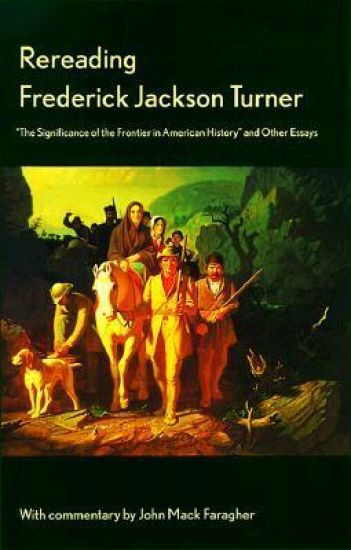
Rereading Frederick Jackson Turner

Rereading Frederick Jackson Turner

Frederick Turner

Yale University Press
1999
pokkari
“The best assembly of Turner’s essays now available. Faragher’s introductory and concluding commentaries add considerably to the import of the book.”—Stephen Aron, University of California, Los Angeles “Still ranks as the most influential piece of writing on American history.”—Carlin Romano, Philadelphia Inquirer, A Notable Book of 1994 “Faragher’s invaluable afterword . . . provides a judicious introduction to the issues that divide the revisionist New Western Historians from Turner and his disciples.”—Michael Kammen, FanFare Frederick Jackson Turner is often considered to be the most influential American historian of the century, and his views continue to shape the controversial field of Western American history. In this book, John Mack Faragher introduces and comments on ten of Turner’s most significant essays, concluding with a comment on the recent debate over Turner’s legacy and his effect on Americans’ understanding of their national character.
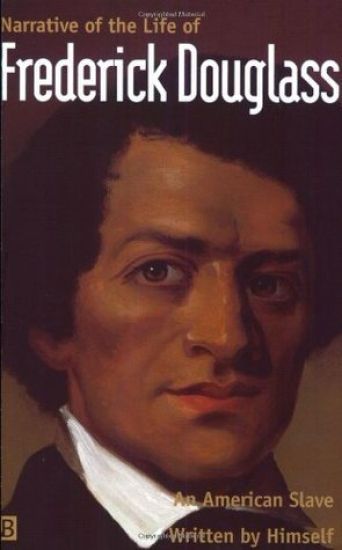
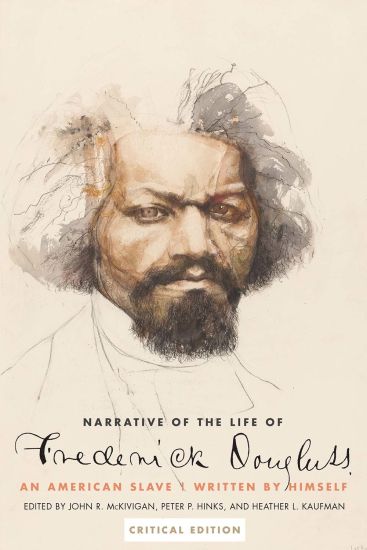
Narrative of the Life of Frederick Douglass, An American Slave
The powerful story of slavery that has become a classic of American autobiography, in an authoritative edition “This edition is the most valuable teaching tool on slavery and abolition available today. It is exceptional.”—Nancy Hewitt, Distinguished Professor Emerita, Rutgers University The autobiography of Frederick Douglass (1818–1895), Narrative of the Life of Frederick Douglass, An American Slave, is widely regarded as a classic of American nineteenth-century history, of African-American studies, and of literature. In 1845, just seven years after his escape from slavery, the young Douglass published this powerful account of his life as a slave and his triumph over oppression. The book, which marked the beginning of Douglass’s career as an impassioned writer, journalist, and orator for the abolitionist cause, reveals the terrors he faced as a slave, the brutalities of his owners and overseers, and his harrowing escape to the North. This edition of the book, based on the authoritative text that appears in Yale University Press’s multivolume edition of the Frederick Douglass Papers, is the only edition of Douglass’s Narrative designated as an Approved Text by the Modern Language Association’s Committee on Scholarly Editions. It includes a chronology of Douglass’s life, a thorough introduction by the eminent Douglass scholar John Blassingame, historical notes, and reader responses to the first edition of 1845. “None so dramatically as Douglass integrated both the horror and the great quest of the African-American experience into the deep stream of American autobiography. He advanced and extended that tradition and is rightfully designated one of its greatest practitioners.”—John W. Blassingame, from the introduction
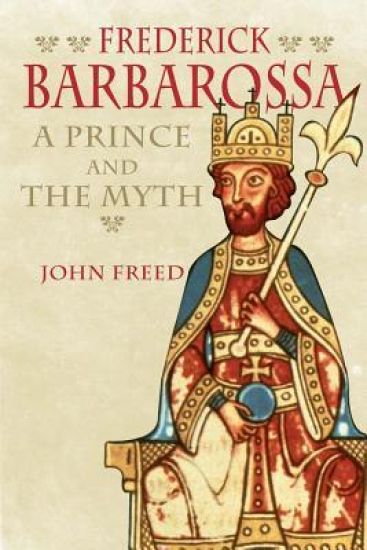
Frederick Barbarossa

Frederick Barbarossa

John Freed

Yale University Press
2016
sidottu
A rich portrait of Frederick Barbarossa, the medieval monarch who ruled Germany in cooperation with the princes and whose legend inspired Hitler to label his invasion of the Soviet Union “Operation Barbarossa”“Freed has done so much to illuminate the ins and out of German politics in the late tweflth century, ensuring that his book will be a constant point of reference for scholars.”—David Abulafia, History Today Frederick Barbarossa, born of two of Germany’s most powerful families, swept to the imperial throne in a coup d’état in 1152. A leading monarch of the Middle Ages, he legalized the dualism between the crown and the princes that endured until the end of the Holy Roman Empire. This new biography, the first in English in four decades, paints a rich picture of a consummate diplomat and effective warrior. John Freed mines Barbarossa’s recently published charters and other sources to illuminate the monarch’s remarkable ability to rule an empire that stretched from the Baltic to Rome, and from France to Poland. Offering a fresh assessment of the role of Barbarossa’s extensive familial network in his success, the author also considers the impact of Frederick’s death in the Third Crusade as the key to his lasting heroic reputation. In an intriguing epilogue, Freed explains how Hitler’s audacious attack on the Soviet Union in 1941 came to be called “Operation Barbarossa.”
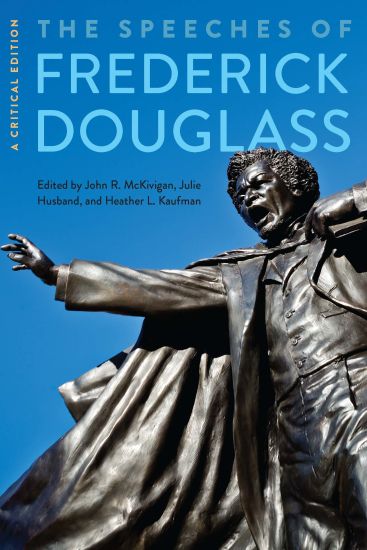
The Speeches of Frederick Douglass

The Speeches of Frederick Douglass

Frederick Douglass

Yale University Press
2018
pokkari
A collection of twenty of Frederick Douglass’s most important orations This volume brings together twenty of Frederick Douglass’s most historically significant speeches on a range of issues, including slavery, abolitionism, civil rights, sectionalism, temperance, women’s rights, economic development, and immigration. Douglass’s oratory is accompanied by speeches that influenced him, his reflections on successful rhetorical strategies, contemporary commentary on his performances, and modern-day assessments of his rhetorical legacy.
Narrative of the Life of Frederick Douglass, an American Slave
A critical edition of one of the most influential literary documents in American and African American history “This edition is the most valuable teaching tool on slavery and abolition available today. It is exceptional.”—Nancy Hewitt, Distinguished Professor Emerita, Rutgers University Ideal for independent reading or for coursework in American and African American history, this revised edition of the memoir written by Frederick Douglass (1818–1895) of his life as a slave in pre–Civil War Maryland incorporates a wide range of supplemental materials to enhance students’ understanding of slavery, abolitionism, and the role of race in American society. Offering readers a new appreciation of Douglass’s world, it includes documents relating to the slave narrative genre and to the later career of an essential figure in the nineteenth-century abolition movement.
The Frederick Douglass Papers

The Frederick Douglass Papers

Frederick Douglass

YALE UNIVERSITY PRESS
2023
sidottu
The selected correspondence of the great American abolitionist and reformer dating from the immediate post–Civil War years This third volume of Frederick Douglass’s Correspondence Series exhibits Douglass at the peak of his political influence. It chronicles his struggle to persuade the nation to fulfill its promises to the former slaves and all African Americans in the tempestuous years of Reconstruction. Douglass’s career changed dramatically with the end of the Civil War and the long-sought after emancipation of American slaves; the subsequent transformation in his public activities is reflected in his surviving correspondence. In these letters, from 1866 to 1880, Douglass continued to correspond with leading names in antislavery and other reform movements on both sides of the Atlantic, and political figures began to make up an even larger share of his correspondents. The Douglass Papers staff located 817 letters for this time period and selected 242, or just under 30 percent, of them for publication. The remaining 575 letters are summarized in the volume’s calendar.
The Frederick Douglass Papers

The Frederick Douglass Papers

Frederick Douglass

YALE UNIVERSITY PRESS
2026
sidottu
Douglass’s letters from the 1880s reveal both his unrelenting efforts to protect African American rights and little-known details about his personal life The fourth volume of the Correspondence Series presents Frederick Douglass as a still-influential public figure but also as a man aware that the gains African Americans made during the Civil War and Reconstruction were not as well secured as he had hoped. For this volume, the editors selected 247 of the 914 known letters sent to or from Douglass between 1881 and 1888. An active partisan, Douglass corresponded regularly with Republican party leaders from the local to national level about campaign tactics and strategies. Douglass also often received letters from African Americans who detailed the deteriorating state of race relations across the South in the 1880s. Douglass used his correspondence to advance the political stature of Republicans he regarded as most sympathetic to protecting African American rights. Douglass wrote about his taste in reading; his fondness for carriage riding; his feuds with family members and neighbors; his first wife, Anna Murray; and his remarriage, to Helen Pitts, and the controversy that the interracial marriage generated. Douglass’s correspondence details the seven-month honeymoon the couple took in Europe and Egypt, the reunion with old abolitionist friends in Great Britain, and candid appraisals of places he visited and people he met overseas.
Frederick Douglass On Women's Rights

Frederick Douglass On Women's Rights

Philip Foner

Da Capo Press Inc
1992
pokkari
In their long, continuing struggle for equality, American women have had to rely primarily on their own resources, which have been considerable. Yet many men have helped advance their cause. Perhaps foremost among them was the great abolitionist Frederick Douglass. According to the women of the time, Douglass was their preeminent male supporter. As Elizabeth Cady Stanton said, "He was the only man I ever saw who understood the degradation of the disfranchisement of women." This book collects the speeches and writings of Frederick Douglass on women's rights. Since suffrage was the major concern of the movement, the issue of voting was primary among Douglass's themes however, he also spoke and wrote resolutely on the need for women to reach their full potential by participating in every phase of American society and in every aspect of decision-making. No one was more insistent that the oppression of women violated the principles proclaimed at the birth of the American Republic. He was, in short, in favour of "absolute justice and perfect equality" for women. And because of his pride in his own race, he never failed to remind the white women who led the movement that black women endured an even greater oppression in white, male-dominated society than they did. Always eloquent and rarely less than inspiring, Frederick Douglass on Women's Rights presents the words of one of America's greatest spokesmen on one of the most important issues of the nineteenth century, words which still ring with truth and power today.
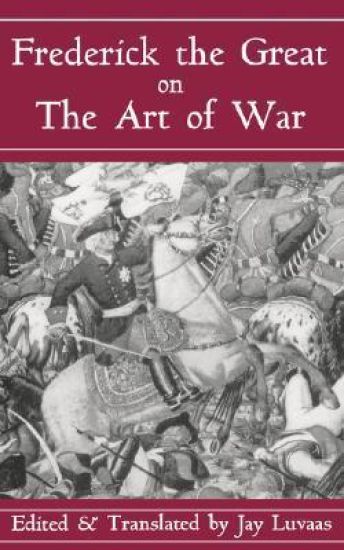
Frederick The Great On The Art Of War

Frederick The Great On The Art Of War

Jay Luvaas

Da Capo Press Inc
1999
pokkari
Frederick the Great (1712-1786), King of Prussia, initiated the Seven Years' War in 1756 outfought the formidable French, Russian, and Austrian armies aligned against him and established Prussia as a major power, thereby decisively influencing the next two centuries of European history. He was also a brilliant military thinker whose observations arose from extensive battlefield experience.This volume presents a balanced selection from Frederick's writings on strategy, tactics, and mobility the problems of logistics and a two-front war the combined use of infantry, cavalry, and artillery the history of the Prussian army the critical battles of the Seven Years' War generalship as an art and much more. A majority of this material is translated here for the first time in English and available nowhere else. The result is an invaluable glimpse into the inner thoughts of a military genius.
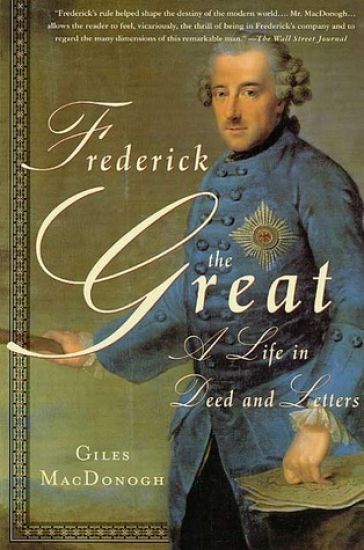
Frederick the Great: A Life in Deed and Letters

Frederick the Great: A Life in Deed and Letters

Giles MacDonogh

St. Martin's Griffin
2001
nidottu
Piet and soldier, misanthrope and philospher, Frederick the Great was a contradictory, almost unfathomable man. His conquests made him one of the most formindable and feared leaders of his era. But as a patron of artists and intellectuals, Frederick re-created Berlin as one of the continent's great cities, matching his state's reputation for military ferocity with one for cultural achievement. Though history remembers Frederick as a "Potsdam Fuhrer," his father more rightly deserved the title. When, as a youth, Frederick attempted to flee the elder man's brutality, the punishment was to watch the execution of his friend and co-conspirator, Katte. Though a subsequent compromise allowed Frederick to take the throne in 1740, he would remain true unto himself. His tastes for music, poetry, and architecture would match the significance of his military triumphs in the Seven Years' War.Drawing on the most recent scholarship, Giles MacDonogh's fresh, authoritative biograhy gives us the most fully rounded portrait yet of an often misunderstood king.
Frederick III

Frederick III

Patricia Kollander

Praeger Publishers Inc
1995
sidottu
Many German historians regard Emperor Frederick III (1831-1888) as a liberal sovereign who could have saved German history from its tragic course. Recent historians, however, have challenged the long-held view that liberalism's failure in 19th century Germany presaged Hitler's triumph, claiming that earlier scholars have overlooked liberalism's positive contributions to German history. This book reassesses Frederick III's contribution to the liberal movement. Using documents recently made available from the Hessische Hausstiftung, the author considers the question of whether Frederick abetted the liberal movement's successes or was part of its tragic history. As crown prince, Frederick maintained ties with prominent liberals and rejected Otto von Bismarck's conservative domestic and foreign policies. His liberal impulses were strengthened by his marriage to the Queen of England's daughter, Princess Victoria. But when Frederick came to the throne in 1888, he died after only 99 days. Many historians consider his untimely death the swan song of German liberalism. Kollander finds that the documents show Frederick to be a constitutional liberal who fought to preserve the constitution-the basis of liberal political power-from subversion by the conservatives. However, he only condoned liberal reform on the basis of the constitutional status quo, rejecting his wife's wish to see British political institutions adopted in Germany. Although Frederick contributed to the survival of liberalism as a political force, the author concludes, the extent of his liberal views have been exaggerated by many historians.
Fredric March

Fredric March

Deborah Peterson

Praeger Publishers Inc
1996
sidottu
Fredric March was one of the foremost actors America produced during the 20th century, holding the distinction of winning Best Actor Awards in two films and two Broadway plays. He consciously chose not to shape his career by projecting his own personality, but created a new characterization for each role by becoming the individual he was portraying. Because of this, March is not as well remembered as many of his contemporaries. March was honored 12 years after his death at a tribute in 1987, but by then, many did not even know who he was. In this fascinating biography, Peterson details who March was, and why he was a craftsman first, star second. Yet, Fredric March is not as well remembered as his contemporaries, such as Bogart and Tracy, screen heroes who shaped their careers by projecting their own personalities. Instead March, endeavored to create a new characterization for each role by concealing his own temperament, becoming the individual he was portraying. From 1939 to 1961 he successfully flourished on the Broadway stage as well as on the Hollywood film lot. After 1961 he gracefully grew old in motion pictures, starring at the age of 75 in the 1973 movie version of O'Neill's The Iceman Cometh, two years prior to his death. March was honored posthumously at a joint tribute to the actor from the Academy of Motion Picture Arts and Sciences and the American Cinematheque in 1987, 12 years after his death. But, by then, many did not even know who the actor was. In this fascinating biography, Peterson reveals who March was, and why he was a craftsman first, star second. Essential for all researchers interested in film studies and drama.
Frederick Douglass

Frederick Douglass

David B. Chesebrough

Greenwood Press
1998
sidottu
Frederick Douglass, once a slave, was one of the great 19th century American orators and the most important African American voice of his era. This book traces the development of his rhetorical skills, discusses the effect of his oratory on his contemporaries, and analyzes the specific oratorical techniques he employed.The first part is a biographical sketch of Douglass's life, dealing with his years of slavery (1818-1837), his prewar years of freedom (1837-1861), the Civil War (1861-1865), and postwar years (1865-1895). Chesebrough emphasizes the centrality of oratory to Douglass's life, even during the years in slavery. The second part looks at his oratorical techniques and concludes with three speeches from different periods. Students and scholars of communications, U.S. history, slavery, the Civil War and Reconstruction, and African American studies will be interested in this book.
Frederick Douglass

Frederick Douglass

C. James Trotman Ph.D.

Greenwood Press
2011
sidottu
Written for young adults, this biography of Frederick Douglass covers the life of the most famous black abolitionist and intellectual of the 19th century.Frederick Douglass: A Biography explores the life of the most famous black abolitionist and intellectual of the 19th century. The book covers the major developments of Douglass's life from his birth in 1818 through his time as a slave and his rise to prominence as the most famous black voice for freedom of his time. The biography discusses Douglass's relationships with such figures as John Brown, the feminist Elizabeth Cady Stanton, and five presidents of the United States, including Abraham Lincoln. It analyzes his role in national politics before, during, and after the Civil War, and examines the way his life is tied to significant local, regional, and national events. By focusing on the importance of spirituality in Douglass's life, this revealing work adds to our understanding of the man, the way he saw himself, and the many things he accomplished.
Fredric Jameson

Fredric Jameson

Palgrave Macmillan
2004
nidottu
This volume brings together original work from internationally recognized scholars that critically engages with the full range of Jameson's work, including: Sartre, Lukács, 'Third World' literature, architecture, postmodernity, globalization, film, dialectics and Brecht. In a series of lively, and at times iconoclastic readings, the contributors challenge accepted views of Jameson's work and locate his project in the historical, political and institutional context that shaped it. The volume concludes with an original contribution by Jameson himself, providing an opportunity for readers to critically engage with his work themselves.
Narrative of the Life of Frederick Douglass, an American Slave & Incidents in the Life of a Slave Girl
Two great works of African-American literature come together in an omnibus edition that includes the autobiography of the famous abolitionist and statesman who escaped to the North after twenty-one years of enslavement, as well as an account that reveals the exploitation of African American female slaves through first-person narrative. Reader's Guide included. Reprint.
Narrative of the Life of Frederick Douglass, an American Slave
Narrative of the Life of Frederick Douglass is an 1845 memoir and treatise on abolition written by famous orator and former slave Frederick Douglass during his time in Lynn, Massachusetts. It is generally held to be the most famous of a number of narratives written by former slaves during the same period. In factual detail, the text describes the events of his life and is considered to be one of the most influential pieces of literature to fuel the abolitionist movement of the early 19th century in the United States.Narrative of the Life of Frederick Douglass encompasses eleven chapters that recount Douglass's life as a slave and his ambition to become a free man.
Frederick Eden Pargiter
The Sundarban stretches from the brackish waters of the broad Hooghly on the west, to the fresh waters of the still broader Meghna to the east; the turbid waters of the Bay of Bengal on its southern limits, to the zamindari or pargana lands on its northern extremity and includes in its southern fringes the dense natural mangrove forests, it is famous for. The revenue history of Sundarbans is linked up with its riverine and coastal networks to its strategic location at the head of the Bay of Bengal which made it a natural protective barrier for the densely populated city of Calcutta. The massive transformation combined with the changed physical structure of Sundarban influenced society and economy on the one hand and invited settlers to establish their control in that region on the other. The text of Pargiter focuses on the revenue history of a larger part of Sundarbans, viz., Jessore, Khulna, Bakarganj and some parts of 24-Parganas since the inception of the colonial rule in Bengal. It has also been shown how the colonial administrators took various types of measures for collecting revenue by the way of land reclamation.The introductory note by the editor analyses the revenue settlement policies which had been implemented on different occasions to ensure the revenue maximization policies of the British Raj on the one hand and to establish an human settlement in the deltaic region on the other.Please note: Taylor & Francis does not sell or distribute the Hardback in India, Pakistan, Nepal, Bhutan, Bangladesh and Sri Lanka