Kirjojen hintavertailu. Mukana 11 544 096 kirjaa ja 12 kauppaa.

Kirjahaku

Etsi kirjoja tekijän nimen, kirjan nimen tai ISBN:n perusteella.

1000 tulosta hakusanalla George M Stringam

An Historical Sketch of the Ancient and Honourable Artillery Company of Boston, Mass.; From Its Formation in the Year 1637, to the Present Time. Compiled and Arranged from Ancient Records.
Title: An historical sketch of the ancient and honourable Artillery Company of Boston, Mass.]; from its formation in the year 1637, to the present time. Compiled and arranged from ancient records.Publisher: British Library, Historical Print EditionsThe British Library is the national library of the United Kingdom. It is one of the world's largest research libraries holding over 150 million items in all known languages and formats: books, journals, newspapers, sound recordings, patents, maps, stamps, prints and much more. Its collections include around 14 million books, along with substantial additional collections of manuscripts and historical items dating back as far as 300 BC.The HISTORY OF COLONIAL NORTH AMERICA collection includes books from the British Library digitised by Microsoft. This collection refers to the European settlements in North America through independence, with emphasis on the history of the thirteen colonies of Britain. Attention is paid to the histories of Jamestown and the early colonial interactions with Native Americans. The contextual framework of this collection highlights 16th century English, Scottish, French, Spanish, and Dutch expansion. ++++The below data was compiled from various identification fields in the bibliographic record of this title. This data is provided as an additional tool in helping to insure edition identification: ++++ British Library Whitman, Zachariah G.; Allen, Samuel A.; Thacher, George M.; 1842. 8 . 1446.g.2.
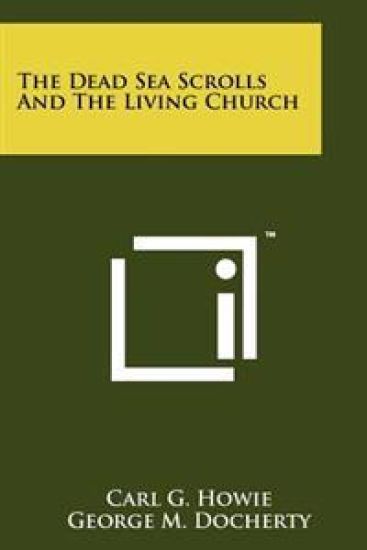
The Dead Sea Scrolls and the Living Church

The Dead Sea Scrolls and the Living Church

Carl G. Howie; George M. Docherty

Literary Licensing, LLC
2011
sidottu
The Dead Sea Scrolls And The Living Church is a book written by Carl G. Howie. The book is an exploration of the Dead Sea Scrolls and their significance to the Christian Church. The Dead Sea Scrolls are a collection of ancient Jewish texts that were discovered in the 1940s and 1950s in the Qumran caves near the Dead Sea. These texts provide valuable insights into the beliefs and practices of the Jewish people during the Second Temple period.In this book, Howie examines the Dead Sea Scrolls and their relevance to the Christian Church. He explores the historical context in which the scrolls were written and the impact they have had on our understanding of the Bible and the early Christian Church. Howie also discusses the controversies surrounding the interpretation of the Dead Sea Scrolls and the role they play in shaping our understanding of Jewish and Christian history.The book is divided into several chapters, each of which focuses on a different aspect of the Dead Sea Scrolls and their relationship to the Christian Church. Howie provides a detailed analysis of the scrolls and their contents, as well as their impact on modern biblical scholarship. He also explores the theological implications of the Dead Sea Scrolls and their significance for contemporary Christian practice.Overall, The Dead Sea Scrolls And The Living Church is a comprehensive and insightful exploration of one of the most important archaeological discoveries of the twentieth century. It is an essential read for anyone interested in the history of Christianity and the role that ancient texts play in shaping our understanding of the faith.This scarce antiquarian book is a facsimile reprint of the old original and may contain some imperfections such as library marks and notations. Because we believe this work is culturally important, we have made it available as part of our commitment for protecting, preserving, and promoting the world's literature in affordable, high quality, modern editions, that are true to their original work.
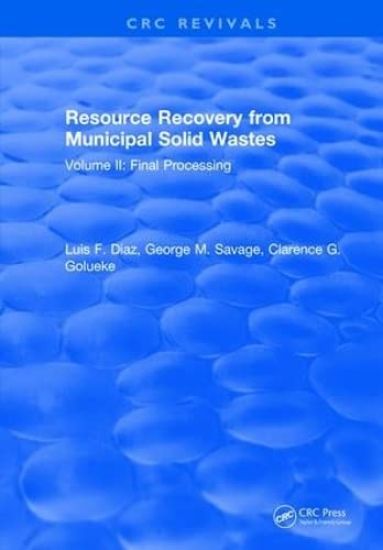
Resource Recovery From Municipal Solid Wastes

Resource Recovery From Municipal Solid Wastes

Luis F. Diaz; George M. Savage; Clarence G. Golueke

CRC Press
2017
sidottu
This text includes two volumes discussing resource recovery form municipal solid wastes. Volume 2 discusses in more detail the final processing including; incineration, preparation and use of refuse-derived fuel, biological resource recoveyr, biogas production, hydrolysis and single cell protein and ethanol production, composting, environmental aspects, and landfill.
With Courage

With Courage

Bernard C Nalty; John F Shiner; George M Watson

University Press of the Pacific
2005
pokkari
The four years between 1941 and 1945 were years in which the nation raised and trained an air armada and committed it to operations on a scale unknown to that time. With Courage: The U.S. Army Air Forces in World War II retells the story of sacrifice, valor, and achievements in air campaigns against tough determined adversaries. It describes the development of a uniquely American doctrine for the application of air power against an opponent's key industries and centers of national life, a doctrine whose legacy today is the Global Reach - Global Power strategic planning framework of the modern U.S. Air Force. The narrative integrates aspects of strategic intelligence, logistics, technology, and leadership to offer a full yet concise account of the contributions of American air power to victory in that war.
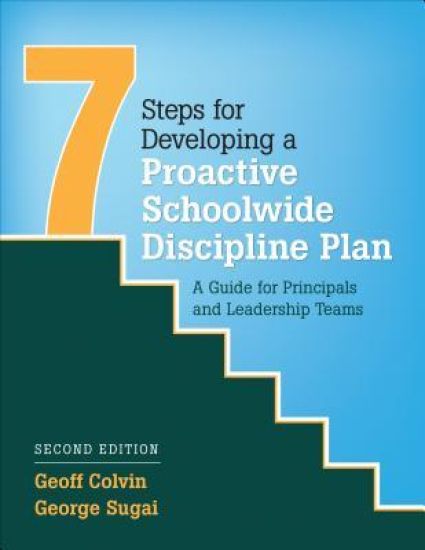
Seven Steps for Developing a Proactive Schoolwide Discipline Plan

Seven Steps for Developing a Proactive Schoolwide Discipline Plan

Geoffrey T. Colvin; George M. Sugai

Corwin Press Inc
2018
nidottu
Maintaining well-disciplined schools is becoming more difficult in today's educational system, and problem behavior or lack of school discipline is reaching crisis proportions. Nationally recognized behavior experts Geoff Colvin and George Sugai provide the "what's," "why's," and "how's" for establishing an effective discipline program while promoting an overall positive and welcoming school climate.
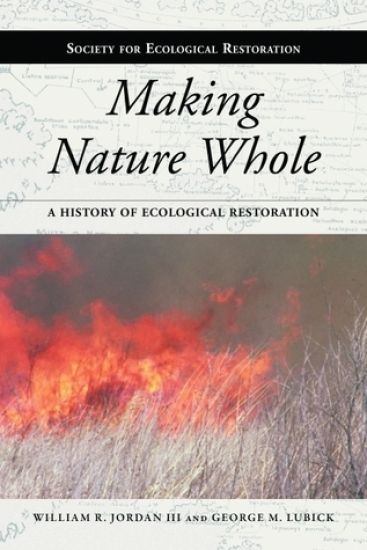
Making Nature Whole

Making Nature Whole

William R. Jordan; George M. Lubick

Island Press
2011
nidottu
"Making Nature Whole" is a seminal volume that presents an in-depth history of the field of ecological restoration as it has developed over the last three decades. The authors draw from both published and unpublished sources, including archival materials and oral histories from early practitioners, to explore the development of the field and its importance to environmental management as well as to the larger environmental movement and our understanding of the world. Considering antecedents as varied as monastic gardens, the Scientific Revolution, and the emerging nature-awareness of nineteenth-century 'Romantics and Transcendentalists', Jordan and Lubick offer unique insight into the field's philosophical and theoretical underpinnings. They examine specifically the more recent history, including the story of those who first attempted to recreate natural ecosystems early in the twentieth century, as well as those who over the past few decades have realised the value of this approach not only as a critical element in conservation but also as a context for negotiating the ever-changing relationship between humans and the natural environment. "Making Nature Whole" is a landmark contribution, providing context and history regarding a distinctive form of land management and giving readers a fascinating overview of the development of the field. It is essential reading for anyone interested in understanding where ecological restoration came from or where it might be going.
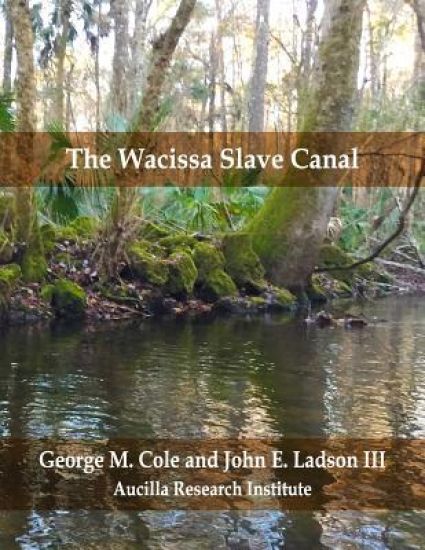
The Wacissa Slave Canal

The Wacissa Slave Canal

John E. Ladson; George M. Cole

Independently Published
2018
nidottu
"... the Canal today remains a natural wonder. It has a remoteness and natural ambiance unlike any other water body in the state. Although a physically challenging venture, a paddling trip through the Canal is an almost spiritual experience, especially to anyone aware of its rich history. Anyone knowledgeable of that history wll be impelled to think of paleo-hunters traveling through the area in search of chert for manufacturing weapons as well as game; later use of the surrounding area by Native Americans for camp sites, ceremonial and burial use; the frequent use of the passage by the Tocobaga for transporting produce and other supplies for the Spanish Missions; the backbreaking work performed by slaves during the pre-Civil War era in digging and piling up the huge limestone boulders that now line some of the banks of the canal; and the subsequent use of the area for trade, subsistence fishing and hunting and even ' moonshining'. That rich history can not help but enhance the natural beauty of the passage."
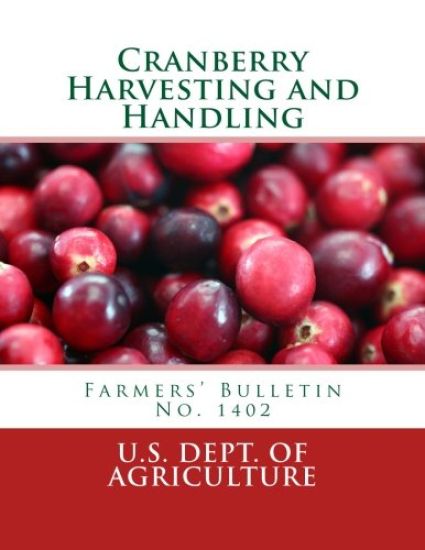
Cranberry Harvesting and Handling: Farmers' Bulletin No. 1402

Cranberry Harvesting and Handling: Farmers' Bulletin No. 1402

Henry J. Franklyn; George M. Darrow; O. G. Malde

Createspace Independent Publishing Platform
2018
nidottu
This special edition of 'Cranberry Harvesting and Handling' was published by the U.S. Department of Agriculture in 1924, making it just shy of a century old. It is also known as 'Farmers Bulletin No. 1402.' The book features sections on Harvesting, Yields, Costs, and Returns, Handling and Storing, Grading, Sorting, and Packing, and more. A super-short, fast read for all those who collect these old government publications, and everyone interested in US Horticultural history. IMPORTANT NOTE - Please read BEFORE buying THIS BOOK IS A REPRINT. IT IS NOT AN ORIGINAL COPY. This book is a reprint edition and is a perfect facsimile of the original book. It is not set in a modern typeface and has not been digitally enhanced. As a result, some characters and images might suffer from slight imperfections, blurring, or minor shadows in the page background. This book appears exactly as it did when it was first printed. DISCLAIMER: Due to the age of this book, some methods, beliefs, or practices may have been deemed unsafe, undesirable, or unacceptable in the interim years. In utilizing the information herein, you do so at your own risk. We republish antiquarian books without judgment, solely for their historical and cultural importance, and for educational purposes. If purchasing a book more than 50 years old, especially for a minor, please use due diligence and vet the text before gifting.
Quantification of Circulating Proteins

Quantification of Circulating Proteins

Wim Th. Hermens; George M. Willems; Marja P. Visser

Springer
2011
nidottu
Less than 50 years ago it was discovered that steady-state protein concentrations in plasma are the net result of continuous elimination and synthesis of protein molecules. The first quanti­ tative studies on the turnover and distribution of plasma pro­ teins were made around 1950, after the introduction of radio­ labeled protein preparations. Around 1970, another development in quantitative interpre­ tation of circulating proteins was initiated in clinical enzy­ mology. Estimation of cumulative release into plasma of cellular enzymes can be helpful in a variety of diseases to assess the extent of tissue damage and to evaluate therapy. Enzymes can be considered as biological tracers, i.e. minute quantities of protein can be accurately determined by their spe­ cific catalytic activities. However, radioactive tracers permit direct estimates of turnover and distr ibution by measurement of excreted radioactivity, possibilities that are not available for enzymes. Consequently, only a few techniques used in tracer studies with radiolabeled proteins can be applied to circulating tissue enzymes and this may explain the lack of communication between the fields of plasma protein metabolism and quantitative clinical enzymology. In the present study a summary is given of the basic methods used in both fields, with emphasis on the equivalence of various models and formalisms used by different authors. It is shown that major limitations in the study of circulating tissue enzymes can be overcome if two different, but simultaneously released, en­ zymes can be measured. The resulting method will also be applied to plasma protein metabolism.
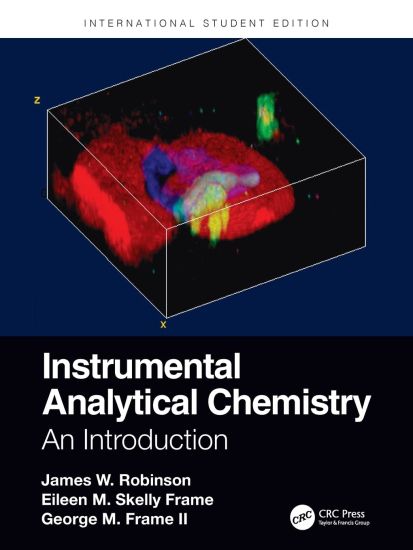
Instrumental Analytical Chemistry

Instrumental Analytical Chemistry

James W. Robinson; Eileen M. Skelly Frame; George M. Frame II

TAYLOR FRANCIS LTD
2021
nidottu
Analytical chemistry today is almost entirely instrumental analytical chemistry and it is performed by many scientists and engineers who are not chemists. Analytical instrumentation is crucial to research in molecular biology, medicine, geology, food science, materials science, and many other fields. With the growing sophistication of laboratory equipment, there is a danger that analytical instruments can be regarded as "black boxes" by those using them. The well-known phrase "garbage in, garbage out" holds true for analytical instrumentation as well as computers. This book serves to provide users of analytical instrumentation with an understanding of their instruments.This book is written to teach undergraduate students and those working in chemical fields outside analytical chemistry how contemporary analytical instrumentation works, as well as its uses and limitations. Mathematics is kept to a minimum. No background in calculus, physics, or physical chemistry is required. The major fields of modern instrumentation are covered, including applications of each type of instrumental technique.Each chapter includes: A discussion of the fundamental principles underlying each technique Detailed descriptions of the instrumentation. An extensive and up to date bibliography End of chapter problems Suggested experiments appropriate to the technique where relevant This text uniquely combines instrumental analysis with organic spectral interpretation (IR, NMR, and MS). It provides detailed coverage of sampling, sample handling, sample storage, and sample preparation. In addition, the authors have included many instrument manufacturers’ websites, which contain extensive resources.
Laboratory Hemostasis

Laboratory Hemostasis

Sterling T. Bennett; Christopher M. Lehman; George M. Rodgers

Springer International Publishing AG
2014
nidottu
Coagulation testing is the basis for the diagnosis of bleeding and thrombotic disorders, as well as the mainstay of anticoagulant monitoring and management. This handbook provides practical information and guidance on topics relevant to directing a coagulation laboratory, filling a void in the literature. Since the first edition, all chapters have been updated and an entirely new chapter is included on pharmacogenomics and pharmacogenetics. The book will aid pathologists, clinical laboratory scientists and other physicians serving as laboratory directors to understand and carry out their responsibilities. It will also assist residents and fellows in learning the basics of coagulation testing and serve as a useful day-to-day reference for coagulation laboratory supervisors, technologists, and technicians. Finally, clinicians may find aspects of the book helpful in understanding the role of the coagulation laboratory in patient evaluation and monitoring.