Kirjojen hintavertailu. Mukana 12 016 292 kirjaa ja 12 kauppaa.

Kirjahaku

Etsi kirjoja tekijän nimen, kirjan nimen tai ISBN:n perusteella.

1000 tulosta hakusanalla George Shepard

George Grant

George Grant

Hugh Donald Forbes

University of Toronto Press
2007
sidottu
George Grant (1918-1988) is widely regarded as one of Canada's most influential philosophers and political theorists. His best-known work, Lament for a Nation (1965), presented a radical reinterpretation of Canadian history and inspired a surge of nationalist sentiment across the country. Along with Grant's other books, it addressed the major cultural shifts and dilemmas of our age, and introduced several generations of students to the basic questions of political philosophy. This study aims to guide the reader toward a clearer understanding of Grant's thought. Focusing on his six short books and some of his most significant articles and speeches, Hugh Donald Forbes provides both an introduction to and an overview of Grant's career and his many contributions to the fields of political science, philosophy, religion, and Canadian studies. Throughout Forbes sheds light on some of Grant's more contradictory and complex ideas, and provides an assessment of his impact on the Canadian political and cultural landscape. Forbes also relates Grant's work to that of three disparate and controversial European thinkers - Martin Heidegger, Leo Strauss, and Simone Weil - providing contexts and comparisons outside of the strictly Canadian framework in which he is normally situated. Comprehensive and lucidly written, George Grant: A Guide to His Thought is an invaluable resource for students, general readers, and academic specialists alike.
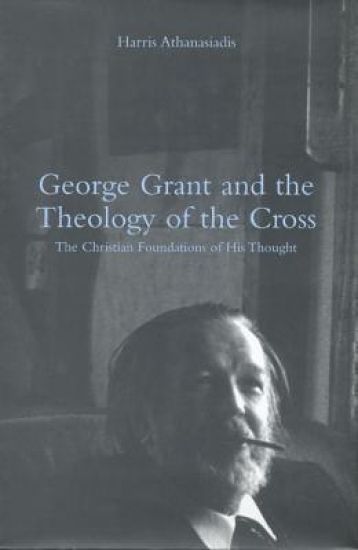
George Grant and the Theology of the Cross

George Grant and the Theology of the Cross

Harris Athanasiadis

University of Toronto Press
2001
sidottu
George Grant is considered by many to be Canada's foremost political philosopher. But while his sweeping criticisms of technological globalization may be well known, the religious passion that informed his thought has been largely obscured from public view. In this book, Harris Athanasiadis shows Grant to be not just a philosopher but a mystic, not just an intellectual but a man of faith. Although Grant did not write about his faith to any great extent, he claimed that it was the inspirational centre of everything he thought and wrote. As this book reveals, beneath the philosophical, social, political, ethical, national, and moral issues that Grant tackled throughout his career was a fundamental concern with theodicy - the problem of faith in God in a world of conflict, suffering, and tragedy. Athanasiadis argues that Grant's thinking was driven by a passion to see God in spite of all that might contradict such a vision. He illustrates Grant's profound engagement with what Luther described as 'the theology of the cross,' and goes on to show how this theological orientation developed significance for Grant as he struggled with various thinkers and intellectual movements. One of his most important influences was the philosopher/activist/mystic Simone Weil, who helped Grant find language through which to articulate a theology of the cross within a twentieth-century secular North American context. This book explicates the theology that drove Grant's intellectual quest, thus providing a key to his essentially mystical nature. The author makes a compelling case that the philosopher was at heart a theologian.
George Grant and the Subversion of Modernity
George Grant's mystique as a public philosopher is due in part to the seemingly contradictory political stances he took through the years. His opposition to the Vietnam war and his linking of liberalism with technological progress and imperialism brought him favour among the political left during the 1960s. Then, in the following decade, his opposition to abortion earned him allies on the political right, despite his rejection of limitless capitalist growth and free trade with the US. This collection of original essays reveals the complex philosophic, artistic, and religious sources underlying Grant's public positions of nationalism, pacifism, and conservatism. The collection begins with Grant's previously unpublished writing on Céline. This is a bold and vigorous Grant, writing on a topic about which he is passionate and deeply informed. Grant's own work is followed by two pieces that explore his devotion to Céline, Nietzsche, Heidegger, Weil, and Strauss also receive special attention here. Many of the essays draw on manuscripts and notes left unpublished by Grant, thus contributing new perspectives to the ongoing discussion of his work. The focus of this book is the unknown George Grant, namely, the philosophic, religious, and artistic inspiration behind his well-known public positions. Here we discover the great modern thinkers who animated Grant, and whose writings occupied him for much of his life.
George Grant

George Grant

George Grant

University of Toronto Press
1996
pokkari
George Grant was one of Canada's foremost political and religious thinkers. In his published writings, Grant was a careful and guarded writer, but in his letters he was frank and spontaneous, expressing ideas and opinions that he hesitated to convey in print. Grant's letters are remarkable for their continuity – about twelve hundred letters survive from 1923 to his death in 1988 – and for their quality. For more than fifty years, he favoured his correspondents with his observations about international relations, Canadian politics, religion, literature, and philosophy. William Christian has selected some three hundred letters, postcards, telegrams, and journal entries which reveal much about Grant – both the troubled man and the daring thinker. His correspondence begins with the letters from his early years at Upper Canada College and his undergraduate days at Queen's University, followed by letters from London during the Second World War, when he struggled with the conflict between his pacifism and his sense of duty. The middle section includes letters that describe his life at Dalhousie in the 1950s, his resignation from York University, and his hopes to create in the department of religion at McMaster University a kind of fifth column that would preserve a university within the multiversities he thought had taken over higher education in Canada. The later letters feature his remorseless attacks on what he felt were the perfidies of Trudeau during his long tenure as prime minister.
The George Grant Reader

The George Grant Reader

George Grant

University of Toronto Press
1998
pokkari
Called the most forceful voice of philosophic radicalism that Canada has so far produced, George Grant was a prolific writer, engaged by subjects ranging from Canadian politics to ancient philosophy. The George Grant Reader is the first book to bring together in one volume a comprehensive selection of his work, allowing readers to sample the whole range of his interests. The reader includes selections from all phases of Grant's career, beginning with The Empire: Yes or No? (1945) and ending with an article on Heidegger, left unfinished at the time of his death in 1988. Forty-six essays, grouped into six sections, encompass his views on politics, morality, philosophy, education, technology, faith, and love. Also featured are Grant's writings on those who most influenced his thought, ranging from St Augustine to Karl Marx and Simone Weil. A number of his more disturbing essays are also included such as his controversial writings on abortion. The editors' substantial introduction places the articles in the wider context of Grant's life and thought. This long-overdue collection contains classic works, little-known masterpieces, and previously unpublished material. The volume is an ideal starting point for those who have never read Grant as well as an indispensable reference for Grant specialists.
George Grant

George Grant

Hugh Donald Forbes

University of Toronto Press
2007
pokkari
George Grant (1918-1988) is widely regarded as one of Canada's most influential philosophers and political theorists. His best-known work, Lament for a Nation (1965), presented a radical reinterpretation of Canadian history and inspired a surge of nationalist sentiment across the country. Along with Grant's other books, it addressed the major cultural shifts and dilemmas of our age, and introduced several generations of students to the basic questions of political philosophy. This study aims to guide the reader toward a clearer understanding of Grant's thought. Focusing on his six short books and some of his most significant articles and speeches, Hugh Donald Forbes provides both an introduction to and an overview of Grant's career and his many contributions to the fields of political science, philosophy, religion, and Canadian studies. Throughout Forbes sheds light on some of Grant's more contradictory and complex ideas, and provides an assessment of his impact on the Canadian political and cultural landscape. Forbes also relates Grant's work to that of three disparate and controversial European thinkers - Martin Heidegger, Leo Strauss, and Simone Weil - providing contexts and comparisons outside of the strictly Canadian framework in which he is normally situated. Comprehensive and lucidly written, George Grant: A Guide to His Thought is an invaluable resource for students, general readers, and academic specialists alike.
George Washington's Expense Account

George Washington's Expense Account

Marvin Kitman

Grove Press / Atlantic Monthly Press
2001
nidottu
In George Washington's Expense Account -- the best-selling expense account in history -- Kitman shows how Washington brilliantly turned his noble gesture of refusing payment for his services as commander in chief of the Continental Army into an opportunity to indulge his insatiable lust for fine food and drink, extravagant clothing, and lavish accommodations. In a close analysis of the document that financed our Revolution, Kitman uncovers more scandals than you can shake a Nixon Cabinet member at -- and serves each up with verve and wit.
George Müller

George Müller

Faith Coxe Bailey

Moody Publishers
2024
nidottu
It began with George M ller--rebellious, absorbed in the world and its pleasures.It became George M ller--miraculously transformed by the power of Christ, daring to dream a dream and to trust God to bring it to pass.In jail by age sixteen, few people would have believed that George M ller would become a great hero of the faith. He and his wife cared for over 10,000 orphans. Discover the incredible true story of the man of faith whose missionary work was built on prayer and who still inspires us today. Taking his biographical details and putting them in an exciting novel form, this short book will stir your heart, move you to greater faith, and lead you to worship the God who answers prayer.
George Bell, Bishop of Chichester

George Bell, Bishop of Chichester

Dr. Andrew Chandler

William B Eerdmans Publishing Co
2016
nidottu
It was to George Bell, an English bishop, that Dietrich Bonhoeffer sent his last words before he was executed at the Flossenburgconcentration camp in April 1945. Why he did so becomes clear from Andrew Chandler's new biography of George Kennedy Allen Bell (1883-1958).As he traces the arc of Bell's life, Chandler shows how his story reshapes our perspective on Bonhoeffer's life and times. In addition to serving as Bishop of Chichester, Bell was an internationalist and ecumenical leader, one of the great Christian humanists of the twentieth century, a tenacious critic of the obliteration bombing of enemy cities during World War II, and a key ally of those who struggled for years to resist Hitler in Germany itself. This inspiring biography raises important questions that still haunt the moral imagination today: When should the word of protest be spoken? When should nations go to war, and how should they fight? What are our obligations to the victims of dictators and international conflict?
George Whitefield

George Whitefield

Peter Y. Choi; Mark A. Noll

William B Eerdmans Publishing Co
2018
nidottu
Narrates the drama of a famous preacher's entire career in his historical context. George Whitefield (1714-1770) is remembered as a spirited revivalist, a catalyst for the Great Awakening, and a founder of the evangelical movement in America. But Whitefield was also a citizen of the British Empire who used his political savvy and theological creativity to champion the cause of imperial expansion. In this religious biography of "the Grand Itinerant," Peter Choi reexamines the Great Awakening and its relationship to a fast-growing British Empire in the context of a dramatic human story. Choi shows that as the British Empire and the Great Awakening evolved, so did Whitefield and his influence. Rather than focusing on his early preaching career, as many books do, Choi follows the trajectory of Whitefield's whole life, including his relation-ships to Britain, the American colonies, slavery, war, and higher education. George Whitefield: Evangelist for God and Empire tells the fascinating, multifaceted life story of Whitefield both as revivalist preacher and subject of the British Empire.
George Washington's War on Native America

George Washington's War on Native America

Barbara Alice Mann

University of Nebraska Press
2009
pokkari
The Revolutionary War is ordinarily presented as a conflict exclusively between colonists and the British, fought along the northern Atlantic seacoast. George Washington's War on Native America recounts the tragic events on the forgotten western front of the American Revolution—a war fought against and ultimately won by Native America. Although history texts often erroneously present the Natives, primarily the Iroquois League and the Ohio Union, as "allies" (or lackeys) of the British, Native America was in fact working from its own agenda: to prevent settlers from invading the Old Northwest. Throughout the war, the unwavering goal of the Revolutionary Army, under George Washington, and its associated settler militias was to break the power of the Iroquois League, which had successfully held off invasion for the preceding two centuries, and the newly formed Ohio Union. To destroy the Natives who stood in the way of land seizure, Washington authorized a series of rampages intended to destroy the League and the Union by starvation. As a result, uncounted thousands of Natives perished from New York and Pennsylvania to Ohio. Barbara Alice Mann tells how, in the wake of the massive assaults, Native America nonetheless won the war in the West and managed to maintain control of the land west and north of the Allegheny–Ohio River systems.
George Allen

George Allen

Michael Richman; Dick Vermeil

University of Nebraska Press
2023
sidottu
George Allen was a fascinating and eccentric figure in the world of football coaching. His remarkable career spanned six decades, from the late 1940s until his sudden death in 1990 at the age of seventy-three. Although he never won a Super Bowl, he never had a losing season as an NFL head coach and was inducted into the Pro Football Hall of Fame in 2002. In George Allen: A Football Life, Mike Richman captures the life and accomplishments of one of the most successful NFL coaches of all time and one of the greatest innovators in the game. A player’s coach, Allen was a tremendous motivator and game strategist, as well as a defensive mastermind, and is credited with making special teams a critical focus in an era in which they were an afterthought. He had a keen eye for talent and pulled off masterful trades, often for veteran players who were viewed to be past their prime, who then had great seasons and made his teams much better. In addition to his coaching feats, Allen had an idiosyncratic and controversial personality. His life revolved around football 24-7. One of his quirks was to minimize chewing time by consuming soft foods, giving himself more time to prepare for games and study opponents. He lived and breathed football; he compared losing to death. Allen had contentious relationships with the owners of the two NFL teams for which he was the head coach, the Washington Redskins and Los Angeles Rams. Richman explores why he was fired by those teams and whether he was blackballed from coaching again in the NFL. Based on detailed research and interviews with family, former players, and coaches, George Allen is the definitive biography of the football coach who lived to win, loved a good challenge, and left a lasting legacy on pro football history.
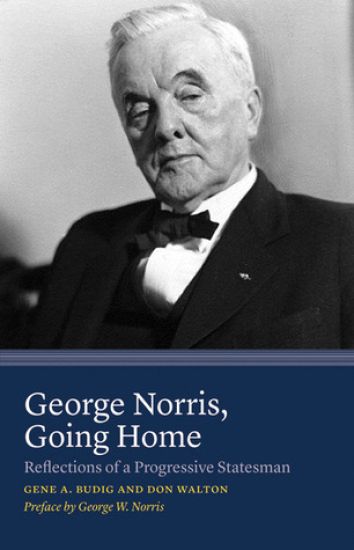
George Norris, Going Home

George Norris, Going Home

Gene A. Budig; Don Walton

Bison Books
2013
pokkari
After forty years of congressional service, five terms in the House and five in the Senate, George William Norris (1861–1944) was going home to Nebraska. Norris had lost the 1942 Senate race and felt the defeat keenly. But as his train rolled westward, he was forcefully reminded of what his legislative efforts had wrought, from the Tennessee Valley Authority (TVA) to the Rural Electrification Act (REA), which brought power to the land unfolding before him. It is here that authors Gene A. Budig and Don Walton begin their journey with this great statesman, perhaps the last progressive Republican, a tireless champion of “public power” and the common man.This book carries readers back through Norris’s career and accomplishments: the establishment of the TVA and the REA as well as the Twentieth Amendment to the Constitution and the shaping of Nebraska’s unique unicameral legislature. Norris recalls the battles he waged, one of which landed him in John F. Kennedy’s Profiles in Courage, and the alliances he formed with leading political figures of his day, from Fiorello La Guardia to Franklin D. Roosevelt. The result is a contemporary perspective on a man who fiercely defended the public interest and followed his convictions to the lasting benefit of his state and his country.
George McGovern and the Democratic Insurgents

George McGovern and the Democratic Insurgents

Hal Elliott Wert; Frank Mankiewicz

University of Nebraska Press
2015
pokkari
South Dakota senator George McGovern’s 1972 presidential bid was one of the most memorable campaigns in American political history. Despite McGovern’s landslide loss to the incumbent Richard Nixon, McGovern’s campaign attracted widespread grassroots support, and his campaign posters represent a landmark in the history of U.S. campaign memorabilia in terms of the sheer number and quality of posters produced in support of the candidate. Like Barack Obama’s run for the presidency in 2008, McGovern’s campaign stoked the imagination of the artistic community. World-famous artists-including Andy Warhol, Alexander Calder, Larry Rivers, Sam Francis, Thomas W. Benton, Sister Corita, and Paul Davis-produced posters in support of McGovern that captured a generation’s efforts to bring about major political change. George McGovern and the Democratic Insurgents, with nearly three hundred stunning images, provides an illustrated journey through the protest and psychedelic rock posters of the 1960s, the posters of Eugene McCarthy’s 1968 presidential campaign, the poster explosion of George McGovern’s 1972 campaign, and the best campaign posters from 1976 to 2012. A historical examination of the graphic precedents for this politicized art form, Hal Elliott Wert’s collection offers readers a singular insight into artistic invention and activism in the United States.
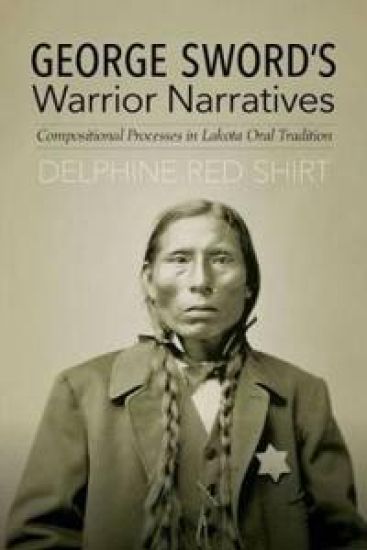
George Sword's Warrior Narratives

George Sword's Warrior Narratives

Delphine Red Shirt

University of Nebraska Press
2016
sidottu
Published through the Recovering Languages and Literacies of the Americas initiative, supported by the Andrew W. Mellon Foundation The general focus in Lakota oral literary research has been on content rather than process within oral traditions. In this groundbreaking study of the characteristics of Lakota oral style, Delphine Red Shirt shows how its composition and structure are reflected in the work of George Sword, who composed 245 pages of text in the Lakota language using the English alphabet. What emerges in Sword’s Lakota narratives are the formulaic patterns inherent in the Lakota language that are used to tell the narratives, as well as recurring themes and story patterns. Red Shirt’s primary conclusion is that this cadence originates from a distinctly Lakota oral tradition. Red Shirt analyzes historical documents and original texts in Lakota to answer the question: How is Lakota literature defined? Her pioneering work uncovers the epistemological basis of this literature, which can provide material for literary studies, anthropological and traditional linguistics, and translation studies. Her analysis of Sword’s texts discloses tools that can be used to determine whether the origin of any given narrative in Lakota tradition is oral, thereby opening avenues for further research.
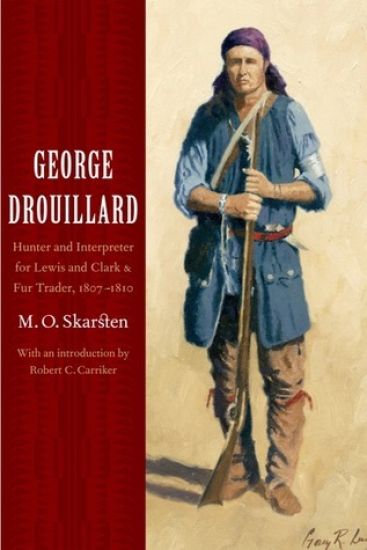
George Drouillard

George Drouillard

M. O. Skarsten

Bison Books
2005
pokkari
George Drouillard's service to the Lewis and Clark Expedition was long obscured by the stronger light cast on the leaders and Sacagawea. Drawing from the various journals of the expedition and from many more obscure documents, letters, and legal records, M. O. Skarsten presents not merely an account of the pursuits in which Drouillard engaged but also an idea of the kind of man he was, as a member of the famous expedition and later as a partner of Manuel Lisa in the fur trade. The variety of responsibilities assigned to Drouillard during the expedition form an impressive list—recruiting personnel, message bearing, retrieving a deserter, pursuing strayed and stolen horses, trading for horses and canoes, horse gelding, and serving as riverboat helmsman, diplomat to the Indians, and boon companion to Lewis—in addition to the hunting and interpreting for which he was specifically hired. Skarsten also pays detailed attention to Drouillard's fur-trade activities, including his trial for the murder of Bissonette, his attempt to trade with the Blackfeet, and later his death at their hands in 1810. Robert C. Carriker's introduction to this edition includes information on Skarsten, an evaluation of his treatment of Drouillard, and new information on Drouillard revealed since the book's original publication in 1964.
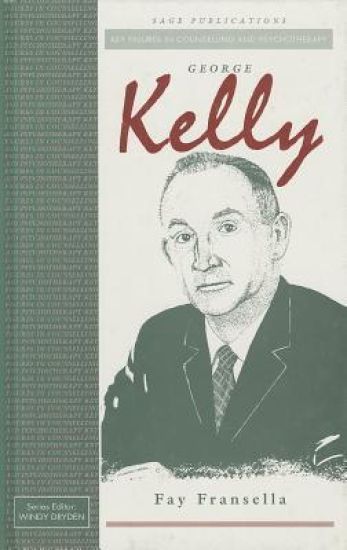
George Kelly

George Kelly

Fay Fransella

SAGE Publications Ltd
1995
sidottu
George Kelly's personal construct theory, first published in 1955, is as radical today as it was then. Describing how each one of us goes about our daily life trying to make sense of the events around us, it maintains that we are in charge of what we do in the world, that we do not merely react to events. This book reveals that George Kelly was a man of enormous intellect, of many talents and of great complexity. Fay Fransella outlines how his views have influenced the theory and practice of psychotherapy, and illustrates how his training in physics and mathematics influenced his theory and led to the development of one of his methods of measurement - the repertory grid. The book also describes Kelly's philosophy of constructive alternativism, which suggests that we have created and can therefore recreate ourselves, and that what is true for the individual, rather than some external truth, is what matters. This philosophy can be seen as a precursor of the current emphasis on constructivism. Criticisms of Kelly's work and examples of work carried out within this framework since his death are also featured.
George Kelly

George Kelly

Fay Fransella

SAGE Publications Ltd
1995
nidottu
George Kelly's personal construct theory, first published in 1955, is as radical today as it was then. Describing how each one of us goes about our daily life trying to make sense of the events around us, it maintains that we are in charge of what we do in the world, that we do not merely react to events. This book reveals that George Kelly was a man of enormous intellect, of many talents and of great complexity. Fay Fransella outlines how his views have influenced the theory and practice of psychotherapy, and illustrates how his training in physics and mathematics influenced his theory and led to the development of one of his methods of measurement - the repertory grid. The book also describes Kelly's philosophy of constructive alternativism, which suggests that we have created and can therefore recreate ourselves, and that what is true for the individual, rather than some external truth, is what matters. This philosophy can be seen as a precursor of the current emphasis on constructivism. Criticisms of Kelly's work and examples of work carried out within this framework since his death are also featured.
George Montague Wheeler

George Montague Wheeler

Doris Ostrander Dawdy

Swallow Press
1993
sidottu
Until Dawdy's \u201cThe Wyant Diary\u201d appeared in Arizona and the West in 1980, it was virtually unknown that Lt. Wheeler was the leader of the government exploring party from which artist A. H. Wyant returned with a paralyzed arm. So little used were government reports prior to the mid-twentieth century that not one of the writers and compilers of information about this prominent artist, known to have been with a military expedition, had looked at the most likely report, that of Lt. Wheeler. Government reports can be extremely misleading. Fault can be found with Wheeler’s in particular. Not only was the Wyant incident disguised in the 1873 report, but earlier reports concealed a hidden agenda that was not exposed until the 1960s when Wheeler’s mining operations were disclosed. Dawdy’s research was done mainly at the National Archives during the years she lived in the Washington area. All War Department papers relating to Wheeler's explorations from 1869 to 1879 were examined and many of them copied. They tell a far different story from that told by Wheeler in his early reports and his final report which appeared in 1889. Likewise so do the field notes of G. K. Gilbert, Wheeler’s chief geologist, and a recent Indian rights case filed by the Hualapai Tribe of Arizona claiming compensation for minerals extracted by mining entrepreneurs, including some in Wheeler’s Maynard District that were located by Wheeler and various members of his expedition in 1871. At last there is an explanation of the powers of attorney Wheeler extracted from members of his expedition in 1871 when the government was accused by a California newspaper of sending out a party of prospectors. Mineral locations found by those prospectors became the property of Lyons and Wheeler Mining Company, a California corporation, in 1872.