

Kirjahaku
Etsi kirjoja tekijän nimen, kirjan nimen tai ISBN:n perusteella.
1000 tulosta hakusanalla Georges FELDIS


UFC fighter, Georges "Rush" St. Pierre, shares the lessons he learned on his way to the top, in The Way of the Fight, revealing how he overcame bullying and injury to become an internationally celebrated athlete and champion. The reigning UFC welterweight champion, St. Pierre seemed untouchable until injury derailed him and jeopardized his title and his career. Determined to make his comeback, he embarked on a careful regimen of physical therapy. He also used this healing period to assess his life, where he's been, what he's achieved, where he wants to go, and and lessons that helped shape who he is. In The Way of the Fight, Canadian championship fighter St. Pierre invites fans into the circle of his life, sharing his most closely guarded memories. A compelling memoir that offers an intimate, gritty look at a fighter's journey, told through inspiring vignettes, GSP is a moving account of commitment and power, achievement and pain, dedication and conviction from one of the world's greatest champions.
Set in a Paris apartment block, this novel describes in minute detail the lives of the inhabitants and the apartments they inhabit at a specific moment in time.
Ransacking his Paris flat, a group of his faithful companions trawl through his diary for any hint as to his location and, insidiously, a ghost, from Vowl's past starts to cast its malignant shadow.
Things: A Story of the Sixties is the story of a young couple who want to enjoy life, but the only way they know how to do so is through ownership of 'things'.

Written in alternating chapters, W or the Memory of Childhood, tells two parallel tales, in two parts. The other story is about two people called Gaspard Winckler: one an eight-year-old deaf-mute lost in a shipwreck, the other a man despatched to search for him, who discovers W, an island state based on the rules of sport.
Modeling for Preparative Chromatography
Georges Guiochon; Bingchang Lin
Academic Press Inc
2003
sidottu
Nonlinear chromatography is a field that borders both chemical engineering and physical chemistry. In turn, the theory of nonlinear chromatography is the foundation of preparative chromatography, a separation process that has lately become of considerable interest in the pharmaceutical industry. Only chromatography is sufficiently flexible and powerful to satisfy the practical requirements encountered in most difficult separations of pharmaceuticals and pharmaceutical intermediates. Since "nonlinear" behaviour is strictly a mathematical concept, it is difficult to leave mathematics out of any fundamental study of nonlinear chromatography. Therefore, Modeling for Preparative Chromatography will describe the different mathematical models of chromatography, examine the assumptions on which they are based, consider their properties, and discuss their solutions. All this will be done from a mathematical analysis point of view, paying considerable attention to the influence of nonlinear behavior on the results.
Fundamentals of Preparative and Nonlinear Chromatography
Georges Guiochon; Attila Felinger; Dean G. G. Shirazi
Academic Press Inc
2006
sidottu
Fundamentals of Preparative and Nonlinear Chromatography, Second Edition is devoted to the fundamentals of a new process of purification or extraction of chemicals or proteins widely used in the pharmaceutical industry and in preparative chromatography. This process permits the preparation of extremely pure compounds satisfying the requests of the US Food and Drug Administration. The book describes the fundamentals of thermodynamics, mass transfer kinetics, and flow through porous media that are relevant to chromatography. It presents the models used in chromatography and their solutions, discusses the applications made, describes the different processes used, their numerous applications, and the methods of optimization of the experimental conditions of this process.
First published in 1964, Ancient Iraq is the classic work on Mesopotamia and the great civilizations that sprung from the region bounded by the Euphrates and Tigris. It remains an invaluable primer for anyone fascinated by the extraordinary ruins and artworks which have emerged from generations of archaeological digs. The book gives a lively, comprehensive account, from the earliest city fragments through the Sumerians, Akkadians, Assyrians and Babylonians through to its decline under Hellenistic rule.
A masterpiece of transgressive, surrealist erotica, George Bataille's Story of the Eye was the Fifty Shades of Grey of its era. This Penguin Modern Classics edition is translated by Joachim Neugroschal, and published with essays by Susan Sontag and Roland Barthes.Bataille's first novel, published under the pseudonym 'Lord Auch', is still his most notorious work. In this explicit pornographic fantasy, the young male narrator and his lovers Simone and Marcelle embark on a sexual quest involving sadism, torture, orgies, madness and defilement, culminating in a final act of transgression. Shocking and sacrilegious, Story of the Eye is the fullest expression of Bataille's obsession with the closeness of sex, violence and death. Yet it is also hallucinogenic in its power, and is one of the erotic classics of the twentieth century.This edition also includes Susan Sontag's superb study of pornography as art, 'The Pornographic Imagination', as well as Roland Barthes' essay 'The Metaphor of the Eye'.Georges Bataille (1897-1962), French essayist and novelist, was born in Billom, France. He converted to Catholicism, then later to Marxism, and was interested in psychoanalysis and mysticism, forming a secret society dedicated to glorifying human sacrifice. Leading a simple life as the curator of a municipal library, Bataille was involved on the fringes of Surrealism, founding the Surrealist magazine Documents in 1929, and editing the literary review Critique from 1946 until his death. Among his other works are the novels Blue of Noon (1957) and My Mother (1966), and the essays Eroticism (1957) and Literature and Evil (1957).If you enjoyed Story of the Eye, you might like Anaïs Nin's Delta of Venus, also available in Penguin Modern Classics.'His black masterpiece ... [a] brilliant, exquisitely fetishistic tale of sexual agitaion'New Statesman
L'Abbé C is a shocking, unnerving narrative about the intense and terrifying relationship between twin brothers. Charles is a modern libertine, dedicated to vice and depravity, while Robert is a priest so devout that he is nicknamed 'l'Abbé'. When the sexually wild Eponine intrudes upon their suffocating relationship, anguish, delirium, and death ensue. Charged with sensuality and a heightened, dreamlike atmosphere, this novel portrays the darkest and most profound aspects of human experience.
Set against the backdrop of Europe's slide into Fascism, Blue of Noon is a blackly compelling account of depravity and violence. As its narrator lurches despairingly from city to city in a surreal sexual and mental nightmare of squalor, sadism and drunken encounters, his internal collapse mirrors the fighting and marching on the streets outside. Exploring the dark forces beneath the surface of civilization, this is a novel torn between identifying with history's victims and being seduced by the monstrous glamour of its terrible victors, and is one of the twentieth century's great nihilist works.
In these three works of erotic prose Georges Bataille fuses sex and spirituality in a highly personal and philosophical vision of the self. My Mother is a frank and intense depiction of a young man's sexual initiation and corruption by his mother, where the profane becomes sacred, and intense experience is shown as the only way to transcend the boundaries of society and morality. Madame Edwarda is the story of a prostitute who calls herself God, and The Dead Man, published in 1964 after Bataille's death, is a startling short tale of cruelty and desire. This volume also contains Bataille's own introductions to his texts as well as essays by Yukio Mishima and Ken Hollings.
A philosopher, essayist, novelist, pornographer and fervent Catholic who came to regard the brothels of Paris as his true 'churches', Georges Bataille ranks among the boldest and most disturbing of twentieth-century thinkers. In this influential study he links the underlying sexual basis of religion to death, offering a dazzling array of insights into incest, prostitution, marriage, murder, sadism, sacrifice and violence, as well as including comments on Freud, Sade and Saint Theresa. Everywhere, Eroticism argues, sex is surrounded by taboos, which we must continually transgress in order to overcome the sense of isolation that faces us all.
'Literature is not innocent,' stated Georges Bataille in this extraordinary 1957 collection of essays, arguing that only by acknowledging its complicity with the knowledge of evil can literature communicate fully and intensely. These literary profiles of eight authors and their work, including Emily Brontë's Wuthering Heights, Baudelaire's Les Fleurs du Mal and the writings of Sade, Kafka and Sartre, explore subjects such as violence, eroticism, childhood, myth and transgression, in a work of rich allusion and powerful argument.

The first novel which appeared in Georges Simenon's famous Maigret series, in a gripping new translation by David Bellos.Not that he looked like a cartoon policeman. He didn't have a moustache and he didn't wear heavy boots. His clothes were well cut and made of fairly light worsted. He shaved every day and looked after his hands. But his frame was proletarian. He was a big, bony man. His firm muscles filled out his jacket and quickly pulled all his trousers out of shape.He had a way of imposing himself just by standing there. His assertive presence had often irked many of his own colleagues.In Simenon's first novel featuring Maigret, the laconic detective is taken from grimy bars to luxury hotels as he traces the true identity of Pietr the Latvian.This novel has been published in previous translations as The Case of Peter the Lett and Maigret and the Enigmatic Lett.'Compelling, remorseless, brilliant' John Gray'One of the greatest writers of the twentieth century' Guardian
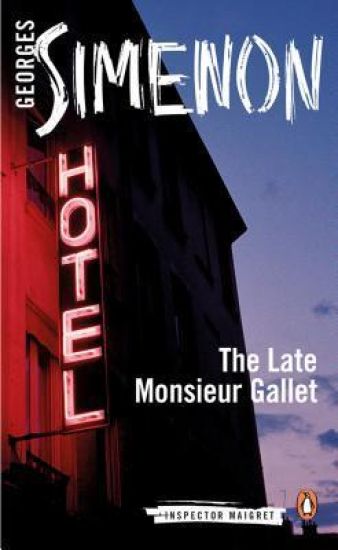
The second book in the new Penguin Maigret series: Georges Simenon's devastating tale of misfortune, betrayal and the weakness of family ties, in a new translation by Anthea Bell.Instead of the detail filling itself in and becoming clearer, it seemed to escape him. The face of the man in the ill-fitting coat just misted up so that it hardly looked human. In theory this mental portrait was good enough, but now it was replaced by fleeting images which should have added up to one and the same man but which refused to get themselves into focus.The circumstances of Monsieur Gallet's death all seem fake: the name the deceased was travelling under and his presumed profession, and more worryingly, his family's grief. Their haughtiness seems to hide ambiguous feelings about the hapless man. In this haunting story, Maigret discovers the appalling truth and the real crime hidden behind the surface of lies.Penguin is publishing the entire series of Maigret novels in new translations. This novel has been published in previous translations as Maigret Stonewalled and The Death of Monsieur Gallet.'Compelling, remorseless, brilliant' John Gray'One of the greatest writers of the twentieth century' Guardian 'A supreme writer . . . unforgettable vividness' Independent
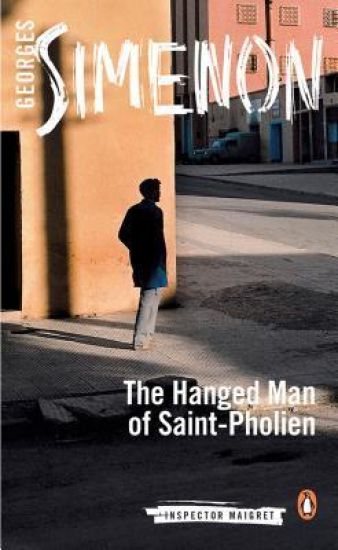
'Compelling, remorseless, brilliant' John Gray A first ink drawing showed a hanged man swinging from a gallows on which perched an enormous crow. And there were at least twenty other etchings and pen or pencil sketches that had the same leitmotif of hanging.On the edge of a forest: a man hanging from every branch.A church steeple: beneath the weathercock, a human body dangling from each arm of the cross. . . Below another sketch were written four lines from François Villon's Ballade of the Hanged Men.On a trip to Brussels, Maigret unwittingly causes a man's suicide, but his own remorse is overshadowed by the discovery of the sordid events that drove the desperate man to shoot himself.This novel has been published in previous translations as Maigret and the Hundred Gibbets and The Crime of Inspector Maigret.'One of the greatest writers of the twentieth century' Guardian
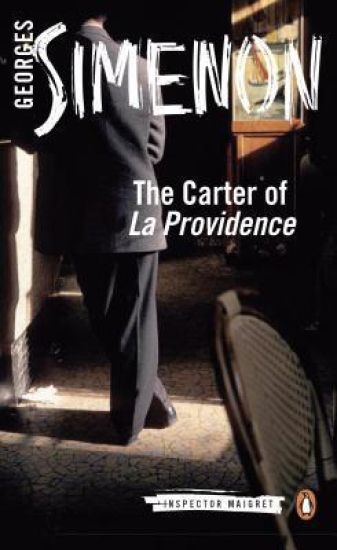
'Compelling, remorseless, brilliant' John Gray What was the woman doing here? In a stable, wearing pearl earrings, her stylish bracelet and white buckskin shoes! She must have been alive when she got there because the crime had been committed after ten in the evening.But how? And why? And no one had heard a thing! She had not screamed. The two carters had not woken up.Inspector Maigret is standing in the pouring rain by a canal. A well-dressed woman, Mary Lampson, has been found strangled in a stable nearby. Why did her glamorous, hedonistic life come to such a brutal end here? Surely her taciturn husband Sir Walter knows - or maybe the answers lie with the crew of the barge La Providence.This novel has been published in previous translations as Lock 14 and Maigret Meets a Milord.'One of the greatest writers of the twentieth century' Guardian