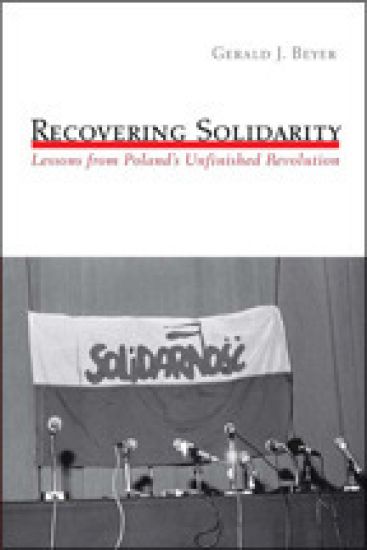
In Recovering Solidarity, Gerald J. Beyer provides a contextualized theological and ethical treatment of the idea of solidarity. He focuses particularly on the Polish Solidarity movement of the 1980s and the ways in which that movement originally embodied but, during the country's transformation to a capitalist democratic society, soon abandoned this important aspect of the Catholic social tradition. Using Poland as a case study, Beyer explores the obstacles to promoting an ethic of solidarity in contemporary capitalist societies and attempts to demonstrate how the moral revolution of the early Solidarity movement can be revived, both in its country of origin and around the world. Recovering Solidarity is widely interdisciplinary, utilizing Catholic social tradition, philosophical ethics, developmental economics, poverty research, gender studies, and sociology. It will appeal to those interested in the problems of poverty and justice.
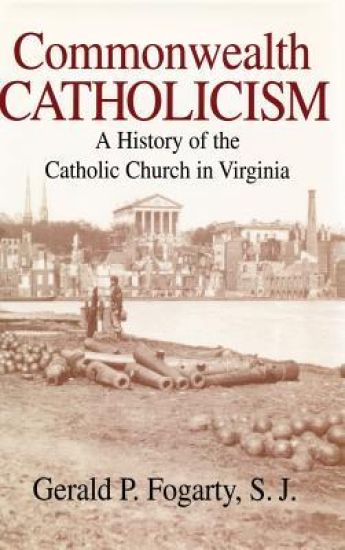
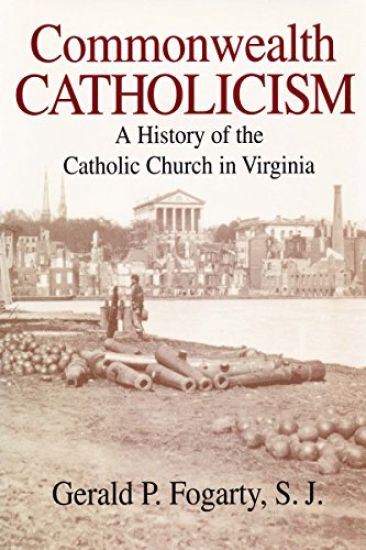
Commonwealth Catholicism is the first comprehensive history of the Catholic Church in the State of Virginia. Distinguished historian Gerald P. Fogarty tells the story of Virginia's Catholics in the state's history, from the colonial period to the present. Using archival resources, Fogarty brings to life the events and characters that comprise the Church's colorful and often turbulent history. Catholics in Virginia, as in other parts of the South, were a tiny minority from the beginning and remained so for much of their history. They gathered into small, isolated communities, often without a resident priest. The Catholic population in Virginia was so small, in fact, that there was only one diocese until 1974. Catholics were often suspected of unpatriotic sympathies by their Protestant neighbors and tried to remain unnoticed, blending in, as far as possible, with the prevailing Protestant culture. Full religious tolerance for Virginia Catholics did not come until the Revolution. Reconstructing the available documentary evidence, Fogarty tells the story of these early communities in full detail. Fogarty also brings to life many of the prominent actors in the unfolding drama. Father Matthew O'Keefe, the pastor of the Norfolk region from 1852 until 1886—a period of intense Know Nothing activity—is one example. O'Keefe was asked by two men calling at the rectory door to minister to a dying man. Reaching the Elizabeth River on the edge of Portsmouth, Virginia, the two said that the dying man lay further on. O'Keefe "took a pair of revolvers from his coat, placed the men under citizen's arrest, and marched them into Portsmouth where he turned them over to the sheriff. They subsequently confessed that they had been hired to assassinate him." Commonwealth Catholicism, a considerable accomplishment from one of the most prominent historians of American Catholicism, will remain for many years the definitive study on the subject of Virginia's Catholic heritage.
Age-old debates over self-love and self-denial continue in the Christian community. Many regard self-love as incompatible with the self-sacrifice of Christ. Others, especially feminists and liberation theologians, contest the notion that self-sacrifice is the test of authentic Christian love. The resolution to this dilemma, argues Gerald Schlabach, lies with St. Augustine. In this engaging book, Schlabach examines how Augustine reconciled self-love and self-denial in a unified Christian love. He demonstrates the crucial role that continence played in Augustine's teaching. It is much more than an attitude toward sexuality. Rather, it is the operative mode of Augustinian caritas. Addressing historical theology, contemporary Christian ethics, feminism, and pastoral considerations, Schlabach traces the role that self-denial played in Augustine's teaching. He argues that an integration of self-love and self-denial enables us to distinguish true Christian self-denial from mere victimization and that the good we seek when we love—whether directed toward neighbor, enemy, or self—is not self-serving but rather a participation in a mutual relationship with God and His creation. Through this critical retrieval of Augustine's thought, Schlabach shows that self-denial is meaningful only when ordered to a higher good, as when Christ endured the suffering of the cross. He demonstrates practical applications of how charity working through continence can maintain right self-love and proper self-denial in our daily lives, and proposes that Christian self-sacrifice is the willing acceptance of a good derived from working on behalf of others. Schlabach rediscovers a unity of Christian love and opens up new resources even for readers skeptical of St. Augustine. His work offers provocative reading for all who are concerned with keeping their lives and work rooted in the Christian tradition of love and service.
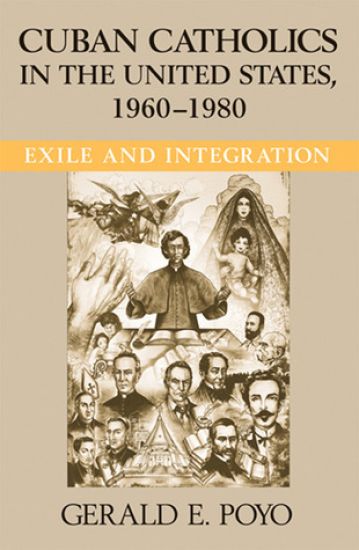
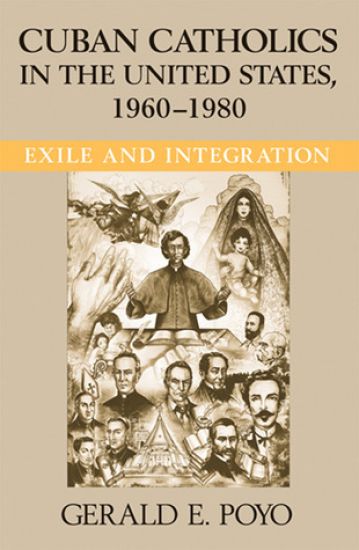
Everyday life for Cubans in the United States during the 1960s and 1970s involved an intimate interaction between commitment to an exile identity and reluctant integration into a new society. For Catholic Cuban exiles, their faith provided a filter through which they analyzed and understood both their exile and their ethnic identities. Catholicism offered the exiles continuity: a community of faith, a place to gather, a sense of legitimacy as a people. Religion exerted a major influence on the beliefs and actions of Cuban exiles as they integrated into U.S. culture and tried at the same time to make sense of events in their homeland. Cuban Catholics in the United States, 1960-1980 examines all these facets of the exile and integration process among Catholics, primarily in south Florida, but the voices of others across the United States, Latin America, and Europe also enter the story. The personal papers of exiles, their books and pamphlets, newspaper articles, government archives, and personal interviews provide the historical data for this book. In his thorough examination Gerald E. Poyo provides insights not only for this community but for other faith-based exile communities.
Everyday life for Cubans in the United States during the 1960s and 1970s involved an intimate interaction between commitment to an exile identity and reluctant integration into a new society. For Catholic Cuban exiles, their faith provided a filter through which they analyzed and understood both their exile and their ethnic identities. Catholicism offered the exiles continuity: a community of faith, a place to gather, a sense of legitimacy as a people. Religion exerted a major influence on the beliefs and actions of Cuban exiles as they integrated into U.S. culture and tried at the same time to make sense of events in their homeland. Cuban Catholics in the United States, 1960-1980 examines all these facets of the exile and integration process among Catholics, primarily in south Florida, but the voices of others across the United States, Latin America, and Europe also enter the story. The personal papers of exiles, their books and pamphlets, newspaper articles, government archives, and personal interviews provide the historical data for this book. In his thorough examination Gerald E. Poyo provides insights not only for this community but for other faith-based exile communities.
Commonwealth Catholicism is the first comprehensive history of the Catholic Church in the State of Virginia. Distinguished historian Gerald P. Fogarty tells the story of Virginia's Catholics in the state's history, from the colonial period to the present. Using archival resources, Fogarty brings to life the events and characters that comprise the Church's colorful and often turbulent history. Catholics in Virginia, as in other parts of the South, were a tiny minority from the beginning and remained so for much of their history. They gathered into small, isolated communities, often without a resident priest. The Catholic population in Virginia was so small, in fact, that there was only one diocese until 1974. Catholics were often suspected of unpatriotic sympathies by their Protestant neighbors and tried to remain unnoticed, blending in, as far as possible, with the prevailing Protestant culture. Full religious tolerance for Virginia Catholics did not come until the Revolution. Reconstructing the available documentary evidence, Fogarty tells the story of these early communities in full detail. Fogarty also brings to life many of the prominent actors in the unfolding drama. Father Matthew O'Keefe, the pastor of the Norfolk region from 1852 until 1886—a period of intense Know Nothing activity—is one example. O'Keefe was asked by two men calling at the rectory door to minister to a dying man. Reaching the Elizabeth River on the edge of Portsmouth, Virginia, the two said that the dying man lay further on. O'Keefe "took a pair of revolvers from his coat, placed the men under citizen's arrest, and marched them into Portsmouth where he turned them over to the sheriff. They subsequently confessed that they had been hired to assassinate him." Commonwealth Catholicism, a considerable accomplishment from one of the most prominent historians of American Catholicism, will remain for many years the definitive study on the subject of Virginia's Catholic heritage.
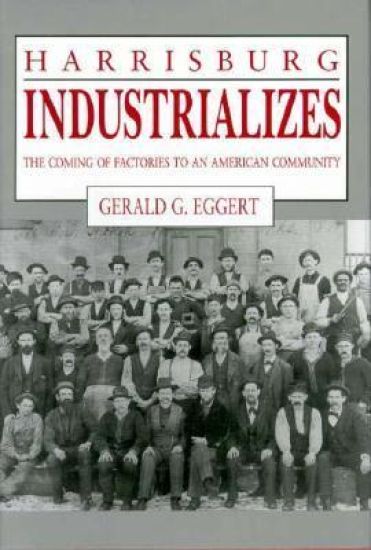
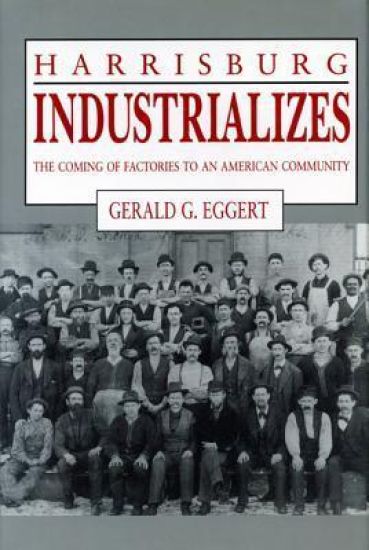
In 1850, Harrisburg, Pennsylvania, was a community like many others in the U. S., employing most of its citizens in trade and commerce. Unlike its larger neighbors, Pittsburgh and Philadelphia, Harrisburg had not yet experienced firsthand the Industrial Revolution. Within a decade, however, Harrisburg boasted a cotton textile mill, two blast furnaces and several iron rolling mills, a railroad car manufactory, and a machinery plant. This burst of industrial activity naturally left its mark on the community, by within two generations most industry had left Harrisburg, and its economic base was shifting toward white-collar governmental administration and services. Harrisburg Industrializes looks at this critical episode in Harrisburg's history to discover how the coming of the factory system affected the life of the community.Eggert begins with the earliest years of Harrisburg, describing its transformation from a frontier town to a small commercial and artisanal community. He identifies the early entrepreneurs who built the banking, commercial, and transportation infrastructure, which would provide the basis for industry at mid-century. Eggert then reconstructs the development of the principal manufacturing firms from their foundings, through the expansive post-Civil War era, to the onset of deindustrialization near the end of the century. Through census and company records, he is able to follow the next generation of craftsmen and entrepreneurs as well as the new industrial workers—many of then minorities—who came to the city after 1850.Eggert sees Harrisburg's experience with the factory system as "second-stage," or imitative, industrialization, which was typical of many, if not most, communities that developed factory production. At those relatively few industrial centers (Lowell and Pittsburgh, for example) where new technologies arose and were aggressively impose on workers, the consequences were devastating, often causing alienation, rebellion, and repression. By contrast, at secondary centers like Harrisburg (or Reading, Scranton, or Wilmington), industrialization came later, was derivative rather than creative, was modest in scale, and focused on local and regional markets. Because the new factories did not compete with local crafts, few displaced artisans became factory hands. At the same time, an adequate supply of local native-born workers forestalled an influx of immigrants, so Harrisburg experienced little ethnic hostility. Ultimately, therefore, Eggert concludes that the introduction of an industrial order was much less disruptive in Harrisburg than in the major industrial sites, primarily because it did not alter so profoundly the existing economic and social order.
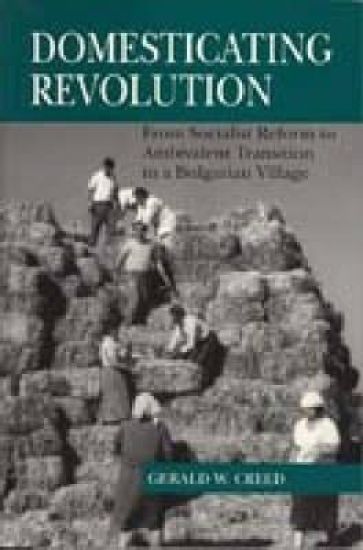
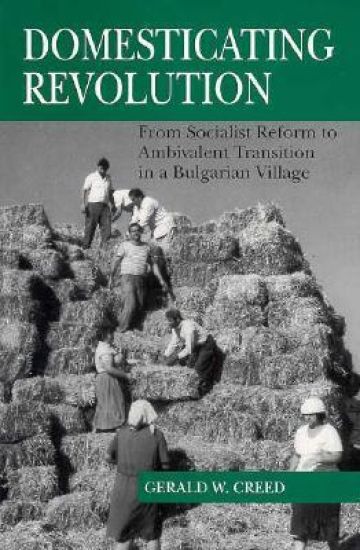
The collapse of state socialism in 1989 focused attention on the transition to democracy and capitalism in Eastern Europe. But for many people who actually lived through the transition, the changes were often disappointing. Perhaps none were more disappointed than the villagers of rural Bulgaria whose very lifestyles and identities were threatened by the transition. Domesticating Revolution explains this unexpected outcome through a detailed study of economic reform in one Bulgarian village, from the beginning of collectivization in the 1940s to decollectivization efforts in the 1990s. Gerald Creed is the only American anthropologist to have conducted extended fieldwork in a single Bulgarian village both during and after the socialist era. This work has enabled him to document the precise connections between socialist practice and postsocialist developments. He suggests that by simply doing what they could to improve their difficult lot under socialism, Bulgarian villagers gradually domesticated the socialist system. This very achievement, however, set the stage for an ambivalent transition after 1989 as villagers sought to defend their earlier gains against new threats. Ironically, they appealed to domesticated socialism in a failed effort to domesticate the transition as well. Domesticating Revolution will force scholars to rethink both their models of state socialism and their interpretations of the transition.
The collapse of state socialism in 1989 focused attention on the transition to democracy and capitalism in Eastern Europe. But for many people who actually lived through the transition, the changes were often disappointing. Perhaps none were more disappointed than the villagers of rural Bulgaria whose very lifestyles and identities were threatened by the transition. Domesticating Revolution explains this unexpected outcome through a detailed study of economic reform in one Bulgarian village, from the beginning of collectivization in the 1940s to decollectivization efforts in the 1990s. Gerald Creed is the only American anthropologist to have conducted extended fieldwork in a single Bulgarian village both during and after the socialist era. This work has enabled him to document the precise connections between socialist practice and postsocialist developments. He suggests that by simply doing what they could to improve their difficult lot under socialism, Bulgarian villagers gradually domesticated the socialist system. This very achievement, however, set the stage for an ambivalent transition after 1989 as villagers sought to defend their earlier gains against new threats. Ironically, they appealed to domesticated socialism in a failed effort to domesticate the transition as well. Domesticating Revolution will force scholars to rethink both their models of state socialism and their interpretations of the transition.
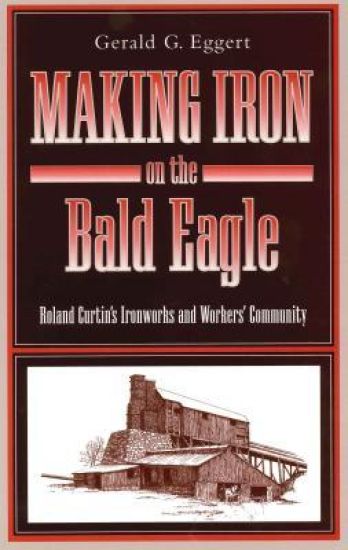
In 1810, Irish immigrant Roland Curtin launched a charcoal ironmaking operation in central Pennsylvania that continued for 110 years. Through this engaging account of Curtin and his iron plantation, Gerald Eggert provides an important chapter in the history of the iron industry in America. Eggert's story begins with Curtin’s arrival in the Bald Eagle Valley in 1797. From the time he constructed his first forge on the south bank of Bald Eagle Creek until the final closing of the Eagle Ironworks in 1922, Roland and his sons, then his grandsons, and still later a great-grandson operated what had become one of Centre County's major enterprises. Throughout much of its history, the Eagle Works employed between 100 and 200 full- and part-time workmen. Eggert analyzes the workforce and describes life in the workers' village. The relationships, lifestyles, and housing of the Curtins, in contrast to those of their employees, offer insights into the social history of the period. Eggert also provides an excellent summary of the ironmaking process—from the cutting of wood and making of charcoal to the mining of ore and smelting of the iron—and the challenges of transporting iron products out of the frontier to Pittsburgh and Philadelphia.The long history of the Curtin family's Eagle Ironworks mirrors both the rise and the long decline of American charcoal-iron production. Typical of the small, family-owned enterprises that bridged the gap between preindustrial and modern industrial production, the history of the Eagle Ironworks illustrates both the industrializing and, later, the deindustrializing processes and the impact these had on all who were involved. When the Eagle Ironworks closed in 1922, it was the last charcoal-iron establishment in Pennsylvania and one of the two or three last such works in the United States.
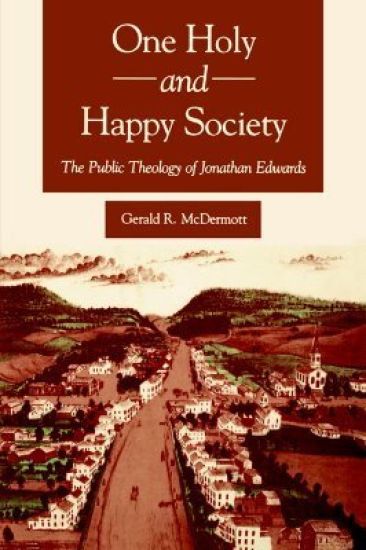
Jonathan Edwards (1703–58) was arguably this country's greatest theologian and its finest philosopher before the nineteenth century. His school if disciples (the "New Divinity") exerted enormous influence on the religious and political cultures of late colonial and early republican America. Hence any study of religion and politics in early America must take account of this theologian and his legacy.Yet historians still regard Edward's social theory as either nonexistent or underdeveloped. Gerald McDermott demonstrates, to the contrary, that Edwards was very interested in the social and political affairs of his day, and commented upon them at length in his unpublished sermons and private notebooks. McDermott shows that Edwards thought deeply about New England's status under God, America's role in the millennium, the nature and usefulness of patriotism, the duties of a good magistrate, and what it means to be a good citizen. In fact, his sociopolitical theory was at least as fully developed as that of his better-known contemporaries and more progressive in its attitude toward citizens' rights.Using unpublished manuscripts that have previously been largely ignored, McDermott also convincingly challenges generations of scholarly opinion about Edwards. The Edwards who emerges from this nook is both less provincial and more this-worldly than the persona he is commonly given.
In 1850, Harrisburg, Pennsylvania, was a community like many others in the U. S., employing most of its citizens in trade and commerce. Unlike its larger neighbors, Pittsburgh and Philadelphia, Harrisburg had not yet experienced firsthand the Industrial Revolution. Within a decade, however, Harrisburg boasted a cotton textile mill, two blast furnaces and several iron rolling mills, a railroad car manufactory, and a machinery plant. This burst of industrial activity naturally left its mark on the community, by within two generations most industry had left Harrisburg, and its economic base was shifting toward white-collar governmental administration and services. Harrisburg Industrializes looks at this critical episode in Harrisburg's history to discover how the coming of the factory system affected the life of the community.Eggert begins with the earliest years of Harrisburg, describing its transformation from a frontier town to a small commercial and artisanal community. He identifies the early entrepreneurs who built the banking, commercial, and transportation infrastructure, which would provide the basis for industry at mid-century. Eggert then reconstructs the development of the principal manufacturing firms from their foundings, through the expansive post-Civil War era, to the onset of deindustrialization near the end of the century. Through census and company records, he is able to follow the next generation of craftsmen and entrepreneurs as well as the new industrial workers—many of then minorities—who came to the city after 1850.Eggert sees Harrisburg's experience with the factory system as "second-stage," or imitative, industrialization, which was typical of many, if not most, communities that developed factory production. At those relatively few industrial centers (Lowell and Pittsburgh, for example) where new technologies arose and were aggressively impose on workers, the consequences were devastating, often causing alienation, rebellion, and repression. By contrast, at secondary centers like Harrisburg (or Reading, Scranton, or Wilmington), industrialization came later, was derivative rather than creative, was modest in scale, and focused on local and regional markets. Because the new factories did not compete with local crafts, few displaced artisans became factory hands. At the same time, an adequate supply of local native-born workers forestalled an influx of immigrants, so Harrisburg experienced little ethnic hostility. Ultimately, therefore, Eggert concludes that the introduction of an industrial order was much less disruptive in Harrisburg than in the major industrial sites, primarily because it did not alter so profoundly the existing economic and social order.
In 1810, Irish immigrant Roland Curtin launched a charcoal ironmaking operation in central Pennsylvania that continued for 110 years. Through this engaging account of Curtin and his iron plantation, Gerald Eggert provides an important chapter in the history of the iron industry in America. Eggert's story begins with Curtin’s arrival in the Bald Eagle Valley in 1797. From the time he constructed his first forge on the south bank of Bald Eagle Creek until the final closing of the Eagle Ironworks in 1922, Roland and his sons, then his grandsons, and still later a great-grandson operated what had become one of Centre County's major enterprises. Throughout much of its history, the Eagle Works employed between 100 and 200 full- and part-time workmen. Eggert analyzes the workforce and describes life in the workers' village. The relationships, lifestyles, and housing of the Curtins, in contrast to those of their employees, offer insights into the social history of the period. Eggert also provides an excellent summary of the ironmaking process—from the cutting of wood and making of charcoal to the mining of ore and smelting of the iron—and the challenges of transporting iron products out of the frontier to Pittsburgh and Philadelphia.The long history of the Curtin family's Eagle Ironworks mirrors both the rise and the long decline of American charcoal-iron production. Typical of the small, family-owned enterprises that bridged the gap between preindustrial and modern industrial production, the history of the Eagle Ironworks illustrates both the industrializing and, later, the deindustrializing processes and the impact these had on all who were involved. When the Eagle Ironworks closed in 1922, it was the last charcoal-iron establishment in Pennsylvania and one of the two or three last such works in the United States.
This intriguing book explores why spectacular films involving Biblical figures or set in Biblical times have been a staple of filmmaking since talkies began. Forshey looks at these films, and suggests that the underlying purpose was to mediate between a monistic scientific world view and a dualistic religious world view, and between secular and religious ethics. Forshey discusses how filmic, political, religious, and cultural history influenced filmmakers of these spectaculars. The first chapter differentiates between religious spectaculars and biblical spectaculars. Following are chapters on early religious films and others on how the post-war and cold war led to a struggle to define the righteous nation. The chapters on biblical spectaculars examine films in which sex and social responsibility was a paramount concern (Samson and Delilah, David and Bathsheba). The 1960s were dominated by films about Jesus, searching for an ethical system for a world undergoing rapid social change. One entire chapter is devoted to Cecil B. DeMille's The Ten Commandments, the epitome of the form, followed by chapters on John Huston's The Bible as a culmination of the form, and a final one on how television rethought spectaculars and how Martin Scorsese's The Last Temptation of Christ drew the battle lines between humanistic Christians and evangelical Christians. American Religious and Biblical Spectaculars will appeal to scholars of film, religion, and popular culture.
In Peace Through Agreement, Gerald Rabow reveals how any dispute, including those that lead to serious confrontation between nations, can be resolved through the proper management of informed self interest. Rabow demonstrates how the utilizing of negotiation, mediation, and arbitration techniques, as well as a sound analytic understanding of non-zero-sum conflicts can achieve peace. He shows, through analogous non-zero-sum games, that cooperation between conflicting factions is much more successful than is generally believed. Through the playing of these games, the reader can experience conflict resolution in a controlled setting. Finally, the book presents a scheme for the arbitration of a major international dispute. Students and scholars of political science, peace studies, diplomacy, or anyone interested in new approaches to peace will find Peace Through Agreement a valuable resource.This book challenges generally accepted views with the following conclusions: Arbitration can be used in resolving all international disputes, particularly those involving the most vital national interests; cooperation, rather than defection is almost always the best strategy in non-zero sum games; negotiators and arbitrators should not base payoff division on threat capabilities; and, delaying negotiations is never justified. Peace Through Agreement, an important contribution to the ever widening field of peace studies, should be required reading for anyone interested in achieving peace in our time.
On November 7, 1938, Herschel Grynszpan, a 17-year old Polish-German Jew, walked into the German Embassy in Paris and shot Third Secretary, Ernst vom Rath, who died shortly after. Vom Rath's death triggered the destruction and mahem which became known as Kristallnacht, or The Night of Broken Glass, resulting in the death of hundreds, the razing of 265 synagogues and 200 houses, the demolition of 7,500 business establishments, and the incarceration of 30,000 Jews in concentration camps. Herschel Grynszpan was immediately arrested. France's foremost criminal lawyer took over his defense. On June 8, 1940, two days before the French Government evacuated Paris, the youth was indicted for murder. A month later he was in Nazi hands, being interrogated by the Gestapo in anticipation of a major show trial. Little has been known in the past about this extraordinary young man. Using German documents never before revealed, including a startling coded testament, Gerald Schwab examines his background and the events culminating in the shooting. The book describes, in considerable detail, Grynszpan's experiences in French and German hands and his trial which was to become Nazi Germany's justification of the Holocaust. It also challenges some commonly held ideas about the cause of the shooting and its aftermath. The Day the Holocaust Began describes the life of a mixed-up, emotionally immature youngster who developed into one of the most amazing and unlikely heroes of modern history, demonstrating the power of the human spirit against overwhelming odds. Anyone interested in modern European history, the Nazi Government, the persecution of the European Jews, as well as students of the Holocaust and its many ramifications, will find The Day the Holocaust Began invaluable reading.
This is a comprehensive examination of the contemporary movement against drunk driving. Written in an eminently readable style, the volume addresses all major substantive aspects of the anti-drunk driving effort including society's changing attitudes and response to the crime itself and the offenders, the role of grass roots groups such as MADD and RID, federal and state initiatives, actions and enabling legislation, and anti-drunk driving programs and projects. Gerald D. Robin takes a socio-legal approach throughout, emphasizing the rationales behind, controversies surrounding, and effectiveness of new strategies and developments to combat drunk driving.Following two introductory chapters, which outline the dimensions of and societal responses to the drunk driving problem, the chapters are arranged to reflect the chronological processing of suspects through the justice system from the point of stopping them on the road to the final disposition of cases in court. Thus, individual chapters treat issues such as sobriety checkpoints, administrative license suspension, prosecuting and defending drunk drivers, mandatory sentencing, third party liability, and deterring drunk driving. Numerous photographs and figures illustrate points discussed in the text. Ideal as a supplemental text for criminology courses, this book is also an important resource for professionals involved in treating drunk drivers and their victims.
The distinction between private and public realms of experience, of social activity, and of personal identity are fundamental for shaping everyday understanding and organization of social life, yet the distinction has not been paramount in sociological theorizing. Dividing Public and Private makes the public/private division central to social theory and social inquiry. Gerald Turkel demonstrates that by placing the public/private distinction at the center of social thought and by rethinking the writings of such classical theorists as Marx, Durkheim, Weber, and Parsons through the prism of the public/private division, new dimensions are raised for the analysis of authority, legitimacy, law, political participation, and the very meanings of freedom and necessity. Based on the joining of legal, social, and political theory, Turkel argues that the public/private division is crucial for mediating and overcoming social totalism and privatized oppression. Dividing Public and Private challenges such theoretical approaches as critical theory, feminism, neo-Marxism, and liberalism to affirm the public/private division in directions that support equality, active participation in politics and the formation of collective projects, and individual self-determination. It is particularly appropriate for theorists in law, political science, and sociology.
This book tells the history of one of the most successful OSS operations of World War II. Three OSS agents—two young immigrants, one from Germany, the other from Holland, and a former Austrian Wehrmacht officer—in the midst of winter make a night jump into the Austrian Alps, landing hip-deep in snow at 10,000 feet. William Casey—then an OSS official and later head of the CIA—called it by far the most successful of the operations mounted from the OSS base at Bari. Thanks to this intrepid threesome, rail and road communications between the Italian front and Germany were seriously hampered and the city of Innsbruck in the heart of the Nazi's vaunted stronghold called the National Redoubt, fell to American troops without a shot being fired.