Kirjojen hintavertailu. Mukana 11 627 220 kirjaa ja 12 kauppaa.

Kirjahaku

Etsi kirjoja tekijän nimen, kirjan nimen tai ISBN:n perusteella.

1000 tulosta hakusanalla Gilbert Dalgalian

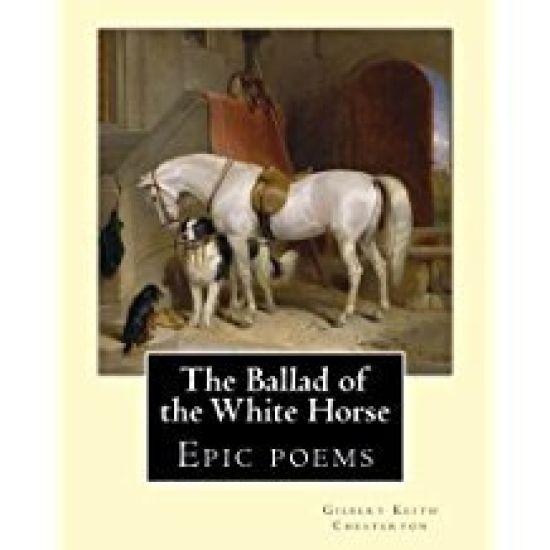
The Ballad of the White Horse, By: Gilbert Keith Chesterton: Epic poems

The Ballad of the White Horse, By: Gilbert Keith Chesterton: Epic poems

G. K. Chesterton

Createspace Independent Publishing Platform
2017
nidottu
Gilbert Keith Chesterton, KC*SG (29 May 1874 - 14 June 1936), better known as G. K. Chesterton, was an English writer, poet, philosopher, dramatist, journalist, orator, lay theologian, biographer, and literary and art critic. Chesterton is often referred to as the "prince of paradox". Time magazine has observed of his writing style: "Whenever possible Chesterton made his points with popular sayings, proverbs, allegories-first carefully turning them inside out." Chesterton is well known for his fictional priest-detective Father Brown, and for his reasoned apologetics. Even some of those who disagree with him have recognised the wide appeal of such works as Orthodoxy and The Everlasting Man.Chesterton, as a political thinker, cast aspersions on both Progressivism and Conservatism, saying, "The whole modern world has divided itself into Conservatives and Progressives. The business of Progressives is to go on making mistakes. The business of the Conservatives is to prevent the mistakes from being corrected."Chesterton routinely referred to himself as an "orthodox" Christian, and came to identify this position more and more with Catholicism, eventually converting to Catholicism from High Church Anglicanism. George Bernard Shaw, Chesterton's "friendly enemy" according to Time, said of him, "He was a man of colossal genius."Biographers have identified him as a successor to such Victorian authors as Matthew Arnold, Thomas Carlyle, Cardinal John Henry Newman, and John Ruskin. Chesterton was born in Campden Hill in Kensington, London, the son of Marie Louise, n e Grosjean, and Edward Chesterton. He was baptised at the age of one month into the Church of England, though his family themselves were irregularly practising Unitarians.According to his autobiography, as a young man Chesterton became fascinated with the occult and, along with his brother Cecil, experimented with Ouija boards. Chesterton was educated at St Paul's School, then attended the Slade School of Art to become an illustrator. The Slade is a department of University College London, where Chesterton also took classes in literature, but did not complete a degree in either subject.
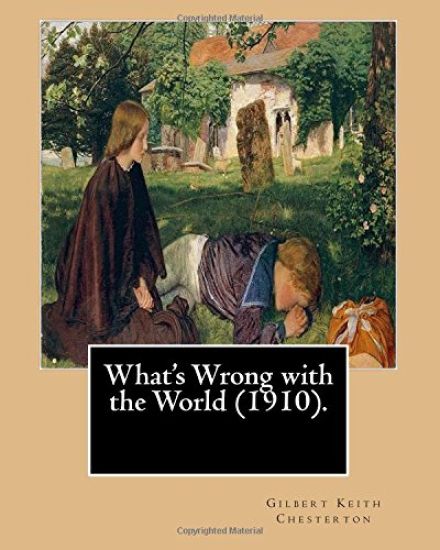
What's Wrong with the World (1910). By: Gilbert Keith Chesterton, dedicated By: C. F. G. Masterman: Charles Frederick Gurney Masterman PC (24 October
Gilbert Keith Chesterton, KC*SG (29 May 1874 - 14 June 1936), better known as G. K. Chesterton, was an English writer, poet, philosopher, dramatist, journalist, orator, lay theologian, biographer, and literary and art critic. Chesterton is often referred to as the "prince of paradox". Time magazine has observed of his writing style: "Whenever possible Chesterton made his points with popular sayings, proverbs, allegories-first carefully turning them inside out." Chesterton is well known for his fictional priest-detective Father Brown, and for his reasoned apologetics. Even some of those who disagree with him have recognised the wide appeal of such works as Orthodoxy and The Everlasting Man.Chesterton, as a political thinker, cast aspersions on both Progressivism and Conservatism, saying, "The whole modern world has divided itself into Conservatives and Progressives. The business of Progressives is to go on making mistakes. The business of the Conservatives is to prevent the mistakes from being corrected."Chesterton routinely referred to himself as an "orthodox" Christian, and came to identify this position more and more with Catholicism, eventually converting to Catholicism from High Church Anglicanism. George Bernard Shaw, Chesterton's "friendly enemy" according to Time, said of him, "He was a man of colossal genius."Biographers have identified him as a successor to such Victorian authors as Matthew Arnold, Thomas Carlyle, Cardinal John Henry Newman, and John Ruskin.... Charles Frederick Gurney Masterman PC (24 October 1873 - 17 November 1927) was a radical Liberal Party politician, intellectual and man of letters, He worked closely with such Liberal leaders as David Lloyd George and Winston Churchill in designing social welfare projects, including the National Insurance Act of 1911. During the First World War, he played a central role in the main government propaganda agency....
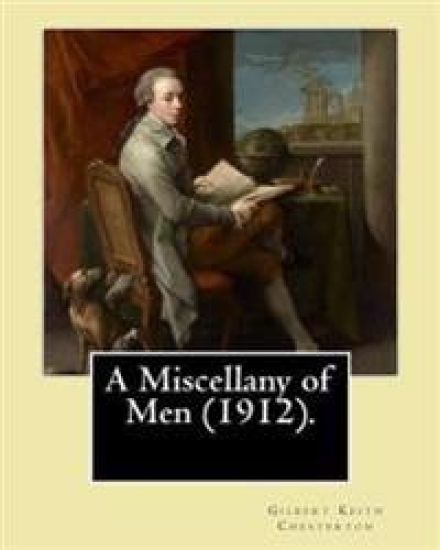
A Miscellany of Men (1912). By: Gilbert Keith Chesterton: (Original Classics)

A Miscellany of Men (1912). By: Gilbert Keith Chesterton: (Original Classics)

G. K. Chesterton

Createspace Independent Publishing Platform
2017
nidottu
Gilbert Keith Chesterton, KC*SG (29 May 1874 - 14 June 1936), better known as G. K. Chesterton, was an English writer, poet, philosopher, dramatist, journalist, orator, lay theologian, biographer, and literary and art critic. Chesterton is often referred to as the "prince of paradox". Time magazine has observed of his writing style: "Whenever possible Chesterton made his points with popular sayings, proverbs, allegories-first carefully turning them inside out." Chesterton is well known for his fictional priest-detective Father Brown, and for his reasoned apologetics. Even some of those who disagree with him have recognised the wide appeal of such works as Orthodoxy and The Everlasting Man.Chesterton, as a political thinker, cast aspersions on both Progressivism and Conservatism, saying, "The whole modern world has divided itself into Conservatives and Progressives. The business of Progressives is to go on making mistakes. The business of the Conservatives is to prevent the mistakes from being corrected."Chesterton routinely referred to himself as an "orthodox" Christian, and came to identify this position more and more with Catholicism, eventually converting to Catholicism from High Church Anglicanism. George Bernard Shaw, Chesterton's "friendly enemy" according to Time, said of him, "He was a man of colossal genius."Biographers have identified him as a successor to such Victorian authors as Matthew Arnold, Thomas Carlyle, Cardinal John Henry Newman, and John Ruskin. Chesterton was born in Campden Hill in Kensington, London, the son of Marie Louise, n e Grosjean, and Edward Chesterton.He was baptised at the age of one month into the Church of England, though his family themselves were irregularly practising Unitarians.According to his autobiography, as a young man Chesterton became fascinated with the occult and, along with his brother Cecil, experimented with Ouija boards. Chesterton was educated at St Paul's School, then attended the Slade School of Art to become an illustrator. The Slade is a department of University College London, where Chesterton also took classes in literature, but did not complete a degree in either subject......
The New Jerusalem (1920). By: Gilbert Keith Chesterton: The New Jerusalem is a 1920 book written by British writer G. K. Chesterton. Dale Ahlquist c
The New Jerusalem is a 1920 book written by British writer G. K. Chesterton. Dale Ahlquist calls it a "philosophical travelogue" of Chesterton's journey across Europe to Palestine. *Quotes* "On the road to Cairo one may see twenty groups exactly like that of the Holy Family in the pictures of the Flight into Egypt; with only one difference. The man is riding on the ass." "The real mistake of the Muslims is something much more modern in its application than any particular passing persecution of Christians as such. It lay in the very fact that they did think they had a simpler and saner sort of Christianity, as do many modern Christians. They thought it could be made universal merely by being made uninteresting. Now a man preaching what he thinks is a platitude is far more intolerant than a man preaching what he admits is a paradox. It was exactly because it seemed self-evident, to Muslims as to Bolshevists, that their simple creed was suited to everybody, that they wished in that particular sweeping fashion to impose it on everybody."....... Gilbert Keith Chesterton, KC*SG (29 May 1874 - 14 June 1936), better known as G. K. Chesterton, was an English writer, poet, philosopher, dramatist, journalist, orator, lay theologian, biographer, and literary and art critic. Chesterton is often referred to as the "prince of paradox". Time magazine has observed of his writing style: "Whenever possible Chesterton made his points with popular sayings, proverbs, allegories-first carefully turning them inside out." Chesterton is well known for his fictional priest-detective Father Brown, and for his reasoned apologetics. Even some of those who disagree with him have recognised the wide appeal of such works as Orthodoxy and The Everlasting Man.Chesterton, as a political thinker, cast aspersions on both Progressivism and Conservatism, saying, "The whole modern world has divided itself into Conservatives and Progressives. The business of Progressives is to go on making mistakes. The business of the Conservatives is to prevent the mistakes from being corrected."Chesterton routinely referred to himself as an "orthodox" Christian, and came to identify this position more and more with Catholicism, eventually converting to Catholicism from High Church Anglicanism. George Bernard Shaw, Chesterton's "friendly enemy" according to Time, said of him, "He was a man of colossal genius."Biographers have identified him as a successor to such Victorian authors as Matthew Arnold, Thomas Carlyle, Cardinal John Henry Newman, and John Ruskin.
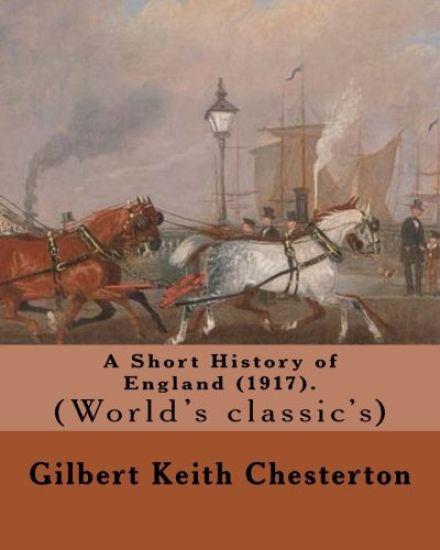
A Short History of England (1917). By: Gilbert Keith Chesterton: (World's classic's)

A Short History of England (1917). By: Gilbert Keith Chesterton: (World's classic's)

G. K. Chesterton

Createspace Independent Publishing Platform
2017
nidottu
G.K. Chesterton was one of the towering figures of British literature in the early twentieth century. A man of massive size, massive personality, and massive appetite, Chesterton famous personality, dress, and personality gave rise to an eponymous adjective: Chestertonian. Gilbert Keith Chesterton, KC*SG (29 May 1874 - 14 June 1936), better known as G. K. Chesterton, was an English writer, poet, philosopher, dramatist, journalist, orator, lay theologian, biographer, and literary and art critic. Chesterton is often referred to as the "prince of paradox". Time magazine has observed of his writing style: "Whenever possible Chesterton made his points with popular sayings, proverbs, allegories-first carefully turning them inside out." Chesterton is well known for his fictional priest-detective Father Brown, and for his reasoned apologetics. Even some of those who disagree with him have recognised the wide appeal of such works as Orthodoxy and The Everlasting Man.Chesterton, as a political thinker, cast aspersions on both Progressivism and Conservatism, saying, "The whole modern world has divided itself into Conservatives and Progressives. The business of Progressives is to go on making mistakes. The business of the Conservatives is to prevent the mistakes from being corrected."Chesterton routinely referred to himself as an "orthodox" Christian, and came to identify this position more and more with Catholicism, eventually converting to Catholicism from High Church Anglicanism. George Bernard Shaw, Chesterton's "friendly enemy" according to Time, said of him, "He was a man of colossal genius."Biographers have identified him as a successor to such Victorian authors as Matthew Arnold, Thomas Carlyle, Cardinal John Henry Newman, and John Ruskin.
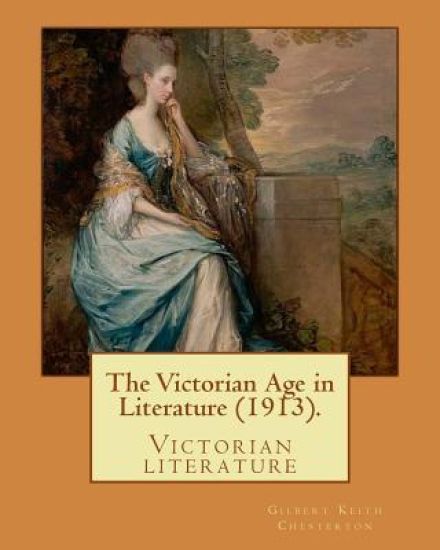
The Victorian Age in Literature (1913). By: Gilbert Keith Chesterton: Victorian literature
'I was born a Victorian; and sympathise not a little with the serious Victorian Spirit.' In this engaging and extremely personal account G K Chesterton expounds his views on Victorian literature. Many of his opinions reflect the conventions of the age; however of the Victorian novel he refreshingly comments 'it is an art in which women are quite beyond controversy'. Gilbert Keith Chesterton, KC*SG (29 May 1874 - 14 June 1936), better known as G. K. Chesterton, was an English writer, poet, philosopher, dramatist, journalist, orator, lay theologian, biographer, and literary and art critic. Chesterton is often referred to as the "prince of paradox". Time magazine has observed of his writing style: "Whenever possible Chesterton made his points with popular sayings, proverbs, allegories-first carefully turning them inside out." Chesterton is well known for his fictional priest-detective Father Brown, and for his reasoned apologetics. Even some of those who disagree with him have recognised the wide appeal of such works as Orthodoxy and The Everlasting Man.Chesterton, as a political thinker, cast aspersions on both Progressivism and Conservatism, saying, "The whole modern world has divided itself into Conservatives and Progressives. The business of Progressives is to go on making mistakes. The business of the Conservatives is to prevent the mistakes from being corrected."Chesterton routinely referred to himself as an "orthodox" Christian, and came to identify this position more and more with Catholicism, eventually converting to Catholicism from High Church Anglicanism. George Bernard Shaw, Chesterton's "friendly enemy" according to Time, said of him, "He was a man of colossal genius."Biographers have identified him as a successor to such Victorian authors as Matthew Arnold, Thomas Carlyle, Cardinal John Henry Newman, and John Ruskin.
An Analysis of Sandra M. Gilbert and Susan Gubar's The Madwoman in the Attic
The 1979 publication of Susan Gubar and Sandra M. Gilbert’s ground-breaking study The Madwoman in the Attic marked a founding moment in feminist literary history as much as feminist literary theory. In their extensive study of nineteenth-century women’s writing, Gubar and Gilbert offer radical re-readings of Jane Austen, the Brontës, Emily Dickinson, George Eliot and Mary Shelley tracing a distinctive female literary tradition and female literary aesthetic. Gubar and Gilbert raise questions about canonisation that continue to resonate today, and model the revolutionary importance of re-reading influential texts that may seem all too familiar
An Analysis of Sandra M. Gilbert and Susan Gubar's The Madwoman in the Attic
The 1979 publication of Susan Gubar and Sandra M. Gilbert’s ground-breaking study The Madwoman in the Attic marked a founding moment in feminist literary history as much as feminist literary theory. In their extensive study of nineteenth-century women’s writing, Gubar and Gilbert offer radical re-readings of Jane Austen, the Brontës, Emily Dickinson, George Eliot and Mary Shelley tracing a distinctive female literary tradition and female literary aesthetic. Gubar and Gilbert raise questions about canonisation that continue to resonate today, and model the revolutionary importance of re-reading influential texts that may seem all too familiar
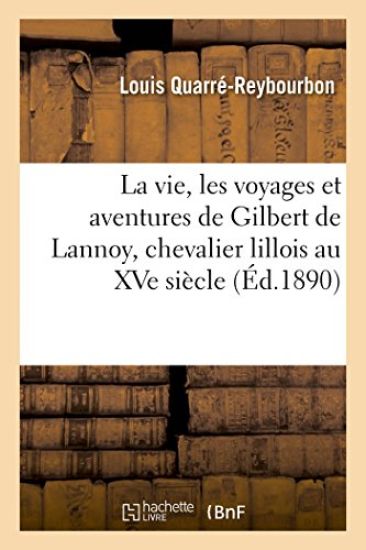
La Vie, Les Voyages Et Aventures de Gilbert de Lannoy, Chevalier Lillois Au Xve Siècle
La vie, les voyages et aventures de Gilbert de Lannoy, chevalier lillois au XVe siecle: travail lu aux reunions des societes savantes, section de geographie historique et descriptive, le 12 juin 1889 / par L. Quarre-Reybourbon, ...Date de l'edition originale: 1890Ce livre est la reproduction fidele d'une oeuvre publiee avant 1920 et fait partie d'une collection de livres reimprimes a la demande editee par Hachette Livre, dans le cadre d'un partenariat avec la Bibliotheque nationale de France, offrant l'opportunite d'acceder a des ouvrages anciens et souvent rares issus des fonds patrimoniaux de la BnF.Les oeuvres faisant partie de cette collection ont ete numerisees par la BnF et sont presentes sur Gallica, sa bibliotheque numerique.En entreprenant de redonner vie a ces ouvrages au travers d'une collection de livres reimprimes a la demande, nous leur donnons la possibilite de rencontrer un public elargi et participons a la transmission de connaissances et de savoirs parfois difficilement accessibles.Nous avons cherche a concilier la reproduction fidele d'un livre ancien a partir de sa version numerisee avec le souci d'un confort de lecture optimal. Nous esperons que les ouvrages de cette nouvelle collection vous apporteront entiere satisfaction.Pour plus d'informations, rendez-vous sur www.hachettebnf.fr"
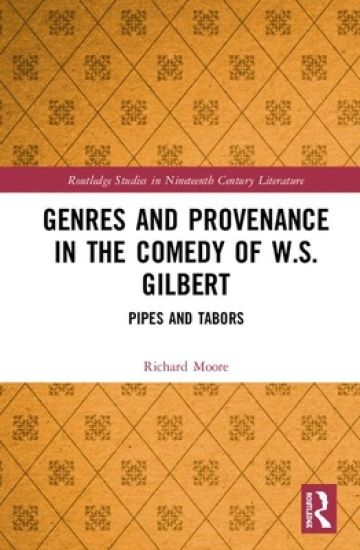
Genres and Provenance in the Comedy of W.S. Gilbert
In The Progress of Fun W.S. Gilbert was considered, not as a ‘classic Victorian’, but as part of an on-going comedic continuum stretching from Aristophanes to Joe Orton and beyond. Pipes and Tabors continues the story, covering the comedic experience differently by reference to genres. Here – treated in relation to a line of significant others – we discover how Gilbert responded to areas such as the Pastoral, the Irish drama, nautical scenarios, melodrama, sensation-theatre, the nonsensemode, pantomime spectaculars, fairy plays, and classical farce. Also included is a wider look at his relation to various European musical forms and (for instance) to the English line of wit and the Elizabethan pamphleteers. To consider a writer not so much by a study of individual works as by threads of linking generic modes tells us a great deal about cultural interconnections and the richly textured nature of theatrical experience. Pipes and Tabors offers a tapestry of overlapping genres and treatments, showing not just the design of the finished products but the shreds and patches which form the underside of the weave. According to Dorothy L. Sayers, life itself offers us the apparent loose ends of a design which will only be revealed from the front after death. In terms of Gilbertian comedy, we are privileged to be able to track both the effort of the weave and the skill of the finished product. On the way we will also discover some new links and sub-text implications about other 19th century denigrated groups which were buried from sight for too long.
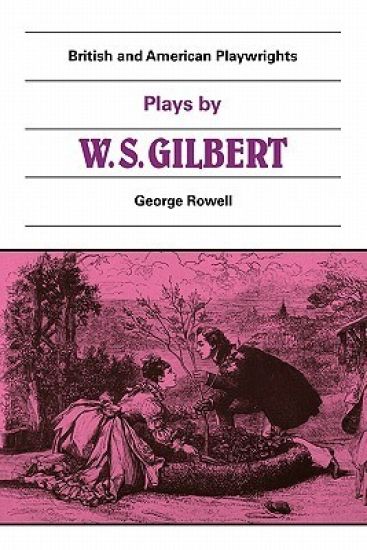
Plays by W. S. Gilbert

Plays by W. S. Gilbert

Cambridge University Press
1982
pokkari
This edition includes four plays and one libretto, covering more than twenty years of the dramatist's career: The Palace of Truth (1870), Sweethearts (1874), Princess Toto (1876), Engaged (1877) and Rosencrantz and Guildenstern (1891). The collection demonstrates that Gilbert was an original dramatist in his own right. The sophisticated irony of his plays challenged the conventions of the Victorian burlesque and sentimental comedy by demanding, and receiving, an intelligent response from the audience. George Rowell's useful and thorough introduction, which presents the theatrical background to Gilbert's development, also shows the dramatist's influence on Pinero, Wilde and Shaw. Gilbert's style combines a technique rarely realistic and stretching to fantasy with a tone apparently cynical and in fact deeply pessimistic. This odd pairing of fantasy and fatalism was recognized by his own and later generations as 'Gilbertian' and the term has been widely applied even outside the theatre.