A comprehensive study guide offering in-depth explanation, essay, and test prep for selected works by Graham Greene, winner of Britain's Order of Merit and the Shakespeare Prize. Titles in this study guide include Brighton Rock, The Power and the Glory, The Heart of the Matter, The Quiet American, Burnt-Out Case, The Comedians, The Little Train, The Potting Shed, The Lawless Roads, The Lost Childhood, Stamboul Train, The Third Man, The Confidential Agent, Our Man in Havana, and The End of the Affair. As one of the leading English novelists of the twentieth-century, Greene's writings assisted in shaping contemporary catholic literature. Moreover, his thriller novels included philosophical and religious themes in order to explore the moral and political issues of the modern world. This Bright Notes Study Guide explores the context and history of Graham Greene's classic work, helping students to thoroughly explore the reasons they have stood the literary test of time. Each Bright Notes Study Guide contains: - Introductions to the Author and the Work - Character Summaries - Plot Guides - Section and Chapter Overviews - Test Essay and Study Q&As The Bright Notes Study Guide series offers an in-depth tour of more than 275 classic works of literature, exploring characters, critical commentary, historical background, plots, and themes. This set of study guides encourages readers to dig deeper in their understanding by including essay questions and answers as well as topics for further research.
The hallmarks of Graham Martin's life have been scholastics and athletics. He had a master's degree in history when he enlisted in the Navy in 1942. He was the only black player on the top-notch Great Lakes Naval Training Center football team. In early 1944 he was tapped for officer training and commissioned in March of that year. He then served as a battalion commander at Great Lakes, on board a yard patrol craft and a yard oiler at San Francisco, as athletic training officer in Hawaii and in Eniwetok, and as a public information officer. After leaving the service in 1946 he earned another master's degree in education, and embarked on a career of teaching and coaching at both collegiate and high school levels. Like others in the Golden Thirteen series, Martin recalls the training, camaraderie among the group, and the racial attitudes of the time.
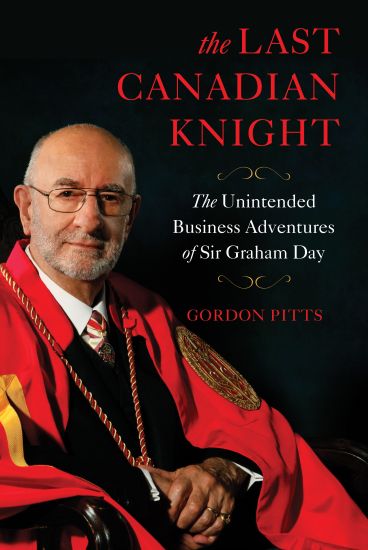
From a small-town law office in Nova Scotia to the pressure-cooker boardrooms of London, England, where he was Margaret Thatcher's "privatization ace," lawyer and businessman Sir Graham Day has earned an international reputation as a tough-minded but charming negotiator. After a rocky educational start in Halifax, Day found his motivation at Dalhousie Law School and established the contacts and experiences that would guide him through the world of global business. With an impressive resume including troubleshooting roles for large companies (Canadian Pacific Limited, British Shipbuilders, Cadbury Schweppes) around the world, often during controversial times, Day solidified his position as an internationally sought-after change-maker. In The Last Canadian Knight, award-winning business journalist Gordon Pitts chronicles Day's meteoric rise and explores the lessons Day gleaned from a lifetime spent in and out of the world's boardrooms.
British abstract painter Wilhelmina Barns-Graham (1912-2004) played a key role in the development of modern abstract art in Britain. This new paperback edition of Lynne Green's classic monograph completes the story of the artist's life and work with a new Coda covering Barns-Graham's final years, which draws for the first time on the artist's personal diaries and notebooks. Born in Fife, Scotland, for over sixty years Barns-Graham lived and worked in St Ives, at the heart of the avant-garde group of artists who made the town internationally famous. Arriving in Cornwall just months after the modernists Ben Nicholson, Barbara Hepworth and Naum Gabo, Barns-Graham was quickly absorbed into their inner circle. She was subsequently one of the Crypt Group of young moderns, and a founder member of the breakaway Penwith Society of Arts. Green examines the importance of Barns-Graham's national tradition and of her teachers at Edinburgh School of Art, particularly the Scottish Colourists William Gillies and John Maxwell. Barns-Graham's developing commitment to abstraction is discussed in detail: never afraid to experiment, her work is revealed as embodying many of the issues central to post-war abstract art. Barns-Graham continued to work right up to her death with the energy and enthusiasm usually associated with the young. Towards the end of her life her art finally started to attract the attention it deserved.
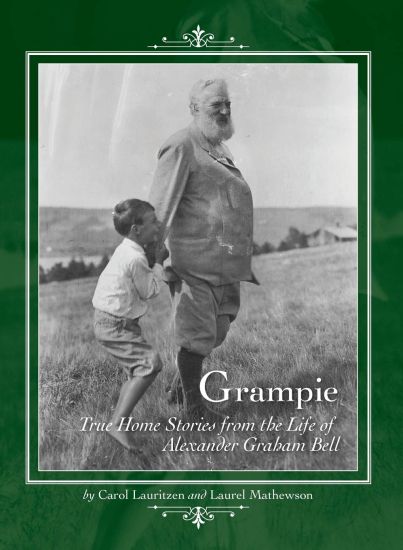
Alexander Graham Bell is one of North America's most famous inventors. Although he is best known for the telephone, he started his science experiments because he wanted to help people who were deaf. He also spent his life exploring metal detectors, iron lungs, kites and speed boats. Have you ever wondered ... What it would have been like to actually live with and learn from Alexander Graham Bell? What was he like as a father and grandfather, not just a public figure?Grampie offers a glimpse into this side of Bell's life and legacy, inviting us to ponder the question Bell answered throughout his life as a parent and grandparent: What does it look like to lovingly cultivate scientific curiosity at home?
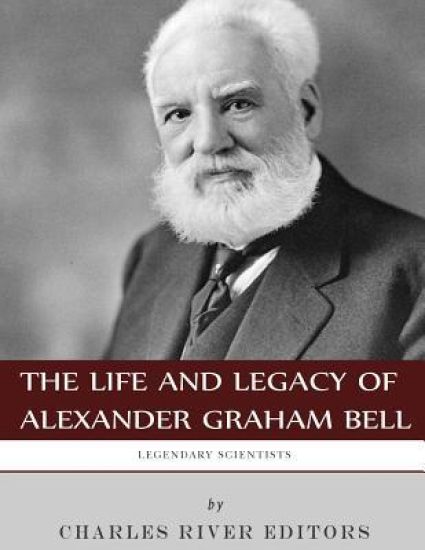
*Includes pictures of Bell and important people, places, and events in his life. *Includes pictures of Bell's inventions and some of his designs. *Includes some of Bell's most inspirational quotes and descriptions of his work. *Includes a Bibliography for further reading. "There cannot be mental atrophy in any person who continues to observe, to remember what he observes, and to seek answers for his unceasing hows and whys about things." - Alexander Graham Bell Today, Alexander Graham Bell is remembered almost solely for one of the few things he didn't have in his laboratory: the telephone. Long hailed as the inventor of the telephone, that accomplishment has nevertheless overshadowed a long and legendary scientific career that saw Bell contribute to a vast number of fields, ranging from geology to aeronautics. Bell also had the misfortune of being outshined by his contemporary Thomas Edison, who invented the incandescent light bulb and has gone down in history as America's greatest inventor. Like many great scientists and inventors, Bell had an unusually gifted intellect that was nurtured from an early age, and even as a child he had access to a workshop that allowed his curious mind to experiment and work. He was also multi-talented, flourishing in music, art, and even a unique form of sign language as his mother grew deaf, an event that would play an influential role in his development of various fields of communication. But ironically, as with Tesla, Edison, and Galileo, Bell's obsession with science and his eccentric learning methods made him a poor student in a formal school setting. Bell's interest in automation and sound led to nearly 20 years of work that he began as a teenager and culminated with the invention of the first telephone, a patent Bell received in March 1876 for "the method of, and apparatus for, transmitting vocal or other sounds telegraphically ... by causing electrical undulations, similar in form to the vibrations of the air accompanying the said vocal or other sound." He was hardly the only one working on the concept; Bell filed for a patent the same day scientist Elisha Gray filed his patent for a similar device. Bell will always be remembered for inventing the telephone and the company that took his name, but he spent an entire lifetime exploring different scientific and medical fields. Biographer Charlotte Gray noted that the ever-curious Bell would actually read Encyclopedia Britannica at night in an attempt to find new things to work on. Bell eventually worked on everything from a breathing apparatus to water filters and aircrafts. Legendary Scientists: The Life and Legacy of Alexander Graham Bell profiles the life and legacy of the inventor of the telephone, while examining his career and contributions to science and technology. Along with pictures of important people, places, and events, you will learn about Alexander Graham Bell like you never have before, in no time at all.
Exploring the backstory that led to the writing of Graham Greene's beloved satirical spy novel, Our Man Down in Havana evokes this pivotal time and place in the author's life.When US immigration authorities deported Graham Greene from Puerto Rico in 1954, the British author made an unplanned visit to Havana and discovered that "every vice was permissible and every trade possible" in a Caribbean fleshpot of mafia-run casinos and nude revues. The former MI6 officer had stumbled upon the ideal setting for a comic espionage story. Three years later, he returned in the midst of Fidel Castro's guerrilla insurgency against a US-backed dictator to begin writing his iconic novel Our Man in Havana. Twelve weeks after its publication, the Cuban Revolution triumphed in January 1959, soon transforming a capitalist playground into a communist stronghold.Combining biography, history, and politics, Our Man Down in Havana investigates the real story behind Greene's fictional one. This includes his many visits to a pleasure island that became a revolutionary island, turning his chance involvement into a political commitment. His Cuban novel describes an amateur agent who dupes his intelligence chiefs with invented reports about "concrete platforms and unidentifiable pieces of giant machinery." With eerie prescience, Greene's satirical tale had foretold the Cold War's most perilous episode, the 1962 Cuban Missile Crisis.Exploiting a wealth of archival material and interviews with key protagonists, Our Man Down in Havana delves into the story behind and beyond the author's prophetic Cuban tale, focusing on one slice of Greene's manic life: a single novel and its complex history.
The must-read summary of Benjamin Graham's book: "The Intelligent Investor: The Classic Text on Value Investing"This complete summary of the ideas from Benjamin Graham's book "The Intelligent Investor" outlines the behavior of the intelligent investor and the right attitude to adopt when one considers investing. Moreover, this summary gives you the six principles at the core of intelligent investing, thus providing you with all the tools to become a successful investor yourself. Added-value of this summary: - Save time - Understand the key concepts - Expand your business knowledge To learn more, read "The Intelligent Investor" and choose your investments wisely.
Die vorliegende Arbeit befasst sich mit der Entwicklung der religiosen Thematik in den sechs bedeutendsten Romanen von Graham Greene und das fur die Struktur dieser Werke wichtige Verfolgungsmotiv."
Seminar paper from the year 2013 in the subject English - Literature, Works, grade: 2,0, Johannes Gutenberg University Mainz, language: English, abstract: "I am who I am. I am Bill Unwin (there, I declare myself ). I am Hamlet the Dane" (Swift 173). This citation neatly covers what Graham Swift's novel Ever After is about; a no one identifies himself with a world-famous figure, namely William Shakespeare's Hamlet, to provide some structure and meaning to his irrelevant existence. Swift tries to picture the insignificance of life and therefore, focuses the story of this middle-aged desperate and childless widower Bill Unwin, who recently survived an attempted suicide. Searching for clues to understand his life, Unwin addresses themes such as love, loss, identity, mortality, and the ephemeral nature of life. In order to give his own existence a sense of meaning, Bill empathizes with Hamlet, but in the end the reader has to discover that these two characters have nothing in common and Unwin's emptiness of life is stressed. So, if you take all of Unwin's fa ade and shape away he tried to construct from Hamlet, no meaning to his life, rather nothing remains, thus, this novel is to show how meaningless and transient life actually is. Therefore, to illustrate this occurrence in this paper, first of all, shared character traits between Bill Unwin and Hamlet the Dane are listed to later on destroy the illusion of Bill being Hamlet by outlining the differences between these two figures. Following, the emptiness of Unwin's life is pointed out and reasons of creating the protagonist like this are specified. Finally, Swift's intention is reached as the overall insignificance of life becomes obvious.
Le livre refl te une tude pure sur la m moire et le r cit, James Olney met le doigt sur l'un des aspects les plus illustratifs des crivains du vingti me si cle. Il affirme "qu'une recherche angoiss e du soi, travers les actes mutuellement r flexifs de la m moire et de la narration, accompagn e de la crainte obs dante que ce soit impossible d s le d but mais aussi impossible abandonner, est l'embl me m me de notre poque" (Olney 1998: xiv-xv). L' tude d'Olney porte sur le genre de l'autobiographie, et il pourrait donc sembler loign d'appliquer cette citation comme point de d part d'une discussion sur le roman de Graham Greene, The End of the Affair. Cependant, en tant que roman, The End of the Affair pr sente de nombreux l ments que l'on consid re g n ralement comme appartenant au genre de l'autobiographie et, en tant que tel, je pense qu'il est conforme l'affirmation d'Olney. Le projet et la situation difficile qu'Olney met en avant capturent l'humeur et l'atmosph re du roman tudi ici de mani re tr s succincte. L'objectif principal de cette th se sera d' tudier et, esp rons-le, d' clairer la mani re dont la m moire et la narration sont pr sent es comme deux complexes puissants l'oeuvre dans ce roman. N en 1904, Greene a t projet dans ce qui est largement consid r , du moins en ce qui concerne la litt rature, comme l'une des plus grandes r ussites de l'histoire.
Il libro riflette uno studio puro su Memoria e Narrativa, James Olney mette il dito su uno degli aspetti illustrativi degli scrittori del ventesimo secolo. Egli sostiene "che una ricerca agonizzante del s , attraverso gli atti reciprocamente riflessivi della memoria e della narrazione, accompagnata dall'ossessionante paura che sia impossibile fin dall'inizio ma anche impossibile da abbandonare, l'emblema stesso del nostro tempo" (Olney 1998: xiv-xv). Quello di Olney uno studio sul genere dell'autobiografia, e quindi potrebbe sembrare remoto applicare questa citazione come punto di partenza in una discussione sul romanzo di Graham Greene The End of the Affair. Come romanzo, tuttavia, The End of the Affair mostra molti elementi che sono comunemente pensati come appartenenti al genere dell'autobiografia, e come tale credo che sia in linea con l'affermazione di Olney. Il progetto e il predicament che Olney accentua catturano in modo molto succinto lo stato d'animo e l'atmosfera del romanzo qui in esame. L'obiettivo principale di questa tesi sar quello di indagare, e si spera illuminare, come la memoria e la narrazione si presentano come due potenti complessi all'opera in questo romanzo. Nato nel 1904, Greene stato gettato in quello che ampiamente considerato, almeno
O livro reflecte um estudo puro sobre Mem ria e Narrativa, James Olney coloca o dedo num dos aspectos ilustrativos dos escritores do s culo XX. Ele afirma "que uma busca agonizada do eu, atrav s dos actos mutuamente reflexivos da mem ria e da narrativa, acompanhada pelo medo assombroso de que imposs vel desde o in cio mas tamb m imposs vel de ceder, o pr prio emblema do nosso tempo" (Olney 1998: xiv-xv). Olney's um estudo do g nero de autobiografia, pelo que pode parecer remoto aplicar esta cita o como ponto de partida numa discuss o do romance de Graham Greene O fim do caso. Como romance, por m, O Fim do Caso mostra muitos elementos que s o geralmente considerados como pertencentes ao g nero da autobiografia, e como tal creio que est de acordo com a afirma o de Olney. O projecto e a situa o dif cil de Olney acentua de forma muito sucinta o estado de esp rito e a atmosfera do romance aqui em investiga o. O principal objectivo desta tese ser investigar, e espera-se que ilumine, como a mem ria e a narrativa s o apresentadas como dois poderosos complexos em ac o neste romance. Nascido em 1904, Greene foi atirado para o que amplamente considerado, pelo menos
Historieskrivningen om Graham Greene utgår ofta från en handfull av hans romaner, trots att han under sju decennier också skrev noveller, essäer, dramatik, barnböcker, filmmanus – och dessutom var en tongivande kritiker och förläggare. Hur blev det så? Hur kom ett livslångt författarskap att sammanfattas med några boktitlar? I Mönster i grönt utforskar Oscar Jansson hur förståelsen av Greenes författarskap tagit form, från debuten på 1920-talet fram till vår tid. Bilden som framträder visar en mångfacetterad författare som på en gång gynnats och begränsats av komplexiteten i 1900-talslitteraturens villkor: av bokmarknadens internationalisering, av ett alltmer varierat medialt landskap och av litteraturkritikens professionalisering.