Kirjojen hintavertailu. Mukana 12 406 211 kirjaa ja 12 kauppaa.

Kirjahaku

Etsi kirjoja tekijän nimen, kirjan nimen tai ISBN:n perusteella.

1000 tulosta hakusanalla Gregory L. Matloff

The Disappearance of Gregory Pluckrose

The Disappearance of Gregory Pluckrose

Elizabeth Gundy

Open Road Media
2014
pokkari
“Let me make clear from the outset, I detest adventure. It’s tasteless, showy, vulgar, and uncalled for.” So begins this delicious thriller about a gay interior decorator who joins his super-wealthy clients for a Caribbean cruise, only to find himself shanghaied by pirates. Bound hand and foot and tossed unceremoniously into a quaint, Paul Gauguin sort of hut picturesquely thatched with banana leaves, Gregory fears he will be boiled à la langouste and served without so much as a creative sauce. But one night, as he lies in the dark with his face in the dirt, he hears a digging, snooting sound coming from the ground outside . . . Enter the most endearing sidekick in fiction, the brave pig Savarin. High adventure is turned on its head in this affectionate satire of yuppie values. “It is as if Oscar Wilde had been parachuted into the jungle,” says the New York Times. “You will find yourself picking out and stowing away your favorite lines. There are enough twists in the story to make a yogi sore. Under the spell of Gundy’s droll and accomplished prose you will end up smiling through the whole thing.”
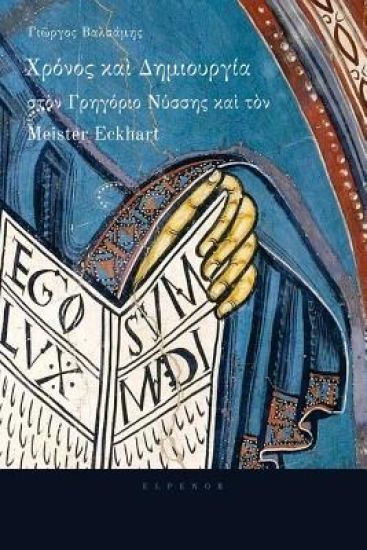
Time and Creation in Gregory of Nyssa and Meister Eckhart

Time and Creation in Gregory of Nyssa and Meister Eckhart

George Valsamis

Createspace Independent Publishing Platform
2017
nidottu
To what extent creation implies the Creator's nearness to His works? What kind of 'paradise' man abandoned with the 'transgression'? Which is the 'prime matter' of beings? What is the meaning for man of the spatiotemporal structure and change as opposed to the simplicity of the divine nature? What does the origin of beings 'out of nothing' mean? How is the divine will related to space and time? What is the meaning of the end of times? What does creation of man 'according to the image' mean? How is the soul related to Creation? How does Monotheism agree with trinitarianism and what is the real value of trinitarianism for the existence of God and man? Raising questions related with these issues, the current study of the cosmology of Gregory of Nyssa and Meister Eckhart highlights also the importance of theoretical similarities and differences between the two great Christian Mystics. The book is offered at cost price. Official page: elpenor.org/books/eckhart-nyssa/default.asp
Phantom Vendetta: An Aaron Gregory Novel

Phantom Vendetta: An Aaron Gregory Novel

Dennis Pritchett

Createspace Independent Publishing Platform
2017
nidottu
Someone has tried to kill P.I. Aaron Gregory. His young employee Mandy Albright has disappeared. Has an old nemesis returned from a watery grave to seek his vengence? The police believe that Mandy is a runaway but Aaron is certain she would not give up her life in Newport Beach for the mean streets of L.A. He is a champion of lost causes and knows he must act quickly using all of the combat talents he learned in the army and his self-taught computer hacking skills to save the young girl from a monster. Has Billy Joe Riley, the ex-Navy Seal really returned from the dead?Phantom Vendetta takes place on the beautiful beaches of Southern California from San Diego to Santa Barbara. The novel once again reunites Gregory with his best friend and veteran Rico Perez, his beautiful girlfriend Alicia Morales, and his sexy employee Wendy Roberts. This novel is the fifth in the Aaron Gregory detective series following: Deadly Deceit, Blue Oblivion, Death in the Big Orange, and Legacy Lost.
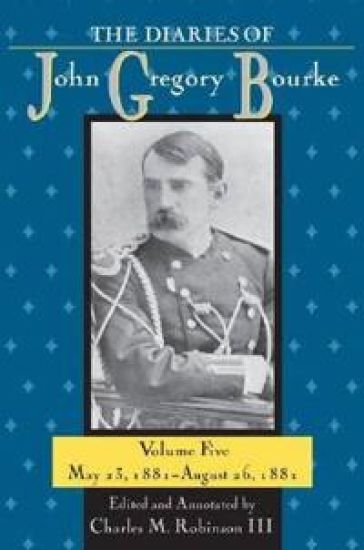
The Diaries of John Gregory Bourke, Volume 5

The Diaries of John Gregory Bourke, Volume 5

Charles M. Robinson

University of North Texas Press,U.S.
2013
sidottu
John Gregory Bourke kept a monumental set of diaries beginning as a young cavalry lieutenant in Arizona in 1872, and ending the evening before his death in 1896. As aide-de-camp to Brigadier General George Crook, he had an insider's view of the early Apache campaigns, the Great Sioux War, the Cheyenne Outbreak, and the Geronimo War. Bourke's writings reveal much about military life on the western frontier, but he also was a noted ethnologist, writing extensive descriptions of American Indian civilization and illustrating his diaries with sketches and photographs. Previously, researchers could consult only a small part of Bourke’s diary material in various publications, or else take a research trip to the archive and microfilm housed at West Point. Now, for the first time, the 124 manuscript volumes of the Bourke diaries are being compiled, edited, and annotated by Charles M. Robinson III in an easily accessible form to the modern researcher. This fifth volume opens at Fort Wingate as Bourke prepares to visit the Navajos. Next, at the Pine River Agency, he is witness to the Sun Dance, where despite his discomfort at what he saw, he noted that during the Sun Dance piles of food and clothing were contributed by the Indians themselves, to relieve the poor among their people. Bourke continued his travels among the Zunis, the Rio Grande pueblos, and finally, with the Hopis to attend the Hopi Snake dance. The volume concludes at Fort Apache, Arizona, which is stirring with excitement over the activities of the Apache medicine man, Nakai’-dokli’ni, which Bourke spelled Na Kay do Klinni. This would erupt into bloodshed less than a week later. Volume Five is especially important because it is the first in this series to deal almost exclusively with Bourke’s ethnological research. Aside from a brief trip to the East Coast, most of the text involves his observations either during the Great Oglala Sun Dance of 1881, or among the pueblos of New Mexico and Arizona. Bourke’s account of the Sun Dance is particularly significant because it was the last one held by the Oglalas. The Hopi material in this volume served as the basis of The Snake Dance of the Moquis of Arizona, published three years later in 1884, and perhaps his best-known work after On the Border with Crook. Extensively annotated and with a biographical appendix on Indians, civilians, and military personnel named in the diaries, this book will appeal to western and military historians, students of American Indian life and culture, and to anyone interested in the development of the American West.
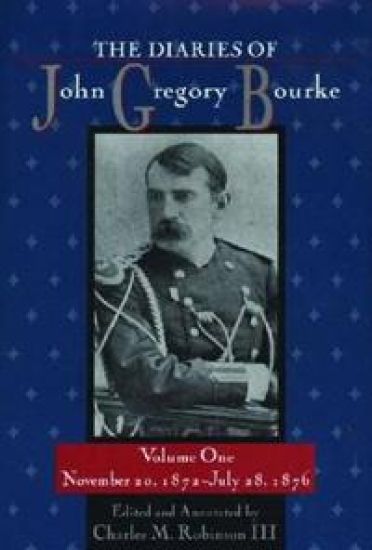
The Diaries of John Gregory Bourke, Volume 1

The Diaries of John Gregory Bourke, Volume 1

UNIVERSITY OF NORTH TEXAS PRESS,U.S.
2024
pokkari
John Gregory Bourke kept a monumental set of diaries as aide-de-camp to Brigadier General George Crook. Volume 1 begins during the 1872 Apache campaigns and dealings with Cochise. Bourke’s ethnographic notes on the Apaches continues with further observations on the Hopis in 1874. The next year he turned his pen on the Sioux and Cheyenne during the 1875 Black Hills Expedition, writing some of his most jingoistic comments in favor of Manifest Destiny. This volume culminates with the momentous events of the Great Sioux War and vivid descriptions of the Powder River fight and the Battle of the Rosebud. Charles M. Robinson III extensively annotates the volume and includes a biographical appendix on the Indians, civilians, and military personnel named.
Happy Birthday Gregory - The Big Birthday Activity Book: Personalized Children's Activity Book
Happy Birthday Gregory is a personalized kids activity book, it includes personalized crosswords, word searches, number puzzles, jokes, drawing and coloring >It is suitable for children between 6-11 years old It is the perfect birthday present for Gregory, and is a great keepsake for parents to remember their child's early years and birthdays This personalized book is available for other names also This is a great gift for children and an amazing keepsake for parents Happy Birthday Gregory
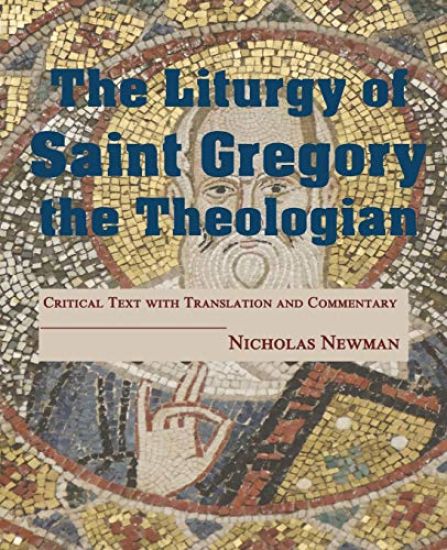
The Liturgy of Saint Gregory the Theologian

The Liturgy of Saint Gregory the Theologian

Nicholas Newman

Saint Dominic's Media Inc.
2019
pokkari
This is a groundbreaking book in Catholic/Orthodox liturgy offers a new edition of the Liturgy of St. Gregory the Theologian based on the manuscripts of the Greek version of the text: Parisinus Graecus 325, the Kacmarcik Codex and the Wadi n'Natrun fragments. The edition, which is one of the only editions to include sections outside the Anaphoral prayers, builds on and supplements the work that prior scholars have done on the Greek text, such as Gerhards, who edited the Anaphora of the liturgy, and Macomber, who worked with the text in the Kacmarcik Codex. In addition to the edition, this book offers a translation of the text, as well as a commentary. The commentary looks at literary elements, such as intertextuality, philosophical and theological elements and the programmatic use of language. The commentary also attempts to clear up some of the fundamental questions about this text. While many of these questions have been discussed before in the secondary literature dealing with this liturgy, or liturgies generally, often the discussion was limited only in a context that dealt with a partial picture of the text. One of these fundamental questions, among many, concerns the placement of the text in time. The Greek manuscripts are clustered relatively late, in the fourteenth century. Despite this, the liturgy does not seem to be a composition of the Middle Ages, the Coptic versions of the text, for example, date from much earlier, the sixth century or so. Is the Greek text, then, a translation of a Coptic original? A few pieces of internal evidence suggest otherwise, that instead, the late manuscripts of the Greek text are the only extant manuscripts in a much longer tradition. By looking at one of the unique features of the text, the pervasive direct address of Christ, the commentary teases out the origin of the text as an anti-Arian polemical work of the theologically turbulent fourth century. Another important question that is discussed in the commentary is the question of geographic provenance, where was this liturgy first written. As with the discussion of the dating of the text, this is initially a difficult question. The Greek and Coptic versions of the text are not in use outside of Egypt, and there are other liturgical texts attributed to St. Gregory the Theologian in other liturgical families, a Syrian Anaphora as well as an Armenian liturgy, this seems to suggest that this text belongs to the Alexandrinian family of liturgies. There are a few prayers, however, which the Egyptian Liturgy of St. Gregory has in common with the Byzantine Liturgy of St. Basil. This would not be unusual, as the Byzantine liturgies exerted a great deal of influence on the other eastern liturgical families, the shared prayers, however, address Christ, implying that they were not borrowed from the Liturgy of St. Basil by the Liturgy of St. Gregory, but the other way around. This implies, then, that the liturgy is not originally from Egypt, but from Cappadocia, or the environs around Constantinople.