King Solomon's Mines (1885) is a popular novel by the Victorian adventure writer and fabulist Sir H. Rider Haggard. It tells of a search of an unexplored region of Africa by a group of adventurers led by Allan Quatermain for the missing brother of one of the party. It is the first English adventure novel set in Africa, and is considered to be the genesis of the Lost World literary genre. Plot: Allan Quatermain, an adventurer and white hunter based in Durban, in what is now South Africa, is approached by aristocrat Sir Henry Curtis and his friend Captain Good, seeking his help finding Sir Henry's brother, who was last seen travelling north into the unexplored interior on a quest for the fabled King Solomon's Mines. Quatermain has a mysterious map purporting to lead to the mines, but had never taken it seriously. However, he agrees to lead an expedition in return for a share of the treasure, or a stipend for his son if he is killed along the way. He has little hope they will return alive, but reasons that he has already outlived most people in his profession, so dying in this manner at least ensures that his son will be provided for. They also take along a mysterious native, Umbopa, who seems more regal, handsome and well-spoken than most porters of his class, but who is very anxious to join the party. Travelling by oxcart, they reach the edge of a desert, but not before a hunt in which a wounded elephant claims the life of a servant. They continue on foot across the desert, almost dying of thirst before finding the oasis shown halfway across on the map. Reaching a mountain range called Suliman Berg, they climb a peak (one of "Sheba's Breasts") and enter a cave where they find the frozen corpse of Jos Silvestre (also spelt Silvestra), the 16th-century Portuguese explorer who drew the map in his own blood. That night, a second servant dies from the cold, so they leave his body next to Silvestra's, to "give him a companion". They cross the mountains into a raised valley, lush and green, known as Kukuanaland. The inhabitants have a well-organised army and society and speak an ancient dialect of IsiZulu. Kukuanaland's capital is Loo, the destination of a magnificent road from ancient times. The city is dominated by a central royal kraal. They soon meet a party of Kukuana warriors who are about to kill them when Captain Good nervously fidgets with his false teeth, making the Kukuanas recoil in fear. Thereafter, to protect themselves, they style themselves "white men from the stars"-sorcerer-gods-and are required to give regular proof of their divinity, considerably straining both their nerves and their ingenuity. They are brought before King Twala, who rules over his people with ruthless violence. He came to power years before when he murdered his brother, the previous king, and drove his brother's wife and infant son, Ignosi, out into the desert to die. Twala's rule is unchallenged. An evil, impossibly ancient hag named Gagool is his chief advisor. She roots out any potential opposition by ordering regular witch hunts and murdering without trial all those identified as traitors. When she singles out Umbopa for this fate, it takes all Quatermain's skill to save his life. Gagool, it appears, has already sensed what Umbopa soon after reveals: he is Ignosi, the rightful king of the Kukuanas. A rebellion breaks out, the Englishmen gaining support for Ignosi by taking advantage of their foreknowledge of a lunar eclipse to claim that they will black out the sun as proof of Ignosi's claim. The Englishmen join Ignosi's army in a furious battle. Although outnumbered, the rebels overthrow Twala, and Sir Henry lops off his head in a duel.... Sir Henry Rider Haggard, KBE ( 22 June 1856 - 14 May 1925), known as H. Rider Haggard, was an English writer of adventure novels set in exotic locations, predominantly Africa, and a pioneer of the Lost World literary genre.
She: A History of Adventure is a novel by H. Rider Haggard (1856-1925), first serialised in The Graphic magazine from October 1886 to January 1887. She is one of the classics of imaginative literature, and one of the best-selling books of all time, with somewhere between 83 million and 100 million copies sold in 44 different languages as of 2013.She was extraordinarily popular upon its release and has never been out of print. According to literary historian Andrew M. Stauffer, "She has always been Rider Haggard's most popular and influential novel, challenged only by King Solomon's Mines in this regard". The story is a first-person narrative that follows the journey of Horace Holly and his ward Leo Vincey to a lost kingdom in the African interior. There they encounter a primitive race of natives and a mysterious white queen named Ayesha who reigns as the all-powerful "She", or "She-who-must-be-obeyed". In this work, Rider Haggard developed the conventions of the Lost World subgenre, which many later authors emulated. She is placed firmly in the imperialist literature of nineteenth-century England, and inspired by Rider Haggard's experiences of South Africa and British colonialism. The story expresses numerous racial and evolutionary conceptions of the late Victorians, especially notions of degeneration and racial decline prominent during the fin de si cle. In the figure of She, the novel notably explored themes of female authority and feminine behaviour. It has received praise and criticism alike for its representation of womanhood. A young Cambridge University professor, Horace Holly, is visited by a colleague, Vincey, who reveals that he will soon die. Vincey proceeds to tell Holly a fantastical tale of his family heritage. He charges Holly with the task of raising his young son, Leo (whom he has never seen) and gives Holly a locked iron box, with instructions that it is not to be opened until Leo turns 25. Holly agrees, and indeed Vincey is found dead the next day. Holly raises the boy as his own; when the box is opened on Leo's 25th birthday they discover the ancient and mysterious "Sherd of Amenartas", which seems to corroborate Leo's father's story. Holly, Leo and their servant, Job, follow instructions on the Sherd and travel to eastern Africa but are shipwrecked. They alone survive, together with their Arab captain, Mahomed; after a perilous journey into an uncharted region of the African interior, they are captured by the savage Amahagger people. The adventurers learn that the natives are ruled by a fearsome white queen, who is worshiped as Hiya or "She-who-must-be-obeyed". The Amahagger are curious about the white-skinned interlopers, having been warned of their coming by the mysterious queen. Billali, the chief elder of one of the Amahagger tribes, takes charge of the three men, introducing them to the ways of his people. One of the Amahagger maidens, Ustane, takes a liking to Leo and, by kissing him and embracing him publicly, weds him according to Amahagger customs. Leo, likewise, grows very fond of her. Billali tells Holly that he needs to go and report the white men's arrival to She. In his absence, some of the Amahagger become restless and seize Mahomed, intending to eat him as part of a ritual "hot pot". Mahomed dies from the hot pot. Realising what is about to happen, Holly shoots several of the Amahagger; in the ensuing struggle Leo is gravely wounded, but Ustane saves his life by throwing herself onto his prostrate body to shield him from spears. All seems lost as the Amahagger resolve to kill Ustane along with the white men but Billali returns in the nick of time and declares that the three men are under the protection of She. Leo's condition, however, worsens and he nears death as Ustane faithfully tends to him.They are taken to the home of the queen, which lies near the ruins of the lost city of K r, a once mighty civilisation that predated the Egyptians. ...
Tono-Bungay is a realist semiautobiographical novel written by H. G. Wells and published in 1909. It has been called "arguably his most artistic book". Plot: Tono-Bungay is narrated by George Ponderevo, who is persuaded to help develop the business of selling Tono-Bungay, a patent medicine created by his ambitious uncle Edward. George devotes seven years to organising the production and manufacture of a product which he believes to be "a damned swindle". 3] He then quits day-to-day involvement with the enterprise in favour of aeronautics. But he remains associated with his uncle Edward, who becomes a financier of the first order and is on the verge of achieving social as well as economic dominance when his business empire collapses. George tries to rescue his uncle's failing finances by stealing quantities of a radioactive compound called "quap " from an island off the coast of West Africa, but the expedition is unsuccessful. His nephew engineers his uncle's escape from England in an experimental aircraft he has built, but the ruined entrepreneur turned financier catches pneumonia on the flight and dies in a French village near Bordeaux, despite George's efforts to save him. The novel ends with George finding a new occupation: designing destroyers for the highest bidder.... Herbert George Wells (21 September 1866 - 13 August 1946)-known as H. G. Wells-was a prolific English writer in many genres, including the novel, history, politics, social commentary, and textbooks and rules for war games. Wells is now best remembered for his science fiction novels and is called a "father of science fiction", along with Jules Verne and Hugo Gernsback.His most notable science fiction works include The Time Machine (1895), The Island of Doctor Moreau (1896), The Invisible Man (1897), and The War of the Worlds (1898). He was nominated for the Nobel Prize in Literature four times. Wells's earliest specialised training was in biology, and his thinking on ethical matters took place in a specifically and fundamentally Darwinian context.He was also from an early date an outspoken socialist, often (but not always, as at the beginning of the First World War) sympathising with pacifist views. His later works became increasingly political and didactic, and he wrote little science fiction, while he sometimes indicated on official documents that his profession was that of journalist.Novels like Kipps and The History of Mr Polly, which describe lower-middle-class life, led to the suggestion, when they were published, that he was a worthy successor to Charles Dickens, but Wells described a range of social strata and even attempted, in Tono-Bungay (1909), a diagnosis of English society as a whole. A diabetic, in 1934 Wells co-founded the charity The Diabetic Association (known today as Diabetes UK). Early life Herbert George Wells was born at Atlas House, 46 High Street, Bromley, in Kent, on 21 September 1866.Called "Bertie" in the family, he was the fourth and last child of Joseph Wells (a former domestic gardener, and at the time a shopkeeper and professional cricketer) and his wife, Sarah Neal (a former domestic servant). An inheritance had allowed the family to acquire a shop in which they sold china and sporting goods, although it failed to prosper: the stock was old and worn out, and the location was poor. Joseph Wells managed to earn a meagre income, but little of it came from the shop and he received an unsteady amount of money from playing professional cricket for the Kent county team.Payment for skilled bowlers and batsmen came from voluntary donations afterwards, or from small payments from the clubs where matches were played....
She-subtitled A History of Adventure-is a novel by H. Rider Haggard (1856-1925), first serialised in The Graphic magazine from October 1886 to January 1887. She is one of the classics of imaginative literature, and one of the best-selling books of all time, with somewhere between 83 million and 100 million copies sold in 44 different languages as of 2013. She was extraordinarily popular upon its release and has never been out of print. According to literary historian Andrew M. Stauffer, "She has always been Rider Haggard's most popular and influential novel, challenged only by King Solomon's Mines in this regard". The story is a first-person narrative that follows the journey of Horace Holly and his ward Leo Vincey to a lost kingdom in the African interior. There they encounter a primitive race of natives and a mysterious white queen named Ayesha who reigns as the all-powerful "She", or "She-who-must-be-obeyed". In this work, Rider Haggard developed the conventions of the Lost World subgenre, which many later authors emulated.
Five Children and It is a children's novel by English author E. Nesbit. Plot: Like Nesbit's The Railway Children, the story begins when a group of children move from London to the countryside of Kent. The five children - Cyril, Anthea, Robert, Jane, and their baby brother, known as the Lamb - are playing in a gravel pit when they uncover a rather grumpy, ugly, and occasionally malevolent Psammead or sand-fairy, who has the ability to grant wishes. He persuades the children to take one wish each day to be shared among them, with the caveat that the wishes will turn to stone at sunset. This, apparently, used to be the rule in the Stone Age, when all that children wished for was food, the bones of which then became fossils. The five children's first wish is to be "as beautiful as the day". The wish ends at sunset and its effects simply vanish, leading the Psammead to observe that some wishes are too fanciful to be changed to stone. All the wishes go comically wrong. The children wish to be beautiful, but the servants do not recognise them and shut them out of the house. They wish to be rich, then find themselves with a gravel-pit full of gold spade guineas that no shop will accept as they are no longer in circulation, so they can't buy anything. A wish for wings seems to be going well, but at sunset the children find themselves stuck on top of a church bell tower with no way down, getting them into trouble with the gamekeeper who must take them home (though this wish has the happy side-effect of introducing the gamekeeper to the children's housemaid, who later marries him). Robert is bullied by the baker's boy, then wishes that he was bigger - whereupon he becomes eleven feet tall, and the other children show him at a travelling fair for coins. They also wish themselves into a castle, only to learn that it is being besieged, while a wish to meet real Red Indians ends with the children nearly being scalped.............. Edith Nesbit (married name Edith Bland; 15 August 1858 - 4 May 1924) was an English author and poet; she published her books for children under the name of E. Nesbit. She wrote or collaborated on more than 60 books of children's literature. She was also a political activist and co-founded the Fabian Society, a socialist organisation later affiliated to the Labour Party. Nesbit was born in 1858 at 38 Lower Kennington Lane in Kennington, Surrey (now part of Greater London), the daughter of an agricultural chemist, John Collis Nesbit, who died in March 1862, before her fourth birthday. Her sister Mary's ill health meant that the family travelled around for some years, living variously in Brighton, Buckinghamshire, France (Dieppe, Rouen, Paris, Tours, Poitiers, Angoul me, Bordeaux, Arcachon, Pau, Bagn res-de-Bigorre, and Dinan in Brittany), Spain and Germany, before settling for three years at Halstead Hall in Halstead in north-west Kent, a location which later inspired The Railway Children (this distinction has also been claimed by the Derbyshire town of New Mills). At eighteen, Nesbit met the bank clerk Hubert Bland in 1877. Seven months pregnant, she married Bland on 22 April 1880, though she did not immediately live with him, as Bland initially continued to live with his mother. Their marriage was a stormy one. Early on Nesbit discovered that another woman believed she was Hubert's fiancee and had also borne him a child.... Harold Robert Millar (1869 - 1942) was a prominent and prolific Scottish graphic artist and illustrator of the late nineteenth and early twentieth centuries.
Edith Nesbit (married name Edith Bland; 15 August 1858 - 4 May 1924) was an English author and poet; she published her books for children under the name of E. Nesbit. She wrote or collaborated on more than 60 books of children's literature. She was also a political activist and co-founded the Fabian Society, a socialist organisation later affiliated to the Labour Party. Nesbit was born in 1858 at 38 Lower Kennington Lane in Kennington, Surrey (now part of Greater London), the daughter of an agricultural chemist, John Collis Nesbit, who died in March 1862, before her fourth birthday. Her sister Mary's ill health meant that the family travelled around for some years, living variously in Brighton, Buckinghamshire, France (Dieppe, Rouen, Paris, Tours, Poitiers, Angoul me, Bordeaux, Arcachon, Pau, Bagn res-de-Bigorre, and Dinan in Brittany), Spain and Germany, before settling for three years at Halstead Hall in Halstead in north-west Kent, a location which later inspired The Railway Children (this distinction has also been claimed by the Derbyshire town of New Mills). At eighteen, Nesbit met the bank clerk Hubert Bland in 1877. Seven months pregnant, she married Bland on 22 April 1880, though she did not immediately live with him, as Bland initially continued to live with his mother. Their marriage was a stormy one. Early on Nesbit discovered that another woman believed she was Hubert's fiancee and had also borne him a child. A more serious blow came later when she discovered that her good friend, Alice Hoatson, was pregnant with Hubert's child. She had previously agreed to adopt Hoatson's child and allow Hoatson to live with her as their housekeeper. After she discovered the truth, they quarrelled violently and she suggested that Hoatson and the baby should leave; her husband threatened to leave Edith if she disowned the baby and its mother. Hoatson remained with them as a housekeeper and secretary and became pregnant by Bland again 13 years later. Edith again adopted Hoatson's child. Nesbit's children were Paul Bland (1880-1940), to whom The Railway Children was dedicated; Iris Bland (1881-1950s); Fabian Bland (1885-1900); Rosamund Bland (1886-1950), to whom The Book of Dragons was dedicated; and John Bland (1898-1971) to whom The House of Arden was dedicated. Her son Fabian died aged 15 after a tonsil operation; Nesbit dedicated a number of books to him: Five Children and It and its sequels, as well as The Story of the Treasure Seekers and its sequels. Nesbit's adopted daughter Rosamund collaborated with her on the book Cat Tales.... Harold Robert Millar (1869 - 1942) was a prominent and prolific Scottish graphic artist and illustrator of the late nineteenth and early twentieth centuries. He is best known for his illustrations of children's books and fantasy literature. 1] "His work...has a lively, imaginative charm and a distinctive sense of design." 2] A native of Dumfriesshire, Millar first pursued civil engineering before deciding upon an artistic career. He then studied at the Wolverhampton Art School and the Birmingham School of Art, and established his career as a magazine illustrator with Punch, Good Words, and other periodicals of the day. Millar illustrated fables for the Strand Magazine, and anthologies of tales, The Golden Fairy Book, The Silver Fairy Book, The Diamond Fairy Book, and The Ruby Fairy Book. He illustrated books by a wide range of British authors of his time, including Sir Arthur Quiller-Couch, Robert Louis Stevenson, and Rudyard Kipling. He had an extensive working relationship with E. Nesbit, and has been called "the most sympathetic and perhaps the most talented of her illustrators."....
English novelist, historian and science writer Herbert George Wells (1866-1946) abandoned teaching and launched his literary career with a series of highly successful science-fiction novels. The Time Machine was the first of a number of these imaginative literary inventions. First published in 1895, the novel follows the adventures of a hypothetical Time Traveller who journeys into the future to find that humanity has evolved into two races: the peaceful Eloi - vegetarians who tire easily - and the carnivorous, predatory Morlocks.After narrowly escaping from the Morlocks, the Time Traveller undertakes another journey even further into the future where he finds the earth growing bitterly cold as the heat and energy of the sun wane. Horrified, he returns to the present, but soon departs again on his final journey.While the novel is underpinned with both Darwinian and Marxist theory and offers fascinating food for thought about the world of the future, it also succeeds as an exciting blend of adventure and pseudo-scientific romance. Sure to delight lovers of the fantastic and bizarre, The Time Machine is a book that belongs on the shelf of every science-fiction fan.
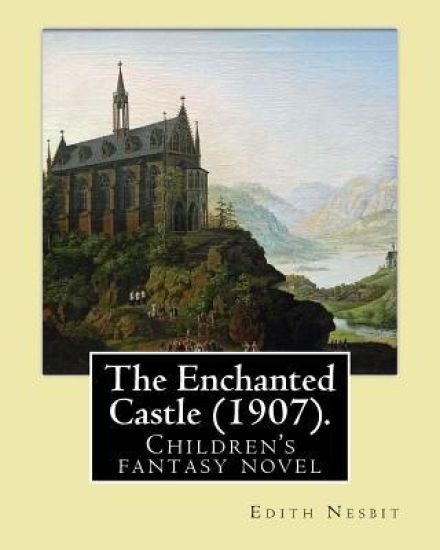
The Enchanted Castle is a children's fantasy novel by Edith Nesbit first published in 1907. PLOT: The enchanted castle of the title is a country estate in the West Country seen through the eyes of three children, Gerald, James and Kathleen, who discover it while exploring during the school holidays. The lake, groves and marble statues, with white towers and turrets in the distance, make a fairy-tale setting, and then in the middle of the maze in the rose garden they find a sleeping fairy-tale princess. The "princess" tells them that the castle is full of magic, and they almost believe her. She shows them the treasures of the castle, including a magic ring she says is a ring of invisibility, but when it actually turns her invisible she panics and admits that she is the housekeeper's niece, Mabel, and was just play-acting. The children soon discover that the ring has other magical powers. 1] The Enchanted Castle was written for both children and adults. It combines descriptions of the imaginative play of children, reminiscent of The Story of the Treasure Seekers, with a magic more muted than in her major fantasies such as The Story of the Amulet. Edith Nesbit (married name Edith Bland; 15 August 1858 - 4 May 1924) was an English author and poet; she published her books for children under the name of E. Nesbit. She wrote or collaborated on more than 60 books of children's literature. She was also a political activist and co-founded the Fabian Society, a socialist organisation later affiliated to the Labour Party. Nesbit was born in 1858 at 38 Lower Kennington Lane in Kennington, Surrey (now part of Greater London), the daughter of an agricultural chemist, John Collis Nesbit, who died in March 1862, before her fourth birthday. Her sister Mary's ill health meant that the family travelled around for some years, living variously in Brighton, Buckinghamshire, France (Dieppe, Rouen, Paris, Tours, Poitiers, Angoul me, Bordeaux, Arcachon, Pau, Bagn res-de-Bigorre, and Dinan in Brittany), Spain and Germany, before settling for three years at Halstead Hall in Halstead in north-west Kent, a location which later inspired The Railway Children (this distinction has also been claimed by the Derbyshire town of New Mills). At eighteen, Nesbit met the bank clerk Hubert Bland in 1877. Seven months pregnant, she married Bland on 22 April 1880, though she did not immediately live with him, as Bland initially continued to live with his mother. Their marriage was a stormy one. Early on Nesbit discovered that another woman believed she was Hubert's fiancee and had also borne him a child. A more serious blow came later when she discovered that her good friend, Alice Hoatson, was pregnant with Hubert's child. She had previously agreed to adopt Hoatson's child and allow Hoatson to live with her as their housekeeper. After she discovered the truth, they quarrelled violently and she suggested that Hoatson and the baby should leave; her husband threatened to leave Edith if she disowned the baby and its mother. Hoatson remained with them as a housekeeper and secretary and became pregnant by Bland again 13 years later. Edith again adopted Hoatson's child. Nesbit's children were Paul Bland (1880-1940), to whom The Railway Children was dedicated; Iris Bland (1881-1950s); Fabian Bland (1885-1900); Rosamund Bland (1886-1950), to whom The Book of Dragons was dedicated; and John Bland (1898-1971) to whom The House of Arden was dedicated. Her son Fabian died aged 15 after a tonsil operation; Nesbit dedicated a number of books to him: Five Children and It and its sequels, as well as The Story of the Treasure Seekers and its sequels. Nesbit's adopted daughter Rosamund collaborated with her on the book Cat Tales.... Harold Robert Millar (1869 - 1942) was a prominent and prolific Scottish graphic artist and illustrator of the late nineteenth and early twentieth centuries. He is best known for his illustrations of children's books and fantasy literature.
Do you believe in magic? Caroline, Charles and Charlotte do, and nothing that happens during their summer holiday at their great uncle's house does anything to diminish that belief. There the Three C.'s find a wonderful garden and some very old books, resulting in escapades which do not necessarily please the grown-ups. Edith Nesbit (married name Edith Bland; 15 August 1858 - 4 May 1924) was an English author and poet; she published her books for children under the name of E. Nesbit. She wrote or collaborated on more than 60 books of children's literature. She was also a political activist and co-founded the Fabian Society, a socialist organisation later affiliated to the Labour Party. Nesbit was born in 1858 at 38 Lower Kennington Lane in Kennington, Surrey (now part of Greater London), the daughter of an agricultural chemist, John Collis Nesbit, who died in March 1862, before her fourth birthday. Her sister Mary's ill health meant that the family travelled around for some years, living variously in Brighton, Buckinghamshire, France (Dieppe, Rouen, Paris, Tours, Poitiers, Angoul me, Bordeaux, Arcachon, Pau, Bagn res-de-Bigorre, and Dinan in Brittany), Spain and Germany, before settling for three years at Halstead Hall in Halstead in north-west Kent, a location which later inspired The Railway Children (this distinction has also been claimed by the Derbyshire town of New Mills). At eighteen, Nesbit met the bank clerk Hubert Bland in 1877. Seven months pregnant, she married Bland on 22 April 1880, though she did not immediately live with him, as Bland initially continued to live with his mother. Their marriage was a stormy one. Early on Nesbit discovered that another woman believed she was Hubert's fiancee and had also borne him a child. A more serious blow came later when she discovered that her good friend, Alice Hoatson, was pregnant with Hubert's child. She had previously agreed to adopt Hoatson's child and allow Hoatson to live with her as their housekeeper. After she discovered the truth, they quarrelled violently and she suggested that Hoatson and the baby should leave; her husband threatened to leave Edith if she disowned the baby and its mother. Hoatson remained with them as a housekeeper and secretary and became pregnant by Bland again 13 years later. Edith again adopted Hoatson's child. Nesbit's children were Paul Bland (1880-1940), to whom The Railway Children was dedicated; Iris Bland (1881-1950s); Fabian Bland (1885-1900); Rosamund Bland (1886-1950), to whom The Book of Dragons was dedicated; and John Bland (1898-1971) to whom The House of Arden was dedicated. Her son Fabian died aged 15 after a tonsil operation; Nesbit dedicated a number of books to him: Five Children and It and its sequels, as well as The Story of the Treasure Seekers and its sequels. Nesbit's adopted daughter Rosamund collaborated with her on the book Cat Tales....