Kirjojen hintavertailu. Mukana 11 347 874 kirjaa ja 12 kauppaa.

Kirjahaku

Etsi kirjoja tekijän nimen, kirjan nimen tai ISBN:n perusteella.

1000 tulosta hakusanalla Hanna-Riikka Kuisma

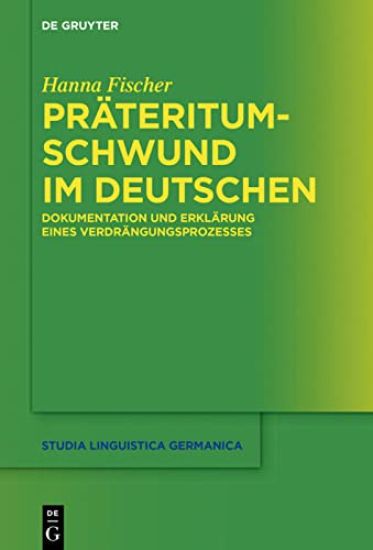
Präteritumschwund im Deutschen

Präteritumschwund im Deutschen

Hanna Fischer

De Gruyter
2018
sidottu
Seit 130 Jahren bemüht sich die sprachwissenschaftliche Forschung vergeblich um eine plausible Erklärung des sog. „Präteritumschwunds“: dem Verlust der Präteritumformen im gesprochenen Deutsch. Die vorliegende Arbeit setzt an diesem Desiderat an und führt in innovativer Weise Theoriebildung, Erkenntnisse und Methoden aus unterschiedlichen linguistischen Disziplinen – Dialektologie, Sprachgeschichte, Grammatikforschung, Tempus & Aspekt-Forschung – ertragreich zusammen. Die Studie liefert zum einen eine umfassende Dokumentation des Präteritumschwunds in Raum und Zeit. Dazu werden in Form einer Metanalyse zahlreiche Dialektgrammatiken, Sprachkarten und Korpusstudien ausgewertet und zu einem Gesamtbild zusammengefügt. Die gestaffelte Verteilung von Präteritumformen im Raum sowie die historische Entwicklung lassen auf eine sukzesssive und prinzipiengeleitete Verdrängung der Präteritumformen durch die expandierende Perfektform schließen. Zum anderen wird auf Basis von modernen theoretischen Konzepten eine Erklärung erarbeitet, die neben der Ursache des Prozesses auch weitere Faktoren des Präteritumschwunds bestimmt und eine europäische Perspektive eröffnet.
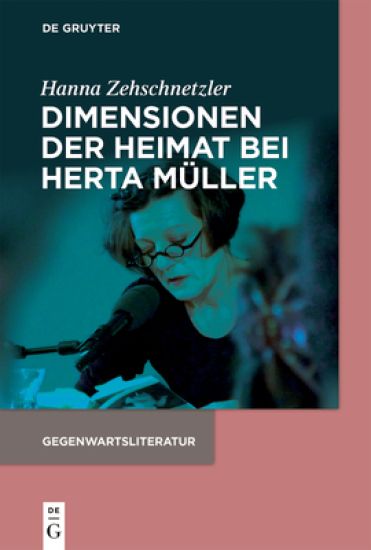
Dimensionen der Heimat bei Herta Müller

Dimensionen der Heimat bei Herta Müller

Hanna Zehschnetzler

De Gruyter
2021
isokokoinen pokkari
‚Heimat‘ ist ein zentraler Topos im Werk Herta Müllers. Wie aber haben sich der Begriff und seine Verwendung historisch verändert? Und wie lotet Müller das Spektrum seiner Bedeutungen in ihrem Schreiben aus? Die systematische Untersuchung zeigt, dass ‚Heimat‘ als multidimensional gedachtes Motiv globale Identitätsdiskurse bereichert. Sie leistet einen produktiven Beitrag zu einer kritischen Reflexion des Begriffs.
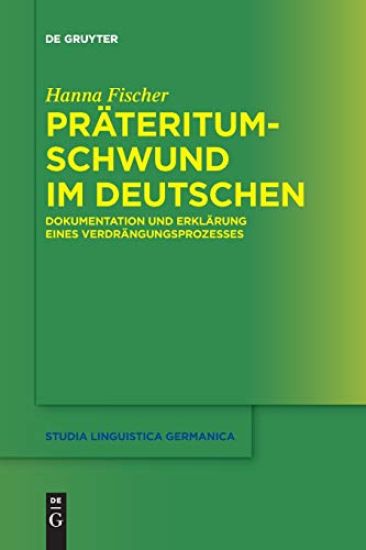
Präteritumschwund im Deutschen

Präteritumschwund im Deutschen

Hanna Fischer

de Gruyter
2020
isokokoinen pokkari
Seit 130 Jahren bemüht sich die sprachwissenschaftliche Forschung vergeblich um eine plausible Erklärung des sog. „Präteritumschwunds“: dem Verlust der Präteritumformen im gesprochenen Deutsch. Die vorliegende Arbeit setzt an diesem Desiderat an und führt in innovativer Weise Theoriebildung, Erkenntnisse und Methoden aus unterschiedlichen linguistischen Disziplinen – Dialektologie, Sprachgeschichte, Grammatikforschung, Tempus & Aspekt-Forschung – ertragreich zusammen. Die Studie liefert zum einen eine umfassende Dokumentation des Präteritumschwunds in Raum und Zeit. Dazu werden in Form einer Metanalyse zahlreiche Dialektgrammatiken, Sprachkarten und Korpusstudien ausgewertet und zu einem Gesamtbild zusammengefügt. Die gestaffelte Verteilung von Präteritumformen im Raum sowie die historische Entwicklung lassen auf eine sukzesssive und prinzipiengeleitete Verdrängung der Präteritumformen durch die expandierende Perfektform schließen. Zum anderen wird auf Basis von modernen theoretischen Konzepten eine Erklärung erarbeitet, die neben der Ursache des Prozesses auch weitere Faktoren des Präteritumschwunds bestimmt und eine europäische Perspektive eröffnet.
Migrierende Subjekte in romanischen Literaturen der Welt
This study analyzes the socioeconomic perspective of subjects migrating from the Global South in contemporary narrative works in Romance languages and the influence of the publication context on their literary portrayals. It inquires into the status of the subaltern characters and their role as intermediaries, revealing the diverse, dialectical and postcolonial tensions between reception and production, reality and fiction, North and South.
Die Christologie der Pastoralbriefe

Die Christologie der Pastoralbriefe

Hanna Stettler

Mohr Siebeck
1998
nidottu
Ein kurzer Forschungsüberblick leitet Hanna Stettlers eingehende Analyse aller christologisch relevanten Passagen der Pastoralbriefe ein. Im Verlauf ihrer Studien entdeckt sie, daß der Verfasser dieser Passagen keineswegs wahl- und planlos Überlieferungen tradiert. Vielmehr ist in ihm ein Lehrer der Gemeinde zu erkennen, der das von Paulus überkommene Erbe gerade dadurch bewahrt, daß er es in der Sprache seiner Zeit neu formuliert. Dabei ist er - ein hellenistischer Judenchrist - in der Lage, eine Brücke zwischen alttestamentlich-jüdischem und hiervon geprägtem christlichem Denken einerseits und hellenistischem Denken andererseits zu schlagen. Durch die Aufnahme synoptischer und johanneischer Überlieferung gelingt es ihm, den Reichtum christologischer Überlieferung zusammenzufassen und der Gemeinde in gut tradierbaren Formen weiterzugeben.Hanna Stettler erarbeitet eine zusammenfassende Sicht von der Intention, Arbeitsweise und den Quellen des Verfassers der Pastoralbriefe. Sie bestimmt inhaltlich präzise die Christologie der Briefe, die unter Zuhilfenahme des Schemas der doppelten Epiphanie Christi eine Präexistenz- und Inkarnationschristologie bieten. Jesus Christus wird ganz an die Seite Gottes gestellt und als der präexistente, von Gott in die Welt gesandte Retter aller Menschen verstanden, zwischen dessen erster und zweiter Epiphanie sich die Gemeinde bewegt.
Ibrahim, der Gottesfreund

Ibrahim, der Gottesfreund

Hanna Nouri Josua

Mohr Siebeck
2016
sidottu
Eine pluralistische Gesellschaft basiert auf der Begegnung und Verständigung der Religionen. Der theologische Dialog bedarf der exegetischen Grundlage und hat die unterschiedlichen Akzentuierungen der beteiligten Religionen aufzuzeigen.Hanna Nouri Josua widmet sich der islamischen Sicht Abrahams - Ibrahim. Mit Hilfe eines hermeneutischen Ansatzes, der vorhandene Methoden der Koranexegese aufgreift, sie konsequent weiterführt, neu verknüpft und an der Erzvätergestalt anwendet, zeigt er die Entwicklung des koranischen Ibrahimbildes auf, das die theologische Entwicklung des Korans widerspiegelt. Durch die Verortung im wahrscheinlichen historischen Kontext werden die einzelnen religiösen Zielgruppen Muhammads berücksichtigt. Die erstmalige Erschließung arabischer Quellen einschließlich der wichtigsten Korankommentare hinterfragt gängige Konzepte und gibt Anstöße zur möglichen Gestaltung einer Abrahamischen Ökumene heute.Die Arbeit wurde 2017 mit dem Johann-Tobias-Beck-Preis des Arbeitskreises für evangelikale Theologie (AfeT) ausgezeichnet.
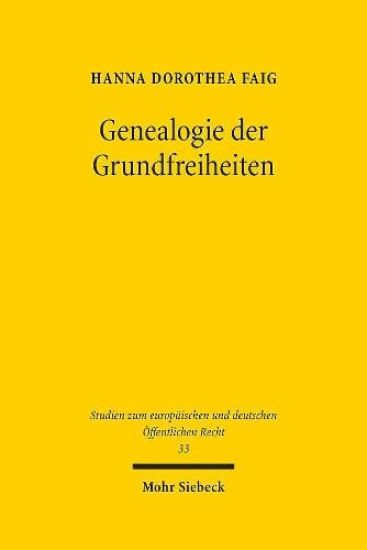
Genealogie der Grundfreiheiten

Genealogie der Grundfreiheiten

Hanna Dorothea Faig

Mohr Siebeck
2020
sidottu
Die Grundfreiheiten prägen die wirtschaftliche Integration der Europäischen Union seit ihrem Inkrafttreten mit den Römischen Verträgen. Ein vertieftes Verständnis dieser Normen und ihrer Bedeutung für den europäischen Integrationsprozess erfordert eine historische Untersuchung der Entstehungsgeschichte der Grundfreiheiten. Hanna Faig analysiert diese Geschichte anhand der vier Leitbegriffe Tradition, Redaktion, Interaktion und Integration und wertet die Verhandlungsdokumente von der Montanunion bis zur Europäischen Wirtschaftsgemeinschaft aus. Mit Blick auf die Vorgänger und Vorbilder der Grundfreiheiten zeichnet sie die Traditionslinien wirtschaftlicher Integration in der Europäischen Union nach und leistet damit auch einen Beitrag zur Klärung aktueller Probleme des Unionsrechts. Immer wieder geht es dabei um die Frage: Wie verhalten sich die Grundfreiheiten zur vielfach kritisierten "negativen" Integration?
Straftheorien und Rechtswirklichkeit

Straftheorien und Rechtswirklichkeit

Hanna Weyrich

Mohr Siebeck
2021
nidottu
Das Strafrecht befindet sich gegenwärtig im Umbruch. Hiervon betroffen sind die Straftheorien ebenso wie die Ausgestaltung des Prozesses. Die Prozessrealität ist geprägt von Entwicklungen, die sich als Ökonomisierung, Medialisierung, politisierte Aufarbeitung und Opferausrichtung zusammenfassen lassen. Sie trifft auf Strafkonzepte, welche von der klassischen straftheoretischen Kontroverse bestimmt und durch diese gerechtfertigt werden. Um die Legitimität der modernen Prozesswirklichkeit beurteilen zu können, überprüft Hanna Weyrich ihre Kompatibilität mit den bestehenden Theorien. Dabei werden auch die Straftheorien selbst kritisch hinterfragt. Als Prüfungsmaßstab wendet die Autorin in der Folge ein auf straftheoretischer Basis entwickeltes "differenzierendes Phasenmodell" an. Dieses erlaubt es, die verschiedenen Aspekte und Ebenen von Strafe und ihre Realisierung durch den Prozess zu erfassen und auf ihre Legitimität zu untersuchen.
Ordnungen der Trauung

Ordnungen der Trauung

Hanna Lausen

Mohr Siebeck
2021
sidottu
Seit 1945 hat sich in der staatlichen wie in der kirchlichen Traupraxis ein erheblicher Wandel vollzogen. Begleitet wurden diese Entwicklungen von gesellschaftlichen, politischen und kirchlichen Debatten, die sich wechselseitig beeinflusst haben. Dies führte etwa in den 1950er und 1970er Jahren zu einem intensiven Austausch zwischen den politischen und kirchlichen Akteuren. Die evangelischen Stimmen entwickelten dabei Argumente und Argumentationsstrategien, um den Wandel sowohl kritisch als auch positiv aufzunehmen. Dabei etablierten sich bestimmte Muster im Diskurs, die bis heute einen Einfluss auf die kirchlichen Stellungnahmen haben. Hanna Lausen untersucht die öffentlichen wie kircheninternen Debatten, die im Hinblick auf ein evangelisches Ehe- und Trauverständnis seit den 1950er Jahren geführt wurden. Zugleich geht sie der Frage nach, welche Auswirkungen diese Debatten auf die kirchlichen Ordnungen der Trauungen haben.
Der Vulnerable Mensch ALS Ebenbild Gottes: Eine Grundlegung Fur Inklusive Sprechweisen in Der Theologischen Anthropologie
Vulnerabilitat als existenzielles Grunddatum menschlichen Daseins wird von Hanna Braun mit einem inklusiven Verstandnis von Gottebenbildlichkeit in einer Weise zusammengedacht, dass freiheitstheoretisch und im Rahmen einer relationalen Ontologie die Rede vom vulnerablen Menschen als Ebenbild Gottes fundamentaltheologisch plausibel wird. Differenzierungen im Vulnerabilitatsbegriff lassen sodann zu, dass auch Gott vulnerabel gedacht wird. Anliegen der Arbeit ist es, eine inklusive (theologische) Anthropologie aufzuzeigen, die Menschen mit Behinderung ab ovo mitdenkt. Anschlussfahig an dieses theologische Denken sind auch u. a. loci aus Pastoraltheologie, Gnadenlehre, Ethik und Eschatologie.
Treatment Wetlands for Environmental Pollution Control

Treatment Wetlands for Environmental Pollution Control

Hanna Obarska-Pempkowiak; Magdalena Gajewska; Ewa Wojciechowska; Janusz Pempkowiak

Springer International Publishing AG
2015
sidottu
The aim of this book is to present an overview of the state of the art with regard to the function, application and design of TWSs in order to better protect surface water from contamination. Accordingly, it also presents applications of constructed wetlands with regard to climatic and cultural aspects.The use of artificial and natural treatment wetland systems (TWSs) for wastewater treatment is an approach that has been developed over the last thirty years. Europe is currently home to roughly 10,000 constructed wetland treatment systems (CWTSs), which simulate the aquatic habitat conditions of natural marsh ecosystems; roughly 3,500 systems are in operation in Germany alone. TWSs can also be found in many other European countries, for example 200 – 400 in Denmark, 400 – 600 in Great Britain, and ca. 1,000 in Poland. Most of the existing systems serve as local or individual household treatment systems. CWTSs are easy to operate and do not require specialized maintenance; further, no biological sewage sludge is formed during treatment processes. As TWSs are resistant to fluctuations in hydraulic loads, they are primarily used in rural areas as well as in urbanized areas with dispersed habitats, where conventional sewer systems and central conventional wastewater treatment plants (WWTPs) cannot be applied due to the high costs they would entail. TWSs are usually applied at the 2nd stage of domestic wastewater treatment, after mechanical treatment, and/or at the 3rd stage of treatment in order to ensure purification of effluent from conventional biological reactors and re-naturalization. New applications of TWSs include rainwater treatment as well as industrial and landfill leachate treatment. TWSs are well suited to these fields, as they can potentially remove not only organic matter and nitrogen compounds but also trace metals and traces of persistent organic pollutants and pathogens. Based on the practical experience gathered to date, and on new research regarding the processes and mechanisms of pollutant removal and advances in the systems properties and design, TWSs continue to evolve.
The Accusation Model Before the International Criminal Court

The Accusation Model Before the International Criminal Court

Hanna Kuczynska

Springer International Publishing AG
2015
sidottu
This book examines how the functioning of the International Criminal Court has become a forum of convergence between the common law and civil law criminal justice systems. Four countries were selected as primary examples of these two legal traditions: the United States, England and Wales, Germany and Poland. The first layer of analysis focuses on selected elements of the model of accusation that are crucial to the model adopted by the ICC. These are: development of the notion of the prosecutor’s independence in view of their ties to the countries and the Security Council; the nature and limits of the prosecutor’s discretional powers to initiate proceedings before the ICC; the reasons behind the prosecutor’s choice of both defendants and charges; the role the prosecutor plays in the procedure of disclosure of evidence and consensual termination of proceedings; and the determinants of the model of accusation used during trial and appeal proceedings. The second layer of the book consists in an analysis of the motives behind applying particular solutions to create the model of accusation before the ICC. It also shows how the model of accusation gradually evolved in proceedings before the military and ad hoc tribunals: ICTY and ICTR. Moreover, the question of compatibility of procedural institutions is addressed: In what ways does adopting a certain element of criminal procedure, e.g. discretional powers of the prosecutor to initiate criminal proceedings, influence the remaining procedural elements, e.g. the existence of the dossier of a case or the powers of a judge to change the legal classification of the criminal behavior appearing in the indictment?
Damages in EU Public Procurement Law

Damages in EU Public Procurement Law

Hanna Schebesta

Springer International Publishing AG
2015
sidottu
The book surveys the enforcement of EU law through the lens of damages claims for violations of EU public procurement rules. The first part clarifies the requirements on damages claims under both public procurement and general EU law, notably the public procurement remedies directives and doctrines such as procedural autonomy, effective judicial protection and Member State liability. The second part focuses on comparative law, covering England, France, Germany and the Netherlands, and provides an overview of national regulation and case law of damages litigation in the area of public procurement. A third part discusses the constitutive and quantification criteria of the damages remedy from a comparative and EU law perspective. It explores the lost chance, which functionally emerges as a compromise capable of mitigating the typically problematic nature of causation and uncertainty in public procurement constellations. The book concludes with a proposal for legislative intervention regarding damages in public procurement.
The Accusation Model Before the International Criminal Court

The Accusation Model Before the International Criminal Court

Hanna Kuczynska

Springer International Publishing AG
2016
nidottu
This book examines how the functioning of the International Criminal Court has become a forum of convergence between the common law and civil law criminal justice systems. Four countries were selected as primary examples of these two legal traditions: the United States, England and Wales, Germany and Poland. The first layer of analysis focuses on selected elements of the model of accusation that are crucial to the model adopted by the ICC. These are: development of the notion of the prosecutor’s independence in view of their ties to the countries and the Security Council; the nature and limits of the prosecutor’s discretional powers to initiate proceedings before the ICC; the reasons behind the prosecutor’s choice of both defendants and charges; the role the prosecutor plays in the procedure of disclosure of evidence and consensual termination of proceedings; and the determinants of the model of accusation used during trial and appeal proceedings. The second layer of the book consists in an analysis of the motives behind applying particular solutions to create the model of accusation before the ICC. It also shows how the model of accusation gradually evolved in proceedings before the military and ad hoc tribunals: ICTY and ICTR. Moreover, the question of compatibility of procedural institutions is addressed: In what ways does adopting a certain element of criminal procedure, e.g. discretional powers of the prosecutor to initiate criminal proceedings, influence the remaining procedural elements, e.g. the existence of the dossier of a case or the powers of a judge to change the legal classification of the criminal behavior appearing in the indictment?
Treatment Wetlands for Environmental Pollution Control

Treatment Wetlands for Environmental Pollution Control

Hanna Obarska-Pempkowiak; Magdalena Gajewska; Ewa Wojciechowska; Janusz Pempkowiak

Springer International Publishing AG
2016
nidottu
The aim of this book is to present an overview of the state of the art with regard to the function, application and design of TWSs in order to better protect surface water from contamination. Accordingly, it also presents applications of constructed wetlands with regard to climatic and cultural aspects.The use of artificial and natural treatment wetland systems (TWSs) for wastewater treatment is an approach that has been developed over the last thirty years. Europe is currently home to roughly 10,000 constructed wetland treatment systems (CWTSs), which simulate the aquatic habitat conditions of natural marsh ecosystems; roughly 3,500 systems are in operation in Germany alone. TWSs can also be found in many other European countries, for example 200 – 400 in Denmark, 400 – 600 in Great Britain, and ca. 1,000 in Poland. Most of the existing systems serve as local or individual household treatment systems. CWTSs are easy to operate and do not require specialized maintenance; further, no biological sewage sludge is formed during treatment processes. As TWSs are resistant to fluctuations in hydraulic loads, they are primarily used in rural areas as well as in urbanized areas with dispersed habitats, where conventional sewer systems and central conventional wastewater treatment plants (WWTPs) cannot be applied due to the high costs they would entail. TWSs are usually applied at the 2nd stage of domestic wastewater treatment, after mechanical treatment, and/or at the 3rd stage of treatment in order to ensure purification of effluent from conventional biological reactors and re-naturalization. New applications of TWSs include rainwater treatment as well as industrial and landfill leachate treatment. TWSs are well suited to these fields, as they can potentially remove not only organic matter and nitrogen compounds but also trace metals and traces of persistent organic pollutants and pathogens. Based on the practical experience gathered to date, and on new research regarding the processes and mechanisms of pollutant removal and advances in the systems properties and design, TWSs continue to evolve.