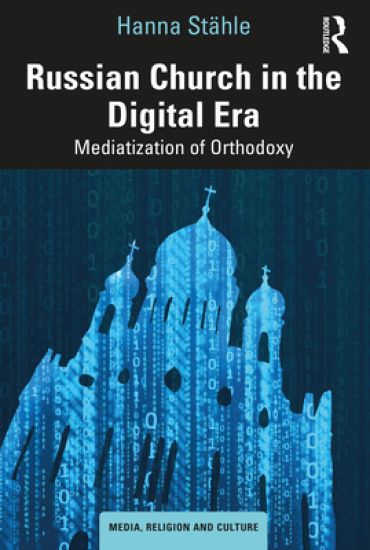
The Russian Orthodox Church, the largest and most powerful religious institution in Russia, has become one of the central pillars of Vladimir Putin’s authoritarianism. While church attendance remains low, the religiously inspired rhetoric of traditionalism has come to dominate the mainstream political and media discourse. Has Russia abandoned its atheist past and embraced Orthodox Christianity as its new moral guide? The reality is more complex and contradictory. Digital sources provide evidence of rising domestic criticism of the Russian Orthodox Church and its leadership. This book offers a nuanced understanding of contemporary Russian Orthodoxy and its changing role in the digital era.Topics covered within this book include:• Mediatization theory;• Church reforms under Patriarch Kirill;• Church–state relations since 2009;• The Russian Orthodox Church’s media policy;• Anticlericalism vs. Church criticism; and• Religious, secular, and atheist critiques of the Church in digital media.Using contemporary case studies such as Pussy Riot's Punk Prayer, this book is a gripping read for those with an interest in media studies, digital criticism of religion, religion in the media, the role of religion in society, and the Russian Orthodox Church.
The Russian Orthodox Church, the largest and most powerful religious institution in Russia, has become one of the central pillars of Vladimir Putin’s authoritarianism. While church attendance remains low, the religiously inspired rhetoric of traditionalism has come to dominate the mainstream political and media discourse. Has Russia abandoned its atheist past and embraced Orthodox Christianity as its new moral guide? The reality is more complex and contradictory. Digital sources provide evidence of rising domestic criticism of the Russian Orthodox Church and its leadership. This book offers a nuanced understanding of contemporary Russian Orthodoxy and its changing role in the digital era.Topics covered within this book include:• Mediatization theory;• Church reforms under Patriarch Kirill;• Church–state relations since 2009;• The Russian Orthodox Church’s media policy;• Anticlericalism vs. Church criticism; and• Religious, secular, and atheist critiques of the Church in digital media.Using contemporary case studies such as Pussy Riot's Punk Prayer, this book is a gripping read for those with an interest in media studies, digital criticism of religion, religion in the media, the role of religion in society, and the Russian Orthodox Church.
This book investigates the ways in which participants in political activities use micro-practices for solving issues of speaking, hearing and understanding as fundamental for the activities they engage in. Based on extensive video recordings of public meetings within a political grassroots project in the field of urbanism, it adopts a conversation analytic and ethnomethodological approach to social action, examining the use of interactional repair in processes of claiming, negotiating, contesting, distributing and establishing knowledge in public. As a study of the ways in which people interact in political meetings, address problems of intersubjectivity and manifest their understanding – or lack of understanding – of political talk, Establishing Shared Knowledge in Political Meetings sheds light on the relationship between interactional problems and political problems. It will thus appeal to scholars in sociology and political sciences with interests in ethnomethodology and conversation analysis, social interaction, social order, and political practice.
This book presents the contemporary history and dynamics of Mexican midwifery - professional, (post)modern or autonomous, traditional and Indigenous - as profoundly political and embedded in differing societal stratifications.By situated politics, the authors refer to various networks, spaces and territories, which are also constructed by the midwives. By politically situated, the authors refer to various intersections, unsettled relations and contexts in which Mexican midwives are positioned. Examining Mexican midwiferies in depth, the volume sharpens the focus on the worlds in which midwives are profoundly immersed as agents in generating and participating in movements, alliances, health professions, communities, homes, territories and knowledges. The chapters provide a complex panorama of midwives in Mexico with an array of insights into their professional and political autonomy, (post)coloniality, body-territoriality, the challenges of defining midwifery, and above all, into the ways in which contemporary Mexican midwiferies relate to a complex set of human rights.The book will be of interest to a range of scholars from anthropology, sociology, politics, global health, gender studies, development studies, and Latin American studies, as well as to midwives and other professionals involved in childbirth policy and practice.The Open Access version of this book, available at http://www.taylorfrancis.com, has been made available under a Creative Commons Attribution-Non Commercial-No Derivatives (CC-BY-NC-ND) 4.0 license.
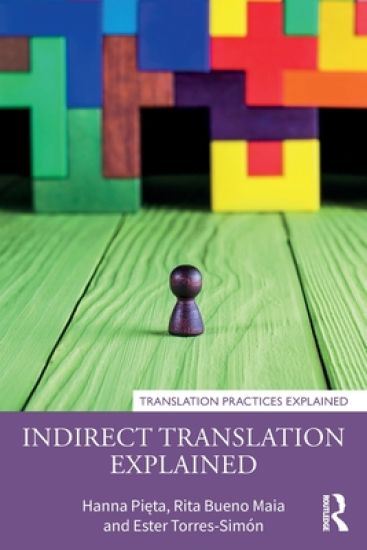
Indirect Translation Explained is the first comprehensive, user-friendly book on the practice of translating indirectly in today’s world. Unlike previous scholarly approaches, which have traditionally focused on translating from the original, this textbook offers practical advice on how to efficiently translate from an already translated text and for the specific purpose of further translation.Written by key specialists in this area of research and drawing on many years of translation teaching and practice, this process-focused textbook covers a range of languages, geographical settings and types of translation, including audiovisual, literary, news, and scientific-technical translation, as well as localization and interpreting. Since this topic addresses the concerns and practices of both more peripheral and more dominant languages, this textbook is usable by all, regardless of the language combinations they work with.Featuring theoretical considerations, tasks for hands-on practice, suggestions for further discussion and diverse, real-world examples, this is the essential textbook for all students and autodidacts learning how to translate via a third language.Additional resources are available on the Routledge Translation Studies Portal: http://routledgetranslationstudiesportal.com
Indirect Translation Explained is the first comprehensive, user-friendly book on the practice of translating indirectly in today’s world. Unlike previous scholarly approaches, which have traditionally focused on translating from the original, this textbook offers practical advice on how to efficiently translate from an already translated text and for the specific purpose of further translation.Written by key specialists in this area of research and drawing on many years of translation teaching and practice, this process-focused textbook covers a range of languages, geographical settings and types of translation, including audiovisual, literary, news, and scientific-technical translation, as well as localization and interpreting. Since this topic addresses the concerns and practices of both more peripheral and more dominant languages, this textbook is usable by all, regardless of the language combinations they work with.Featuring theoretical considerations, tasks for hands-on practice, suggestions for further discussion and diverse, real-world examples, this is the essential textbook for all students and autodidacts learning how to translate via a third language.Additional resources are available on the Routledge Translation Studies Portal: http://routledgetranslationstudiesportal.com
This book explains the development of the international system’s present-day balance of power by exploring three central questions: (1) Under what conditions has the international system order evolved from a unipolar system to the current multipolar system? (2) What are its major states? (3) How do weak powers affect great power competition?It puts forward the following hypotheses: (1) if China and Russia are expanding their military, political, and economic influence into weaker states globally, then the unipolar American order is unraveling; and (2) if the international system is multipolar, then great power balancing may enhance international security. However, balancing may be made difficult because of weak state aid-seeking behavior. When weak states engage competing great powers, they become spheres of competition. This book delves into these states. Whether in Africa, Latin America, the Middle East, Central Asia, East Asia, or Eastern Europe, great powers hope to establish some control over weaker units for security, economic, and at times, prestige purposes.This book will be of interest to students and scholars of political science and IR, security studies, and IPE, as well as members of the think tank community and policy analysts.
This book explains the development of the international system’s present-day balance of power by exploring three central questions: (1) Under what conditions has the international system order evolved from a unipolar system to the current multipolar system? (2) What are its major states? (3) How do weak powers affect great power competition?It puts forward the following hypotheses: (1) if China and Russia are expanding their military, political, and economic influence into weaker states globally, then the unipolar American order is unraveling; and (2) if the international system is multipolar, then great power balancing may enhance international security. However, balancing may be made difficult because of weak state aid-seeking behavior. When weak states engage competing great powers, they become spheres of competition. This book delves into these states. Whether in Africa, Latin America, the Middle East, Central Asia, East Asia, or Eastern Europe, great powers hope to establish some control over weaker units for security, economic, and at times, prestige purposes.This book will be of interest to students and scholars of political science and IR, security studies, and IPE, as well as members of the think tank community and policy analysts.
This book investigates the ways in which participants in political activities use micro-practices for solving issues of speaking, hearing and understanding as fundamental for the activities they engage in. Based on extensive video recordings of public meetings within a political grassroots project in the field of urbanism, it adopts a conversation analytic and ethnomethodological approach to social action, examining the use of interactional repair in processes of claiming, negotiating, contesting, distributing and establishing knowledge in public. As a study of the ways in which people interact in political meetings, address problems of intersubjectivity and manifest their understanding – or lack of understanding – of political talk, Establishing Shared Knowledge in Political Meetings sheds light on the relationship between interactional problems and political problems. It will thus appeal to scholars in sociology and political sciences with interests in ethnomethodology and conversation analysis, social interaction, social order, and political practice.
How do urban ruins provoke their cultural revaluation? This book offers a unique sociological analysis about the social agencies of material culture and atmospheric knowledge of buildings in the making. It draws on ethnographic research in Berlin along the former Palace of the Republic, the E-Werk and the Café Moskau in order to make visible an interdisciplinary regime of design experts who have developed a professional sensorium turning the built memory of the city into an object of aesthetic inquiry.
This book presents the contemporary history and dynamics of Mexican midwifery - professional, (post)modern or autonomous, traditional and Indigenous - as profoundly political and embedded in differing societal stratifications.By situated politics, the authors refer to various networks, spaces and territories, which are also constructed by the midwives. By politically situated, the authors refer to various intersections, unsettled relations and contexts in which Mexican midwives are positioned. Examining Mexican midwiferies in depth, the volume sharpens the focus on the worlds in which midwives are profoundly immersed as agents in generating and participating in movements, alliances, health professions, communities, homes, territories and knowledges. The chapters provide a complex panorama of midwives in Mexico with an array of insights into their professional and political autonomy, (post)coloniality, body-territoriality, the challenges of defining midwifery, and above all, into the ways in which contemporary Mexican midwiferies relate to a complex set of human rights.The book will be of interest to a range of scholars from anthropology, sociology, politics, global health, gender studies, development studies, and Latin American studies, as well as to midwives and other professionals involved in childbirth policy and practice.The Open Access version of this book, available at http://www.taylorfrancis.com, has been made available under a Creative Commons Attribution-Non Commercial-No Derivatives (CC-BY-NC-ND) 4.0 license.
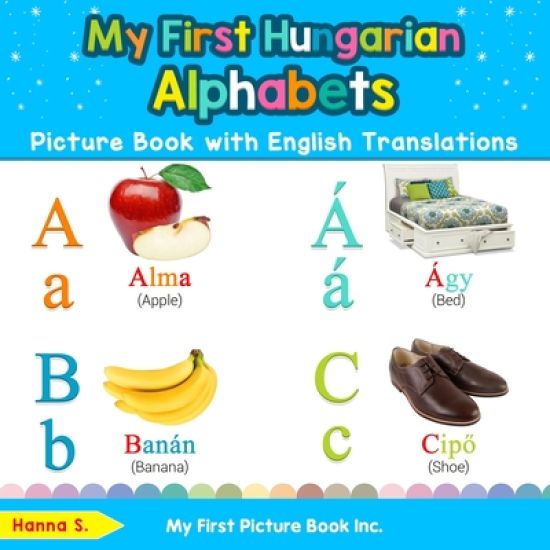
Did you ever want to teach your kids the basics of Hungarian ? Learning Hungarian can be fun with this picture book. In this book you will find the following features: Hungarian Alphabets. Hungarian Words. English Translations.
Did you ever want to teach your kids the basics of Hungarian ? Learning Hungarian can be fun with this picture book. In this book you will find the following features: Hungarian Alphabets Hungarian Words English Translations Some Important Information Regarding Our Books: Each Alphabet has its own Page. All Pages are in Color. No Transliterations (Pronunciations). You (the Parent) should be helping your child learn how to pronounce.
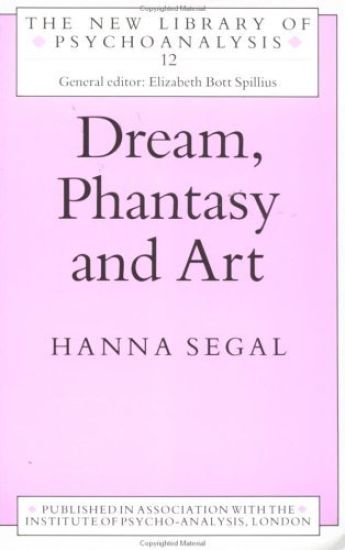
The author's clinical work on psychoanalysis, specifically her ideas on symbolism, aesthetics, dreams and the exploration of psychotic thinking, are examined in this text. Theories and clinical examples are combined and applied to create original studies of art and aesthetics.
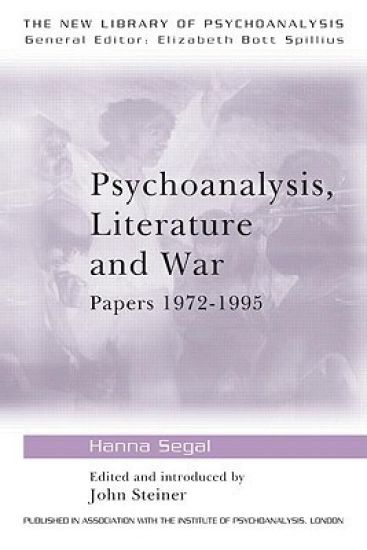
Many of the themes which were elaborated in Hanna Segal's earlier work return in this volume of her most recent papers. Two act as connecting strands and give the book its unity: the clinical usefulness of the concept of the death instinct and the relationship between fantasy and reality.A past mistress at capturing the vitality of the clinical session on the page, Segal shows how the same conflicts between life and death instincts, fantasy and reality, are experienced in the consulting room, reflected in literature, and played out by nations in their attitudes to war.Edited by John Steiner, this collection of writings by a leading psychoanalytic thinker provides a rich source of clinical insights and challenging theory for all analysts practising today.
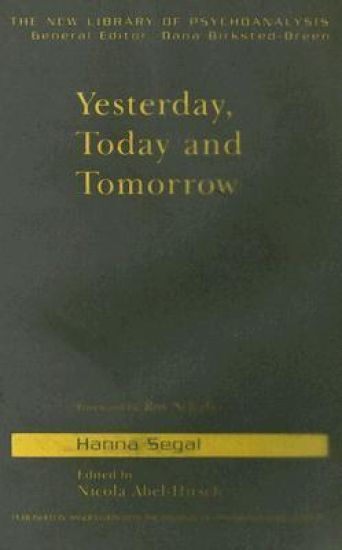
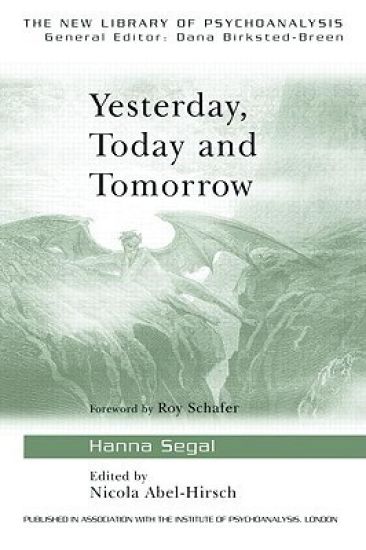
What is the role of psychoanalysis in today's world? Yesterday, Today and Tomorrow presents a selection of papers written by Hanna Segal. The collection introduces the reader to a wide spectrum of insights into psychoanalysis, ranging from current thoughts on the nature of dreaming to new ideas about vision and disillusionment. Her long interest in factors affecting war is pursued in her examination of the psychotic factors, symbolic significance and psychological impact of the events of September the 11th, and the ensuing war on Iraq.The second half of the book discusses Segal's presentations to conferences and symposia from 1969-2000, this material is split into six sections:Models of the mind and mental processesPsychoanalytic techniqueSegal on KleinSegal on BionEnvy and narcissismInterviews.Yesterday, Today and Tomorrow is a masterly contribution to the field. Segal's clarity of thought and striking clinical illustrations make the book accessible to those new to the field as well as those acquainted with her seminal work.
What is the role of psychoanalysis in today's world? Yesterday, Today and Tomorrow presents a selection of papers written by Hanna Segal. The collection introduces the reader to a wide spectrum of insights into psychoanalysis, ranging from current thoughts on the nature of dreaming to new ideas about vision and disillusionment. Her long interest in factors affecting war is pursued in her examination of the psychotic factors, symbolic significance and psychological impact of the events of September the 11th, and the ensuing war on Iraq.The second half of the book discusses Segal's presentations to conferences and symposia from 1969-2000, this material is split into six sections:Models of the mind and mental processesPsychoanalytic techniqueSegal on KleinSegal on BionEnvy and narcissismInterviews.Yesterday, Today and Tomorrow is a masterly contribution to the field. Segal's clarity of thought and striking clinical illustrations make the book accessible to those new to the field as well as those acquainted with her seminal work.
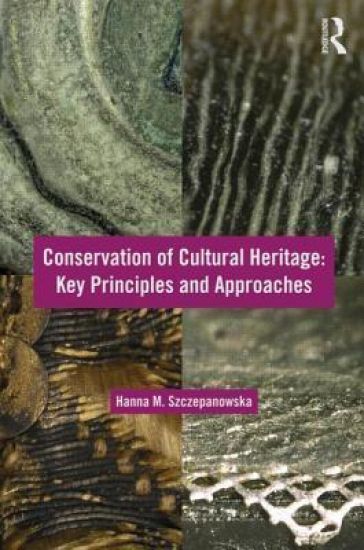
Conservation of Cultural Heritage covers the methods and practices needed for future museum professionals who will be working in various capacities with museum collections and artifacts. It also assists current professionals in understanding the complex decision-making processes that face conservators on a daily basis. The uniqueness of this book lies in correlating the aspects of material science and the behaviour of artifacts in a museum environment. It will be of special benefit to museum professionals not trained in conservation.Covering a broad range of topics that are key to sound conservation in the museum, Conservation of Cultural Heritage is an important tool for students and professionals alike in ensuring that best practice is followed in the preservation of important collections.
Conservation of Cultural Heritage covers the methods and practices needed for future museum professionals who will be working in various capacities with museum collections and artifacts. It also assists current professionals in understanding the complex decision-making processes that face conservators on a daily basis. The uniqueness of this book lies in correlating the aspects of material science and the behaviour of artifacts in a museum environment. It will be of special benefit to museum professionals not trained in conservation.Covering a broad range of topics that are key to sound conservation in the museum, Conservation of Cultural Heritage is an important tool for students and professionals alike in ensuring that best practice is followed in the preservation of important collections.