"Monographies politiques - Henri IV" de Louis de Carn . Diplomate, homme politique, journaliste et historien fran ais, Acad micien, p re de Louis-Marie de Carn (1804-1876).
If eyes are the windows to the soul, blood is an HDMI cable. Henri Dunn was damn good at being a vampire until her immortality was forcibly ripped away from her. Six months ago, Henri was made into an unwilling test subject for serum V-504: The Immortality Cure. Now, after almost a century of being an immortal monster, Henri is human again and she's not loving it: her body aches, she has too many mortal needs, and the other vampires shun her as a Blood Traitor. All she can do is keep her head down and bide her time until she can find a way to get her immortality back. When vials of the serum are stolen from the lab and a vampire is murdered, Henri is the number one suspect. With the help of a melodramatic vampire "king" and his mortal groupie, Henri must find the real killer to clear her name or be executed for a crime she didn't commit. The Immortality Cure is the first installment in the Henri Dunn Urban Fantasy series.
La corta vida de Henri Carson Brown narra la historia de tres j venes unidos por su edad y sus carencias, dentro del los violentos a os de fines del siglo XX. La fatalidad, la curiosidad y la herencia los llevan a caminos sin vuelta en su lucha por no cumplir los papeles que la historia les tiene asignados.
In this mesmerizing tale of espionage set in 1961 Berlin, Blackford Oakes links up with Henri Tod, a Jewish survivor of Hitler's madness dedicated to preserving freedom in his homeland. When Tod learns of the plans for the Berlin Wall, Oakes knows he must stop Tod from taking action.
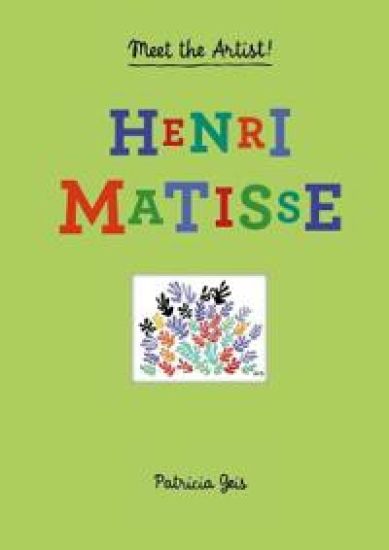
Henri Matisse: Meet the Artist provides an overview of Matisse's artistic career, reflecting on each pivotal period, including sculpture, fauve paintings, his friendship w/ Picasso and his paper cut-outs. The Meet the Artist series is a whimsical exploration of famous artists through interactive pop-ups and lift-the-flaps, that will appeal to adults and children alike and is intended to teach children about their lives and careers.
In the small town of Crozon in Brittany, a library houses manuscripts that were rejected for publication: the faded dreams of aspiring writers. Visiting while on holiday, young editor Delphine Despero is thrilled to discover a novel so powerful that she feels compelled to bring it back to Paris to publish it. The book is a sensation, prompting fevered interest in the identity of its author - apparently one Henri Pick, a now-deceased pizza chef from Crozon. Sceptics cry that the whole thing is a hoax: how could this man have written such a masterpiece? An obstinate journalist, Jean-Michel Rouche, heads to Brittany to investigate. By turns farcical and moving, The Mystery of Henri Pick is a fast-paced comic mystery enriched by a deep love of books - and of the authors who write them.
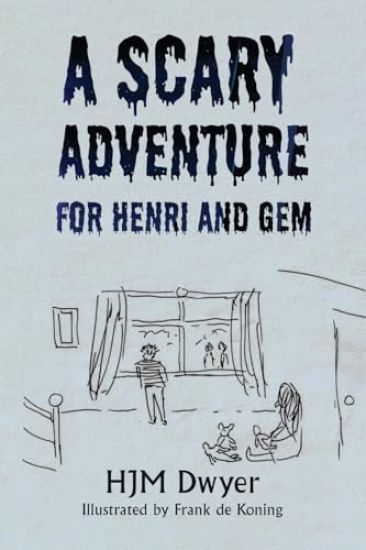
This illustrated story is about eight year old Gem and her ten year old brother, Henri. They overhear their mother and grandma talk. The word 'nuisance' is used. This is a word their mother uses for them all the time. Their mother says that they are nuisances and she wants to get rid of them. Therefore, they think that they are talking about them. They fear that they are going to be left behind in the woods. They are very upset. Then, the fairy-tale Hansel and Gretel springs to mind. They decide to be prepared by filling their rucksacks with useful things, which will help them to find their way out of the woods. The day arrives. Their mother picks them up from school and says she is taking them for a picnic in the woods. They panic. Their rucksacks are at home. Luckily, Gem has some things in her schoolbag that can help, such as silver paper she is collecting for an art project, marbles and a penlight. Henri has his birthday presents with him; his compass clip watch, a torch head light and night-vision goggles. They breathe a little easier.Once in the woods, they find out that their mother took the slugs and snails from their garden to leave there. She had been telling them about these amazing creatures all week. Now, Gem and Henri are happy and they enjoy a picnic. Then, when it is time to go home, they realise that they are lost. It grows very dark; scary sounds are heard. They are all afraid. At last Gem shines her penlight on some bushes and the silver paper she threw on them, shimmers. They escape the woods. Their dad is waiting at the car park with a joke.
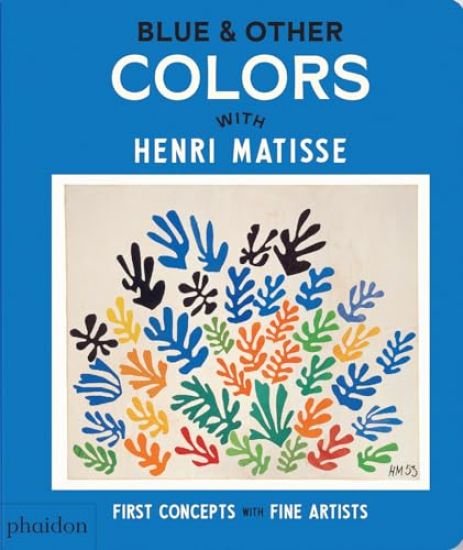
Henri Matisse's abstract cut-outs are used to teach colors in this innovative read-aloud board bookBlue & Other Colors takes children through Henri Matisse's color palette, one artwork per page, beginning with blue and returning to it as a familiar refrain throughout. The variance of shapes, depth, and scale of the shapes on each page will keep readers engaged, while the text enriches the reading experience with relatable commentary that encourages conversation.Henri Matisse's innovative use of color has inspired generations of artists. His cutouts - collages made from shapes cut from painted paper in a process he described as 'painting with scissors' - have become some of the most admired works of the last century.Through this groundbreaking book, readers will not only learn their colors, but also grow familiar with fine art.Each title in this must-own series of artful read-aloud board uses masterpieces by celebrated artists to teach one of the top early-learning concepts for toddlers. Each concept is explored playfully through a curated selection of beautifully reproduced artworks while the accompanying text enriches the experience with witty, conversational commentary and an 'about the artist' text. Companion books in this series feature the art of Pablo Picasso, Ellsworth Kelly, Alexander Calder, and Josef Albers.Ages 1-3
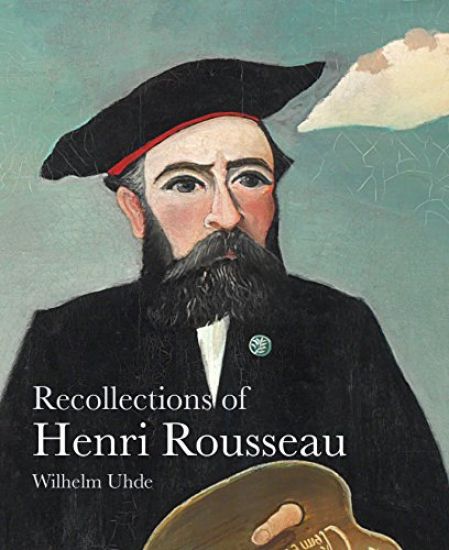
Written by the art dealer and friend who was among the first to recognize Rousseau's importance, these Recollections present a movingly personal portrait of the artist known as Le Douanier (the Customs Officer).
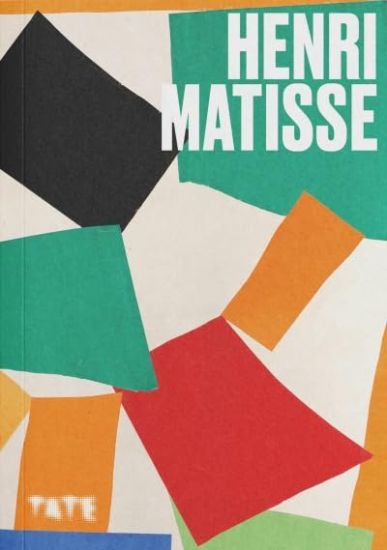
A fascinating introduction to the life and work of Henri Matisse, a leading artist of the modern age whose radical and innovative techniques demonstrate his lifelong commitment to celebrating dynamic forms and bold, expressive colour. Henri Matisse (1869–1954) was a leading figure in early twentieth-century modern art and one of the most significant colourists of all time. In a prolific career that spanned over half a century, he created a large and diverse body of work, encompassing drawing, painting, sculpture, ceramics and the decorative arts. This concise book is a captivating introduction to the life and work of this remarkable artist. It contextualises Matisse’s career from his informal training in Paris to his early study of the impressionists, and the pivotal point when he created his first fauvist painting, marking his singular interest in experimenting with flatness of colour, simple shapes and sinuous loose lines. Highlighting the artist’s revolutionary technique with paper cutouts, which became his chosen medium after ill health confined him to bed and prevented him from painting, this book demonstrates the relentless passion and incredible creative drive of a modern master.
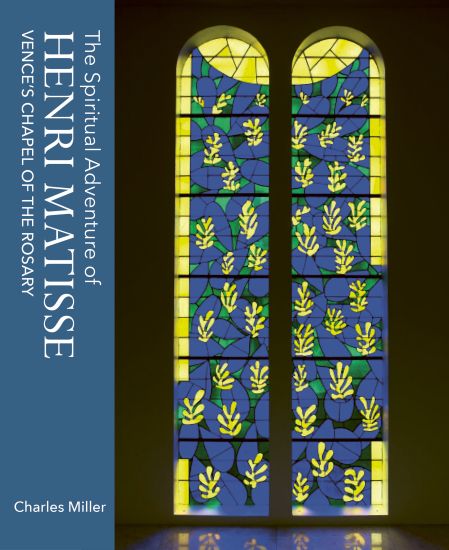
Henri Matisse described the Chapel of the Rosary, the chief labour of his final years, as the 'gathering together' of his lifetime's work. Although widely known as 'Matisse's Chapel', the building's remarkable 'modern' design and decoration emerged from a surprising friendship and artistic engagement with a group of Dominican sisters and brothers keen to see the Church embrace 'Modern Art' and modern artists. With the advantage of hitherto unexplored archive and printed materials this study highlights that mutual encounter and explores how their shared artistic adventure became for Matisse himself an opportunity to express his 'religious' vision of art and to rediscover his natal Catholic Faith in its post-war avant-garde form.
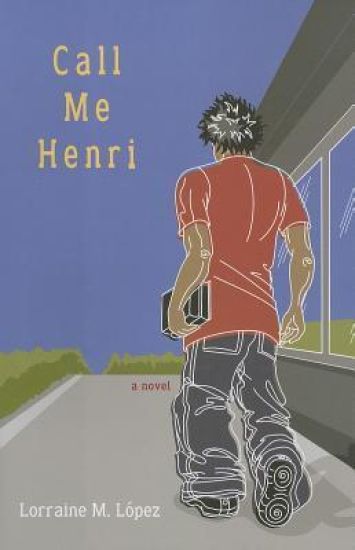
Enrique, a young boy in Peralta Middle School, faces abuse at home and danger on the barrio streets. Yet he is driven to succeed by the desire to join that "other America" he sees on TV and in the movies, and is aided in his quest by compassionate teachers. His ambition finds expression in his determination to drop his ESL class in favor of taking French, and his story begins, "Call me HenrA--." Lorraine LA3pez (author of "Soy la Avon Lady and Other Stories") has created a vivid picture of barrio life, filled with honesty, insight, and humor for young adults. She paints a balanced and detailed landscape of Enrique's world. Although Enrique is confused and angered by his mother's refusal to stand up for him against the abuse of his stepfather, he also draws strength from the supportive and loving family of his friend Francisco. While some of his teachers are uncaring or inept, others provide help and encouragement at critical moments in his life. When Enrique witnesses his friend Horacio gunned down in a drive-by shooting and is seen by the assailants, gang members set out to kill him. As the novel reaches its climax, Enrique must make some agonizing decisions. Although specifically about barrio life, this novel is universal in its themes-the drive for success, the desire for love and family support, and the need for true friendship. LA3pez's fully delineated characters provide a rich and credible mural of our human comedy. Lorraine LA3pez's "Soy la Avon Lady and Other Stories" was selected for the Marmal Prize, and also won the IPPY Award for Multicultural Fiction.
French homosexuality covered the best of times and the worst of times. The first country in which homosexuals were free to bed whomever they wished, and this from 1791, and knew a period so wondrous it was called the Belle poque, where Montmartre cabarets swarmed with life in all its uninhibited forms, Toulouse-Lautrec recording it all in breathtaking art, the art itself a new form: Art Nouveau, inspired by natural forms, the curved lines of plants and flowers, never before seen colors, where Mistinguett exchanged Maurice Chevalier as lover for an artist aged 16 and Jean Cocteau enhanced films with the beauty of Jean Marias, as did Marcel Carn in Dr le de Drame with the unequalled beauty of Jean-Pierre Aumont. Diaghilev made Paris the ballet capital of Europe thanks to his lover Nijinsky, and Stravinsky astonished the world with his Sacre du printemps as Diaghilev had commissioned him to do. Ravel rivaled Gide and a visiting Gore Vidal for the attention of Arab lads, Genet blew smoke through a straw from one cell to another, the men on each side taking their individual pleasure. A nonstop party that the German occupiers of Paris encouraged during the war and honored with their presence, while in Berlin they sent homosexuals off to concentration camps. It was the worst of times where, under the law that prohibited public offenses to decency, homosexuals were tracked down and persecuted, jailed after the First World War, executed after the Second, where gay marriage was voted in 2013 yet a boy, today, would be crazy to admit to his locker-room buddies that he preferred them to the chirping maidens in the showers next door, this because, in the hearts of the French, nothing, or little, has changed since good Christians began burning homosexuals at the stake 2,000 very bloody years ago. This is the history of those good and bad times.