Kirjahaku
Etsi kirjoja tekijän nimen, kirjan nimen tai ISBN:n perusteella.
1000 tulosta hakusanalla Herbert Marcuse

The Adventures of Herbert Figmont Moppity Zoo-Bop
April Moon
various Australia publishers
2022
pokkari
FIRST BOOK OF THE HERBERT SERIES All acts of kindness and compassion have their rewards From educational to heartwarming. Little Herbert Figmont Moppity Zoo-Bop is a sensitive and caring boy who loves a good adventure. Even though Herbert realizes he doesn't always fit in with his peers at school, he won't let that get in his way One morning on his way to school, Herbert was curious to identify what he saw falling from the sky. Due to his inquisitive nature, Herbert was keen to investigate what it was. Herbert's actions had the potential to change his life forever - by conquering his fears and choosing kindness and compassion instead This story is filled with heartfelt messages, encouraging children to be compassionate, brave, and confident, especially when needing to make their own decisions. It is also a reminder to little ones that it's not only ok to be yourself but by having a positive outlook on life regardless of the challenge faced, we can turn situations around to create positive outcomes. The beautiful illustrations add to the messages in this story, inspiring courage, inclusion, love, kindness, and compassion. An ideal book for home and the schoolroom


This analysis of the writings of two major Victorian intellectuals examines the crucial place of gender in the larger Victorian debate about nature, religion, and evolutionary theory. Demonstrating the primacy of Herbert Spencer's influence on George Eliot's thought, Nancy Paxton discloses the continuous dialogue between this profoundly learned novelist and one of the most formidable and influential scientific authorities of her time. Using rarely cited first editions of Spencer's published works, Paxton reveals that Eliot and Spencer initially agreed in supporting several of the goals of early Victorian feminism when they met in 1851. Paxton surveys all of Spencer's writing to show when and why he repudiated his early feminism and demonstrates Eliot's determined resistance to the most conservative tendencies of evolutionary theory in her representation of female sexuality, motherhood, feminist ambition, and desire. In comparing Eliot's and Spencer's evolutionary "reconstruction of gender," the book draws on a wide variety of biographical, literary, and critical texts and on interdisciplinary scholarship about the relation between scientific and literary discourse in the nineteenth century. By thus reassessing Eliot's contribution to feminist thought, it presents a revolutionary reading of her novels which is informed by contemporary feminist criticism and the new historicism. "This is an important book because of the questions it raises, the issues it covers, and the illumination it brings to Eliot and Spencer and to crucial problems in the nineteenth century: Paxton looks at the ways scientific data get turned into arguments about the nature of women in society, about women and education, about women and sexuality. This work shows how truly current Eliot's novels are, no matter what their setting."--Barry Qualls, Rutgers University Originally published in 1991. The Princeton Legacy Library uses the latest print-on-demand technology to again make available previously out-of-print books from the distinguished backlist of Princeton University Press. These editions preserve the original texts of these important books while presenting them in durable paperback and hardcover editions. The goal of the Princeton Legacy Library is to vastly increase access to the rich scholarly heritage found in the thousands of books published by Princeton University Press since its founding in 1905.

This analysis of the writings of two major Victorian intellectuals examines the crucial place of gender in the larger Victorian debate about nature, religion, and evolutionary theory. Demonstrating the primacy of Herbert Spencer's influence on George Eliot's thought, Nancy Paxton discloses the continuous dialogue between this profoundly learned novelist and one of the most formidable and influential scientific authorities of her time. Using rarely cited first editions of Spencer's published works, Paxton reveals that Eliot and Spencer initially agreed in supporting several of the goals of early Victorian feminism when they met in 1851. Paxton surveys all of Spencer's writing to show when and why he repudiated his early feminism and demonstrates Eliot's determined resistance to the most conservative tendencies of evolutionary theory in her representation of female sexuality, motherhood, feminist ambition, and desire. In comparing Eliot's and Spencer's evolutionary "reconstruction of gender," the book draws on a wide variety of biographical, literary, and critical texts and on interdisciplinary scholarship about the relation between scientific and literary discourse in the nineteenth century. By thus reassessing Eliot's contribution to feminist thought, it presents a revolutionary reading of her novels which is informed by contemporary feminist criticism and the new historicism. "This is an important book because of the questions it raises, the issues it covers, and the illumination it brings to Eliot and Spencer and to crucial problems in the nineteenth century: Paxton looks at the ways scientific data get turned into arguments about the nature of women in society, about women and education, about women and sexuality. This work shows how truly current Eliot's novels are, no matter what their setting."--Barry Qualls, Rutgers University Originally published in 1991. The Princeton Legacy Library uses the latest print-on-demand technology to again make available previously out-of-print books from the distinguished backlist of Princeton University Press. These editions preserve the original texts of these important books while presenting them in durable paperback and hardcover editions. The goal of the Princeton Legacy Library is to vastly increase access to the rich scholarly heritage found in the thousands of books published by Princeton University Press since its founding in 1905.
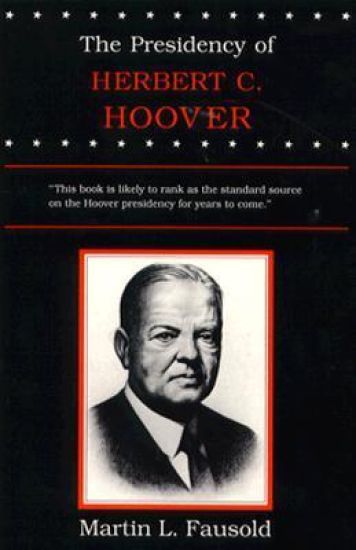
Few presidents have been subjected to such a wide range of interpretation as has Herbert Hoover, from hero to villain, from genius to naif. Fausold meets the daunting challenge of assessing the Hoover presidency by focusing on the to most basic questions: first, whether the Hoover presidency advanced the country toward the goals outlined in his Inaugural Address--justice, ordered liberty, equality of opportunity, individual initiative, freedom of opinion, integrity in government, peace, growth of religious spirit, and strengthening of the home--and, second, whether Hoover attacked the causes of the depression--international, cyclical, sectoral, fiscal, and monetary. Making use of extensive primary sources beyond the Hoover Library, Fausold argues that Herbert Hoover was what Walter Lippmann said a president should be, a custodian of a nation's ideals, and that Hoover fought the causes of the depression with vigor and imagination. Nevertheless, on election day in 1932, Hoover was turned out of office in a landslide, carrying only six eastern states. From his defeat of Alfred E. Smith in 1928 to his trouncing by FDR four years later, Hoover's presidential years are detailed here: the stock-market crash, which happened eight months after Hoover took office; the ever-deepening depression; tariff legislation; Hoover's farm policy and foreign policy; and his pursuit of the twin goals of prosperity and freedom. This volume discusses in detail the relationship of the Hoover presidency to capital and labor, showing that Hoover's farm policies provide the best illustration of his corporatist formulas. Fausold reverses simplistic conclusions about the Stimson Doctrine, arguing that Hoover's Quaker pacifism, the Great Depression, and the forcefulness of Secretary of State Henry L. Stimson affected Hoover's foreign policy far less than has been presumed. Finally, Fausold details the disastrous events of the 1932 reelection campaign, punctuated by the march of the Bonus Army on Washington and culminating in Hoover's decisive defeat. Fausold views the Hoover presidency as the logical transition from progressivism to the New Deal, calling it both the last of the old and the first of the new presidencies. The important question about Hoover, Fausold argues, is not why the people refused to reelect him, but why the reversal of his nation's image of him was so overwhelming and has been so long-lasting. Despite three arguments in defense of the administration--that its goals and antidepression efforts were in many respects without precedent; that it was surely as much a failure of American capital as of presidential leadership; and that probably no American elected in 1928 could have survived the nation's greatest depression--Fausold points to two factors that were paramount in spelling the misfortunes of Hoover's presidency: his unalterable commitment to ordered freedom as a canopy for solutions to the depression, and his firm rejection of any kind of an accommodation with the New Deal.
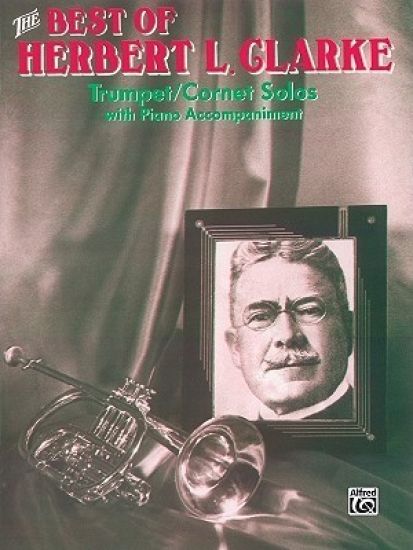
The Best of Herbert L. Clarke
Warner Bros. Publications Inc.,U.S.
1986
nidottu
Includes: Bride of the Waves * The Debutante * The Maid of the Mist * The Southern Cross * Carnival of Venice and more. This title is available in SmartMusic.

Herbert Spencer (1820-1903) is remembered today only as an alleged Social Darwinist who applied the theory of the survival of the fittest to society. Yet he was among the most influential and widely-read philosophers of the nineteenth century. There were few Victorian thinkers and scientists who did not know his work, and who did not formulate their own positions partly in reaction to his. Michael Taylor's book provides the only detailed and reliable modern survey of the whole corpus of Spencer's thought. Taylor introduces a Spencer very different to his posthumous reputation: not primarily a political philosopher, but the architect of a comprehensive philosophical system that aimed to demonstrate the inevitability of human perfection through universal natural laws. He also locates the Synthetic Philosophy firmly in its place and time by showing how it developed out of the concerns of a group of like-minded British writers and thinkers during the 1850s. This book will be of interest to historians of philosophy and of science, to social scientists, to scholars and students of nineteenth century literature, and to anyone who wishes to understand one of most important figures in Victorian intellectual life.

Sarah Mercer and Herbert Puchta's 101 Psychological Tips Paperback
Sarah Mercer; Herbert Puchta
Cambridge University Press
2023
pokkari
A compact, user-friendly reference book which draws from up-to-date research and theories from psychology to offer teachers with practical tips for small changes which they can make to their practice which will significantly improve learner outcomes and teaching. Focussing on principles from 'nudge theory', this publication aims to facilitate positive learning and teaching scenarios. The book is organised around six core areas of the psychology of language learning and teaching: teacher wellbeing; leading with compassion, authority and skill; balancing the socio-emotional climate of your group; improving learner self-esteem; empowering students.

50th Anniversary Directory, 1913-1963, H.H. Herbert School of Journalism of the University of Oklahoma
H H Herbert School of Journalism and; Ruth E. Skinner; C. Joe (Cullen Joe) 1915-2007 Holland
Hassell Street Press
2021
sidottu
50th Anniversary Directory, 1913-1963, H.H. Herbert School of Journalism of the University of Oklahoma
H H Herbert School of Journalism and; Ruth E. Skinner; C. Joe (Cullen Joe) 1915-2007 Holland
Hassell Street Press
2021
nidottu


The Poetical Works of George Herbert. With Memoir
George 1593-1633 Herbert; Charles Cowden 1787-1877 Clarke; John 1833-1894 Nichol
Hutson Street Press
2025
sidottu

The Poetical Works of George Herbert. With Memoir
George 1593-1633 Herbert; Charles Cowden 1787-1877 Clarke
Hutson Street Press
2025
pokkari

Elgar Companion to Herbert Simon
EDWARD ELGAR PUBLISHING LTD
2025
nidottu
Honoring the life and work of Herbert Simon, this illuminating Companion provides an in-depth survey of one of the most prolific social scientists of our age. Mirroring the breadth of Simon’s studies, chapters analyze his contributions to artificial intelligence, economics, entrepreneurship, management, psychology and other fields.The comprehensive book outlines how Herbert Simon came to be the only person to receive both the Nobel Memorial Prize in Economics and the Turing Award in Computer Science. Bounded rationality, satisficing and heuristic search are just a few of his seminal ideas that pioneered behavioral economics and artificial intelligence. Elucidating how Simon freed the study of human behavior from the dictates of subjective expected utility theory and Bayesian theory, chapters discuss how he instead promoted the development of empirically based theories on the behavior of individuals, organizations and machines. Interdisciplinary contributors thoughtfully explore his groundbreaking ideas, examining Simon’s influence on their own work and even their personal outlook on life. This Companion enables the ideas of Herbert Simon to live on. It is a foundational resource for scholars of disciplines such as cognitive science, entrepreneurship, organizational behavior, behavioral and experimental economics, econometrics, economic psychology, industrial organization, and public administration and management.
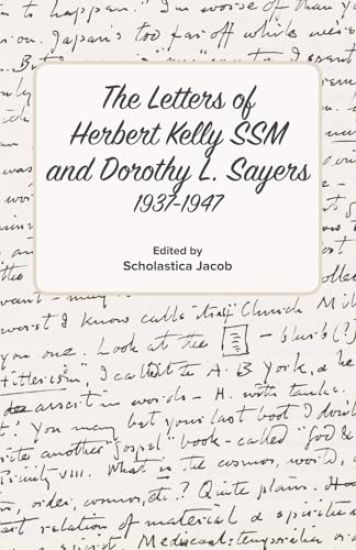
The Letters of Herbert Kelly SSM and Dorothy L. Sayers
Society of the Sacred Mission
2024
pokkari