
Kirjahaku
Etsi kirjoja tekijän nimen, kirjan nimen tai ISBN:n perusteella.
1000 tulosta hakusanalla Herman Franck

Legal Aspects of Commercial Letters of Credit
Herman N. Finkelstein
Columbia University Press
2022
sidottu

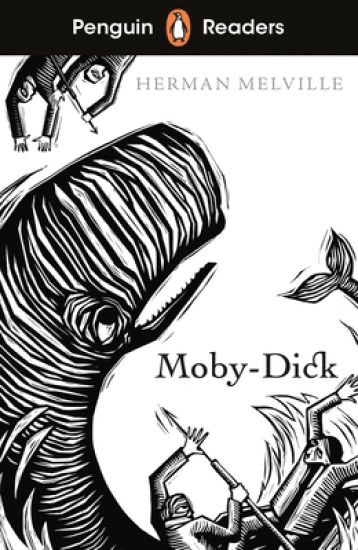
Penguin Readers Level 7: Moby Dick (ELT Graded Reader)
Herman Melville
Penguin Books Ltd
2020
pokkari
Penguin Readers is an ELT graded reader series for learners of English as a foreign language. With carefully adapted text, new illustrations and language learning exercises, the print edition also includes instructions to access supporting material online.Titles include popular classics, exciting contemporary fiction, and thought-provoking non-fiction, introducing language learners to bestselling authors and compelling content.The eight levels of Penguin Readers follow the Common European Framework of Reference for language learning (CEFR). Exercises at the back of each Reader help language learners to practise grammar, vocabulary, and key exam skills. Before, during and after-reading questions test readers' story comprehension and develop vocabulary.Visit the Penguin Readers websiteExclusively with the print edition, readers can unlock online resources including a digital book, audio edition, lesson plans and answer keys.When the young sailor "Ishmael" decides to sail on the Pequod with the mysterious Captain Ahab, he has no idea about Ahab's plans to get revenge on the great white whale Moby Dick. Ahab wants to find and kill the whale at any cost - even if it means losing his ship and his crew.
'Engrossing, richly informative . . . challenges us to rethink universal health benchmarks' New YorkerA new way of thinking about diversity and what really unites us, from the internationally renowned author of BurnReal diversity isn’t skin deep. Over the past 100,000 years, as humans expanded into every biome on the planet, our bodies and our cultures have been fine-tuned to our local environments. Beyond the physical demands of our climate, we live our lives immersed in ideas and norms that affect what we eat, how we move and why we get sick – all of which, in turn, affect how our bodies work.As an evolutionary anthropologist conducting ground-breaking research with human populations around the globe, Herman Pontzer has come to see much more clearly how our genes and environments combine to shape our bodies and our health: for better or worse. In this book, he takes us on a tour of the human body and the surprising ways it can change in response to its environment: from the Andean groups who have developed increased lung capacity to the Sama divers who have larger spleens. He also highlights the critical ways we misinterpret biological adaptations: in healthcare, public policy and individual choices.With so much of our wellbeing and public discourse centred on human biology, a clear understanding of the distinction between socially constructed and genetic differences is more important than ever. This timely reappraisal of an overlooked science is an essential guide to our remarkable bodies.
Is the metaverse a brave new world? An immersive digital playground? The next generation of online gaming? Or just the latest manifestation of our human tendency to create other realities?Herman Narula argues that it is all of these things. His vision of the metaverse, deeply rooted in history and psychology, looks to the Egyptians, whose conception of death inspired them to build the pyramids, to modern-day sports fans whose fantasy leagues are as competitive as the real thing, and finds that humanity has always sought to supplement our day-to-day lives with a rich diversity of alternative immersive experiences. Rigorously researched, passionately argued, and written by a tech founder and creator of digital worlds, Virtual Society reveals why the metaverse offers a new universe of ideas that offers users unprecedented opportunities to create, explore and find meaning. It's an essential guide for anyone who wants to get beyond superficial headlines and understand the true shape of our virtual future.
A definitive guide to the metaverse: why it's important, why it matters to society, and how to create a metaverse that works for all of us---------------'Brimming with big and convincing arguments about where human life is heading' Arianna Huffington---------------The metaverse is a vision of how the next generation of the internet will operate. Many people believe it is the future. But what will that future look like? An immersive digital playground? The next generation of online gaming? Or just the latest manifestation of our human tendency to create other realities?Herman Narula argues that it is all of these things and more. His vision of the metaverse, deeply rooted in history and psychology, looks to the Egyptians, whose concept of death inspired them to build the pyramids, to modern-day sports fans whose fantasy leagues are as competitive as the real thing, and finds that humanity has always sought ways to supplement our day-to-day lives with a rich diversity of alterative immersive experiences.Virtual Society reveals why the metaverse offers a new universe of ideas that gives everyone the chance to create, explore and find meaning. It's an essential guide for anyone who wants to understand the true shape of our virtual future.---------------Reader reviews'This book unlocked my understanding of the Metaverse in a completely new refreshing way. This is a must read book which needs to be introduced in every school curriculum globally for our upcoming metaversial society and "fulfilment economy".' *****'I've been trying to follow what tech professionals and commentators mean when talking about the metaverse over the last two years. Herman's description of what the metaverse may become, however, is by the far the most compelling. What makes it compelling is the fact that it is routed in human history. The metaverse is not a new concept; and you don't need a degree from Cambridge to understand it.' *****
Volledig herziene versie van de eerste druk van 'Diep onder onze huid' die verscheen in 2010. Het doel daarvan was het aanbrengen van orde in de veelheid van informatie rond rituele activiteiten. De nadruk lag daarbij op het transformerend vermogen van rituelen. Ze kunnen mensen, sociale relaties en zelfs hele samenlevingen vormen en veranderen. Dit boek gaat daar dieper op in. Daarbij wordt aandacht gegeven aan rituologie (de studie van rituelen), mythen, magie en religieuze en psychologische aspecten van rituelen. Duidelijk wordt hoe we met rituelen vorm geven aan ons dagelijks leven en hoe rituelen de hoeksteen vormen van ons bestaan. Zo geven mensen betekenis aan hun leven door elkaar verhalen te vertellen. Deze worden vervolgens begeleid met rituele activiteiten. Daardoor worden voorstellingen en overtuigingen, die in deze verhalen worden overgedragen, diep verankerd in ons lichamelijke systeem op een manier die als onbetwistbaar en natuurlijk wordt ervaren.
The end of apartheid brought South Africa into the global media environment. Outside companies invested in the nation's newspapers while South African conglomerates pursued lucrative tech ventures and communication markets around the world. Many observers viewed the rapid development of South African media as a roadmap from authoritarianism to global modernity. Herman Wasserman analyzes the debates surrounding South Africa's new media presence against the backdrop of rapidly changing geopolitics. His exploration reveals how South African disputes regarding access to, and representation in, the media reflect the domination and inequality in the global communication sphere. Optimists see post-apartheid media as providing a vital space that encourages exchanges of opinion in a young democracy. Critics argue the public sphere mirrors South Africa's past divisions and privileges the viewpoints of the elite. Wasserman delves into the ways these simplistic narratives obscure the country's internal tensions, conflicts, and paradoxes even as he charts the diverse nature of South African entry into the global arena.
From the introduction: “To those unacquainted with military history, [this book] provides an elementary, instructive, and readable military account of the American Civil War. The basic concepts of war, its conduct, management, and support, are thoroughly explained and explicitly applied throughout in order to make clear what many authors often incorrectly take for granted that readers already know. . . . We have tried to tell the military history of the war from the viewpoint of the higher commanders on both sides. We therefore emphasize strategy and logistics rather than tactics. . . .Strategy, management, and execution weigh more than superior numbers and resources in dictating the outcomes of wars, and the Civil War is no exception. The weaker side can win; the South almost did.”
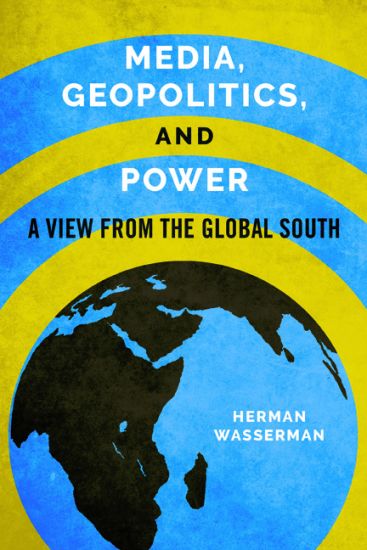
The end of apartheid brought South Africa into the global media environment. Outside companies invested in the nation's newspapers while South African conglomerates pursued lucrative tech ventures and communication markets around the world. Many observers viewed the rapid development of South African media as a roadmap from authoritarianism to global modernity. Herman Wasserman analyzes the debates surrounding South Africa's new media presence against the backdrop of rapidly changing geopolitics. His exploration reveals how South African disputes regarding access to, and representation in, the media reflect the domination and inequality in the global communication sphere. Optimists see post-apartheid media as providing a vital space that encourages exchanges of opinion in a young democracy. Critics argue the public sphere mirrors South Africa's past divisions and privileges the viewpoints of the elite. Wasserman delves into the ways these simplistic narratives obscure the country's internal tensions, conflicts, and paradoxes even as he charts the diverse nature of South African entry into the global arena.
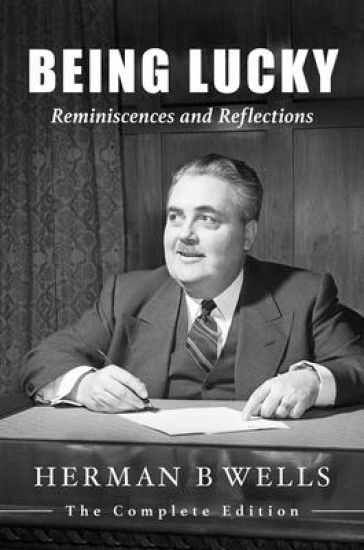
Being Lucky: Reminiscences and Reflections, The Complete Edition presents legendary Indiana University president Herman B Wells' autobiography as he originally intended. Painstakingly restored from original archival materials and featuring over a dozen fascinating vignettes and talks that were cut from the original edition, Being Lucky is a must read for Hoosiers everywhere. In this absorbing autobiography, Herman B Wells recalls his small-town childhood, the strong influence of his parents, and his pioneering work with Indiana banks during the Great Depression. His first contact with Indiana University was as an undergraduate in 1921, when the still provincial school had fewer than 3,000 students. At the end of his 25-year tenure as president in 1962, IU had gained an international reputation and a student body that would soon exceed 30,000. Wells' reflections on his years as university president are both lighthearted and illuminating. They describe in candied detail how he approached the job, his observations on effective administration, his thoughts on academic freedom and tenure, his approach to student and alumni relations, and his views on the role of the university as a cultural center. Also included are his fifty maxims for young college presidents. Finally Wells discusses the national and international service that helped shape his presidency and the university. Being Lucky is a nourishing brew of the memories, advice, wit, and wisdom of a remarkable man.
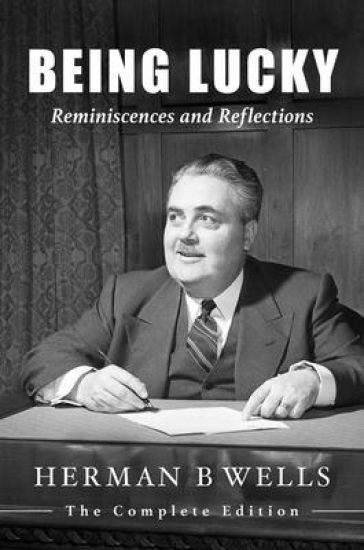
Being Lucky: Reminiscences and Reflections, The Complete Edition presents legendary Indiana University president Herman B Wells' autobiography as he originally intended. Painstakingly restored from original archival materials and featuring over a dozen fascinating vignettes and talks that were cut from the original edition, Being Lucky is a must read for Hoosiers everywhere. In this absorbing autobiography, Herman B Wells recalls his small-town childhood, the strong influence of his parents, and his pioneering work with Indiana banks during the Great Depression. His first contact with Indiana University was as an undergraduate in 1921, when the still provincial school had fewer than 3,000 students. At the end of his 25-year tenure as president in 1962, IU had gained an international reputation and a student body that would soon exceed 30,000. Wells' reflections on his years as university president are both lighthearted and illuminating. They describe in candied detail how he approached the job, his observations on effective administration, his thoughts on academic freedom and tenure, his approach to student and alumni relations, and his views on the role of the university as a cultural center. Also included are his fifty maxims for young college presidents. Finally Wells discusses the national and international service that helped shape his presidency and the university. Being Lucky is a nourishing brew of the memories, advice, wit, and wisdom of a remarkable man.
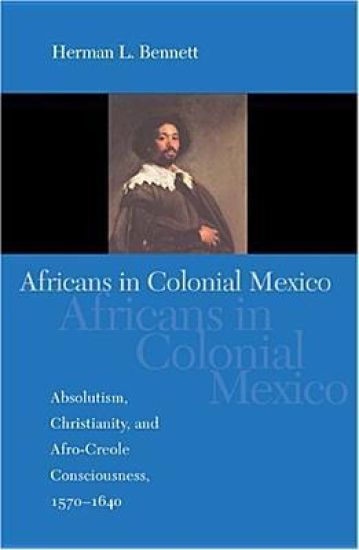
"This book charts new directions in thinking about the construction of new world identities. . . . Bennett does a masterful job." —Judith A. Byfield, Dartmouth In this study of the largest population of free and slave Africans in the New World, Herman L. Bennett has uncovered much new information about the lives of slave and free blacks, the ways that their lives were regulated by the government and the Church, the impact upon them of the Inquisition, their legal status in marriage, and their rights and obligations as Christian subjects.
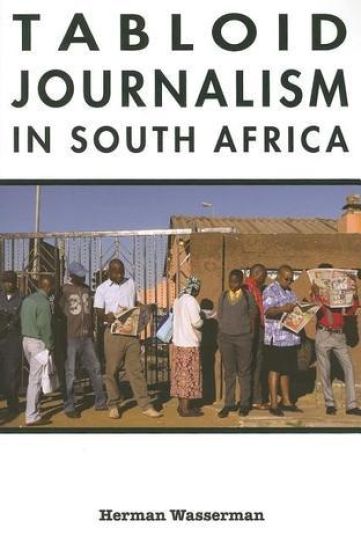
Less than a decade after the advent of democracy in South Africa, tabloid newspapers have taken the country by storm. One of these papers—the Daily Sun—is now the largest in the country, but it has generated controversy for its perceived lack of respect for privacy, brazen sexual content, and unrestrained truth-stretching. Herman Wasserman examines the success of tabloid journalism in South Africa at a time when global print media are in decline. He considers the social significance of the tabloids and how they play a role in integrating readers and their daily struggles with the political and social sphere of the new democracy. Wasserman shows how these papers have found an important niche in popular and civic culture largely ignored by the mainstream media and formal political channels.
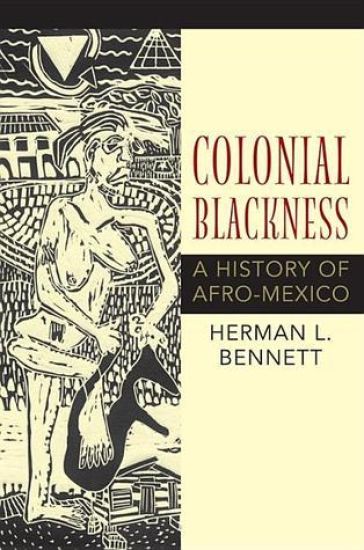
Asking readers to imagine a history of Mexico narrated through the experiences of Africans and their descendants, this book offers a radical reconfiguration of Latin American history. Using ecclesiastical and inquisitorial records, Herman L. Bennett frames the history of Mexico around the private lives and liberty that Catholicism engendered among enslaved Africans and free blacks, who became majority populations soon after the Spanish conquest. The resulting history of 17th-century Mexico brings forth tantalizing personal and family dramas, body politics, and stories of lost virtue and sullen honor. By focusing on these phenomena among peoples of African descent, rather than the conventional history of Mexico with the narrative of slavery to freedom figured in, Colonial Blackness presents the colonial drama in all its untidy detail.



On May 31, 1889, the South Fork Dam upstream of Johnstown, Pennsylvania, failed, unleashing a torrent of water that killed more than two thousand people and destroyed the city. Herman Dieck's Johnstown Flood, published shortly after the event, offers sensational stories of death, escape, sacrifice, and survival along with demographic reports and an investigation of several myths-such as the legend of a Paul Revere-like messenger on horseback racing down the valley, warning of the impending flood.The flooding of late May and early June 1889 was not limited to the Johnstown area. Dieck includes reports of rains that inundated many river towns of the mid-Atlantic region. His accounts of other catastrophic floods place the Pennsylvania disaster in historical perspective. The book also presents the tragic story of the Pennsylvania Children's Aid Society. The group's headquarters had been transferred from Philadelphia to Johnstown just before the flood; only two officers survived. Despite this devastation, reinforcements from the Philadelphia branch office were able to establish a new, greatly needed orphanage in what proved to be one of the most effective relief efforts after the flood.The Johnstown Flood gives a rich account of one of the worst disasters in America and the Keystone State.
Adolescent Subcultures and Delinquency
Herman Schwendinger; Julia Schwendinger
Praeger Publishers Inc
1985
nidottu
The author presents a theory of juvenile delinquency which explains the rise of delinquents from middle class backgrounds. Written by two eminent sociologists, Adolescent Subcultures and Delinquency is the culmination of 20 years of research, and includes new methodological procedures in addition to new data.