
Kirjahaku
Etsi kirjoja tekijän nimen, kirjan nimen tai ISBN:n perusteella.
1000 tulosta hakusanalla Howard Reede-Pelling
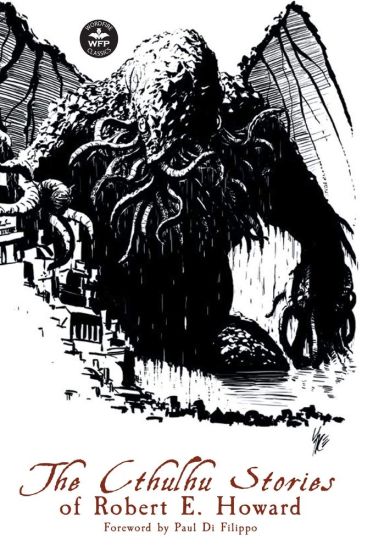
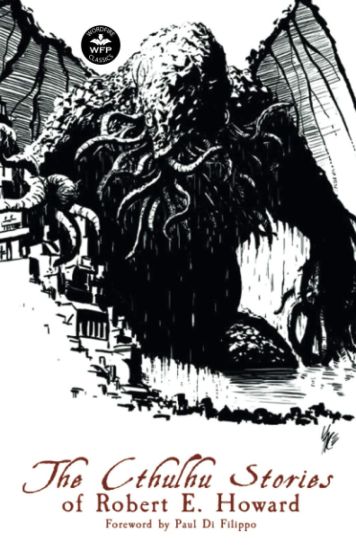
The Cthulhu Stories of Robert E. Howard
Robert E Howard; H P Lovecraft; C L Moore
Wordfire Press
2020
sidottu

It's 1974, and the iconic Xanadu hotel-the most renowned resort in the Caribbean-is the playground and secret hideaway of Hollywood's jet set. So when aspiring actress Julia St. Ives hears that Howard Hughes is casting his latest movie there, she books a flight and finagles a room there, certain this will be her big break. Unfortunately, the only way to get a meeting with Mr. Hughes is through his personal gatekeeper, the attractive and aloof Cliff Sandalwood. But Julia has a plan to convince Cliff to introduce her to Hughes . . . until she falls for him.Heartbroken after his fianc e cheats on him, Cliff Sandalwood has sworn off women-especially actresses. Then he meets Julia. Beautiful and genuine, she seems different from other women who just want something from him. Drawn together by a visceral connection, their blossoming love is as romantic as it is unexpected.But can their newfound love survive when Julia's dreams begin to come true?
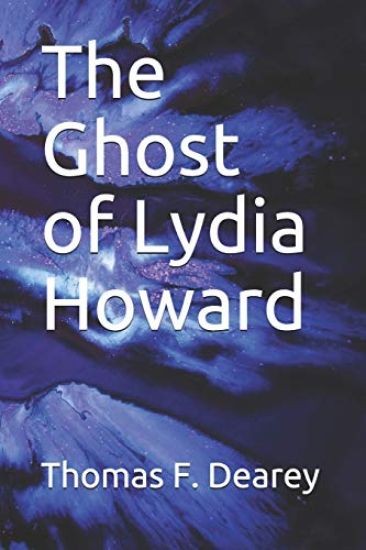
This is the story of John Stafford, who is impressed into the service of the ghost of Lydia Howard to undo wrongs committed in the last century. It is a tale of conspiracy, of evil deeds, and of murder. It is a tale of an unwilling protagonist whose pursuit of the truth places him in mortal peril. John Stafford's investigation dangerously unearths family secrets long buried in the past. It is also a tale of a strange love affair, an affair that defies any explanation.
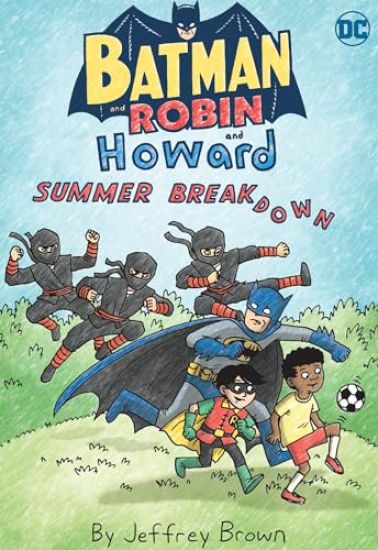
Damian and Howard are teaming up to face an all-new mastermind villain who is ready to demolish their favorite soccer spot! Summer is in session and that means all the neighborhood patrols, soccer games, and snacks the boys can handle. But things take an unexpected turn when a new group of heroes, known as the Hero Club, approach Damian and Howard with an unusual offer an invitation to help unmask the corporation planning to build a recycling factory in their favorite park. Together, they hope to recruit the help of Metropolis s favorite reporter. If that weren t enough, Batman has been acting strangely and disappearing for stretches of time. And there are ninja everywhere What could possibly be going on? Get ready for this laugh-out-loud sequel from beloved New York Times bestselling author-illustrator Jeffrey Brown.
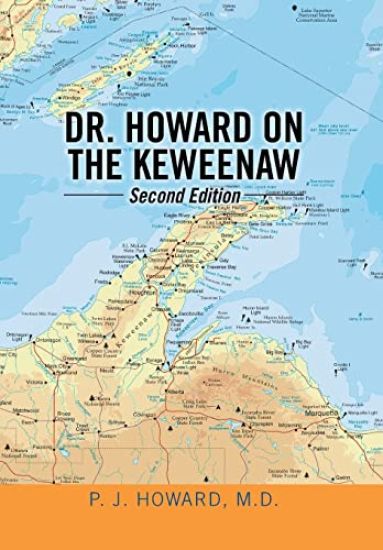
Michigan's Upper Peninsula is one of America's hidden treasures. Overlooked and ignored as a place to visit compared, say, to Vermont or coastal Maine. It is decidedly not Yellowstone Park, Disney World, or New Orleans. The UP and the yoopers, as they are called, like it just that way. They enjoy their own character, culture, and history. The land of Lake Superior, the largest freshwater lake in the world, is their world along with the fingerlike Keweenaw Peninsula that dares to thrust deep northward into the heart of this beautiful, and sometimes dangerous, magnificent glacial gift. This is the setting for which Longfellow wrote his magical poem The Song of Hiawatha. Come along and enjoy the adventures of a surgeon working and exploring the land around the lake, the Keweenaw, the Copper Country history, the Ojibwa and Chippewa Indians, and more. How did the UP become an unexpected, greatly unappreciated golden gift to Michigan and pay Michigan back a thousand fold for begrudgingly accepting the UP. Come along with me and learn all about the yoopers, the culture, the history, Father Marquette, and Michigan's connection to the Mississippi River and more. See how the UP transformed itself from a copper-mining industrial area back to a most beautiful and wonderful part of America. I'll even tell you where to get good meals and where not to get good meals. As a bonus I'll throw in a lot of useful medical advice with no co-pay Come along now. Let's go
Michigan's Upper Peninsula is one of America's hidden treasures. Overlooked and ignored as a place to visit compared, say, to Vermont or coastal Maine. It is decidedly not Yellowstone Park, Disney World, or New Orleans. The UP and the yoopers, as they are called, like it just that way. They enjoy their own character, culture, and history. The land of Lake Superior, the largest freshwater lake in the world, is their world along with the fingerlike Keweenaw Peninsula that dares to thrust deep northward into the heart of this beautiful, and sometimes dangerous, magnificent glacial gift. This is the setting for which Longfellow wrote his magical poem The Song of Hiawatha. Come along and enjoy the adventures of a surgeon working and exploring the land around the lake, the Keweenaw, the Copper Country history, the Ojibwa and Chippewa Indians, and more. How did the UP become an unexpected, greatly unappreciated golden gift to Michigan and pay Michigan back a thousand fold for begrudgingly accepting the UP. Come along with me and learn all about the yoopers, the culture, the history, Father Marquette, and Michigan's connection to the Mississippi River and more. See how the UP transformed itself from a copper-mining industrial area back to a most beautiful and wonderful part of America. I'll even tell you where to get good meals and where not to get good meals. As a bonus I'll throw in a lot of useful medical advice with no co-pay Come along now. Let's go

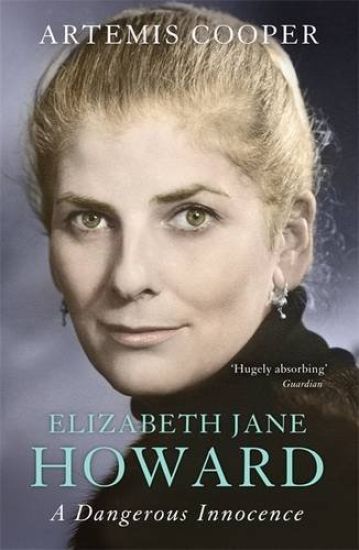
Elizabeth Jane Howard (1923-2014) wrote brilliant novels about what love can do to people, but in her own life the lasting relationship she sought so ardently always eluded her. She grew up yearning to be an actress; but when that ambition was thwarted by marriage and the war, she turned to fiction. Her first novel, The Beautiful Visit, won the John Llewellyn Rhys prize - she went on to write fourteen more, of which the best-loved were the five volumes of The Cazalet Chronicle. Following her divorce from her first husband, the celebrated naturalist Peter Scott, Jane embarked on a string of high-profile affairs with Cecil Day-Lewis, Arthur Koestler and Laurie Lee, which turned her into a literary femme fatale. Yet the image of a sophisticated woman hid a romantic innocence which clouded her emotional judgement. She was nearing the end of a disastrous second marriage when she met Kingsley Amis, and for a few years they were a brilliant and glamorous couple - until that marriage too disintegrated. She settled in Suffolk where she wrote and entertained friends, but her turbulent love life was not over yet. In her early seventies Jane fell for a conman. His unmasking was the final disillusion, and inspired one of her most powerful novels, Falling.Artemis Cooper interviewed Jane several times in Suffolk. She also talked extensively to her family, friends and contemporaries, and had access to all her papers. Her biography explores a woman trying to make sense of her life through her writing, as well as illuminating the literary world in which she lived.
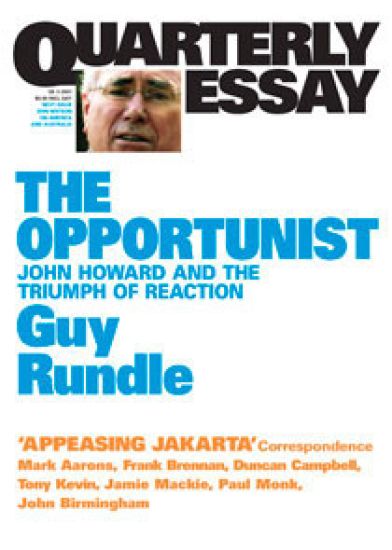
The Opportunist: John Howard and the Triumph of Reaction: Quarterly Essay 3
Guy Rundle
Quarterly Essay
2001
pokkari
In The Opportunist, Guy Rundle comes to grips with John Howard, the prime minister who, on the eve of an election, seems to have turned round his political fortunes by spurning refugees and writing blank cheques for America's War on Terror.This is a brilliant account of John Howard's dominant ideas, his concerted 'dreaming' with its emphasis on unity and national identity that reveals him to be the most reactionary PM we have ever had, the only political leader who would allow ideas like those of One Nation to dominate the mainstream of Australian politics in order to improve his political chances. Rundle puts Howard in the context of the economic liberalism he shares with his colleagues and opponents and the conservative social ideology that sets him apart. It is a complex portrait in a radical mirror which relates John Howard to everything from Menzies's 'forgotten people' to the inadvertent glamour of the government's antidrug advertising. It is also a plea for right-thinking people of every political persuasion to resist the call to prejudice and reaction.

Silent Dialogues, by art historian Alexander Nemerov, is a probing, intimate reflection about photographer Diane Arbus, the author's aunt, and her brother, Pulitzer Prize–winning poet Howard Nemerov, the author's father. "I have no memories of Diane Arbus," begins Alexander Nemerov in the first of two meditative essays that comprise this book. "A Resemblance" examines Howard Nemerov's complicated responses to his sister's photography. "The School" focuses on a body of Arbus' work known as the Untitled series, photographs made at residences for the mentally disabled between 1969 and 1971, in the last years of her life. Through their work, the author explores the siblings' disparate and distinct sensibilities, and in doing so uncovers signs of an unexpected aesthetic kinship. Illustrations complementing the essays include numerous examples of Arbus' photographs; paintings by artists as diverse as Pieter Brueghel, Norman Rockwell, Paul Feeley and Johannes Vermeer; and a selection of poems by Howard Nemerov, chosen by his son.

Looks at both Howard's immense legacy in terms of prison reform as well as his fascinating character and personal life.

When Mitsy Howard first moved into Appledore House, she didn't know what to expect from a residential care home other than an escape from loneliness, housework, and the daily chores. In The Enduring Curiosity of Mitsy Howard - A Walk in the Mill, Mitsy Howard - In the Dark, and What Mitsy Did Next she discovers new friendships and many different interests and projects to keep herself occupied and entertained. The Complete Mitsy Howard follows her experiences, as well as those of her family, the care home staff, and what is happening in the wider world of the 2020s.
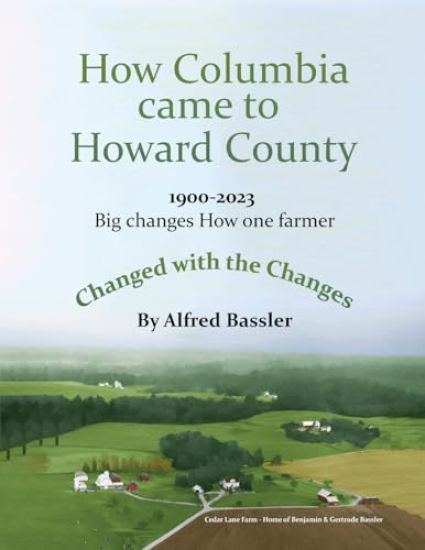
Alfred was born in Howard County Maryland. Sept 1927. He grew up in a rural farming community. He was a 4th generation farmer in the area. He saw the "Before, During and after" of Columbia coming to Howard County.This book covers how Columbia changed his life during that time period.
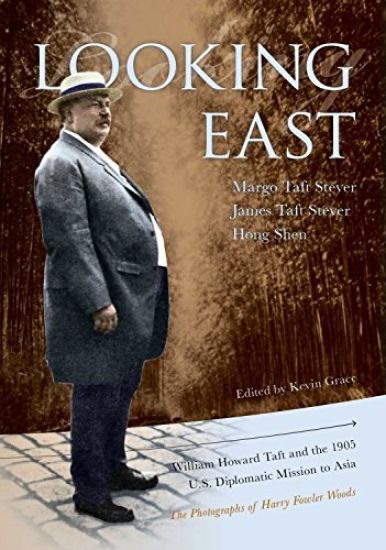
Looking East – William Howard Taft and the 1905 U.S. Diplomatic Mission to Asia: the Photographs of Harry Fowler Woods
Margo Taft Stever; James Taft Stever; Hong Shen; Kevin Grace
University of Cincinnati Press
2015
sidottu
Since the mid-19th century, relations between the United States in the West and Asian countries in the East have been an aggregate of diplomatic miscues and achievements, of trade policy successes and failures, and of cultural chasms and bridges. From the Treaty of Wangxia in 1844 that provided America with trading rights in China on a par with European countries to the contemporary political debates and educational partnerships in nations like Japan, Vietnam, India, and China, the element of understanding and appreciating differences has been paramount. A singular event in this heritage of almost 150 years in the 1905 mission that sent William Howard Taft on a combination trade and culture junket to Asian countries. Occurring just a few years after U.S. Secretary of State's John Hay's 1899 Open Door Note that sought to keep China open to equitable trade with all countries, the Taft delegation primarily visited China, Japan, and the Philippines to shore up America's interests and to learn more about their emerging partners in the new century. In Looking East, authors Margo Taft Stever, James Taft Stever, and Hong Shen explore this journey not only by an assiduous use of archives and historical analyses, but especially through the extraordinary images captured by photographer Harry Fowler Woods. Both Taft and Woods are ancestors of two of the authors so there is a particular interest on their part. With scholar Shen, they uncovered these photos and created exhibitions and published the initial Chinese-language edition of this volume by Zhejiang University Press in 2012. In this new, English-language edition, William Howard Taft's 1905 endeavors in Asia are freshly accorded the insight and appreciation they deserve in American diplomatic history.

"You're gonna save the world someday, Ward." Howard Cross proved his father's prediction to be very wrong the day that he died. Not only does he not save the world, but unable to take his families secret to the grave, he condemns it. Sheriff Allen Fritz finds his life long friend, Howard, dead at his log cabin home he stumbles onto more than just a dead body. An old, scarred, snub nosed revolver, a half empty bottle of Jack Daniel's, and the message: "Laura, it's time", are just a few of the strange clues that lead Fritz through a string of horrific crime scenes; each one telling its own nefariously violent tale of murder. As he closes the gap, Fritz finds himself face-to-face with an ancient evil, fighting a battle for his life against a perfect killer in the apocalyptic aftermath of The Death of Howard Cross.
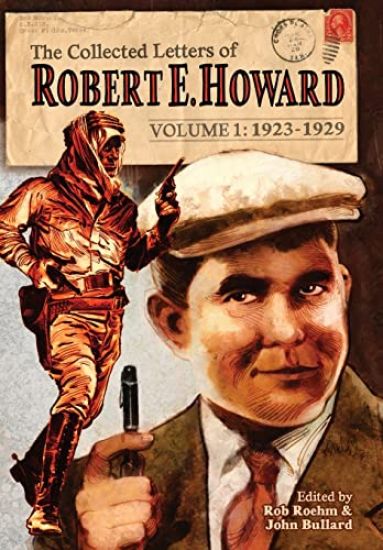
The Collected Letters of Robert E. Howard, Volume 1
Robert E Howard
Reh Foundation Press
2022
sidottu
Discover the elements of style and personality that would define the writing of Robert E. Howard, creator of Conan, Kull, Solomon Kane, and one of the most influential pulp writers ever.