Kirjojen hintavertailu. Mukana 11 244 527 kirjaa ja 12 kauppaa.

Kirjahaku

Etsi kirjoja tekijän nimen, kirjan nimen tai ISBN:n perusteella.

1000 tulosta hakusanalla Ian Merkel

Pervasive Prejudice?

Pervasive Prejudice?

Ian Ayres

University of Chicago Press
2003
nidottu
If you're a woman shopping for a new car, will you really get the best deal? If you're a man, will you fare better? If you're a black man waiting to receive an organ transplant, will you have to wait longer than a white man? In "Pervasive Prejudice?" Ian Ayres confronts these questions and more. In a series of important studies he finds overwhelming evidence that in a variety of markets - retail car sales, bail bonding, kidney transplantation and FCC licensing - blacks and females are consistently at a disadvantage. For example, when Ayres sent out agents of different races and genders posing as potential buyers to more than 200 car dealerships in Chicago, he found that dealers regularly charged blacks and women more than they charged white men. Other tests revealed that it is commonly more difficult for blacks than whites to receive a kidney transplant because of federal regulations. Moreover, Ayres found that minority male defendants are frequently required to post higher bail bonds than their Caucasian counterparts. Traditional economic theory predicts that free markets should drive out discrimination, but Ayres's startling findings challenge that position. Along with empirical research, Ayres offers game-theoretic and other economic methodologies to show how prejudice can enter the bargaining process even when participants are supposedly acting as rational economic agents. He also responds to critics of his previously published studies included here. These studies suggest that race and gender discrimination are neither a thing of the past nor merely limited to the handful of markets that have been the traditional focus of civil rights laws.
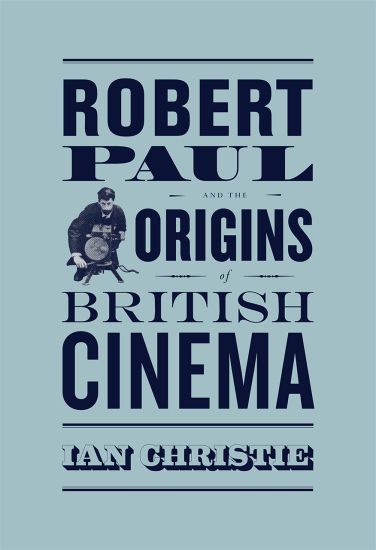
Robert Paul and the Origins of British Cinema

Robert Paul and the Origins of British Cinema

Ian Christie

University of Chicago Press
2019
pokkari
The early years of film were dominated by competition between inventors in America and France, especially Thomas Edison and the Lumiere brothers . But while these have generally been considered the foremost pioneers of film, they were not the only crucial figures in its inception. Telling the story of the white-hot years of filmmaking in the 1890s, Robert Paul and the Origins of British Cinema seeks to restore Robert Paul, Britain's most important early innovator in film, to his rightful place. From improving upon Edison's Kinetoscope to cocreating the first movie camera in Britain to building England's first film studio and launching the country's motion-picture industry, Paul played a key part in the history of cinema worldwide. It's not only Paul's story, however, that historian Ian Christie tells here. Robert Paul and the Origins of British Cinema also details the race among inventors to develop lucrative technologies and the jumbled culture of patent-snatching, showmanship, and music halls that prevailed in the last decade of the nineteenth century. Both an in-depth biography and a magnificent look at early cinema and fin-de-siecle Britain, Robert Paul and the Origins of British Cinema is a first-rate cultural history of a fascinating era of global invention, and the revelation of one of its undervalued contributors.
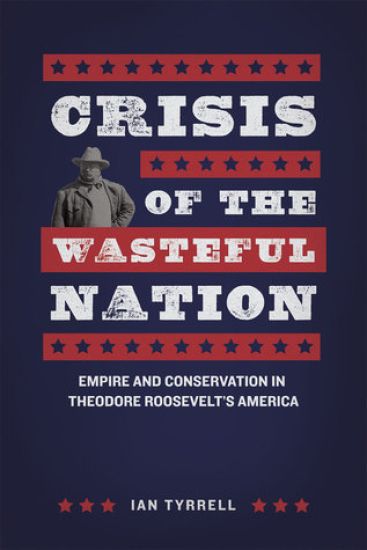
Crisis of the Wasteful Nation

Crisis of the Wasteful Nation

Ian Tyrrell

University of Chicago Press
2015
sidottu
Long before people were "going green" and toting reusable bags, the Progressive generation of the early 1900s was calling for the conservation of resources, sustainable foresting practices, and restrictions on hunting. Industrial commodities such as wood, water, soil, coal, and oil, as well as improvements in human health and the protection of "nature" in an aesthetic sense, were collectively seen for the first time as central to the country's economic wellbeing, moral integrity, and international power. One of the key drivers in the rise of the conservation movement was Theodore Roosevelt, who, even as he slaughtered animals as a hunter, fought to protect the country's natural resources. In Crisis of the Wasteful Nation, Ian Tyrrell gives us a cohesive picture of Roosevelt's engagement with the natural world along with a compelling portrait of how Americans used, wasted, and worried about natural resources in a time of burgeoning empire. Countering traditional narratives that cast conservation as a purely domestic issue, Tyrrell shows that the movement had global significance, playing a key role in domestic security and in defining American interests around the world. Tyrrell goes beyond Roosevelt to encompass other conservation advocates and policy makers, particularly those engaged with shaping the nation's economic and social policies-policies built on an understanding of the importance of crucial natural resources. Crisis of the Wasteful Nation is a sweeping transnational work that blends environmental, economic, and imperial history into a cohesive tale of America's fraught relationships with raw materials, other countries, and the animal kingdom.
Say No to the Devil

Say No to the Devil

Ian Zack

University of Chicago Press
2015
sidottu
Who was the greatest of all American guitarists? You probably didn't name Gary Davis, but many of his musical contemporaries considered him without peer. Bob Dylan called Davis "one of the wizards of modern music." Bob Weir of the Grateful Dead - who took lessons with Davis - claimed his musical ability "transcended any common notion of a bluesman." And the folklorist Alan Lomax called him "one of the really great geniuses of American instrumental music." But you won't find Davis alongside blues legends Robert Johnson and Muddy Waters in the Rock and Roll Hall of Fame. Despite almost universal renown among his contemporaries, Davis lives today not so much in his own work but through covers of his songs by Dylan, Jackson Browne, and many others, as well as in the untold number of students whose lives he influenced. The first biography of Davis, Say No to the Devil restores "the Rev's" remarkable story. Drawing on extensive research and interviews with many of Davis' former students, Ian Zack takes readers through Davis' difficult beginning as the blind son of sharecroppers in the Jim Crow South to his decision to become an ordained Baptist minister and his move to New York in the early 1940s, where he scraped out a living singing and preaching on street corners and in storefront churches in Harlem. There, he gained entry into a circle of musicians that included, among many others, Lead Belly, Woody Guthrie, and Dave Van Ronk. But in spite of his tremendous musical achievements, Davis never gained broad recognition from an American public that wasn't sure what to make of his trademark blend of gospel, ragtime, street preaching, and the blues. His personal life was also fraught, troubled by struggles with alcohol, women, and deteriorating health. Zack chronicles this remarkable figure in American music, helping us to understand how he taught and influenced a generation of musicians.
Say No to the Devil

Say No to the Devil

Ian Zack

University of Chicago Press
2016
nidottu
Who was the greatest of all American guitarists? You probably didn’t name Gary Davis, but many of his musical contemporaries considered him without peer. Bob Dylan called Davis “one of the wizards of modern music.” Bob Weir of the Grateful Dead—who took lessons with Davis—claimed his musical ability “transcended any common notion of a bluesman.” And the folklorist Alan Lomax called him “one of the really great geniuses of American instrumental music.” But you won’t find Davis alongside blues legends Robert Johnson and Muddy Waters in the Rock and Roll Hall of Fame. Despite almost universal renown among his contemporaries, Davis lives today not so much in his own work but through covers of his songs by Dylan, Jackson Browne, and many others, as well as in the untold number of students whose lives he influenced. The first biography of Davis, Say No to the Devil restores “the Rev’s” remarkable story. Drawing on extensive research and interviews with many of Davis’s former students, Ian Zack takes readers through Davis’s difficult beginning as the blind son of sharecroppers in the Jim Crow South to his decision to become an ordained Baptist minister and his move to New York in the early 1940s, where he scraped out a living singing and preaching on street corners and in storefront churches in Harlem. There, he gained entry into a circle of musicians that included, among many others, Lead Belly, Woody Guthrie, and Dave Van Ronk. But in spite of his tremendous musical achievements, Davis never gained broad recognition from an American public that wasn’t sure what to make of his trademark blend of gospel, ragtime, street preaching, and the blues. His personal life was also fraught, troubled by struggles with alcohol, women, and deteriorating health. Zack chronicles this remarkable figure in American music, helping us to understand how he taught and influenced a generation of musicians.
American Exceptionalism

American Exceptionalism

Ian Tyrrell

University of Chicago Press
2022
sidottu
The idea that the United States is unlike every other country in world history is a surprisingly resilient one. Throughout his distinguished career, Ian Tyrrell has been one of the most influential historians of the idea of American exceptionalism, but he has never written a book focused solely on it until now. The notion that American identity might be exceptional emerged, Tyrrell shows, from the belief that the nascent early republic was not simply a postcolonial state but a genuinely new experiment in an imperialist world dominated by Britain. Prior to the Civil War, American exceptionalism fostered declarations of cultural, economic, and spatial independence. As the country grew in population and size, becoming a major player in the global order, its exceptionalist beliefs came more and more into focus—and into question. Over time, a political divide emerged: those who believed that America’s exceptionalism was the basis of its virtue and those who saw America as either a long way from perfect or actually fully unexceptional, and thus subject to universal demands for justice. Tyrrell masterfully articulates the many forces that made American exceptionalism such a divisive and definitional concept. Today, he notes, the demands that people acknowledge America’s exceptionalism have grown ever more strident, even as the material and moral evidence for that exceptionalism—to the extent that there ever was any—has withered away.
Historians in Public

Historians in Public

Ian Tyrrell

University of Chicago Press
2005
sidottu
From lagging book sales and shrinking job prospects to concerns over the discipline's "narrowness," myriad factors have been cited by historians as evidence that their profession is in decline in America. Ian Tyrrell's "Historians in Public" shows that this perceived threat to history is recurrent, exaggerated, and often misunderstood. In fact, history has adapted to and influenced the American public more than people - and often historians - realize. Tyrrell's elegant chronicle of the practice of American history traces debates, beginning shortly after the profession's emergence in American academia, about history's role in school curricula. He also examines the use of historians in and by the government and whether historians should utilize mass media such as film and radio to influence the general public. As "Historians in Public" shows, the utility of history is a distinctive theme throughout the history of the discipline, as is the attempt to be responsive to public issues among pressure groups. A superb examination of the practice of American history since the turn of the century, "Historians in Public" uncovers the often tangled ways history-makers make history - both as artisans and as actors.
Historians in Public

Historians in Public

Ian Tyrrell

University of Chicago Press
2005
nidottu
From lagging book sales and shrinking job prospects to concerns over the discipline's "narrowness," myriad factors have been cited by historians as evidence that their profession is in decline in America. Ian Tyrrell's "Historians in Public" shows that this perceived threat to history is recurrent, exaggerated, and often misunderstood. In fact, history has adapted to and influenced the American public more than people - and often historians - realize. Tyrrell's elegant chronicle of the practice of American history traces debates, beginning shortly after the profession's emergence in American academia, about history's role in school curricula. He also examines the use of historians in and by the government and whether historians should utilize mass media such as film and radio to influence the general public. As "Historians in Public" shows, the utility of history is a distinctive theme throughout the history of the discipline, as is the attempt to be responsive to public issues among pressure groups. A superb examination of the practice of American history since the turn of the century, "Historians in Public" uncovers the often tangled ways history-makers make history - both as artisans and as actors.
American Exceptionalism

American Exceptionalism

Ian Tyrrell

THE UNIVERSITY OF CHICAGO PRESS
2024
nidottu
A powerful dissection of a core American myth. The idea that the United States is unlike every other country in world history is a surprisingly resilient one. Throughout his distinguished career, Ian Tyrrell has been one of the most influential historians of the idea of American exceptionalism, but he has never written a book focused solely on it until now. The notion that American identity might be exceptional emerged, Tyrrell shows, from the belief that the nascent early republic was not simply a postcolonial state but a genuinely new experiment in an imperialist world dominated by Britain. Prior to the Civil War, American exceptionalism fostered declarations of cultural, economic, and spatial independence. As the country grew in population and size, becoming a major player in the global order, its exceptionalist beliefs came more and more into focus—and into question. Over time, a political divide emerged: those who believed that America’s exceptionalism was the basis of its virtue and those who saw America as either a long way from perfect or actually fully unexceptional, and thus subject to universal demands for justice. Tyrrell masterfully articulates the many forces that made American exceptionalism such a divisive and definitional concept. Today, he notes, the demands that people acknowledge America’s exceptionalism have grown ever more strident, even as the material and moral evidence for that exceptionalism—to the extent that there ever was any—has withered away.
Making a Killing

Making a Killing

Ian Michael Oxnevad

McGill-Queen's University Press
2021
sidottu
The international financial system is not only economic, but political. Making a Killing explores the often-overlooked world of terrorist financing and the involvement of the international banking system. In order to address the threat of terrorist organizations in a post-9/11 world – and how they are funded and financed in particular – the international community has constructed a vast architecture of counterterrorist finance laws, policies, and institutions.Connecting the fields of security studies, political economy, and finance, Ian Oxnevad argues that a bank’s institutional link to a state (as a state-owned bank or a bank with strong state connections) will protect it from any enforcement action for violations of anti-money laundering and counter-terrorism financing regulations. In the face of states blocking such enforcement actions, these regulations prove ineffective in preventing the financing of terrorism, as the state’s self-interest supersedes its interest in preventing terrorist financing.Making a Killing seeks to assess how effective new laws and regulations have been, as well as to identify best practices for future attempts to counter the financing of terrorism.
Stalingrad Lives

Stalingrad Lives

Ian Garner

MCGILL-QUEEN'S UNIVERSITY PRESS
2022
sidottu
In the fall of 1942, only the city of Stalingrad stood between Soviet survival and defeat as Hitler’s army ran rampant. With the fate of the USSR hanging in the balance, Soviet propaganda chiefs sent their finest writers into the heat of battle. After six months of terrifying work, these men succeeded in creating an enduring epic of Stalingrad. Their harrowing tales of valour and heroism offered hope for millions of readers. “Stalingrad lives!” went the rallying cry: the city had to live if the nation was to stave off defeat. In Stalingrad Lives Ian Garner brings together a selection of short stories written at and after the battle. They reveal, for the first time in English, the real Russian narrative of Stalingrad – an epic story of death, martyrdom, resurrection, and utopian beginnings. Following the authors into the hellish world of Stalingrad, Garner traces how tragedy was written as triumph. He uncovers how, dealing with loss and destruction on an unimaginable scale, Soviet readers and writers embraced the story of martyred Stalingrad, embedding it into the Russian psyche for decades to come.Featuring lost work by Vasily Grossman alongside texts by luminaries such as Konstantin Simonov, Viktor Nekrasov, and Ilya Ehrenburg, Stalingrad Lives offers a literary perspective on the Soviet Union at war.
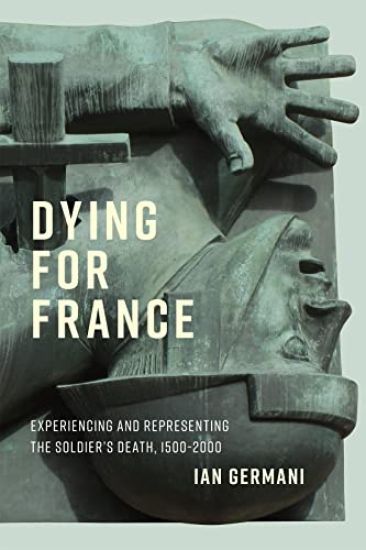
Dying for France

Dying for France

Ian Germani

MCGILL-QUEEN'S UNIVERSITY PRESS
2023
sidottu
In the past century Western attitudes toward the soldier’s death have undergone a remarkable transformation. Widely accepted at the time of the First World War – when nearly ten million soldiers died in uniform – as a redemptive sacrifice on behalf of the nation, the soldier’s death is increasingly regarded as an unacceptable tragedy. In Dying for France Ian Germani considers this transformation in the context of the history of France over the expanse of five centuries, from the Renaissance to the present. Blending military history with the history of culture and mentalities, Germani explores key episodes in the history of France’s wars to show how patriotic models of the soldier’s death eclipsed those inspired by the aristocratic code of honour, before themselves giving way to disillusioned representations. First-hand testimony of soldiers, surgeons, and others provides the basis for vivid descriptions of how a soldier encountered death, on and away from the battlefield. Works of art and print culture are used to analyze how soldiers’ deaths were represented to the public and to discern how popular attitudes evolved over time. Encompassing France’s major external conflicts and its civil wars, this study also considers the experiences of soldiers recruited from the French colonial empire. Relating changes in the perception of military mortality to broader changes in society’s relationship with death, Dying for France highlights essential turning points in the rise and fall of the patriotic ideal of the soldier’s death.
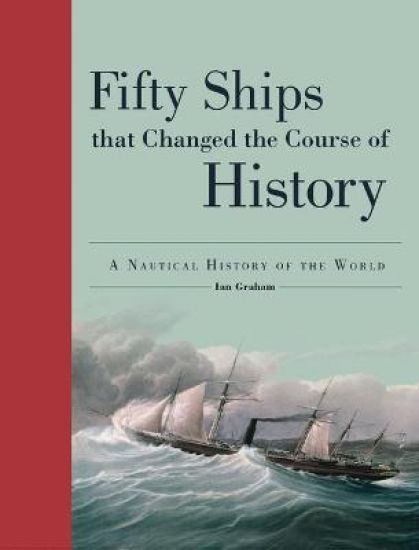
Fifty Ships That Changed the Course of History: A Nautical History of the World
"This is a beautiful book, replete with illustrations, photos, diagrams, and maps. The text balances technicality with storytelling, scholarly analysis with entertainment. It's a sweeping, fascinating look at barges, battleships, caravels, dhows, submarines, and more, placing them all in context with the battles, countries, discoveries, inventions, and people that surrounded them. Readers interested in history of any kind will enjoy this highly accessible book." -- Publishers Weekly From an ancient funeral ship to the Rainbow Warrior -- war, trade, science and pleasure on the open seas. Fifty Ships that Changed the Course of History is a beautiful guide to 50 water vessels that played a key role in world history and had a great impact on human civilization. The book presents the ships chronologically, beginning with Pharaoh Khufu's solar barge from about 2566 BCE. The chapter includes a photograph of the reconstructed ship, discovered in 1954 near the Great Pyramid. Religious beliefs held that in the afterlife the pharaoh would need a ship to sail the cosmic waters of the sky with the sun god, Ra. The book closes with another sun-seeking ship 4,000 years later. The epitome of an ocean cruise ship, the MS Allure of the Seas is the biggest passenger ship ever built. An Oasis-class cruise ship, it is a destination in itself, complete with a Central Park-like oasis, 18 decks, 5,492 passengers, and a crew of 2,384. Between these landmark vessels is a variety of ships used for all of mankind's needs, from hunters searching for food, traders with goods to barter and warriors bent on conquest, to explorers longing to see what lay beyond the horizon. Over time, the first small primitive watercraft evolved into bigger seagoing vessels, shaping our history, culture and civilization along the way. This attractive reference provides an innovative perspective on maritime and world history. It is an excellent selection for all collections.