Kirjojen hintavertailu. Mukana 12 595 353 kirjaa ja 12 kauppaa.

Kirjahaku

Etsi kirjoja tekijän nimen, kirjan nimen tai ISBN:n perusteella.

1000 tulosta hakusanalla Irving Bacheller

Lie Algebras and Locally Compact Groups

Lie Algebras and Locally Compact Groups

Irving Kaplansky

University of Chicago Press
1995
nidottu
This volume presents lecture notes based on the author's courses on Lie algebras and the solution of Hilbert's fifth problem. In chapter 1, "Lie Algebras," the structure theory of semi-simple Lie algebras in characteristic zero is presented, following the ideas of Killing and Cartan. Chapter 2, "The Structure of Locally Compact Groups," deals with the solution of Hilbert's fifth problem given by Gleason, Montgomery, and Zipplin in 1952.
Cubeo Hehénewa Religious Thought

Cubeo Hehénewa Religious Thought

Irving Goldman; Stephen Hugh-Jones

Columbia University Press
2004
sidottu
The societies of the Vaupes region are now among the most documented indigenous cultures of the New World, in part because they are thought to resemble earlier civilizations lost during initial colonial conflict. Here at last is the eagerly awaited publication of a posthumous work by the man widely regarded as the preeminent authority on Vaupes Amazonian societies. Cubeo Hehenewa Religious Thought will be the definitive account of the religious worldview of a significant Amazonian culture. Cubeo religious thought incorporates ideas about the nature of the cosmos, society, and human life; the individual's orientation to the world; the use of hallucinogenic substances; and a New World metaphysics. This volume was substantially completed before Irving Goldman's death, but Peter Wilson has edited it for publication, providing a thorough introduction to Goldman's work. Stephen Hugh-Jones has contributed an afterword, setting the work in the context of contemporary Vaupes ethnography.
Cubeo Hehénewa Religious Thought

Cubeo Hehénewa Religious Thought

Irving Goldman; Stephen Hugh-Jones

Columbia University Press
2004
pokkari
The societies of the Vaupes region are now among the most documented indigenous cultures of the New World, in part because they are thought to resemble earlier civilizations lost during initial colonial conflict. Here at last is the eagerly awaited publication of a posthumous work by the man widely regarded as the preeminent authority on Vaupes Amazonian societies. Cubeo Hehenewa Religious Thought will be the definitive account of the religious worldview of a significant Amazonian culture. Cubeo religious thought incorporates ideas about the nature of the cosmos, society, and human life; the individual's orientation to the world; the use of hallucinogenic substances; and a New World metaphysics. This volume was substantially completed before Irving Goldman's death, but Peter Wilson has edited it for publication, providing a thorough introduction to Goldman's work. Stephen Hugh-Jones has contributed an afterword, setting the work in the context of contemporary Vaupes ethnography.
A History of Mass Communication

A History of Mass Communication

Irving Fang

Focal Press
1997
nidottu
This exciting new text traces the common themes in the long and complex history of mass communication. It shows how the means of communicating grew out of their eras, how they developed, how they influenced the societies of those eras, and how they have continued to exert their influence upon subsequent generations. The book is divided into six periods which are identified as 'Information Revolutions' writing, printing, mass media, entertainment, the 'toolshed' (which we call 'home' now), and the Information Highway. In looking at the ways in which the tools of communication have influenced and been influenced by social change, A History of Mass Communication provides students of media and journalism with a strong sense of the way their chosen field affects how society functions. Providing a broad-based approach to media history, Dr. Fang encourages the reader to take a careful look at where our culture is headed through the tools we use to communicate with one another.A History of Mass Communication is not only the most current text on communication history, but also an invaluable resource for anyone interested in how methods of communication affect society.
The Jews of Chicago

The Jews of Chicago

Irving Cutler

University of Illinois Press
1996
sidottu
Vividly told and richly illustrated with more than 160 photographs, The Jews of Chicago is the fascinating story of the cultural, religious, fraternal, economic, and everyday life of Chicago's Jews. This edition of Irving Cutler's definitive historical volume also includes a new foreword written by the author. The first comprehensive history of Chicago's Jewish population in eighty years, The Jews of Chicago brings to life the people, events, neighborhoods, and institutions that helped shape today's Jewish community. Cutler intertwines neighborhood histories with representative biographical vignettes of some of Chicago's best known figures, such as Edna Ferber, Saul Bellow, Benny Goodman, Mel Tormé, Studs Terkel, Paul Muni, Mandy Patinkin, Emil G. Hirsch, Julius Rosenwald, Dankmar Adler, Arthur Goldberg, Philip Klutznick, and many others. From their roots in the Old Country to their present-day communities, Cutler captures in extraordinary detail the remarkable saga of the Jews of Chicago.
The Jews of Chicago

The Jews of Chicago

Irving Cutler

University of Illinois Press
2008
nidottu
Vividly told and richly illustrated with more than 160 photographs, The Jews of Chicago is the fascinating story of the cultural, religious, fraternal, economic, and everyday life of Chicago's Jews. This edition of Irving Cutler's definitive historical volume also includes a new foreword written by the author. The first comprehensive history of Chicago's Jewish population in eighty years, The Jews of Chicago brings to life the people, events, neighborhoods, and institutions that helped shape today's Jewish community. Cutler intertwines neighborhood histories with representative biographical vignettes of some of Chicago's best known figures, such as Edna Ferber, Saul Bellow, Benny Goodman, Mel Tormé, Studs Terkel, Paul Muni, Mandy Patinkin, Emil G. Hirsch, Julius Rosenwald, Dankmar Adler, Arthur Goldberg, Philip Klutznick, and many others. From their roots in the Old Country to their present-day communities, Cutler captures in extraordinary detail the remarkable saga of the Jews of Chicago.
The Nature of Love

The Nature of Love

Irving Singer

MIT Press
2009
pokkari
An analysis of concepts of bestowal, appraisal, imagination, and idealization followed by explorations into the writings of thinkers that include Plato, Ovid, and Martin Luther.Irving Singer's trilogy The Nature of Love has been called "majestic" (New York Times Book Review), "monumental" (Boston Globe), "one of the major works of philosophy in our century" (Nous), "wise and magisterial" (Times Literary Supplement), and a "masterpiece of critical thinking [that] is a timely, eloquent, and scrupulous account of what, after all, still makes the world go round" (Christian Science Monitor).In the first volume, Singer begins by studying love as appraisal and bestowal as well as imagination and idealization. He then examines the contrasting views of Plato, Aristotle, Plotinus, Ovid, Lucretius, Saint Augustine, Saint Thomas Aquinas, and Martin Luther. After having described the nature of erotic idealization, Singer analyzes the religious idealization in Judeo-Christian concepts of eros, philia, nomos, and agape. Medieval Catholicism sought to combine these four ideas of love in the "caritas synthesis." Luther repudiated that attempt on the grounds that love exists only in God's agapastic bestowal of unlimited goodness upon humanity and all of nature. In relation to the different modes of theorizing, Singer explores the humanistic implications of each.
The Nature of Love

The Nature of Love

Irving Singer

MIT Press
2009
pokkari
An examination of ideas and ideals of medieval courtly love and the transition into later Romantic love, analyzing the work of Dante, Shakespeare, and Schopenhauer, among many others.Review), "monumental" (Boston Globe), "one of the major works of philosophy in our century" (Nous), "wise and magisterial" (Times Literary Supplement), and a "masterpiece of critical thinking [that] is a timely, eloquent, and scrupulous account of what, after all, still makes the world go round" (Christian Science Monitor). In the second volume, Singer studies the ideas and ideals of medieval courtly love and nineteenth-century Romantic love, as well as the transition between these two perspectives. According to the traditions of courtly love in the twelfth century and thereafter, not only God but also human beings in themselves are capable of authentic love. The pursuit of love between man and woman was seen as a splendid ideal that ennobles both the lover and the beloved. It was something more than libidinal sexuality and involved sophisticated and highly refined courtliness that emulated religious love in its ability to create a holy union between the participants. Adherents to Romantic love in later centuries, affirmed the capacity of love to effect a merging between two people who thus became one. Singer analyzes the transition from courtly to Romantic by reference to the writings of many artists beginning with Dante and ending with Richard Wagner, as well as Neoplatonist philosophers of the Italian Renaissance, Descartes, Spinoza, Rousseau, Hume, Kant, Hegel, and Schopenhauer. In relation to romanticism itself, he distinguishes between two aspects-"benign romanticism" and "Romantic pessimism"-that took on renewed importance in the twentieth century.
The Nature of Love

The Nature of Love

Irving Singer

MIT Press
2009
pokkari
The final volume of Singer's trilogy discusses ideas about love in the work of writers ranging from Kierkegaard, Nietzsche, and Tolstoy to Freud, Proust, D. H. Lawrence, Shaw, and others in the contemporary world.Irving Singer's trilogy The Nature of Love has been called "majestic" (New York Times Book Review), "monumental" (Boston Globe), "one of the major works of philosophy in our century" (Nous), "wise and magisterial" (Times Literary Supplement), and a "masterpiece of critical thinking [that] is a timely, eloquent, and scrupulous account of what, after all, still makes the world go round" (Christian Science Monitor).In the third volume, Singer examines the pervasive dialectic between optimistic idealism and pessimistic realism in modern thinking about the nature of love. He begins by discussing "anti-Romantic Romantics" (focusing on Kierkegaard, Nietzsche, and Tolstoy), influential nineteenth-century thinkers whose views illustrate much of the ambiguity and self-contradiction that permeate thinking about love in the last hundred years. He offers detailed studies of Freud, Proust, Shaw, D. H. Lawrence, and Santayana, and he maps the ideas about love in Continental existentialism, particularly those of Sartre and de Beauvoir. Singer finally envisages a future of cooperation between pluralistic humanists and empirical scientists. This last volume of Singer's trilogy does not pretend to offer the final word on the subject, any more than do most of the philosophers he discusses, but his masterful work can take its place beside their earlier investigations into these vast and complex questions.
Meaning in Life

Meaning in Life

Irving Singer

MIT Press
2009
pokkari
An acclaimed philosopher views the search for meaning in life as the search for a mode of creativity that will make our lives meaningful.What is meaning in life? Does anything really matter? How can a life achieve lasting significance? How can we explain the human propensity to struggle for ideals? How is meaning related to contentment, happiness, joy? Is meaning something we discover, or do we create it? What is the nature of value, and what are its sources in human experience? Can there be a meaning in life without religious faith? What is the meaning of death? Is life worth living? What would enable us to have a love of life?"Meaning in life," writes philosopher Irving Singer, "and the meaning in our own lives, results from creative efforts on our part. It is not a prior reality awaiting our discovery. Though we talk about a 'search' for meaning, what we are seeking is primarily a mode of creativity that will make our lives meaningful." In The Creation of Value, the first volume of his Meaning in Life trilogy, Singer studies the nature of imagination, idealization, and love in the context of humanity's attempt to define itself through the pursuit of meanings and values that it creates. Singer confronts life's most troubling problems: the meaning of death, the presence of anxiety in daily existence, the conditions needed for us to have a life worth living, and the possibility of a love of life in others as well as in ourselves.
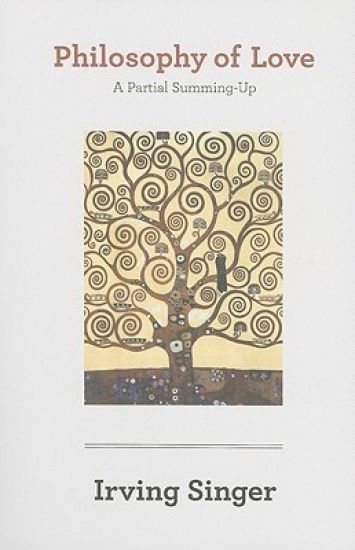
Philosophy of Love

Philosophy of Love

Irving Singer; Alan Soble

MIT Press
2011
pokkari
The author of the classic philosophical treatment of love reflects on the trajectory, over decades, of his thoughts on love and other topics.In 1984, Irving Singer published the first volume of what would become a classic and much acclaimed trilogy on love. Trained as an analytical philosopher, Singer first approached his subject with the tools of current philosophical methodology. Dissatisfied by the initial results (finding the chapters he had written "just dreary and unproductive of anything"), he turned to the history of ideas in philosophy and the arts for inspiration. He discovered an immensity of speculation and artistic practice that reached wholly beyond the parameters he had been trained to consider truly philosophical. In his three-volume work The Nature of Love, Singer tried to make sense of this historical progression within a framework that reflected his precise distinction-making and analytical background. In this new book, he maps the trajectory of his thinking on love. It is a "partial" summing-up of a lifework: partial because it expresses the author's still unfolding views, because it is a recapitulation of many published pages, because love-like any subject of that magnitude-resists a neatly comprehensive, all-inclusive formulation. Adopting an informal, even conversational, tone, Singer discusses, among other topics, the history of romantic love, the Platonic ideal, courtly and nineteenth-century Romantic love; the nature of passion; the concept of merging (and his critique of it); ideas about love in Freud, Schopenhauer, Nietzsche, Dewey, Santayana, Sartre, and other writers; and love in relation to democracy, existentialism, creativity, and the possible future of scientific investigation. Singer's writing on love embodies what he has learned as a contemporary philosopher, studying other authors in the field and "trying to get a little further." This book continues his trailblazing explorations.
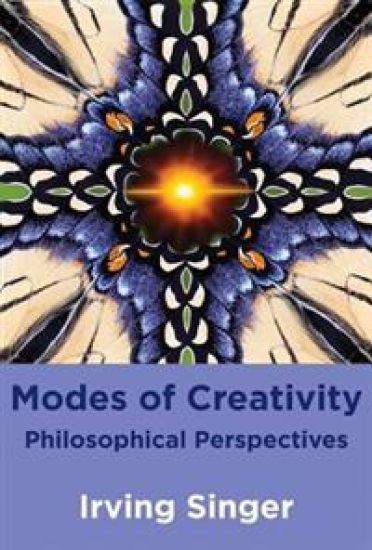
Modes of Creativity

Modes of Creativity

Irving Singer; Moreland Perkins

MIT Press
2013
pokkari
Philosophical reflections on creativity in science, humanities, and human experience as a whole.In this philosophical exploration of creativity, Irving Singer describes the many different types of creativity and their varied manifestations within and across all the arts and sciences. Singer's approach is pluralistic rather than abstract or dogmatic. His reflections amplify recent discoveries in cognitive science and neurobiology by aligning them with the aesthetic, affective, and phenomenological framework of experience and behavior that characterizes the human quest for meaning.Creativity has long fascinated Singer, and in Modes of Creativity he carries forward investigations begun in earlier works. Marshaling a wealth of examples and anecdotes ranging from antiquity to the present, about persons as diverse as Albert Einstein and Sherlock Holmes, Singer describes the interactions of the creative and the imaginative, the inventive, the novel, and the original. He maintains that our preoccupation with creativity devolves from biological, psychological, and social bases of our material being; that creativity is not limited to any single aspect of human existence but rather inheres not only in art and the aesthetic but also in science, technology, moral practice, as well as ordinary daily experience.
The Estimation Of Probabilities

The Estimation Of Probabilities

Irving John Good

MIT Press
2003
pokkari
The problem of how to estimate probabilities has interested philosophers, statisticians, actuaries, and mathematicians for a long time. It is currently of interest for automatic recognition, medical diagnosis, and artificial intelligence in general. This monograph reviews existing methods, including those that are new or have not been written up in a connected manner.The problem of how to estimate probabilities has interested philosophers, statisticians, actuaries, and mathematicians for a long time. It is currently of interest for automatic recognition, medical diagnosis, and artificial intelligence in general. The main purpose of this monograph is to review existing methods, especially those that are new or have not been written about in an organized way. The need for nontrivial theory arises because our samples are usually too small for us to rely exclusively on the frequency definition of probability. Most of the techniques described in this book depend on a modern Bayesian approach. The maximum-entropy principle, also relevant to this discussion, is used in the last chapter. It is hoped that the book will stimulate further work in a field whose importance will increasingly be recognized.Methods for estimating probabilities are related to another part of statistics, namely, significance testing, and example of this relationship are also presented.Many readers will be persuaded by this work that it is necessary to make use of a theory of subjective probability in order to estimate physical probabilities and also that a useful idea is that of a hierarchy of three types of probability which can sometimes be identified with physical, logical, and subjective probabilities.
Reality Transformed

Reality Transformed

Irving Singer

MIT Press
2000
pokkari
A new look at film that succeeds in combining the realist and formalist sides of an ongoing debate.In Reality Transformed Irving Singer offers a new approach to the philosophy of film. Returning to the classical debate between realists and formalists, he shows how the opposing positions may be harmonized and united. Singer concentrates on questions about appearance and reality, the visual and the literary, and the interplay between communication as a goal and alienation as a hazard in films of every sort. In three exemplary chapters, he provides suggestive readings of Woody Allen's The Purple Rose of Cairo, Luchino Visconti's Death in Venice, and Jean Renoir's The Rules of the Game. Reality Transformed will interest the general reader as well as students in all fields related to film studies.
The Supply of Concepts

The Supply of Concepts

Irving Silverman

Praeger Publishers Inc
1989
sidottu
The Supply of Concepts achieves a major breakthrough in the general theory of systems. It unfolds a theory of everything that steps beyond Physics' theory of the same name. The author unites all knowledge by including not only the natural but also the philosophical and theological universes of discourse. The general systems model presented here resembles an organizational flow chart that represents conceptual positions within any type of system and shows how the parts are connected hierarchically for communication and control. Analyzing many types of systems in various branches of learned discourse, the model demonstrates how any system type manages to maintain itself true to type. The concepts thus generated form a network that serves as a storehouse for the supply of concepts in learned discourse. Partial to the use of analogies, Irving Silverman presents his thesis in an easy-to-read style, explaining a way of thinking that he has found useful. This book will be of particular interest to the specialist in systems theory, philosophy, linguistics, and the social sciences.Irving Silverman applies his general systems model to 22 system types and presents rationales for these analyses. He provides the reader with a method, and a way to apply that method; a theory of knowledge derived from the method; and a practical outlook based on a comprehensive approach. Chapters include: Minding the Storehouse; Standing Together; The Cognitive Contract; The Ecological Contract; The Social Contract; The Semantic Terrain.
American Challenges

American Challenges

Irving Leveson

Praeger Publishers Inc
1991
sidottu
The American economy and society are undergoing vast transformations, including a renaissance of capitalism, a great wave of technological change, and a restructuring of businesses and industries. A superindustrial society is evolving, and there is a new social cycle that initially offers a greater understanding of problems along with practical means to their solutions. This work addresses the changing state of America's economy and society in its global context, painting a serious but positive portrait of the United States in the next decade. In this context, Irving Leveson carefully explores long term trends and prospects, provides an integrated treatment of issues that are usually examined in discrete fragments, offers a context for planning and decision making, and contributes thorough analyses of specific trends and issues.The book is structured around three major themes. The first is the need for longer term perspectives in both personal and business affairs; the second focuses on key trends, and the way in which some will be significantly weakened, nullified, or reversed in the 1990s; and the third details the serious business, social, and economic challenges that remain to be dealt with. Leveson charts the transformation of America and the economic conservatism and market orientation that resulted in the renaissance of capitalism, as well as the long cycle upswing of economic restructuring. He then turns to the coming superindustrial society and new social cycle, along with the challenges, opportunities, and problems that the 1990s and the next century will bring. Throughout the work, he offers perspectives on such topics as prospects for corporate restructuring, financial globalization and volatility, health futures, and the relation of business strategy to long cycle evolution. An accompanying appendix provides comparisons of long cycles, and the study concludes with a selected bibliography. This work will be a useful tool for corporate managers and executives, government officials, and policy planners, as well as a valuable resource for courses in economic studies and public policy. It will also be an important addition to the collections of both public and academic libraries.