Bestselling author John Davidson presents "Bees - For Kids - Amazing Animal Books For Young Readers". Beautiful Pictures and easy reading format will help children fall in love with Bees This is one of over 30 books in the Amazing Animal Books for Young Readers Series. http: //AmazingAnimalBooks.com The series is known as one of the most beautiful on the kindle. The pictures look great even in black and white and are excellent on the full color kindle. Lots of facts and photos will help your children learn about this wonderful animal. Children are given a well-rounded understanding of bees: anatomy, feeding habits and behavior. *** You and your kids will love learning about bees Table of Contents 1. What Are Bees? 2. Facts About Bees 3. The Life Cycle of a Bee 4. Why Are Bees So Important to Humans? 5. Types of Bees 6. Bumble Bees 7. Yellow Jackets 8. Wasps 9. The Bee Hive 10. The Honey Bee Colony 11. The Royal Queen 12. Bee Keeping 13. Tips for Preventing Attacks 14. Harvesting Honey 15. What is Pollen and Pollination? 16. Flowers That Attract Bees 17. Credits of Photography Facts about bees 1. A honey bee is not born knowing how to make honey, they are taught by more experienced bees. 2. A honey bee will make only 1/12 of a teaspoon of honey in its lifetime. 3. Are the only insects that produce food eaten by humans. 4. Honey bees must consume 16-18 pounds of honey to make each pound of beeswax. 5. Bees have been around 30 million years. 6. Over 1000 bee stings are considered to be fatal. 7. Honey bees are not native to the Americas. 8. Bees are cold blooded. 9. Bacteria cannot grow in honey because of the natural preservatives. 10. Bears prefer to eat the bee larvae rather than the honey. 11. Bees communicate through smells and dances. 12. Bees can fly up to 15 miles per hour. 13. A hive will fly almost 100,000 miles to collect 1kg of honey. 14. It would only take one ounce of honey to feed a bee and if possible give them enough energy to fly all the way around the world. Read more animal books at http: //AmazingAnimalBooks.com
Bestselling author John Davidson presents "Big Cats For Kids - Amazing Animal Books For Young Readers". Beautiful Pictures and easy reading format will help children fall in love with big cats. This is one of over 20 books in the Amazing Animal Books for Young Readers Series. http: //AmazingAnimalBooks.com The series is known as one of the most beautiful on the kindle. The pictures look great even in black and white and are excellent on the full color kindle. Lots of facts and photos will help your children learn about this wonderful animal. Children are given a well-rounded understanding of these beautiful cats: anatomy, feeding habits and behavior. *** You and your kids will love learning about big cats*** Table of Contents 1. 10 Facts About Big Cats 2. Facts For Children About Leopards 3. What Do You Think A Wildcat Is? 4. Endangered Big Cats 5. Big Cats Habitat 6. All About Cougars 7. Have You Ever Heard Of An Ocelt? 8. About African Cheetahs 9. The African Caracal 10. Big Cats Diet 11. Cubs Or Baby Big Cats 12. Tigers 13. A Cat Called A Serval 14. Snow Leopards: King Of The Frozen Mountains 15. The Bobcat, North America's Wildcat 16. Why I Love The Jaguarundi 17. The Lynx - A Majestic Cat 18. What Are Pumas? 19. What Is A Jaguar? 20. What Are Lions? Get this book at this special price exclusive to the Amazon Store. If a naturalist uses the term of big cats, this usually will be talking about the four different kinds of cats that can roar, and these four different kinds of cats are very different in size from each other, and they also live in different places in the world. The first fact about all these big cats is that they are all carnivores, which means meat eaters, and this means that they do out hunting for their food a good deal of the time. The second fact about big cats is that they belong to a family group called the genus Panther and in the Panther group you will find lions, tigers, leopards, and jaguars. The third fact about big cats is that they unlike smaller cats do prefer to eat their food while they are laying down. The forth fact about big cats is that they mainly do their hunting at night, but there are some species of these big cats that do hunt only during the day. The fifth fact about big cats is they are very powerful climbers the big cats is no other than the leopard. The leopard is able to carry any prey up a tree, which is sometimes twice its own weight. Read more animal books at http: //AmazingAnimalBooks.com
Bestselling author John Davidson presents "Pandas - For Kids - Amazing Animal Books For Young Readers". Beautiful Pictures and easy reading format will help children fall in love with pandas. This is one of over 30 books in the Amazing Animal Books for Young Readers Series. http: //AmazingAnimalBooks.com The series is known as one of the most beautiful on the kindle. The pictures look great even in black and white and are excellent on the full color kindle. Lots of facts and photos will help your children learn about this wonderful animal. Children are given a well-rounded understanding of pandas: anatomy, feeding habits and behavior. *** You and your kids will love learning about spiders Table of Contents 1. 10 Facts About Pandas 2. What Are Pandas Bears? 3. Types Of Pandas 4. Endangered Pandas 5. Panda Bears Habitat 6. Where Do Pandas Live 7. What Do Panda Bears Eat 8. Giant Panda Bear Behavior 9. Giant Panda Bear Anatomy 10. Giant Panda Bear Predators Get this book at this special price exclusive to the Amazon Store. The following are the ten facts about pandas: A panda's hand has six digits as five fingers as well as an opposable thumb There are less than 10 million pandas in the world. Pandas are found mostly in mountain ranges in central Shaanxi, China's Sichuan, and Gansu provinces. Pandas inhabit mostly mountain forests, which are dense with conifers and bamboo. Due to their ineffective intestinal system, the giant pandas have to feed for approximately 15 hours each day, with bamboo making 99 % of their diet. Giant pandas are among the few bear species that do not hide. This is because it cannot store adequate fat from its diet. Pandas live at high altitudes of about 1,500 to 3,000M. Their thick and oily fur aids keep them warm. Male pandas are called as boars while females are sows. Pandas are solitary creatures At birth time an infant panda is about 1/900th its mother's body size. The panda is friendly to children compared to adults Read more animal books at http: //AmazingAnimalBooks.com
Bestselling author John Davidson presents "Meerkats - For Kids - Amazing Animal Books For Young Readers". Beautiful Pictures and easy reading format will help children fall in love with Meerkats. This is one of over 30 books in the Amazing Animal Books for Young Readers Series. http: //AmazingAnimalBooks.com The series is known as one of the most beautiful on the kindle. The pictures look great even in black and white and are excellent on the full color kindle. Lots of facts and photos will help your children learn about this wonderful animal. Children are given a well-rounded understanding of Meerkats: anatomy, feeding habits and behavior. *** You and your kids will love learning about Meerkats Table of Contents 1. Meerkat Facts 2. What Do Meerkats Look Like? 3. Where Do Meerkats live? 4. The Meerkat Home 5. What Do Meerkats eat? 6. What Animals eat Meerkats? 7. The Meerkat Mob 8. The Meerkat Family 9. A Meerkats Life Cycle 10. How do meerkats speak to each other? 11. A Day in the Life of a Meerkat. 12. Meerkats in Captivity 13. Did you know? 14. Could I have a meerkat as a pet? Meerkat Facts - Meerkats are mammals. This means that they breathe with lungs like humans. - Meerkats live in large groups. People refer to these groups as a mob, gang or clan. - Meerkats are omnivores. This means they eat meat and vegetables. - Meerkats are also known as Suricate or Suricata Suricata. The word means "Lake Cat" but Meerkats are not related to cats at all. - They belong to the mongoose family. - In the wild they live for 6 - 8 years. - A baby meerkat is called a pup. Read more animal books at http: //AmazingAnimalBooks.com
Bestselling author John Davidson presents "Lady Bugs - For Kids - Amazing Animal Books For Young Readers". Beautiful Pictures and easy reading format will help children fall in love with lady bugs. This is one of over 30 books in the Amazing Animal Books for Young Readers Series. http: //AmazingAnimalBooks.com The series is known as one of the most beautiful on the kindle. The pictures look great even in black and white and are excellent on the full color kindle. Lots of facts and photos will help your children learn about this wonderful bug. Children are given a well-rounded understanding of these beautiful bugs: anatomy, feeding habits and behavior. *** You and your kids will love learning about lady bugs*** Table of Contents 1. Introduction 2. What are ladybugs? 3. Anatomy of the ladybug 4. Ladybug romance 5. How to spot different types of ladybugs 6. Are ladybugs helpful? 7. Why do ladybugs smell when they are crushed? 8. How to get rid of ladybugs in the home and in the garden 9. How did the humble ladybug get her name? 10. Ladybugs in the farming field 11. Ladybugs and tree diseases in the forest 12. Ladybugs around the globe and in your backyard 13. Seasons for ladybugs 14. Conclusion 15. Photo credits Get this book at this special price exclusive to the Amazon Store. 1. Introduction Ladybugs seem to come and go without being noticed most of the time. They are cute and colorful insects. Insects are a living species that have a 3-part body, several eyes, 3 pairs of jointed legs and 1 pair of antennae. Antennae are long, thin sensors. Scientists that study insects are called entomologists. Entomology is a Greek word meaning segmented or cut into pieces. The study of insects is part of the field of biology which studies all living things. An insect's body has pieces that are joined together. Some animals have a long spine or backbone which means that they are made all in one piece. Insects are a diverse and fascinating form of life which accounts for more than two-thirds of all known organisms. There are approximately 1.3 million named species of insects around the globe. Insect species are still being identified and classified, with a description and a name. Ladybugs have a smooth and delicate shell on the top of their body. Underneath, 6, tiny rough legs work together so that they can walk around. Watch them move, they are slow and steady. They can tip over by accident and they may get stuck. Their stubby legs and their round body will struggle to right themselves. Just give them a little push and they will have their shell back on top. When ladybugs cluster on a sunny, kitchen window they can be a pest. But they are helpful creatures in the garden, field and forest. They naturally feed on the harmful insects that destroy plants, crops and trees. Ladybugs or lady beetles fly and cluster together. Read more animal books at http: //AmazingAnimalBooks.com
Bestselling author John Davidson presents "Komodo Dragons - For Kids - Amazing Animal Books For Young Readers". Beautiful Pictures and easy reading format will help children fall in love with Komodo Dragons. This is one of over 30 books in the Amazing Animal Books for Young Readers Series. The series is known as one of the most beautiful on the kindle. The pictures look great even in black and white and are excellent on the full color kindle. Lots of facts and photos will help your children learn about this wonderful animal. Children are given a well-rounded understanding of Komodo Dragons: anatomy, feeding habits and behavior. You and your kids will love learning about Komodo Dragons Table of Contents 1.Komodo Dragon Facts 2.What is a Komodo Dragon? 3.What Do Komodo Dragons Look Like? 4.Where Do Komodo Dragons Live? 5.The Komodo Dragon Home 6.The Komodo Dragons Senses. 7.What Do Komodo Dragons Eat? 8.What Eats the Komodo Dragon? 9.The Komodo Dragon Family 10.Komodo Dragons in Captivity 11.Why are Komodo Dragons Vulnerable? 12.When Komodo Dragons Attack 13.Can I keep a Komodo Dragon as a Pet? Komodo Dragon Facts -Komodo dragons are also known as Varanus Komodoensis, komodo monitor, the komodo island monitor, blawak rakasa (this means giant monitor) or ora buaya darat (this means land crocodile) -Komodo dragons are large lizards. -Lizards are a type of animal called a reptile. -Komodo dragons do not breathe fire like the dragons in story books. -They are the largest living species of lizard. -They were officially discovered by western scientists in 1910. -They are classified as vulnerable which means that they are at risk of extinction. -The biggest ever recorded komodo dragon in the wild was 10ft long ( 3.13 meters) and weighed 370 lb (166 kg) -Their size has been called island gigantism by scientists. Many believe that the komodo dragon has become so big because there are no other predators where they live and they have their pick of prey. -Other scientists feel that the size of the komodo dragon shows a direct link between them and their ancestors; the varanid lizards. These extinct creatures once lived in Australia and Indonesia. -When a komodo dragon in a zoo needs a blood test, two zoo keepers have to hold it down because it is so powerful, and it does not like blood tests -It can run up to 15mph. -A komodo dragon will attack animals bigger than itself. No other lizard will do this. -A komodo dragon will keep growing new teeth to replace those that have fallen off or broken while eating. -Its saliva is poisonous. -In 2011Komodo was included in the "New 7 Wonders of Nature" list. -Komodo dragons are carnivores. -3 stuffed komodo dragons can be still seen today in the American Museum of Natural History. They were brought back from an expedition to the Indonesian Islands in 1926 by Douglas Burden. -Burden also brought back 2 live komodo dragons that were put in a show where people paid a lot of money to see these dragons tied up on a stage. This would never happen today because people would say it was cruel. It was this show that inspired the movie makers to create a famous old film called King Kong from 1933. (it was later remade in 2005) This is about a giant gorilla that is taken from its home and put in a show in America. In the film King Kong escapes from the show to wreak havoc in New York City. The komodo dragons never did that.
Bestselling author John Davidson presents "Kittens For Kids - Amazing Animal Books For Young Readers". Beautiful Pictures and easy reading format will help children fall in love with kittens. This is one of over 20 books in the Amazing Animal Books for Young Readers Series. http: //AmazingAnimalBooks.com The series is known as one of the most beautiful on the kindle. The pictures look great even in black and white and are excellent on the full color kindle. Lots of facts and photos will help your children learn about this wonderful animal. Children are given a well-rounded understanding of kittens: anatomy, feeding habits and behavior. *** You and your kids will love learning about kittens*** Table of Contents 1. Facts about Kittens 2. Adopt a Kitten 3. Kitten Care 4. Newborn Kittens 5. Black Kittens 6. White Kittens 7. Persian Kittens 8. Tabby Kittens 9. Siamese Kittens 10. Bengal Kittens 11. Kittens and Puppies Get this book at this special price exclusive to the Amazon Store. Kitten Facts Kittens lifespan can be up to 20 years. To figure out how old your cat is, multiply his years by 4, this will total human years for your kitten or cat. Kittens need their mothers for six weeks before going to a new home. Kittens cannot have dry food until they are weaned from their mother's milk. Kittens become lactose intolerant after being weaned from their mother. Kittens should not have cow's milk. Kittens cannot see or hear when they are born. Kittens are considered kittens until 2 years of age. Read more animal books at http: //AmazingAnimalBooks.com
Snakes For Kids - Amazing Animal Books for Young Readers Bestselling author John Davidson presents "Snakes For Kids - Amazing Animal Books For Young Readers". Beautiful Pictures and easy reading format will help children fall in love with Snakes. This is one of over 20 books in the Amazing Animal Books for Young Readers Series. http: //AmazingAnimalBooks.com The series is known as one of the most beautiful on the kindle. The pictures look great even in black and white and are excellent on the full color kindle. Lots of facts and photos will help your children learn about this wonderful animal. Children are given a well-rounded understanding of this beautiful animal: its anatomy, feeding habits and behavior. *** You and your kids will love learning about Snakes*** Table of Contents About snakes Boa Snakes, Water Snakes Pythons and Rattlesnakes Venomous Snakes Corn Snakes Cobras Most Dangerous Snakes Dangerous Snakes King Snakes White Snakes Rattlesnakes Molting Rat Snakes Black Snakes Scrub Snakes Boas Garter Snakes How Can I Help? Fun Facts About Snakes About the Author About Snakes Did you know that snakes are one of the most misunderstood creatures in the animal kingdom? In this book we are going to learn about snakes. We are going to talk about where they live, how they hunt, what they eat, and learn some fun and interesting facts about snakes. One thing that is very interesting about snakes is that some species lay eggs to hatch and other species give birth to live young. As we talk about each different snake keep an eye out for which ones lay eggs and which have live babies. Snakes are also grouped together in different families just like humans We will learn a few of the snake families and some of the snakes that belong to them.
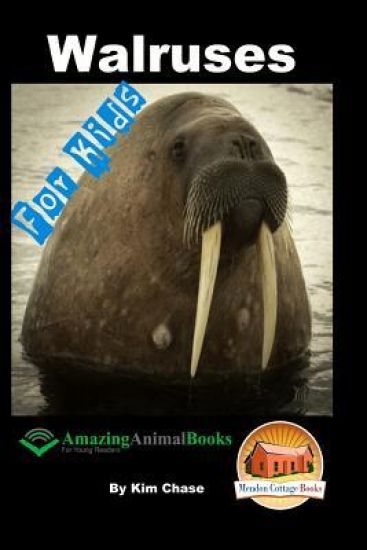
Bestselling author John Davidson presents "Walruses - For Kids - Amazing Animal Books For Young Readers". Beautiful Pictures and easy reading format will help children fall in love with walruses. This is one of over 30 books in the Amazing Animal Books for Young Readers Series. http: //AmazingAnimalBooks.com The series is known as one of the most beautiful on the kindle. The pictures look great even in black and white and are excellent on the full color kindle. Lots of facts and photos will help your children learn about this wonderful animal. Children are given a well-rounded understanding of walruses: anatomy, feeding habits and behavior. *** You and your kids will love learning about walruses Introduction 1. Information On Walruses 2. Facts About Walruses 3. Pacific Walruses 4. Arctic Walruses 5. Baby Walruses 6. How Walruses Communicate 7. Walruses' Habitat 8. Walruses' Diet 9. Where do Walruses Come From? 10. Seals and Walruses 11. Life In the Herd 12. Walrus Features 13. Walruses and Humans 14. Migration 15. Living in Cold Waters 16. Walruses are Endangered 17. Pictures of Walruses Get this book at this special price exclusive to the Amazon Store. 2. Facts About Walruses Walruses are very social creatures that like to gather in herds. The size of their herds can range in number anywhere from 100 walruses to more than 1,000 An adult male walrus is called a bull. The female walrus is called a cow. The reason that walruses lay in the sun is to keep warm. Although their color is usually a reddish brown, when they lay in the sun, their skin can turn pink in color. It is actually good when their skin color changes to pink. That is a sign that the walrus is warming up. The walrus also has its thick blubber to protect them and keep them warm from the freezing cold waters of the Artic. This layer of blubber is under the skin of the walrus, and can measure to over 5" thick. When walruses are young, their coat is a deep colored brown. As the walruses grow older, this color begins to change. Their color gets lighter, and looks more reddish brown. When male walruses become old, the color of their skin turns mostly pink. When a walrus is swimming, they can look almost white in color. This is because the cold water makes their skin blood vessels become tighter and narrower. A walrus can stay up to 30 minutes underwater before they must surface for air. The walrus can actually slow down their heartbeat so that they can stand up to the icy cold Artic water temperatures. Most groups of walrus will travel south for the winter months, then turn around and head north for the summer. The male walruses have air sacs that can be found by their neck. These air sacs are very useful. One thing it helps them to do is make loud, deep roaring sounds. These sacs can also fill up with air. When they inflate, the walrus can stay afloat in the water vertically so that he can go to sleep. Their nostrils stay closed when they are resting. Both the female and the male walruses have tusks, but it is the males' tusks that are slightly longer. These tusks will continue to grow over their lifetime. A female's tusk can measure 2-1/2 ft long, while, a male's tusk can measure over 3 ft. long The scientific name for walrus is Odobenus rosmarus. In Latin, this name actually means, "tooth walking sea horse". The walruses' whiskers, also known as mystacial vibrissae, are also very interesting. They can have as many as 13 to 15 rows of whiskers that are 12" long. That could mean as many as 400 to 700 total whiskers Many times, walruses that live in the wild, do not have whiskers that reach that long. They are always using their whiskers to look for food at the ocean's bottom, so their whiskers are shorter.