Kirjojen hintavertailu. Mukana 12 083 983 kirjaa ja 12 kauppaa.

Kirjahaku

Etsi kirjoja tekijän nimen, kirjan nimen tai ISBN:n perusteella.

1000 tulosta hakusanalla James C. Rodkey

Enoch

Enoch

James C. VanderKam

University of South Carolina Press
2008
nidottu
This book presents a valuable survey of Jewish and Christian textual references to an understudied Old Testament figure. Credited with predicting the flood and foretelling a second punishment but mentioned only briefly in the Hebrew Bible, Enoch is one of the most intriguing yet little-known characters of ancient Jewish and Christian literature. ""Genesis"" devotes just four verses to Enoch; yet this man became a central figure in many of the oldest surviving Jewish legends of apocalypse, the subject of a larger number of traditions during the intertestamental period, and a significant character in early Christian writing. In this examination of ancient references to Enoch and to Enochian themes, James C. VanderKam illumines the range of ancient testimonies to the man, his teachings, and his work.As he introduces readers to the mostly extrabiblical traditions surrounding Enoch, VanderKam addresses the significant question of how the canon of the Hebrew Bible came to be decided. He also uses the Enochian literature as a point of departure for an analysis of the apocalyptic literary tradition and the historical connection between Jewish and Mesopotamian thought.
1 and 2 Samuel

1 and 2 Samuel

James C Dant

Smyth Helwys,U.S.
2024
pokkari
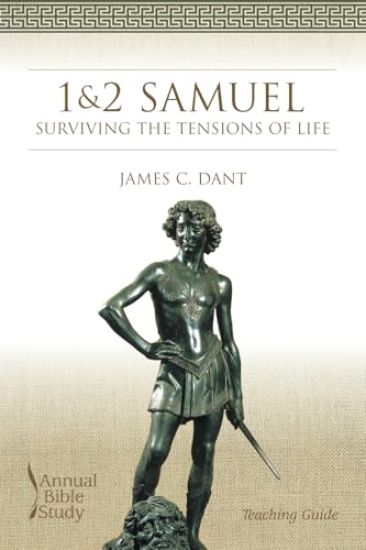
Annual Bible StudyEvery great work of art conveys an element of tension. The sculptures of Michelangelo present creatures frozen in motion, creating a unique statuesque tension. This artistic tension is also an integral part of narrative literature. Stories are saturated with romantic, ethical, and spiritual tensions. These tense themes have found themselves embodied in the fictitious lives of Othello and Desdemona, Rhett and Scarlett, Luke Skywalker and Darth Vader.Long before the patrons of art, books, and box office were entertained by exploiting the tragic and comedic tensions of their culture, the writer of 1 and 2 Samuel exposed the existence of these tensions in human life. The prophetic history of Hebrew Scripture does not dreamily begin with "Once upon a time," nor does it sentimentally end with "and they lived happily ever after." First and Second Samuel begin, end, and are filled with the political, theological, relational, and spiritual tensions that saturate and invigorate our existence. These four "life" tensions (political, theological, relational, and spiritual) will provide the framework for the study of 1 and 2 Samuel.This Teaching Guide for the Smyth & Helwys Annual Bible Study on the books of 1 and 2 Samuel includes teaching options, a suggested worship outline, and approaches for leading discussions. The study examines biblical background, history of interpretation, and the themes of spirituality, ministry, and theology. It also includes relevant lesson plans for teaching children and youth.James C. Dant is pastor of Highland Hills Baptist Church in Macon, Georgia. He also serves as Adjunct Professor in the Christianity Department of Mercer University. He is a regular contributor to the Smyth & Helwys Sunday school series Formations and Uniform, as well as to the news journal Baptists Today. He is married and has three daughters.
Nassau Plantation

Nassau Plantation

James C. Kearney

University of North Texas Press,U.S.
2011
nidottu
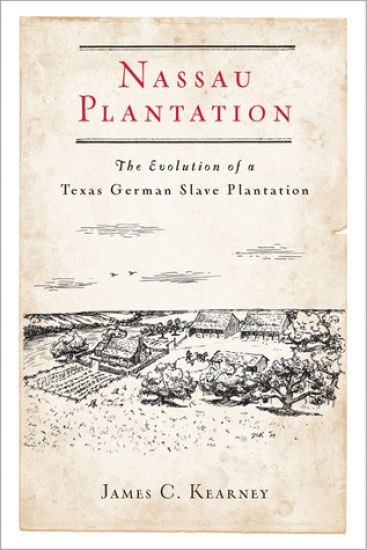
In the 1840s an organisation of German noblemen, the Mainzner Adelsverein, attempted to settle thousands of German emigrants on the Texas frontier. Nassau Plantation, located near modern-day Round Top, Texas, in northern Fayette County, was a significant part of this story. No one, however, has adequately documented the role of the slave plantation or given a convincing explanation of the Adelsverein from the German point of view. James C. Kearney has studied a wealth of original source material (much of it in German) to illuminate the history of the plantation and the larger goals and motivation of the Adelsverein, both in Texas and in Germany. Moreover, this new study highlights the problematic relationship of German emigrants to slavery. Few today realise that the society’s original colonisation plan included ownership and operation of slave plantations. Ironically, the German settlements the society later established became hotbeds of anti-slavery and anti-secessionist sentiment. Responding to criticism in Germany, the society declared its colonies to be “slave free zones” in 1845. This act thrust the society front and centre into the complicated political landscape of Texas prior to annexation. James A. Mayberry, among others, suspected an English-German conspiracy to flood the state with anti-slavery immigrants and delivered a fiery speech in the legislature denouncing the society. In the 1850s the plantation became a magnet for German immigration into Fayette and Austin Counties. In this connection, Kearney explores the role and influence of Otto von Roeder, a largely neglected but important Texas-German. Another chapter deals with the odyssey of the extended von Rosenberg family, who settled on the plantation in 1850 and helped to elevate the nearby town of Round Top into a regional centre of culture and education. Many members of the family subsequently rose to positions of leadership and influence in Texas. Several notable personalities graced the plantation—Carl Prince of Solms-Braunfels, Johann Otto Freiherr von Meusebach, botanist F. Lindheimer, and the renowned naturalist Dr. Ferdinand Roemer, to name a few. Dramatic events also occurred at the plantation, including a deadly shootout, a successful escape by two slaves (documented in an unprecedented way), and litigation over ownership that wound its way to both the Texas Supreme Court and the U.S. Supreme Court.
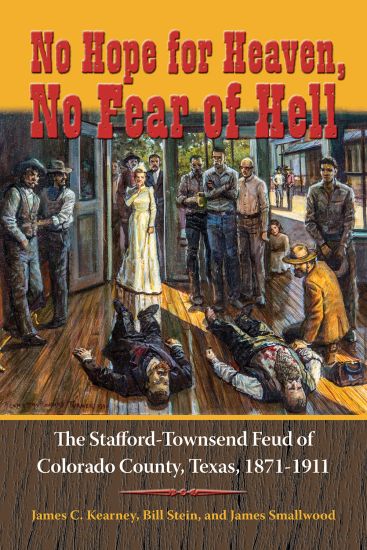
No Hope for Heaven, No Fear of Hell

No Hope for Heaven, No Fear of Hell

James C. Kearney

University of North Texas Press,U.S.
2016
sidottu
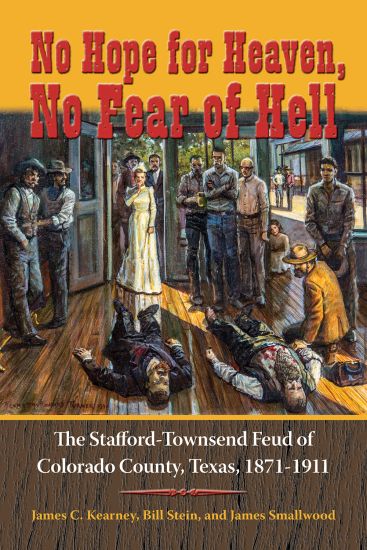
Two family names have come to be associated with the violence that plagued Colorado County, Texas, for decades after the end of the Civil War: the Townsends and the Staffords. Both prominent families amassed wealth and achieved status, but it was their resolve to hold on to both, by whatever means necessary, including extra-legal means, that sparked the feud. Elected office was one of the paths to success, but more important was control of the sheriff’s office, which gave one a decided advantage should the threat of gun violence arise.No Hope for Heaven, No Fear of Hell concentrates on those individual acts of private justice associated with the Stafford and Townsend families. It began with an 1871 shootout in Columbus, followed by the deaths of the Stafford brothers in 1890. The second phase blossomed after 1898 with the assassination of Larkin Hope, and concluded in 1911 with the violent deaths of Marion Hope, Jim Townsend, and Will Clements, all in the space of one month.
No Hope for Heaven, No Fear of Hell

No Hope for Heaven, No Fear of Hell

James C. Kearney; Bill Stein; James Smallwood
University of North Texas Press,U.S.
2018
nidottu
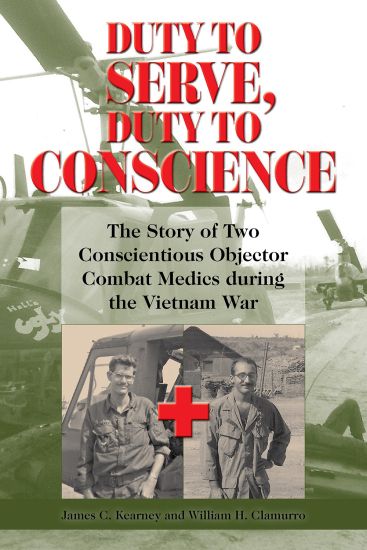
The Stafford-Townsend feud began with an 1871 shootout in Columbus, Texas, followed by the deaths of the Stafford brothers in 1890. The second phase blossomed after 1898 with the assassination of Larkin Hope, and concluded in 1911 with the violent deaths of Marion Hope, Jim Townsend, and Will Clements, all in the space of one month.
Duty to Serve, Duty to Conscience

Duty to Serve, Duty to Conscience

James C. Kearney; William H Clamurro

UNIVERSITY OF NORTH TEXAS PRESS,U.S.
2023
sidottu
Despite all that has been written about Vietnam, the story of the 1-A-O conscientious objector, who agreed to put on a uni-form and serve in the field without weapons rather than accept alternative service outside the military, has received scarce atten-tion. This joint memoir by two 1-A-O combat medics, James C. Kearney and William H. Clamurro, represents a unique approach to the subject. It is a blend of their personal narratives—with select Vietnam poems by Clamurro—to illustrate noncombatant objection as a unique and relatively unknown form of Vietnam War protest. Both men initially met during training and then served as frontline medics in separate units “outside the wire” in Vietnam. Clamurro was assigned to a tank company in Tay Ninh province next to the Cambodian border, before reassignment to an aid station with the 1st Air Cavalry. Kearney served first as a medic with an artillery battery in the 1st Infantry Division, then as a convoy medic during the Cambodian invasion with the 25th Infantry Division, and finally as a Medevac medic with the 1st Air Cavalry. In this capacity Kearney was seriously wounded during a “hot hoist” in February 1971 and ended up being treated by his friend Clamurro back at base. Because of their status as “a new breed of conscientious objector”—i.e., more political than religious in their convictions—the authors’ experience of the Vietnam War differed fundamentally from that of their fellow draftees and contrasted even with the great majority of their fellow 1-A-O medics, whose conscientious objector status was largely or entirely faith-based.
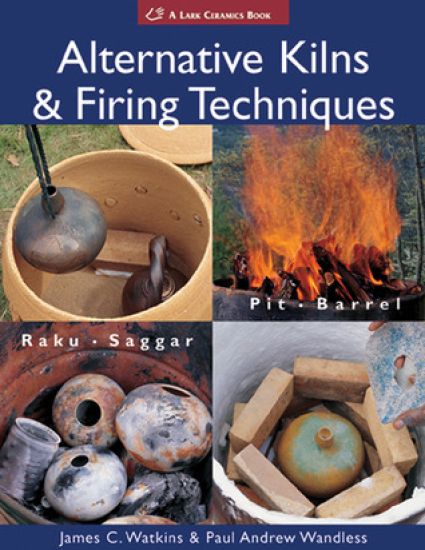
Alternative Kilns & Firing Techniques

Alternative Kilns & Firing Techniques

James C. Watkins; Paul Andrew Wandless
Lark Books,U.S.
2006
pokkari
Ceramicists searching for new ways to fire their creations now have a wealth of options. Authors James Watkins and Paul Wandless, along with a group of distinguished artisans, demonstrate in detail how to build low-cost, low-tech, yet high-quality kilns and varied firing techniques. The plans range from an easy, affordable and versatile Raku Kiln to a unique wood-fuelled Downdraft Stovepipe Barrel kiln. These clever devices make it possible to produce rich surface effects from alternative reduction firing techniques. In addition to showing the basic procedures for using each kiln, easy-to-follow directions for many fast-fire methods unfold in color photographs: you'll see how to achieve terra sigillata surfaces with direct chemical application and how to do traditional crackle-glaze raku and smoke finishes.
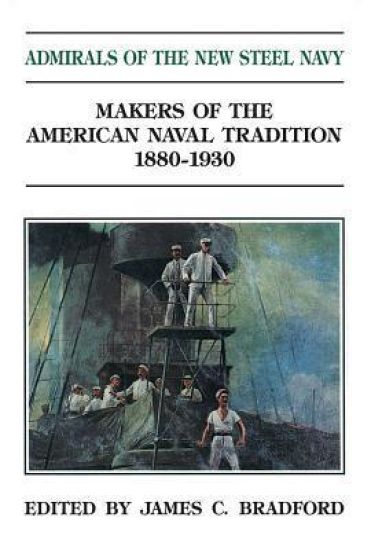
Admirals of the New Steel Navy

Admirals of the New Steel Navy

James C. Bradford

Naval Institute Press
2013
nidottu
This collection of interpretive, biographical essays on the admirals of the new steel navy continues the story of the development of the American naval begun so successfully in Command Under Sail and Captains of the Old Steam Navy. During the period of 1880 to 1930, the U.S. Navy underwent a significant transformation as it adapted to new technologies and grew to meet the responsibilities thrust upon it by America’s new role as a world power. This book offers readers an entertaining yet informative history that allows amateur and professionals alike to better appreciate the U.S. Navy’s dramatic period of development and adjustment.
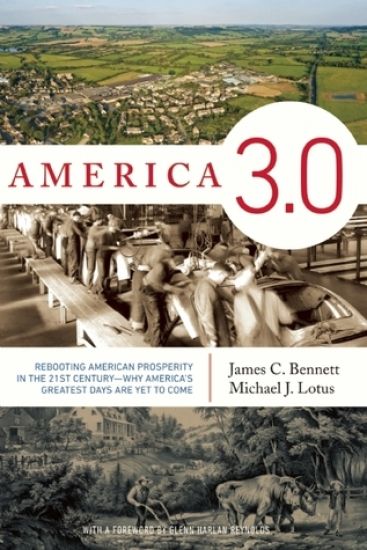
America 3.0

America 3.0

James C. Bennett; Lotus Michael J.

Encounter Books,USA
2013
sidottu
America's greatest days are yet to come. We are in a painful transition period. Our government is crushingly expensive, failing at its basic functions, and unable to keep its promises. It does not work and it cannot continue as it is. But the inevitable end of big government does not mean the end of America. It only means the end of one phase of American life. America is poised to enter a new era of freedom and prosperity. The cultural roots of the American people go back at least fifteen centuries, and make us individualistic, enterprising, and liberty-loving. The Founding generation of the United States lived in a world of family farms and small businesses, America 1.0. This world faded away and was replaced by an industrialized world of big cities, big business, big labor unions and big government, America 2.0. Now America 2.0 is outdated and crumbling, while America 3.0 is struggling to be born. This new world will bring immense productivity, rapid technological progress, greater scope for individual and family-scale autonomy, and a leaner and strictly limited government. America has made one major transition already, and industrial America became an economic colossus. We are now making a new transition, which will surprise many Americans, and astonish the world.
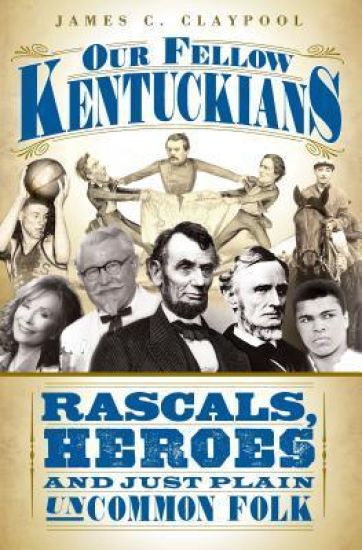
Our Fellow Kentuckians: Rascals, Heroes and Just Plain Uncommon Folk
In this one-of-a-kind collection, Dr. James C. Claypool, professor emeritus at Northern Kentucky University, rolls out the red carpet for thirty-nine of the most fascinating characters with ties to the commonwealth. From intrepid pioneers to noble statesmen, legendary athletes, inventors, entrepreneurs, war heroes and a couple of men named Cassius Clay, this is a comprehensive and highly entertaining volume that no true Kentuckian should be without. Some will make you proud, others may leave you in shame, but good or bad, noble or vile, they are still our fellow Kentuckians.
Sockets, Shellcode, Porting, and Coding: Reverse Engineering Exploits and Tool Coding for Security Professionals
The book is logically divided into 5 main categories with each category representing a major skill set required by most security professionals: 1. Coding – The ability to program and script is quickly becoming a mainstream requirement for just about everyone in the security industry. This section covers the basics in coding complemented with a slue of programming tips and tricks in C/C++, Java, Perl and NASL. 2. Sockets – The technology that allows programs and scripts to communicate over a network is sockets. Even though the theory remains the same – communication over TCP and UDP, sockets are implemented differently in nearly ever language. 3. Shellcode – Shellcode, commonly defined as bytecode converted from Assembly, is utilized to execute commands on remote systems via direct memory access. 4. Porting – Due to the differences between operating platforms and language implementations on those platforms, it is a common practice to modify an original body of code to work on a different platforms. This technique is known as porting and is incredible useful in the real world environments since it allows you to not “recreate the wheel.? 5. Coding Tools – The culmination of the previous four sections, coding tools brings all of the techniques that you have learned to the forefront. With the background technologies and techniques you will now be able to code quick utilities that will not only make you more productive, they will arm you with an extremely valuable skill that will remain with you as long as you make the proper time and effort dedications.