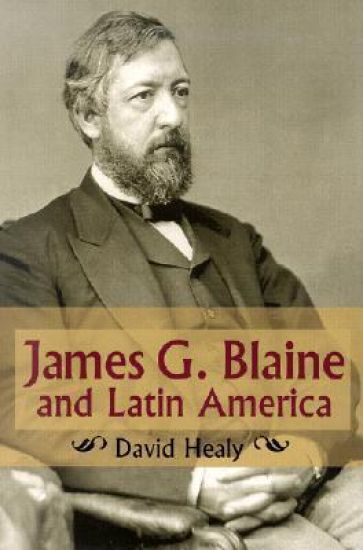
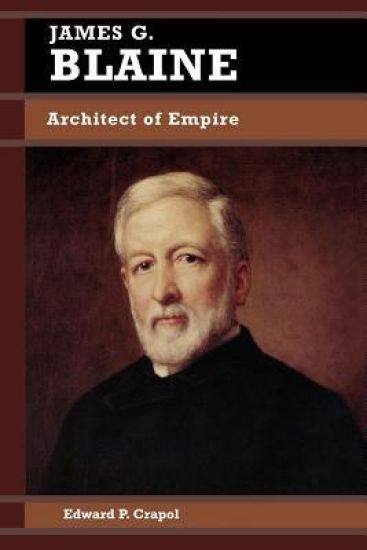
James G. Blaine was a leader of the Republican Party and a major shaper of national politics for more than a decade. This biography asserts that Latin America lay at the heart of Blaine's foreign policy and vision for America, and examines seven issues that defined his methods, goals and views.
James Milton Turner, Missouri's most prominent nineteenth-century African American political figure, possessed a deep faith in America. The Civil War, he believed, had purged the land of its sins and allowed the country to realize what had always been its promise: the creation of a social and political environment in which merit, not race, mattered. Born a slave, Turner gained freedom when he was a child and received his education in clandestine St. Louis schools, later briefly attending Oberlin College. A self-taught lawyer, Turner earned a statewide reputation and wielded power far out of proportion to Missouri's relatively small black population. After working nearly a decade in Liberia, Turner never regained the prominence he had enjoyed during Reconstruction.
Veteran journalist and author Sherry Robinson presents readers with the first full biography of New Mexico's first territorial governor, James Silas Calhoun. Robinson explores Calhoun's early life in Georgia and his military service in the Mexican War and how they led him west. Through exhaustive research Robinson shares Calhoun's story of arriving in New Mexico in 1849--a turbulent time in the region--to serve as its first Indian agent. Inhabitants were struggling to determine where their allegiances lay; they had historic and cultural ties with Mexico, but the United States offered an abundance of possibilities.An accomplished attorney, judge, legislator, and businessman and an experienced speaker and negotiator who spoke Spanish, Calhoun was uniquely qualified to serve as the first territorial governor only eighteen months into his service. While his time on the New Mexico political scene was brief, he served with passion, intelligence, and goodwill, making him one of the most intriguing political figures in the history of New Mexico.
Veteran journalist and author Sherry Robinson presents readers with the first full biography of New Mexico's first territorial governor, James Silas Calhoun. Robinson explores Calhoun's early life in Georgia and his military service in the Mexican War and how they led him west. Through exhaustive research Robinson shares Calhoun's story of arriving in New Mexico in 1849—a turbulent time in the region—to serve as its first Indian agent. Inhabitants were struggling to determine where their allegiances lay; they had historic and cultural ties with Mexico, but the United States offered an abundance of possibilities.An accomplished attorney, judge, legislator, and businessman and an experienced speaker and negotiator who spoke Spanish, Calhoun was uniquely qualified to serve as the first territorial governor only eighteen months into his service. While his time on the New Mexico political scene was brief, he served with passion, intelligence, and goodwill, making him one of the most intriguing political figures in the history of New Mexico.
In this remarkable book, Douglas Wolk recreates the evening of October 24th 1962, at Harlem's Apollo Theatre, an evening at the epicentre of Cold War tensions. An evening when James Brown took the stage to be faced by 1500 screaming fans - fans who thought they might well be dead within a week. Wolk reconstructs, in great detail, what took place (and was recorded) inside the Apollo that night: one of the tightest, most legendary performances ever put down on tape. 33 1/3 is a series of short books about critically acclaimed and much-loved albums of the last 40 years. Focusing on one album rather than an artist's entire output, the books dispense with the standard biographical background that fans know already, and cut to the heart of the music on each album. The authors provide fresh, original perspectives, often through their access to and relationships with the key figures involved in the recording of these albums. By turns obsessive, passionate, creative, and informed, the books in this series demonstrate many different ways of writing about music. (A task that can be, as Elvis Costello famously observed, as tricky as dancing about architecture.) What binds this series together, and what brings it to life, is that all of the authors - musicians, scholars, and writers - are deeply in love with the album they have chosen. Previous titles in this now well-established series have beaten sales expectations and received excellent review coverage - the third batch is sure to continue this success. More titles follow in the spring of 2005.
This is a concise, authoritative but very readable guide to "The Turn of the Screw", offering students a guide to contexts, language, criticism and reading the text. Henry James' ghost story novella, "The Turn of the Screw" (1898) is a key gothic text and is one of the most popular James texts for undergraduate study. This is the ideal guide to the text, setting "The Turn of the Screw" in its historical, intellectual and cultural contexts, offering analysis of its themes, style and structure, providing exemplary close readings, presenting an up-to-date account of its critical reception and examining its afterlife in literature, film and popular culture. It includes points for discussion, suggestions for further study and an annotated guide to relevant reading. "Continuum Reader's Guides" are clear, concise and accessible introductions to key texts in literature and philosophy. Each book explores the themes, context, criticism and influence of key works, providing a practical introduction to close reading, guiding students towards a thorough understanding of the text. They provide an essential, up-to-date resource, ideal for undergraduate students.
This is a concise, authoritative but very readable guide to "The Turn of the Screw", offering students a guide to contexts, language, criticism and reading the text. Henry James's ghost story novella, "The Turn of the Screw" (1898) is a key gothic text and is one of the most popular James texts for undergraduate study. This is the ideal guide to the text, setting "The Turn of the Screw" in its historical, intellectual and cultural contexts, offering analysis of its themes, style and structure, providing exemplary close readings, presenting an up-to-date account of its critical reception and examining its afterlife in literature, film and popular culture. It includes points for discussion, suggestions for further study and an annotated guide to relevant reading. "Continuum Reader's Guides" are clear, concise and accessible introductions to key texts in literature and philosophy. Each book explores the themes, context, criticism and influence of key works, providing a practical introduction to close reading, guiding students towards a thorough understanding of the text. They provide an essential, up-to-date resource, ideal for undergraduate students.
This is volume 17 in the "Major Conservative and Libertarian Thinkers" series. James McGill Buchanan (B. 1919) is an American economist best known for his public choice theory. The founder of a new Virginia school of political economy, he has written extensively on subjects including public finance, macroeconomics, and libertarian theory. Buchanan's theory offered a basis for conservative political endeavors such as a constitutional amendment to balance the federal budget. He was awarded the Nobel Prize in Economics in 1986. "Major Conservative and Libertarian Thinkers" provides comprehensive accounts of the works of seminal conservative thinkers from a variety of periods, disciplines, and traditions - the first series of its kind. Even the selection of thinkers adds another aspect to conservative thinking, including not only theorists but also writers and practitioners. The series comprises twenty volumes, each including an intellectual biography, historical context, critical exposition of the thinker's work, reception and influence, contemporary relevance, bibliography including references to electronic resources, and an index.
In the second half of 1845 the focus of Polk's correspondence shifted from those issues relating, to the formation of his administration and distribution of party patronage to those that would give shape and consequence to his presidency: the admission of Texas, preparation for its defense, restoration of diplomatic relations with Mexico, and termination of joint occupancy of the Oregon Country. In addition to the texts, briefs, and annotations, the editors have calendared all of the documents for the last six months of 1845. Entries for unpublished letters include the documents' dates, addressees, classifications, repositories, and precis. The Polk Project is sponsored by the University of Tennessee and assisted by grants from the National Historical Publications and Records Commission, the National Endowment for the Humanities, and the Tennessee Historical Commission.
In the second half of 1845 the focus of Polk's correspondence shifted from those issues relating, to the formation of his administration and distribution of party patronage to those that would give shape and consequence to his presidency: the admission of Texas, preparation for its defense, restoration of diplomatic relations with Mexico, and termination of joint occupancy of the Oregon Country. In addition to the texts, briefs, and annotations, the editors have calendared all of the documents for the last six months of 1845. Entries for unpublished letters include the documents' dates, addressees, classifications, repositories, and precis. The Polk Project is sponsored by the University of Tennessee and assisted by grants from the National Historical Publications and Records Commission, the National Endowment for the Humanities, and the Tennessee Historical Commission.
In the second half of 1845 the focus of Polk's correspondence shifted from those issues relating, to the formation of his administration and distribution of party patronage to those that would give shape and consequence to his presidency: the admission of Texas, preparation for its defense, restoration of diplomatic relations with Mexico, and termination of joint occupancy of the Oregon Country. In addition to the texts, briefs, and annotations, the editors have calendared all of the documents for the last six months of 1845. Entries for unpublished letters include the documents' dates, addressees, classifications, repositories, and precis. The Polk Project is sponsored by the University of Tennessee and assisted by grants from the National Historical Publications and Records Commission, the National Endowment for the Humanities, and the Tennessee Historical Commission.
In the second half of 1845 the focus of Polk's correspondence shifted from those issues relating, to the formation of his administration and distribution of party patronage to those that would give shape and consequence to his presidency: the admission of Texas, preparation for its defense, restoration of diplomatic relations with Mexico, and termination of joint occupancy of the Oregon Country. In addition to the texts, briefs, and annotations, the editors have calendared all of the documents for the last six months of 1845. Entries for unpublished letters include the documents' dates, addressees, classifications, repositories, and precis. The Polk Project is sponsored by the University of Tennessee and assisted by grants from the National Historical Publications and Records Commission, the National Endowment for the Humanities, and the Tennessee Historical Commission.
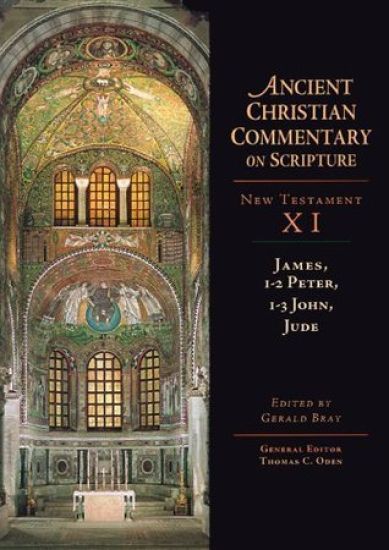
Christianity Today Award of Merit winner Because the Catholic Epistles focus on orthodox faith and morals, the Fathers drew on them as a means of defense against the rising challenge of heretics. Many of the Fathers saw in these letters anticipatory attacks on Marcion and strong defenses against the Arians. They did so quite naturally because in their view truth was eternal and deviations from it had existed from the beginning. Above all, the Fathers found in the Catholic Epistles a manual for spiritual warfare, counsel for the faithful in the cosmic struggle between good and evil. In them was sound instruction in the ways of self-sacrifice, generosity, and humility, through which the cosmic forces could be defeated. Allusions to these letters go back as far as Justin Martyr, Irenaeus, and Tertullian, but the first commentary derives from Clement of Alexandria. Didymus the Blind was the next significant Greek-speaking commentator, though his commentary is fully extant only in Latin translation. Many of the comments from the early centuries have been passed on to us through Latin catenae, or chain commentaries, in which a later commentator collected comments from a variety of sources and chained them together in a fashion much like that of the Ancient Christian Commentary on Scripture in English. Among Latin commentators on these letters, pride of place must be given to Bede the Venerable. This volume opens up a treasure house of ancient wisdom that allows these faithful witnesses, some appearing here in English translation for the first time, to speak with eloquence and intellectual acumen to the church today.
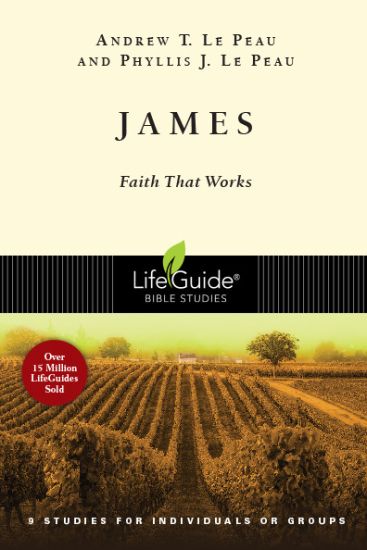
We all want a faith that won't let us down in times of trouble or loss, uncertainty or fear. A faith that can pull us through the worst--and best--times in our lives. This is the kind of faith that James writes about. It is a faith that we must practice day by day. These nine-session LifeGuide(R) Bible Study by Andrew and Phyllis Le Peau on the teaching of James will help us grow a steadfast faith that can carry us through all the ups and downs of life.For over three decades LifeGuide Bible Studies have provided solid biblical content and raised thought-provoking questions--making for a one-of-a-kind Bible study experience for individuals and groups. This series has more than 130 titles on Old and New Testament books, character studies, and topical studies.
Christianity Today Award of Merit winner Because the Catholic Epistles focus on orthodox faith and morals, the Fathers drew on them as a means of defense against the rising challenge of heretics. Many of the Fathers saw in these letters anticipatory attacks on Marcion and strong defenses against the Arians. They did so quite naturally because in their view truth was eternal and deviations from it had existed from the beginning. Above all, the Fathers found in the Catholic Epistles a manual for spiritual warfare, counsel for the faithful in the cosmic struggle between good and evil. In them was sound instruction in the ways of self-sacrifice, generosity, and humility, through which the cosmic forces could be defeated. Allusions to these letters go back as far as Justin Martyr, Irenaeus, and Tertullian, but the first commentary derives from Clement of Alexandria. Didymus the Blind was the next significant Greek-speaking commentator, though his commentary is fully extant only in Latin translation. Many of the comments from the early centuries have been passed on to us through Latin catenae, or chain commentaries, in which a later commentator collected comments from a variety of sources and chained them together in a fashion much like that of the Ancient Christian Commentary on Scripture in English. Among Latin commentators on these letters, pride of place must be given to Bede the Venerable. This volume opens up a treasure house of ancient wisdom that allows these faithful witnesses, some appearing here in English translation for the first time, to speak with eloquence and intellectual acumen to the church today.
The New Beacon Bible Commentary is an engaging, indispensable reference tool to aid individuals in every walk of life in the study and meditation of God's Word. Written from the Wesleyan theological perspective, it offers insight and perceptive scholarship to help you unlock the deeper truths of Scripture and garner an awareness of the history, culture, and context attributed to each book of study. Readable, relevant, and academically thorough, it offers scholars, pastors, and laity a new standard for understanding and interpreting the Bible in the 21st century.EACH VOLUME FEATURES: Completely New Scholarship from notable experts in the Wesleyan tradition Convenient Introductory Material for each book of the Bible including information on authorship, date, history, audience, sociological/cultural issues, purpose, literary features, theological themes, hermeneutical issues, and more Clear Verse-by-Verse Explanations, which offer a contemporary, Wesleyan-based understanding derived from the passage's original language Comprehensive Annotation divided into three sections, which cover background elements behind the text; verse-by-verse details and meanings found in the text; and significance, relevance, intertextuality, and application from the text Helpful Sidebars, which provide deeper insight into theological issues, word meanings, archeological connections, historical relevance, cultural customs, and more Expanded Bibliography for further study of historical elements, additional interpretations, and theological themes The book of James is full of advice on how Christians should live. Thus, some say it contradicts Paul's gospel of grace and faith, and they question its place in the canon. However, this commentary will show that James' and Paul's thoughts are complementary, not contradictory.
In James, we find one of the clearest examples of the Jewish contributions to Christianity--a strong ethic. First-century Jews believed that body, soul, and spirit were one. Therefore, one could not act contrary to how one believed. Over the course of seven weeks exploring the concepts of practical Christian living presented in the book of James, you will discover: the secret of living a joy-filled life in the midst of trouble, the tools for finding salvation through obedient faith, how to keep the commandments by loving your neighbor, and how God wants you to live in Christian fellowship. A faithful reading of God's Word leads to a faithful response from God's people. The Shaped by Scripture series teaches a simple, engaging method of studying the Bible that will lead to honest interpretation and a changed relationship with God.
In James G. Blaine: Architect of Empire, author Edward P. Crapol assesses Blaine's role as an architect of empire and revisits the ambitious imperialistic goals of this two-time secretary of state. Crapol examines Blaine's pivotal role in shaping American foreign relations and looks at some of the underlying reasons why the U.S. acquired an overseas empire at the turn of the century. This text will acquaint readers with how Blaine sought to win global economic supremacy and intended to transform the U.S. into the world's number one power. The book also lends insight into Blaine's efforts to spark energetic governmental action in revitalizing the merchant marine, building a first-class navy, using the coercive tactic of reciprocity, achieving unilateral control of an isthmian canal, and creating U.S. political and economic hegemony in the hemisphere. In addition, James G. Blaine: Architect of Empire takes a serious look at Blaine the Anglophobe and anti-British nationalist who defined Great Britain as the U.S.'s primary global rival and the chief obstacle to American economic and political dominance in Latin America and the Pacific. Finally, Crapol looks at Blaine as the transitional figure who helped forge the economic expansionist mentality that underpinned the late nineteenth-century burst of imperialism. James G. Blaine is an excellent resource for scholars and students interested in America's imperial past and the figures who played key roles in America's global economic development.