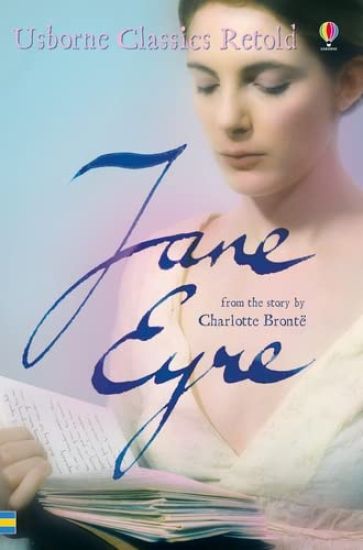
When Jane Eyre becomes a governess at Thornfield Hall, she falls in love with her mysterious employer, Mr. Rochester. But he hides a terrible secret that threatens to drive them apart... Clearly written in a modern, approachable style, this retelling of the classic story includes informative notes on both the author and the original text.
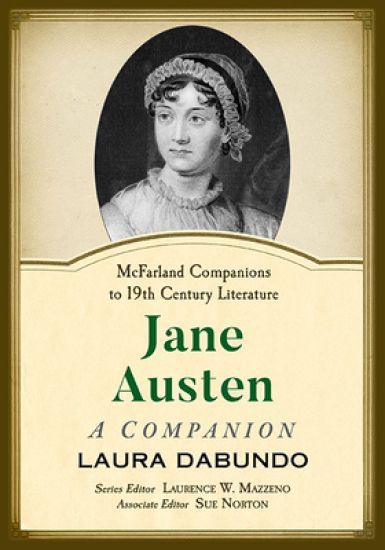
Written for readers at all levels, this book situates Jane Austen in her time, and for all times. It provides a biography; locates her work in the context of literary history and criticism; explores her fiction; and features an encyclopedic, readable resource on the people, places and things of relevance to Austen the person and writer. Details on family members, beaux, friends, national affairs, church and state politics, themes, tropes, and literary devices ground the reader in Austen's world. Appendices offer resources for further reading and consider the massive modern industry that has grown up around Austen and her works.
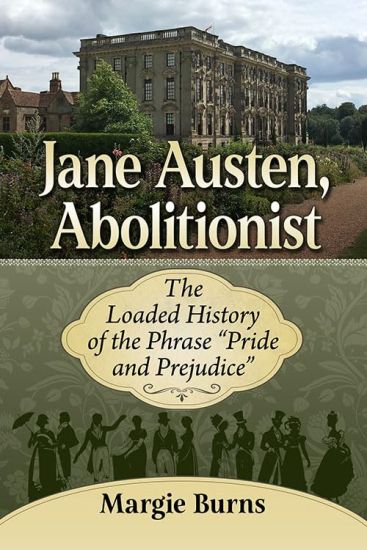
The words "pride and prejudice" became the title of Jane Austen's most famous novel, but the history of the phrase before Austen is less famous. In particular, most of the reading public has never known that "pride and prejudice" was a traditional critique adopted by British and American antislavery writers. After Austen's lifetime, the antislavery associations intensified, especially in America. This is the only book about the tradition and the many newly discovered uses of "pride and prejudice" before and after Austen's popular novel. Hundreds of examples in an annotated list show the use of "pride and prejudice" used to uphold independence--independent judgment, independent ethical behavior, independence that repudiated all forms of oppression. The book demonstrates how, in a natural evolution, the phrase was used to criticize enslavement and the slave trade. Eighteenth-century revolutionary Thomas Paine used the phrase in Common Sense nineteenth-century abolitionist Frederick Douglass used it throughout his lifetime. Choosing her title for these resonances, Austen supported independent reason, reinforced writing by women, and opposed enslavement.
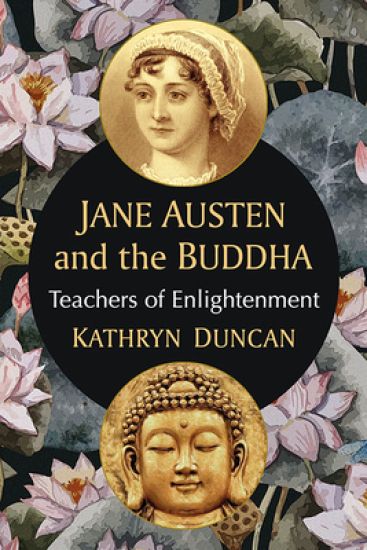
Jane Austen wrote six books that were published at the beginning of the 19th century, all with happy endings. Yet below the courtship novels' sparkling wit and dance scenes flows an undercurrent of suffering. Austen had a deep understanding of the sources and cure for suffering that shares much in common with Buddhism. Though not intentionally writing through the lens of Buddhism, Austen intuitively understood the Buddha's most fundamental teaching of the Four Noble Truths: that life contains suffering, that we can discover the causes of suffering, and that we can stop suffering by following the Eightfold Path described by the Buddha. In this book, Austen fans or those who wish for a deeper understanding of how stories can alleviate suffering will discover a combination of psychology and Buddhism alongside accessible close readings of Austen. This unique approach offers insight into Austen's enduring popularity and lessons we might apply to our own lives to find happiness--just like Austen's heroines.
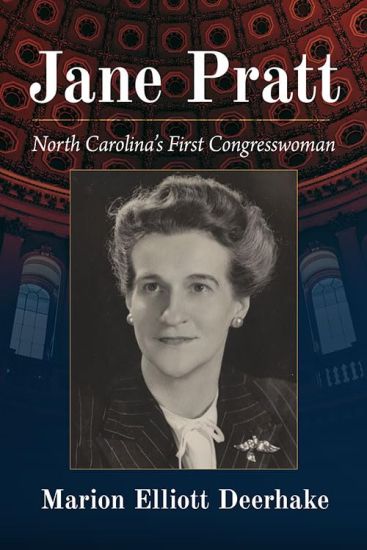
On May 25th, 1946, after 22 years as a congressional secretary, Jane Pratt was elected as North Carolina's first congresswoman. The press reported with great interest how "Miss Jane" won by a landslide with only a $100 campaign budget. She hit the ground running, voting to the pass the Atomic Energy Act, working tirelessly to mitigate a century of flood disasters in western North Carolina, and serving the constituents she knew so well. This first biography of Congresswoman Jane Pratt recounts her youth and fascinating career on Capitol Hill. It also provides a unique federal view of North Carolina's early 20th century history. After working as a rare female newspaper editor in the early 1920s, Pratt became secretary to five tarheel congressmen over some 30 years. Her career spanned the roaring twenties, the Great Depression, World War II, and the Cold War. Pratt's amazing network was a who's who of leaders in North Carolina and Washington, DC. Her decision not to run for re-election offers insight into why 46 years passed before the state elected another woman to Congress.
Jane Austen overcame the limitations of early fiction by pivoting from superficial adventures to the psychological studies that have defined the novel since. Her creativity and technique grew as she wrestled with pragmatic writing issues. This evaluation of Austen's creative process brings into focus the strengths and weaknesses of her six novels. Each is examined in its use of major fictional techniques--description, scene-building, point of view, and psychological development--to reveal unique literary attributes. The result is a revealing analysis of how world-class fiction is built from the ground up.
Wild nature is as important to Jane Austen's heroines as picturesque, altered landscapes. Her heroines respond to the power of the natural world, seeking comfort in nature's calm or referencing "verdure," meaning fresh greenness and fertility, in relation to their awakening sexuality. By transforming elements of pastoral literature, an ancient genre, Austen makes nature integral to the development of her characters. She draws from pastoral tropes, motifs, and structure to depict realities of early nineteenth century life for young women. A study of the pastoral techniques in all of Austen's major works, this book focuses on the interactions between Austen's heroines and the uncontrollable, wild world. As Austen depicts these relationships, her unconventional use of pastoral literature reveals their complexity. Femininity and nature are interwoven; male characters often exploit nature as they exploit women. In the fragment Sanditon, Austen satirizes resort developers who commodify both nature and women. This book demonstrates Austen's transformation of the courtship novel by using pastoral language to illuminate themes of human greed, the inequality between men and women, and the emotional development of young women in the early nineteenth century.
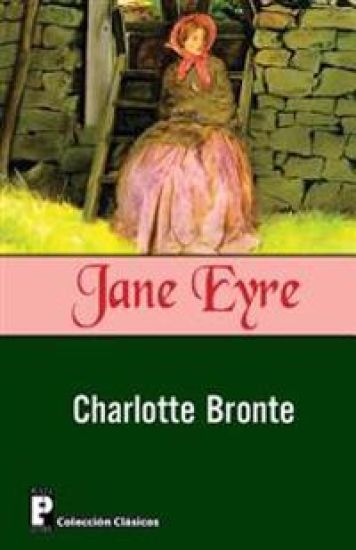
Charlotte Bront 's most famous novel 'Jane Eyre' is one of the greatest literary achievements of the nineteenth century. A gothic Bildungsroman, it deftly charts its heroine's progress through hardship, cruelty and tribulation, and casts a piercing eye on religion, society and gender relations in the process.
Jane Eyre is a novel by English writer Charlotte Bront . It was published in London, England, in 1847 by Smith, Elder & Co. with the title Jane Eyre. An Autobiography under the pen name "Currer Bell." The first American edition was released the following year by Harper & Brothers of New York. Writing for the Penguin edition, Stevie Davies describes it as an "influential feminist text" because of its in-depth exploration of a strong female character's feelings. -wikipedia
Jane Eyre es una novela escrita por Charlotte Bronte, hoy considerada un cl sico de la literatura en lengua inglesa. El libro es innovador en la forma de pensar y de actuar de la protagonista, Jane Eyre, y en su forma de ver el mundo. Es considerado por muchos como una de las novelas precursoras del feminismo y en su poca fue muy pol mico debido a esta actitud. Ha tenido varias adaptaciones al cine y la televisi n.
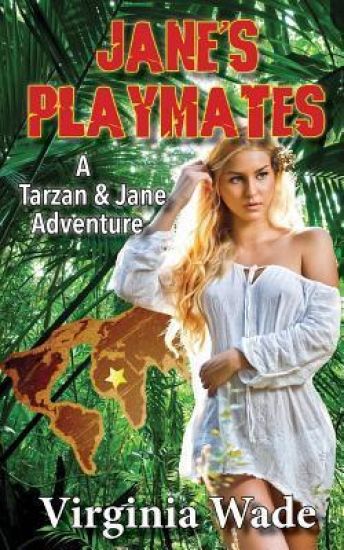
Deep in the heart of Africa, Jane searches for her long lost father, the famous explorer, Author Tennent. Her uptight chaperone, Evelyn, is hiding a dirty secret. She's been administering a "soothing technique" to her young ward for years, and society would be scandalized, if they knew what it was. A rough and tumble Texan by the name of Maxwell Collins heads the expedition. He's unabashedly interested in the lovely Miss Tennent and harbors a rather stiff crush. Natives with cocks the size of tree trunks, a great white-ape who enjoys kidnapping women and having his way with them, and an orgy loving chief, all play a role in this adventurous story about lust and love. "The scene was set so that you could visualize the jungle, heat and lack of civilization. Once the ride started it was on, I was hooked. Vivid hot detail throughout. Hope Jane has more playmates in her next adventure."- Stephluve, Texas "I thoroughly enjoyed this romp." - Juanita Blau, NJ "This title reminds me of Victorian Erotica and for those who love that genre, don't pass this one up. The premise, writing and scenes are hot " - RomanceLover