Kirjojen hintavertailu. Mukana 11 244 527 kirjaa ja 12 kauppaa.

Kirjahaku

Etsi kirjoja tekijän nimen, kirjan nimen tai ISBN:n perusteella.

1000 tulosta hakusanalla Jay Rayner

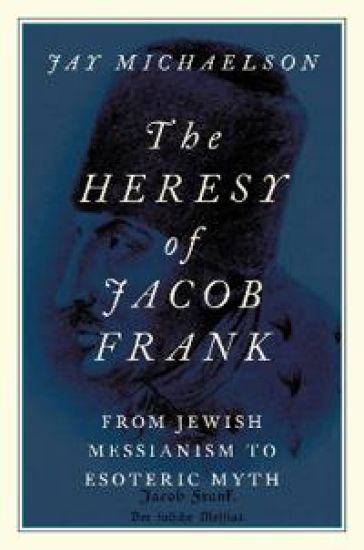
The Heresy of Jacob Frank

The Heresy of Jacob Frank

Jay Michaelson

OXFORD UNIVERSITY PRESS INC
2023
nidottu
The Heresy of Jacob Frank is the first monograph length study on the religious philosophy of Jacob Frank (1726-1791), who, in the wake of false messiah Sabbetai Zevi, led the largest mass apostasy in Jewish history. Based on close readings of Frank's late teachings, recorded in 1784 and 1790, this book challenges scholarly presentations of Frank that depict him as a sex-crazed "degenerate," and presents Frank as an original and prescient figure at the crossroads of tradition and modernity, reason and magic, Kabbalah and Western Esotericism. Frank's worldview combines a skeptical rejection of religious law as ineffectual and repressive with a supernatural, esoteric myth of immortal beings, material magic, and worldly power. With close readings of the theological and narrative passages of Frank's teachings, Michaelson shows how the Frankist sect evolved from its Sabbatean roots and the infamous 1757-59 disputations before the Catholic Church, into a Western Esoteric society based on alchemy, secrecy, and sexual liberation. Sexual ritual, apparently tightly limited and controlled by the sect, was not a libertine bacchanal but an enactment of the messianic reality, a corporealization of what would later become known as spirituality. While Frank was undoubtedly a manipulative, even abusive leader whose sect mostly disappeared from history, Michaelson suggests that his ideology anticipated themes that would become predominant in the Haskalah, Early Hasidism, and even contemporary 'New Age' Judaism. In an inversion of traditional religious values, Frank's antinomian theology held personal flourishing to be a religious virtue, affirmed only the material, and transferred messianic eros into social, sexual, and political reality.
Law 101

Law 101

Jay M. Feinman

OXFORD UNIVERSITY PRESS INC
2023
sidottu
An authoritative and up-to-date introduction to the American legal system. In this sixth edition of his bestselling classic, Jay Feinman provides an authoritative and up-to-date overview of the American legal system. In the years since the publication of the fifth edition, there have been many important developments on the legal front. The Supreme Court has become more conservative and is in the process of handing down important decisions that will change the law on affirmative action, abortion, gun rights, presidential power, and religious rights. Feinman covers all of this and expands his discussion of originalism, the guiding philosophy of many conservative jurists serving on the federal bench now. He also addresses the rapidly changing legal landscape in a variety of issue areas: race and the criminal justice system, cryptocurrency, and tort reform, among others. This fully updated edition of Law 101 accounts for all these developments and more, as Feinman once again covers all the main subjects taught in the first year of law school. Drawing from noteworthy, infamous, and even outrageous examples and cases, he discusses every facet of the American legal tradition, including constitutional law, the litigation process, and criminal, property, tort, and contract law. A key to learning about the law is understanding legal vocabulary, and Feinman helps by clarifying terms like "due process" and "equal protection," as well as by drawing distinctions between terms like "murder" and "manslaughter." Above all, Feinman reveals to readers of all kinds that despite its complexities and quirks, the law can be understood by everyone. Perfect for students contemplating law school, journalists covering legislatures, or even casual fans of "court-television" shows, Law 101 is a clear and accessible introduction to the American legal system.
In a Sentimental Mood

In a Sentimental Mood

Jay Odenbaugh

OXFORD UNIVERSITY PRESS INC
2026
sidottu
Emotion, and its expression, is present in almost every facet of life: in our personal relationships, morality, politics, and art. Over time, emotions have evolved and have become intimately connected to our bodies, as matters of existential and scientific importance. In a Sentimental Mood is a philosophical examination of what emotion is, the kinds of emotions there are, and the ways in which they are expressed in our behavior and other social and moral expressions. Jay Odenbaugh's goal is to integrate the diverse work in psychology, neuroscience, evolutionary biology, and behavioural ecology with that from the philosophy of biology and psychology. This integration provides a unified, naturalistic understanding of this key component of human experience. Odenbaugh argues that emotion is a multimodal perceptual experience integrating exteroception and interoception. They are seamlessly about our environment, ourselves, and more specifically how we are faring in that environment. Many are natural kinds in virtue of being causally structured clusters of elicitors, behaviours, and autonomic nervous activities. Emotions are culturally widespread even with local inflections of place. Finally, Odenbaugh fruitfully integrates the nature of moral judgments with the resources of teleosemantics and hybrid expressivism. These judgments both describe and direct us to reciprocate, aid, and punish. Covering a wide range of research on human evolution and culture and bringing them into conversation, In a Sentimental Mood provides a bold new account of human emotional experience while also providing a useful synthesis of the state of the art on the topic.
By the Light of the Moon

By the Light of the Moon

Jay L. Garfield; Sonam Thakchöe

OXFORD UNIVERSITY PRESS INC
2025
sidottu
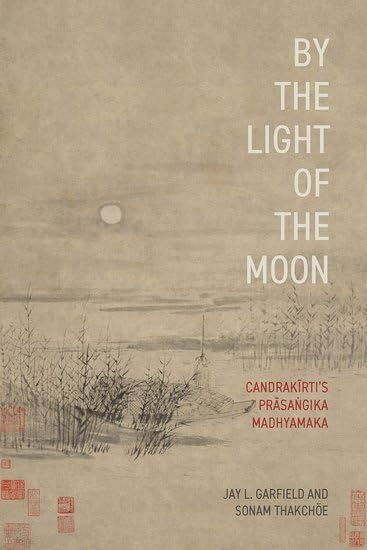
Much of the commentary and scholarship on Candrakirti-whether canonical or contemporary-has been concerned with the question of whether Candrakirti is a radical nihilist who denies the possibility of any knowledge and the reality of both the external world and of the mind. Eminent Tibetan exegetes have argued that this is the correct understanding of Candrakirti and of Madhyamaka itself, and that Madhyamaka so understood is the correct philosophical position. Others have argued that Candrakirti provides the resources for reconciling realism with the emptiness of all phenomena. This debate continues among contemporary scholars: many, while less sanguine regarding the cogency of the position they ascribe to Candrakirti, read him explicitly as an ontological and epistemological nihilist. Others take him to advocate a plausible, moderately realist position. The book argues that Candrakirti is not a nihilist. The authors show instead that Candrakirti develops a sophisticated understanding of knowledge in the context of massive delusion, of reality in the world of conventional truth, and of ethics in the domain of human life. This analysis reconciles the claim that all phenomena are empty-that they lack any intrinsic existence or identity-with a moderate realism about the conventional world.
By the Light of the Moon

By the Light of the Moon

Jay L. Garfield; Sonam Thakchöe

OXFORD UNIVERSITY PRESS INC
2025
nidottu
Much of the commentary and scholarship on Candrakirti-whether canonical or contemporary-has been concerned with the question of whether Candrakirti is a radical nihilist who denies the possibility of any knowledge and the reality of both the external world and of the mind. Eminent Tibetan exegetes have argued that this is the correct understanding of Candrakirti and of Madhyamaka itself, and that Madhyamaka so understood is the correct philosophical position. Others have argued that Candrakirti provides the resources for reconciling realism with the emptiness of all phenomena. This debate continues among contemporary scholars: many, while less sanguine regarding the cogency of the position they ascribe to Candrakirti, read him explicitly as an ontological and epistemological nihilist. Others take him to advocate a plausible, moderately realist position. The book argues that Candrakirti is not a nihilist. The authors show instead that Candrakirti develops a sophisticated understanding of knowledge in the context of massive delusion, of reality in the world of conventional truth, and of ethics in the domain of human life. This analysis reconciles the claim that all phenomena are empty-that they lack any intrinsic existence or identity-with a moderate realism about the conventional world.
Norms and Nature

Norms and Nature

Jay L. Garfield

OXFORD UNIVERSITY PRESS INC
2026
sidottu
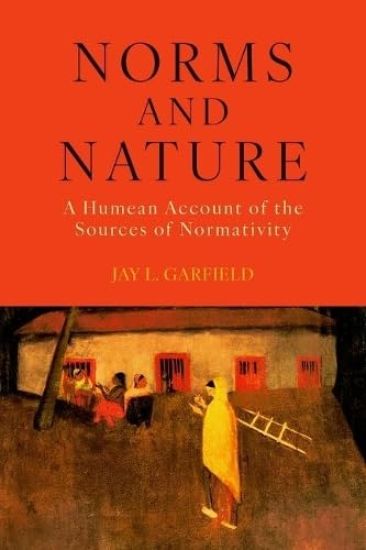
In The Treatise of Human Nature, Hume argued that we are normative animals, and he treats human nature in the context of, and on a par with, non-human nature. In Norms and Nature, Jay L. Garfield argues that Hume was right, and to demonstrate and explain this fact, he shows how the animals that we are construct norms, learn to conform to norms, and how we are transformed by the normative structures we come to inhabit. Garfield draws on the work of the American psychologist Edward Chace Tolman, who argued that the intentional could be naturalized without reducing it to the non-intentional and in the thought of those philosophers who shared that vision, including those in the Prasangika Madhyamaka tradition, as well as Nietzsche, Schopenhauer, Dewey, Wittgenstein, and Sellars. Norms and Nature examines what it is to be human in the full sense of the term: to be an organism that only comes to self-consciousness in virtue of being thrown into a world already pregnant with meaning; meaning that can only be constituted collectively. To be human is to be one whose very being is constituted both by the web of customs into which we are born. In this investigation, Garfield shows how much of our existence as persons depends upon a set of interlocking virtuous spirals that enable the development of the communities that make normativity possible, and on the development of the sets of norms that enable those communities to sustain themselves. Garfield argues that it is this very aspect of our nature which provides hope that we can improve ourselves. Norms and Nature offers a rich sense of our place as a species in the natural world, and of our places as individuals in the context of the social order that we create, and that in turn create us.
Philosophy without Ambiguity

Philosophy without Ambiguity

Jay David Atlas

Clarendon Press
1989
sidottu
In this book, a set of problems which overlap philosophy, linguistics, cognitive psychology, and artificial intelligence are examined from the point of view of Chomsky's linguistics. The author uses linguistic analysis to shed new light on the philosophical and logical problems of meaning, ambiguity, truth, falsity, negation and existence. He shows that visual and verbal symbols have ways of meaning in common.
The CRF Signal

The CRF Signal

Jay Schulkin

Oxford University Press
2017
sidottu
Information molecules, such as Cortico-Releasing Factor (CRF), are ancient and widely distributed across diverse organs, playing various regulatory roles. CRF has been associated with a range of human conditions, including fear and anxiety, social contact, and most recently, addiction – in particular the euphoric feelings associated with alcohol consumption. Since its original discovery, research has unearthed that the role of this molecule is much broader than first thought. The scientific community now knows that CRF is a dynamic and diversely widespread peptide hormone that plays many roles and has many functions, in addition to its role as a releasing factor in the brain. This book explores the role of CRF, examining the relationship between location and function. It considers recurrent features that are linked to CRF - movement and change. CRF expression in regions of the brain is tied to paying attention to novel events and invoking movement in response to those events. Indeed, CRF provokes simple organized rhythmic behavior and can be mobilized under diverse conditions, including adversity. Examining the evolutionary origins of CRH, its neural functions, and its role in a variety of human characteristics and social behaviors, this book provides unique insights into CRF, and will be of interest to students and researchers in Neuroscience, Psychology, and Biology.
Hemoglobin

Hemoglobin

Jay F. Storz

Oxford University Press
2018
sidottu
The primary aim of this book is to provide a synthesis of our current understanding of hemoglobin function and evolution, and to illustrate how research on one particular family of proteins has provided general insights into mechanisms of protein evolution and biochemical adaptation. In doing so, it will also promote an appreciation of how mechanistic insights into protein function can enrich our understanding of how evolution works. Reciprocally, it highlights how approaches in evolutionary genetics (such as phylogenetic comparative methods and ancestral sequence reconstruction) can be brought to bear on questions about the functional evolution of proteins. This treatise on the functional evolution of hemoglobin illustrates how research on a single, well-chosen model system can enhance our investigative acuity and bring key conceptual questions into especially sharp focus.
Hemoglobin

Hemoglobin

Jay F. Storz

Oxford University Press
2018
nidottu
The primary aim of this book is to provide a synthesis of our current understanding of hemoglobin function and evolution, and to illustrate how research on one particular family of proteins has provided general insights into mechanisms of protein evolution and biochemical adaptation. In doing so, it will also promote an appreciation of how mechanistic insights into protein function can enrich our understanding of how evolution works. Reciprocally, it highlights how approaches in evolutionary genetics (such as phylogenetic comparative methods and ancestral sequence reconstruction) can be brought to bear on questions about the functional evolution of proteins. This treatise on the functional evolution of hemoglobin illustrates how research on a single, well-chosen model system can enhance our investigative acuity and bring key conceptual questions into especially sharp focus.
The French Revolutionary Tradition in Russian and Soviet Politics, Political Thought, and Culture
Because they were Marxists, the Bolsheviks in Russia, both before and after taking power in 1917, believed that the past was prologue: that embedded in history was a Holy Grail, a series of mysterious, but nonetheless accessible and comprehensible, universal laws that explained the course of history from beginning to end. Those who understood these laws would be able to mould the future to conform to their own expectations. But what should the Bolsheviks do if their Marxist ideology proved to be either erroneous or insufficient-if it could not explain, or explain fully, the course of events that followed the revolution they carried out in the country they called the Soviet Union? Something else would have to perform this function. The underlying argument of this volume is that the Bolsheviks saw the revolutions in France in 1789, 1830, 1848, and 1871 as supplying practically everything Marxism lacked. In fact, these four events comprised what for the Bolsheviks was a genuine Revolutionary Tradition. The English Revolution and the Puritan Commonwealth of the seventeenth century were not without utility-the Bolsheviks cited them and occasionally utilized them as propaganda-but these paled in comparison to what the revolutions in France offered a century later, namely legitimacy, inspiration, guidance in constructing socialism and communism, and, not least, useful fodder for political and personal polemics.
William Faulkner and the Faces of Modernity

William Faulkner and the Faces of Modernity

Jay Watson

Oxford University Press
2019
sidottu
Winner of the 2020 C. Hugh Holman Award William Faulkner has enjoyed a secure reputation as American modernism's foremost fiction writer, and as a landmark figure in international literary modernism, for well over half a century. Less secure, however, has been any scholarly consensus about what those modernist credentials actually entail. Over recent decades, there have been lively debates in modernist studies over the who, what, where, when, and how of the surprisingly elusive phenomena of modernism and modernity. This book broadens and deepens an understanding of Faulkner's oeuvre by following some of the guiding questions and insights of new modernism studies scholarship into understudied aspects of Faulkner's literary modernism and his cultural modernity. William Faulkner and the Faces of Modernity explores Faulkner's rural Mississippians as modernizing subjects in their own right rather than mere objects of modernization; traces the new speed gradients, media formations, and intensifications of sensory and affective experience that the twentieth century brought to the cities and countryside of the US South; maps the fault lines in whiteness as a racial modernity under construction and contestation during the Jim Crow period; resituates Faulkner's fictional Yoknapatawpha County within the transnational counter-modernities of the Black Atlantic; and follows the author's imaginative engagement with modern biopolitics through his late work A Fable, a novel Faulkner hoped to make his 'magnum o.' By returning to the utterly uncontroversial fact of Faulkner's modernism with a critical sensibility sharpened by new modernism studies, William Faulkner and the Faces of Modernity aims to spark further reappraisal of a distinguished and quite dazzling body of fiction. Perhaps even make it new.
Wilfrid Sellars: Fusing the Images

Wilfrid Sellars: Fusing the Images

Jay F. Rosenberg

Oxford University Press
2007
sidottu
Wilfrid Sellars was and remains one of the most prominent and important twentieth-century philosophers: his writings played a key role in shaping the philosophical agenda in the English-speaking world during the second half of the 20th century, and they remain an active focus of intense critical attention and lively discussion. Jay Rosenberg studied under Sellars in the early 1960s, was continuously engaged with his work for over forty years, and was widely regarded both as its foremost expositor and as one of Sellars' truest disciples. This was the last book that Rosenberg completed before his death at the age of only sixty-five. In it he gathers previously published studies of the central elements and implications of Sellars' philosophy, along with three new essays that further highlight and articulate the significance of his work, both historically and with respect to contemporary debates.
Hittite and the Indo-European Verb

Hittite and the Indo-European Verb

Jay H. Jasanoff

Oxford University Press
2003
sidottu
This book reconciles what is known of the Proto-Indo-European verbal system with the evidence of Hittite and the other early Anatolian languages. The decipherment of Hittite in 1917 and the recognition that it was an Indo-European language had dramatic consequences for conceptions of the Indo-European parent language. For most of the twentieth century, the 'disconnects' between Hittite and the other early languages such as Sanskrit and Greek have been the subject of research, scholars finally realizing that the question was not whether the conventional picture of the parent language should be modified to account for the facts of Hittite, but how. After investigating the subject for twenty-five years, Professor Jasanoff proposes a resolution of the problem that is the most thorough and systematic yet published. In this outstanding book he puts forward a new and revolutionary model of the Proto-Indo-European verbal system which will have a profound impact on the study of the Indo-European family of languages. It also represents a significant advance in the understanding of the history of Indo-European.
Thinking about Knowing

Thinking about Knowing

Jay Rosenberg

Clarendon Press
2002
sidottu
Jay Rosenberg offers a systematic philosophical theory of knowledge which is specifically responsive to the fact that we always engage the world from a particular perspective within it. It consequently calls into question in a fundamental way many received understandings regarding the relationships among the concepts of knowledge, belief, justification, and truth. Thinking about Knowing's leading thesis is that we correctly ascribe knowledge to those whom, from our de facto epistemic perspective, we judge able adequately to justify the corresponding belief. Since from any one epistemic perspective the judgments that a person has done everything he needs to do to be entitled to a confident belief, and that he has done everything he needs to do to establish the truth of that belief, stand or fall together, a further 'truth requirement' is vacuous and idle. On this 'perspectivalist' account, unqualified knowledge attributions are always made only from our own epistemic perspective, with reference to a determinate context of inquiry. The theory is consequently both resolutely anti-skeptical and comprehensively fallibilistic. The corresponding 'proceduralist' conception of justification, applying in the first instance to conducts of persons, carries the further 'internalist' consequence that a person's belief is justified only to the extent that he is in a position to justify it.
Accessing Kant

Accessing Kant

Jay F. Rosenberg

Oxford University Press
2005
sidottu
Jay Rosenberg introduces Immanuel Kant's masterwork, the Critique of Pure Reason, from a 'relaxed' problem-oriented perspective which treats Kant as an especially insightful practising philosopher, from whom we still have much to learn, intelligently and creatively responding to significant questions that transcend his work's historical setting. Rosenberg's main project is to command a clear view of how Kant understands various perennial problems, how he attempts to resolve them, and to what extent he succeeds. The constructive portions of the First Critique - the Aesthetic and Analytic - are explored in detail; the Paralogisms and Antinomies more briefly. At the same time the book is an introduction to the challenges of reading the text of Kant's work and, to that end, selectively adopts a more rigorous historical and exegetical stance. Accessing Kant will be an invaluable resource for advanced students and for any scholar seeking Rosenberg's own distinctive insights into Kant's work.
Accessing Kant

Accessing Kant

Jay F. Rosenberg

Oxford University Press
2005
nidottu
Jay Rosenberg introduces Immanuel Kant's masterwork, the Critique of Pure Reason, from a 'relaxed' problem-oriented perspective which treats Kant as an especially insightful practising philosopher, from whom we still have much to learn, intelligently and creatively responding to significant questions that transcend his work's historical setting. Rosenberg's main project is to command a clear view of how Kant understands various perennial problems, how he attempts to resolve them, and to what extent he succeeds. The constructive portions of the First Critique - the Aesthetic and Analytic - are explored in detail; the Paralogisms and Antinomies more briefly. At the same time the book is an introduction to the challenges of reading the text of Kant's work and, to that end, selectively adopts a more rigorous historical and exegetical stance. Accessing Kant will be an invaluable resource for advanced students and for any scholar seeking Rosenberg's own distinctive insights into Kant's work.
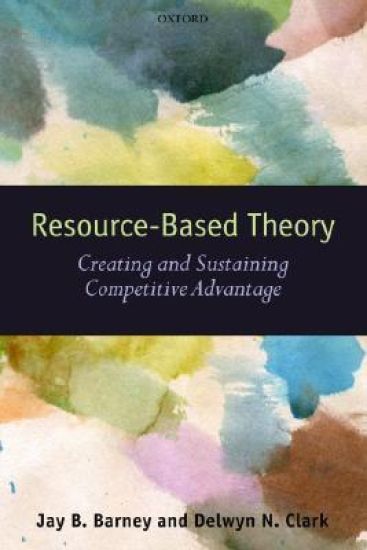
Resource-Based Theory

Resource-Based Theory

Jay B. Barney; Delwyn N. Clark

Oxford University Press
2007
sidottu
The 'Resource-Based View of the Firm' has emerged over the last fifteen years as one of the dominant perspectives used in strategic management. It addresses the fundamental research question of strategic management: Why it is that some firms persistently outperform others? Resource-Based Theory provides a considered overview of this theory, including the latest developments, from one of the key thinkers in its development. In broad terms it offers an alternative to Michael Porter's approach, focusing more on the competences and capabilities of the firm, rather than its positioning in its chosen markets. Jay B. Barney has long been recognised as one of the leading contributor to the resource-based theory literature. In this book he has collaborated with Delwyn N. Clark to produce the first book to examine the theory in a holistic and in-depth manner. The authors explore not only the applications of the theory in research, teaching, and practice, but also its early roots in traditional economic theory, development and proliferation in the 1990s, and later influence on management thinking.
Resource-Based Theory

Resource-Based Theory

Jay B. Barney; Delwyn N. Clark

Oxford University Press
2007
nidottu
The 'Resource-Based View of the Firm' has emerged over the last fifteen years as one of the dominant perspectives used in strategic management. It addresses the fundamental research question of strategic management: Why it is that some firms persistently outperform others? Resource-Based Theory provides a considered overview of this theory, including the latest developments, from one of the key thinkers in its development. In broad terms it offers an alternative to Michael Porter's approach, focusing more on the competences and capabilities of the firm, rather than its positioning in its chosen markets. Jay B. Barney has long been recognised as one of the leading contributor to the resource-based theory literature. In this book he has collaborated with Delwyn N. Clark to produce the first book to examine the theory in a holistic and in-depth manner. The authors explore not only the applications of the theory in research, teaching, and practice, but also its early roots in traditional economic theory, development and proliferation in the 1990s, and later influence on management thinking.