Kirjojen hintavertailu. Mukana 11 699 587 kirjaa ja 12 kauppaa.

Kirjahaku

Etsi kirjoja tekijän nimen, kirjan nimen tai ISBN:n perusteella.

1000 tulosta hakusanalla Jeffrey B Perry

Linear Optimal Control

Linear Optimal Control

Jeffrey Burl

Pearson
1999
nidottu
Linear Optimal Control: H2 and H??? Methods is a reader-friendly book that features recent research results on robustness, H??? control, and ???m- synthesis. Linear Optimal Control combines these new results with previous work on optimal control to form a complete picture of control system design and analysis. A comprehensive book, Linear Optimal Control covers the analysis of control systems, H2 (linear quadratic Gaussian), and H??? to a degree not found in many texts. Its logical organization and its focus on establishing a solid grounding in the basics be fore tackling mathematical subtleties make Linear Optimal Control an ideal teaching text.
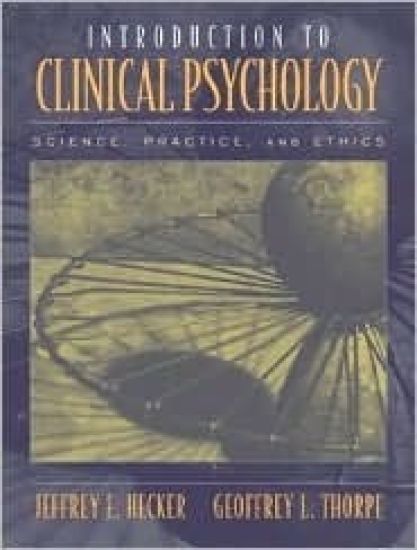
Introduction to Clinical Psychology

Introduction to Clinical Psychology

Jeffrey Hecker; Thorpe Geoffrey

Psychology Press
2004
nidottu
This introductory textbook gives students an appreciation of the field of clinical psychology as an applied science by teaching them the history and future of the field as well as ethical dilemmas facing psychologists today. It is organized around four key themes: • Science: the text analyzes and critiques research and practice in clinical psychology from a scientific perspective. • Controversies: the text examines the conflict and controversies that continue to shape the discipline of Psychology. • Currency: the text surveys the field of contemporary clinical psychology. • Ethics: the text discusses ethical dilemmas faced by clinical psychologists in every chapter.
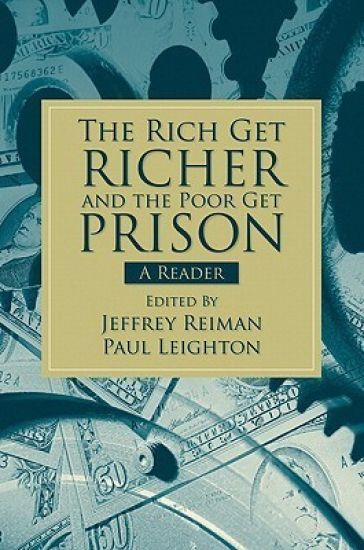
The Rich Get Richer and the Poor Get Prison

The Rich Get Richer and the Poor Get Prison

Jeffrey Reiman; Leighton Paul

Routledge Member of the Taylor and Francis Group
2009
nidottu
This book shows students that much that goes on in the criminal justice system violates their own sense of basic fairness, presents evidence that the system malfunctions, and sketches a whole theoretical perspective from which they might understand the failures and evaluate them morally.
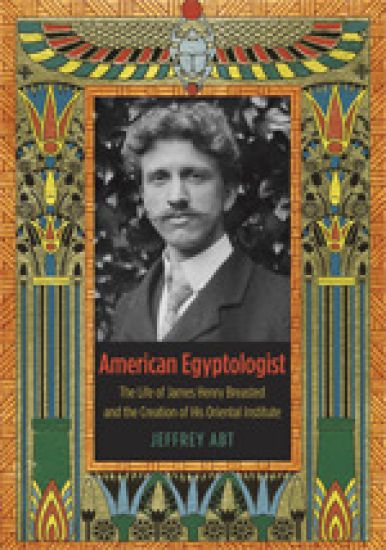
American Egyptologist

American Egyptologist

Jeffrey Abt

University of Chicago Press
2012
sidottu
James Henry Breasted (1865-1935) had a career that epitomizes our popular image of the archaeologist. Daring, handsome, and charismatic, he travelled on expeditions to remote and politically unstable corners of the Middle East, helped identify the tomb of King Tut, and was on the cover of "Time" magazine. But Breasted was more than an Indiana Jones - he was an accomplished scholar, academic entrepreneur, and talented author who brought ancient history to life not just for students but for such notables as Teddy Roosevelt and Sigmund Freud. In "American Egyptologist", Jeffrey Abt weaves together the disparate strands of Breasted's life, from his small-town origins following the Civil War to his evolution into the father of American Egyptology and the founder of the Oriental Institute in the early years of the University of Chicago. Abt explores the scholarly, philanthropic, diplomatic, and religious contexts of his ideas and projects, providing insight into the origins of America's most prominent center for Near Eastern archaeology. An illuminating portrait of the nearly forgotten man who demystified ancient Egypt for the general public, "American Egyptologist" restores James Henry Breasted to the world and puts forward a brilliant case for his place as one of the most important scholars of modern times.
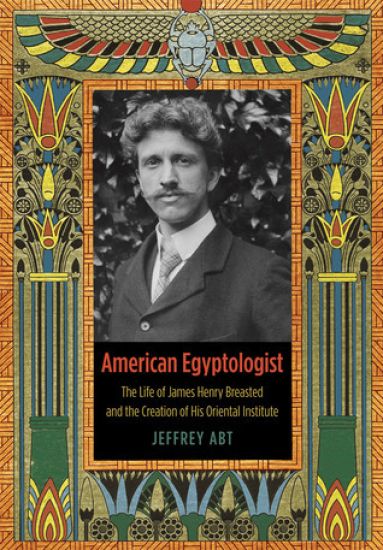
American Egyptologist

American Egyptologist

Jeffrey Abt

University of Chicago Press
2013
nidottu
James Henry Breasted (1865-1935) had a career that epitomizes our popular image of the archaeologist. Daring, handsome, and charismatic, he travelled on expeditions to remote and politically unstable corners of the Middle East, helped identify the tomb of King Tut, and was on the cover of "Time" magazine. But Breasted was more than an Indiana Jones - he was also an accomplished scholar, academic, entrepreneur, and talented author who brought ancient history to life not just for students but for such notables as Teddy Roosevelt and Sigmund Freud. In "American Egyptologist", Jeffrey Abt weaves together the disparate strands of Breasted's life, from his small-town origins following the Civil War to his evolution into the father of American Egyptology and the founder of the Oriental Institute in the early years of the University of Chicago. Abt explores the scholarly, philanthropic, diplomatic, and religious contexts of his ideas and projects, providing insight into the origins of America's most prominent center for Near Eastern archaeology. An illuminating portrait of the nearly forgotten man who demystified ancient Egypt for the general public, "American Egyptologist" restores James Henry Breasted to the world and puts forward a brilliant case for his place as one of the most important scholars of modern times.
Democracy against Development

Democracy against Development

Jeffrey Witsoe

University of Chicago Press
2013
sidottu
Hidden behind the much-touted success story of India's emergence as an economic superpower is another, far more complex narrative of the nation's recent history, one in which economic development is frequently countered by profoundly unsettling, and often violent, political movements. In Democracy against Development, Jeffrey Witsoe investigates this counternarrative, uncovering an antagonistic relationship between recent democratic mobilization and development-oriented governance in India. Witsoe looks at the history of colonialism in India and its role in both shaping modern caste identities and linking locally powerful caste groups to state institutions, which has effectively created a postcolonial patronage state. He then looks at the rise of lower-caste politics in one of India's poorest and most populous states, Bihar, showing how this increase in democratic participation has radically threatened the patronage state by systematically weakening its institutions and disrupting its development projects. By depicting democracy and development as they truly are in India - in tension - Witsoe reveals crucial new empirical and theoretical insights about the long-term trajectory of democratization in the larger postcolonial world.
Democracy against Development

Democracy against Development

Jeffrey Witsoe

University of Chicago Press
2013
nidottu
Hidden behind the much-touted success story of India's emergence as an economic superpower is another, far more complex narrative of the nation's recent history, one in which economic development is frequently countered by profoundly unsettling, and often violent, political movements. In Democracy against Development, Jeffrey Witsoe investigates this counternarrative, uncovering an antagonistic relationship between recent democratic mobilization and development-oriented governance in India. Witsoe looks at the history of colonialism in India and its role in both shaping modern caste identities and linking locally powerful caste groups to state institutions, which has effectively created a postcolonial patronage state. He then looks at the rise of lower-caste politics in one of India's poorest and most populous states, Bihar, showing how this increase in democratic participation has radically threatened the patronage state by systematically weakening its institutions and disrupting its development projects. By depicting democracy and development as they truly are in India - in tension - Witsoe reveals crucial new empirical and theoretical insights about the long-term trajectory of democratization in the larger postcolonial world.
Sexual Discretion

Sexual Discretion

Jeffrey Q. McCune

University of Chicago Press
2014
sidottu
African American men who have sex with men while maintaining a heterosexual lifestyle in public are attracting increasing interest from both the general media and scholars. Commonly referred to as "down low" or "DL" men, many continue to have relationships with girlfriends and wives who remain unaware of their same-sex desires, and in much of the media, DL men have been portrayed as carriers of HIV who spread the virus to black women. Sexual Discretion explores the DL phenomenon, offering refreshingly innovative analysis of the significance of media, space, and ideals of black masculinity in understanding down low communities. In Sexual Discretion, Jeffrey Q. McCune Jr. provides the first in-depth examination of how the social expectations of black masculinity intersect and complicate expressions of same-sex affection and desire. Within these underground DL communities, men aren't as highly policed-and thus are able to maintain their public roles as "properly masculine." McCune draws from sources that range from R&B singer R. Kelly's epic hip-hopera series "Trapped in the Closet" to Oprah's high-profile expose on DL subculture; from E. Lynn Harris' contemporary sexual passing novels to McCune's own interviews and ethnography in nightclubs and online chat rooms. Sexual Discretion details the causes, pressures, and negotiations driving men who rarely disclose their intimate secrets.
In the House of the Hangman

In the House of the Hangman

Jeffrey K. Olick

University of Chicago Press
2013
nidottu
The central question for both the victors and the vanquished of World War II was just how widely the stain of guilt would spread over Germany. Political leaders and intellectuals on both sides of the conflict debated whether support for National Socialism tainted Germany's entire population and thus discredited the nation's history and culture. The tremendous challenge that Allied officials and German thinkers faced as the war ended, then, was how to limn a postwar German identity that accounted for National Socialism without irrevocably damning the idea and character of Germany as a whole. In the House of the Hangman chronicles this delicate process, exploring key debates about the Nazi past and German future during the later years of World War II and its aftermath. Jeffrey K. Olick explores the processes of accommodation and rejection that Allied plans for a new German state inspired among the German intelligentsia. He also examines heated struggles over the value of Germany's institutional and political heritage. Along the way, he demonstrates how the moral and political vocabulary for coming to terms with National Socialism in Germany has been of enduring significance - as a crucible not only of German identity but also of contemporary thinking about memory and social justice more generally.
Secret Body – Erotic and Esoteric Currents in the History of Religions
Over the course of his twenty-five-year career, Jeffrey J. Kripal's study of religion has had two major areas of focus: the erotic expression of mystical experience and the rise of the paranormal in American culture. This book brings these two halves together in surprising ways through a blend of memoir, manifesto, and anthology, drawing new connections between these two realms of human experience and revealing Kripal's body of work to be a dynamic whole that has the potential to renew and reshape the study of religion. Kripal tells his story, biographically, historically and politically contextualizing each of the six books of his Chicago corpus, from Kali's Child to Mutants and Mystics, all the while answering his censors and critics and exploring new implications of his thought. In the process, he begins to sketch out a speculative "new comparativism" in twenty theses. The result is a new vision for the study of religion, one that takes in the best of the past, engages with outside critiques from the sciences and the humanities, and begins to blaze a new positive path forward. A major work decades in the making, Secret Body will become a landmark in the study of religion.
Crucibles of Black Empowerment

Crucibles of Black Empowerment

Jeffrey Helgeson

University of Chicago Press
2014
sidottu
The term "community organizer" was deployed repeatedly against Barack Obama during the 2008 presidential campaign as a way to paint him as an inexperienced politician unfit for the presidency. The implication was that the job of a community organizer wasn't a serious one, and that it certainly wasn't on the list of credentials needed for a presidential resume. In reality, community organizers have played key roles in the political lives of American cities for decades, perhaps never more so than during the 1970s in Chicago, where African Americans laid the groundwork for further empowerment as they organized against segregation, discrimination, and lack of equal access to schools, housing, and jobs. In Crucibles of Black Empowerment, Jeffrey Helgeson recounts the rise of African American political power and activism from the 1930s onward, revealing how it was achieved through community building. His book tells stories of the housewives who organized their neighbors, building tradesmen who used connections with federal officials to create opportunities in a deeply discriminatory sector, and the social workers, personnel managers, and journalists who carved out positions in the white-collar workforce. Looking closely at black liberal politics at the neighborhood level in Chicago, Helgeson explains how black Chicagoans built the networks that eventually would overthrow the city's seemingly invincible political machine.
Mutants and Mystics

Mutants and Mystics

Jeffrey J. Kripal

University of Chicago Press
2015
nidottu
In many ways, twentieth-century America was the land of superheroes and science fiction. From Superman and Batman to the Fantastic Four and the X-Men, these pop-culture juggernauts, with their "powers and abilities far beyond those of mortal men," thrilled readers and audiences - and simultaneously embodied a host of our dreams and fears about modern life and the onrushing future. But that's just scratching the surface, says Jeffrey J. Kripal. In Mutants and Mystics, Kripal offers a brilliantly insightful account of how comic book heroes have helped their creators and fans alike explore and express a wealth of paranormal experiences ignored by mainstream science. Delving deeply into the work of major figures in the field - from Jack Kirby's cosmic superhero sagas and Philip K. Dick's futuristic head - trips to Alan Moore's sex magic and Whitley Strieber's communion with visitors - Kripal shows how creators turned to science fiction to convey the reality of the inexplicable and the paranormal they experienced in their lives. Expanded consciousness found its language in the metaphors of sci-fi-incredible powers, unprecedented mutations, time-loops, and vast intergalactic intelligences - and the deeper influences of mythology and religion that these in turn drew from; the wildly creative work that followed caught the imaginations of millions. A bravura performance, beautifully illustrated in full color throughout and brimming over with incredible personal stories, Mutants and Mystics is that rarest of things: a book that is guaranteed to broaden-and maybe even blow-your mind.
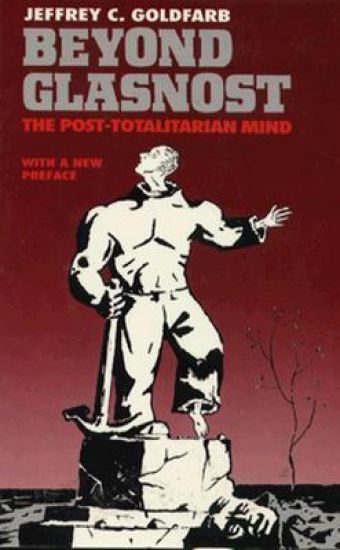
Beyond Glasnost

Beyond Glasnost

Jeffrey C. Goldfarb

University of Chicago Press
1992
nidottu
"Beyond Glasnost is a thoughtful exploration of the past decade's cultural and political ferment in Eastern Europe. It is also something else: an argument—in a deceptively unassuming, anti-ideological voice—about how to conceive of and move toward freedom; an argument that could hardly be more relevant to the roiling debates on the Western left."—Ellen Willis, Village Voice
On Cultural Freedom

On Cultural Freedom

Jeffrey C. Goldfarb

University of Chicago Press
1983
nidottu
In this timely study, Jeffrey C. Goldfarb explores the nature and prospects of cultural freedom by examining the conditions that favor or threaten its development in the political East and West. Goldfarb—who examines conditions in the Soviet Union, the United States, and their respective European allies—focuses most closely upon Poland and the United States. He investigates a wide range of concrete cases, including the Polish opposition movement and Solidarity, the migration of artists, the American television and magazine industries, American philanthropy, and communist cultural conveyor belts. From these cases, Goldfarb derives a definitive set of sociological conditions for cultural freedom: critical creativity which resists systematic constraints, continuity of cultural tradition, and a relatively autonomous public realm for the reception of culture. Cultural freedom, Goldfarb shows, is not a static state but a process of achievement. Its parameters and content are determined by social practice in cultural institutions and by their relations with other components and the totality of social structure. So defined, cultural freedom is transformed from an ideological concept into one with real critical and analytical power. Through it we can appreciate the invisible nature of constraint in the West and the unapparent but acting supports of cultural freedom existing in socialist countries. Most importantly, Goldfarb's conclusions provide a framework for understanding more clearly than before the circumstance of cultural freedom in both East and West so that citizens may utilize their full creative abilities as they address the problems of the present day.
The Cynical Society

The Cynical Society

Jeffrey C. Goldfarb

University of Chicago Press
1991
sidottu
The Cynical Society is a study of the political despair and abdication of (individual) responsibility Goldfarb calls cynicism—a central but unexamined aspect of contemporary American political and social life. Goldfarb reveals with vivid strokes how cynicism undermines our capacity to think about society's strengths and weaknesses. Drawing on thinkers from Alexis de Tocqueville to Allan Bloom and on such recent works as Beloved, Bonfire of the Vanities, and Mississippi Burning, The Cynical Society celebrates cultural pluralism's role in democracy.
The Cynical Society

The Cynical Society

Jeffrey C. Goldfarb

University of Chicago Press
1992
nidottu
The Cynical Society is a study of the political despair and abdication of (individual) responsibility Goldfarb calls cynicism—a central but unexamined aspect of contemporary American political and social life. Goldfarb reveals with vivid strokes how cynicism undermines our capacity to think about society's strengths and weaknesses. Drawing on thinkers from Alexis de Tocqueville to Allan Bloom and on such recent works as Beloved, Bonfire of the Vanities, and Mississippi Burning, The Cynical Society celebrates cultural pluralism's role in democracy.
The Politics of Small Things

The Politics of Small Things

Jeffrey C. Goldfarb

University of Chicago Press
2006
sidottu
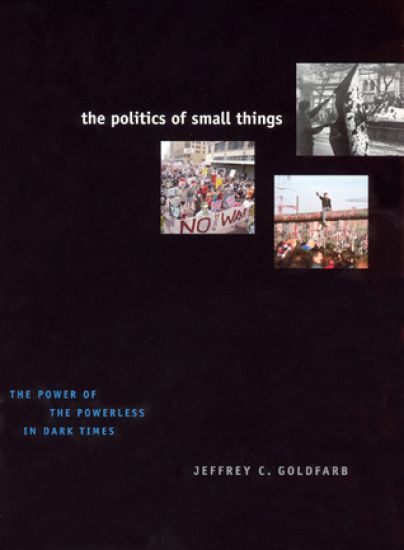
Political change doesn't always begin with a bang; it often starts with just a whisper. From the discussions around kitchen tables that led to the dismantling of the Soviet bloc to the more recent emergence of Internet initiatives like MoveOn.org and Redeem the Vote that are revolutionizing the American political landscape, consequential political life develops in small spaces where dialogue generates political power. In "The Politics of Small Things", Jeffrey C. Goldfarb provides an innovative way for understanding politics, a way of appreciating the significance of politics at the micro level by comparatively analyzing key turning points and institutions in recent history. He presents a sociology of human interactions that lead from small to large: dissent around the old Soviet bloc; life on the streets in Warsaw, Prague, and Bucharest in 1989; the network of terror that spawned 9/11; and the religious and Internet mobilizations that transformed the 2004 presidential election, to name a few. In such pivotal moments, he masterfully shows, political autonomy can be generated, presenting alternatives to the big politics of the global stage and the dominant narratives of terrorism, antiterrorism, and globalization.
The Politics of Small Things

The Politics of Small Things

Jeffrey C. Goldfarb

University of Chicago Press
2007
nidottu
Political change doesn't always begin with a bang; it often starts with just a whisper. From the discussions around kitchen tables that led to the dismantling of the Soviet bloc to the more recent emergence of Internet initiatives such as MoveOn.org and Redeem the Vote that are revolutionizing the American political landscape, consequential political life develops in small spaces where dialogue generates political power. In "The Politics of Small Things", Jeffrey C. Goldfarb studies political activism at the micro level by comparatively analyzing key turning points in recent history. He presents a sociology of human interactions that lead from small to large: dissent around the old Soviet bloc; life on the streets in Warsaw, Prague, and Bucharest in 1989; and the religious and Internet mobilizations that transformed the 2004 presidential election, to name a few. Such pivotal but small moments, Goldfarb argues, can generate political autonomy and present alternatives to the big politics of the global stage and the dominant narratives of terrorism, antiterrorism, and globalization.
The Sins of the Fathers

The Sins of the Fathers

Jeffrey K. Olick

University of Chicago Press
2016
sidottu
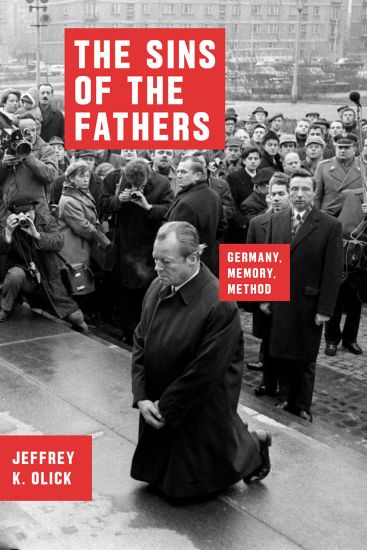
National identity and political legitimacy always involve a delicate balance between remembering and forgetting. All nations have elements in their past that they would prefer to pass over the catalog of failures, injustices, and horrors committed in the name of nations, if fully acknowledged, could create significant problems for a country trying to move on and take action in the present. Yet denial and forgetting carry costs as well. Nowhere has this precarious balance been more potent, or important, than in the Federal Republic of Germany, where the devastation and atrocities of two world wars have weighed heavily in virtually every moment and aspect of political life. The Sins of the Fathers confronts that difficulty head-on, exploring the variety of ways that Germany's leaders since 1949 have attempted to meet this challenge, with a particular focus on how those approaches have changed over time. Jeffrey K. Olick asserts that other nations are looking to Germany as an example of how a society can confront a dark past casting Germany as our model of difficult collective memory.
Arts of Wonder

Arts of Wonder

Jeffrey L. Kosky

University of Chicago Press
2016
nidottu
"The fate of our times is characterized by rationalization and intellectualization and, above all, by 'the disenchantment of the world.'" Max Weber's statement remains a dominant interpretation of the modern condition: the increasing capabilities of knowledge and science have banished mysteries, leaving a world that can be mastered technically and intellectually. And though this idea seems empowering, many people have become disenchanted with modern disenchantment. Using intimate encounters with works of art to explore disenchantment and the possibilities of re-enchantment, Arts of Wonder addresses questions about the nature of humanity, the world, and God in the wake of Weber's diagnosis of modernity. Jeffrey L. Kosky focuses on a handful of artists Walter De Maria, Diller + Scofidio, James Turrell, and Andy Goldsworthy to show how they introduce spaces hospitable to mystery and wonder, redemption and revelation, and transcendence and creation. What might be thought of as religious longings, he argues, are crucial aspects of enchanting secularity when developed through encounters with these works of art. Developing a model of religion that might be significant to secular culture, Kosky shows how this model can be employed to deepen interpretation of the art we usually view as representing secular modernity. A thoughtful dialogue between philosophy and art, Arts of Wonder will catch the eye of readers of art and religion, philosophy of religion, and art criticism.