Kirjojen hintavertailu. Mukana 11 342 296 kirjaa ja 12 kauppaa.

Kirjahaku

Etsi kirjoja tekijän nimen, kirjan nimen tai ISBN:n perusteella.

1000 tulosta hakusanalla Jennifer Cook

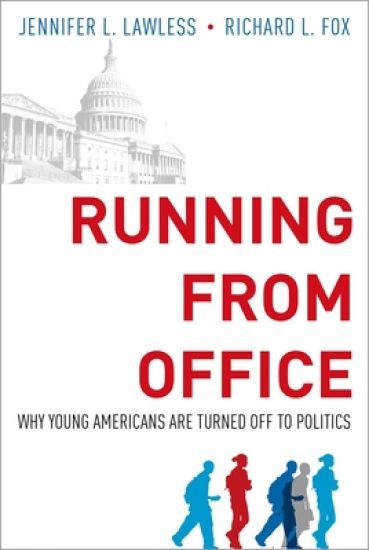
Running from Office

Running from Office

Jennifer L. Lawless; Richard L. Fox

Oxford University Press Inc
2017
nidottu
The past two decades of politics in Washington have seen increased partisanship, prolonged stalemates, and numerous scandals. For today's teenagers and young adults, years of ineffective and inefficient political leadership have completely eroded any sense that politicians or government have the ability to do good or effect positive change. Worse, the mean-spirited, dysfunctional political system that has come to characterize American politics has turned young people off to the idea of running for office. With more than 500,000 elected positions in the United States, what will happen when this generation is expected to take the reins of political power? Through an original, national survey of more than 4,000 high school and college students, as well as more than 100 in-depth interviews, Jennifer L. Lawless and Richard L. Fox find that young Americans feel completely alienated from contemporary politics and express little ambition or aspiration to run for office in the future. The overwhelming majority see nothing particularly noble about those currently in office, viewing most as dishonest, self-interested, and disinterested in helping their constituents. These young people want to improve their communities and enact change in the world; but they don't think politics is the way to achieve these goals. In fact, they look disdainfully upon the prospects of growing up to be a mayor, governor, senator, or even president of the United States. Running from Office explores young people's opinions about contemporary politics and their political ambition (or lack of it). The book paints a political profile of the next generation that should sound alarm bells about the long-term, deeply embedded damage contemporary politics has wrought on U.S. democracy and its youngest citizens. As disheartening as their conclusions sound, Lawless and Fox end with practical suggestions for how new technologies, national service programs, and well-strategized public service campaigns could generate political ambition in young people. Today's high school and college students care deeply about improving the future, and it's not too late to ensure that they view running for office as an effective way to do so.
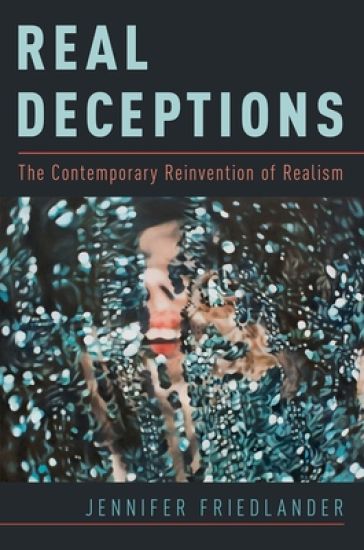
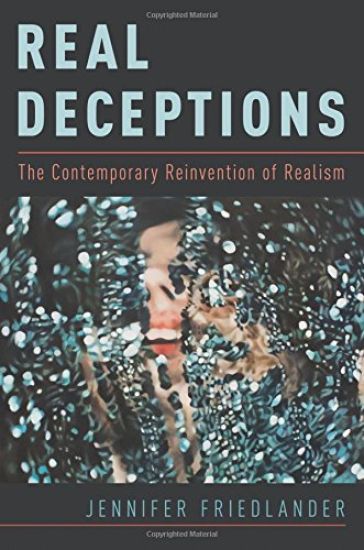
Real Deceptions

Real Deceptions

Jennifer Friedlander

Oxford University Press Inc
2017
sidottu
Real Deceptions develops a new theory of realism through close consideration of myriad contemporary art, media, and cultural practices. Rather than focusing on transgressing deceptions which distort reality, the book argues that reality lies within the deceptions themselves. That is to say, realism's political potential emerges not by revealing deception but precisely by staging deceptions--particularly deceptions that imperil the very categories of true and false. In lieu of perceiving deception as an obstacle to truth, it shows how deception functions as the truth's necessary conduit. Categories invoked in realist works, such as trompe l'oeil, illusion, hypervirtuality, and simulation help to establish how realism can be seen as moving from the creation of mere epistemological uncertainty to radical ontologically-based indeterminacy. The book cultivates this schema by considering productive connections between insights from Jacques Lacan and Jacques Rancière. Real Deceptions not only applies these theoretical frameworks to art and media examples, but also engages in the reverse move of using the "cases" to further the theories. This dual approach points to the ways in which efforts to produce realist representations often give rise to the destabilizing Real.
Real Deceptions

Real Deceptions

Jennifer Friedlander

Oxford University Press Inc
2017
nidottu
Real Deceptions develops a new theory of realism through close consideration of myriad contemporary art, media, and cultural practices. Rather than focusing on transgressing deceptions which distort reality, the book argues that reality lies within the deceptions themselves. That is to say, realism's political potential emerges not by revealing deception but precisely by staging deceptions--particularly deceptions that imperil the very categories of true and false. In lieu of perceiving deception as an obstacle to truth, it shows how deception functions as the truth's necessary conduit. Categories invoked in realist works, such as trompe l'oeil, illusion, hypervirtuality, and simulation help to establish how realism can be seen as moving from the creation of mere epistemological uncertainty to radical ontologically-based indeterminacy. The book cultivates this schema by considering productive connections between insights from Jacques Lacan and Jacques Rancière. Real Deceptions not only applies these theoretical frameworks to art and media examples, but also engages in the reverse move of using the "cases" to further the theories. This dual approach points to the ways in which efforts to produce realist representations often give rise to the destabilizing Real.
Presidential Campaigning in the Internet Age

Presidential Campaigning in the Internet Age

Jennifer Stromer-Galley

Oxford University Press Inc
2019
sidottu
As the plugged-in presidential campaign has arguably reached maturity, Presidential Campaigning in the Internet Age challenges popular claims about the democratizing effect of Digital Communication Technologies (DCTs). Analyzing campaign strategies, structures, and tactics from the past six presidential election cycles, Stromer-Galley reveals how, for all their vaunted inclusivity and tantalizing promise of increased two-way communication between candidates and the individuals who support them, DCTs have done little to change the fundamental dynamics of campaigns. The expansion of new technologies has presented candidates with greater opportunities to micro-target potential voters, cheaper and easier ways to raise money, and faster and more innovative ways to respond to opponents. The need for communication control and management, however, has made campaigns slow and loathe to experiment with truly interactive internet communication technologies. Citizen involvement in the campaign historically has been and, as this book shows, continues to be a means to an end: winning the election for the candidate. For all the proliferation of apps to download, polls to click, videos to watch, and messages to forward, the decidedly undemocratic view of controlled interactivity is how most campaigns continue to operate. In the fully revised second edition, Presidential Campaigning in the Internet Age examines election cycles from 1996, when the World Wide Web was first used for presidential campaigning, through 2016 when campaigns had the full power of advertising on social media sites. As the book charts changes in internet communication technologies, it shows how, even as campaigns have moved from a mass mediated to a networked paradigm, the possibilities these shifts in interactivity seem to promise for citizen input and empowerment remain farther than a click away.
Presidential Campaigning in the Internet Age

Presidential Campaigning in the Internet Age

Jennifer Stromer-Galley

Oxford University Press Inc
2019
nidottu
As the plugged-in presidential campaign has arguably reached maturity, Presidential Campaigning in the Internet Age challenges popular claims about the democratizing effect of Digital Communication Technologies (DCTs). Analyzing campaign strategies, structures, and tactics from the past six presidential election cycles, Stromer-Galley reveals how, for all their vaunted inclusivity and tantalizing promise of increased two-way communication between candidates and the individuals who support them, DCTs have done little to change the fundamental dynamics of campaigns. The expansion of new technologies has presented candidates with greater opportunities to micro-target potential voters, cheaper and easier ways to raise money, and faster and more innovative ways to respond to opponents. The need for communication control and management, however, has made campaigns slow and loathe to experiment with truly interactive internet communication technologies. Citizen involvement in the campaign historically has been and, as this book shows, continues to be a means to an end: winning the election for the candidate. For all the proliferation of apps to download, polls to click, videos to watch, and messages to forward, the decidedly undemocratic view of controlled interactivity is how most campaigns continue to operate. In the fully revised second edition, Presidential Campaigning in the Internet Age examines election cycles from 1996, when the World Wide Web was first used for presidential campaigning, through 2016 when campaigns had the full power of advertising on social media sites. As the book charts changes in internet communication technologies, it shows how, even as campaigns have moved from a mass mediated to a networked paradigm, the possibilities these shifts in interactivity seem to promise for citizen input and empowerment remain farther than a click away.
For Peace and Money

For Peace and Money

Jennifer Siegel

Oxford University Press Inc
2017
nidottu
From the late imperial period until 1922, the British and French made private and government loans to Russia, making it the foremost international debtor country in pre-World War I Europe. To finance the modernization of industry, the construction of public works projects, the building of railroads, and the development of the military-industrial complex, Russia's ministers of finance, municipal leaders, and nascent manufacturing class turned, time and time again, to foreign capital. From the forging of the Franco-Russian alliance onwards, Russia's needs were met, first and foremost, by France and Great Britain, its allies, and diplomatic partners in the developing Triple Entente. Russia's continued access to those ready lenders ensured that the empire of the Tsars would not be tempted away from its alliance and entente partners. This web of financial and political interdependence affected both foreign policy and domestic society in all three countries. The Russian state was so heavily indebted to its western creditors, rendering those western economies almost prisoners to this debt, that the debtor nation in many ways had the upper hand; the Russian government at times was actually able to dictate policy to its French and British counterparts. Those nations' investing classes-which, in France in particular, spanned not only the upper classes but the middle, rentier class, as well-had such a vast proportion of their savings wrapped up in Russian bonds that any default would have been catastrophic for their own economies. That default came not long after the Bolshevik Revolution brought to power a government who felt no responsibility, whatsoever, for the debts accrued by the tsars for the purpose of oppressing Russia's workers and peasants. The ensuing effect on allied morale, the Anglo-French relationship, and, ultimately, on international relations in the twentieth century, was grim and far-reaching. Jennifer Siegel narrates a classic tale of money and power in the modern era-an age of economic interconnectivity and great power interdependency-involving such figures as Lord Revelstoke, chairman of Baring Brothers, the British and French Rothschild cousins, and Sergei Witte, Russia's authoritative finance minister during much of this age of expansion. For Peace and Money highlights the importance of foreign capital in policymaking on the origins and conduct of World War I.
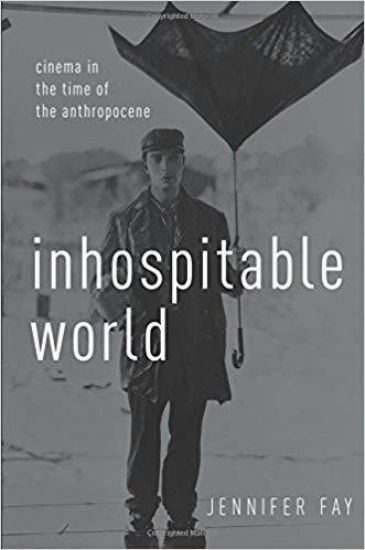
Inhospitable World

Inhospitable World

Jennifer Fay

Oxford University Press Inc
2018
sidottu
In recent years, environmental and human rights advocates have suggested that we have entered the first new geological epoch since the end of the ice age: the Anthropocene. In this new epoch, humans have come to reshape unwittingly both the climate and natural world; humankind has caused mass extinctions of plant and animal species, polluted the oceans, and irreversibly altered the atmosphere. Ironically, our efforts to make the planet more hospitable to ourselves seem to be driving us toward our inevitable extinction. A force of nature, humanity is now decentered as the agent of history. As Jennifer Fay argues, this new situation is to geological science what cinema has always been to human culture. Film, like the Anthropocene, is a product of the industrial revolution, but arises out of a desire to preserve life and master time and space. It also calls for the creation of artificial worlds, unnatural weather, and deadly environments for entertainment, scientific study, and devising military strategy. Filmmaking stages, quite literally, the process by which worlds and weather come into being and meaning, and it mimics the forces that are driving this new planetary inhospitality. Cinema, in other words, provides an image of "nature" in the age of its mechanical reproducability. Fay argues that cinema exemplifies the philosophical, political, and perhaps even logistical processes by which we can adapt to these forces and also imagine a world without humans in it. Whereas standard ecological criticism attends to the environmental crisis as an unraveling of our natural state, this book looks to film (from Buster Keaton, to Jia Zhangke, to films of atomic testing and early polar exploration) to consider how it reflects upon the creation and destruction of human environments. What are the implications of ecological inhospitality? What role might cinema and media theory play in challenging our presumed right to occupy and populate the world? As an art form, film enjoys a unique relationship to the material, elemental world it captures and produces. Through it, we may appreciate the ambitions to design an unhomely planet that may no longer accommodate us.
Inhospitable World

Inhospitable World

Jennifer Fay

Oxford University Press Inc
2018
nidottu
In recent years, environmental and human rights advocates have suggested that we have entered the first new geological epoch since the end of the ice age: the Anthropocene. In this new epoch, humans have come to reshape unwittingly both the climate and natural world; humankind has caused mass extinctions of plant and animal species, polluted the oceans, and irreversibly altered the atmosphere. Ironically, our efforts to make the planet more hospitable to ourselves seem to be driving us toward our inevitable extinction. A force of nature, humanity is now decentered as the agent of history. As Jennifer Fay argues, this new situation is to geological science what cinema has always been to human culture. Film, like the Anthropocene, is a product of the industrial revolution, but arises out of a desire to preserve life and master time and space. It also calls for the creation of artificial worlds, unnatural weather, and deadly environments for entertainment, scientific study, and devising military strategy. Filmmaking stages, quite literally, the process by which worlds and weather come into being and meaning, and it mimics the forces that are driving this new planetary inhospitality. Cinema, in other words, provides an image of "nature" in the age of its mechanical reproducability. Fay argues that cinema exemplifies the philosophical, political, and perhaps even logistical processes by which we can adapt to these forces and also imagine a world without humans in it. Whereas standard ecological criticism attends to the environmental crisis as an unraveling of our natural state, this book looks to film (from Buster Keaton, to Jia Zhangke, to films of atomic testing and early polar exploration) to consider how it reflects upon the creation and destruction of human environments. What are the implications of ecological inhospitality? What role might cinema and media theory play in challenging our presumed right to occupy and populate the world? As an art form, film enjoys a unique relationship to the material, elemental world it captures and produces. Through it, we may appreciate the ambitions to design an unhomely planet that may no longer accommodate us.
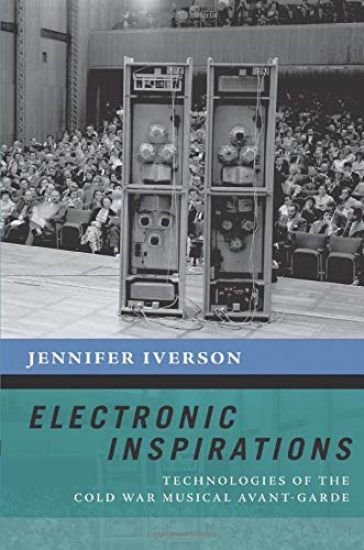
Electronic Inspirations

Electronic Inspirations

Jennifer Iverson

Oxford University Press Inc
2019
sidottu
For a decimated post-war West Germany, the electronic music studio at the WDR radio in Cologne was a beacon of hope. Jennifer Iverson's Electronic Inspirations: Technologies of the Cold War Musical Avant-Garde traces the reclamation and repurposing of wartime machines, spaces, and discourses into the new sounds of the mid-century studio. In the 1950s, when technologies were plentiful and the need for reconstruction was great, West Germany began to rebuild its cultural prestige via aesthetic and technical advances. The studio's composers, collaborating with scientists and technicians, coaxed music from sine-tone oscillators, noise generators, band-pass filters, and magnetic tape. Together, they applied core tenets from information theory and phonetics, reclaiming military communication technologies as well as fascist propaganda broadcasting spaces. The electronic studio nurtured a revolutionary synthesis of science, technology, politics, and aesthetics. Its esoteric sounds transformed mid-century music and continue to reverberate today. Electronic music-echoing both cultural anxiety and promise-is a quintessential Cold War innovation.
Electronic Inspirations

Electronic Inspirations

Jennifer Iverson

Oxford University Press Inc
2019
nidottu
For a decimated post-war West Germany, the electronic music studio at the WDR radio in Cologne was a beacon of hope. Jennifer Iverson's Electronic Inspirations: Technologies of the Cold War Musical Avant-Garde traces the reclamation and repurposing of wartime machines, spaces, and discourses into the new sounds of the mid-century studio. In the 1950s, when technologies were plentiful and the need for reconstruction was great, West Germany began to rebuild its cultural prestige via aesthetic and technical advances. The studio's composers, collaborating with scientists and technicians, coaxed music from sine-tone oscillators, noise generators, band-pass filters, and magnetic tape. Together, they applied core tenets from information theory and phonetics, reclaiming military communication technologies as well as fascist propaganda broadcasting spaces. The electronic studio nurtured a revolutionary synthesis of science, technology, politics, and aesthetics. Its esoteric sounds transformed mid-century music and continue to reverberate today. Electronic music-echoing both cultural anxiety and promise-is a quintessential Cold War innovation.
We're Still Here

We're Still Here

Jennifer M. Silva

Oxford University Press Inc
2019
sidottu
The economy has been brutal to American workers for several decades. The chance to give one's children a better life than one's own-the promise at the heart of the American Dream-is withering away. In turn, "deaths of despair" such as drug overdoses, suicides, and cirrhosis of the liver are rising among the working class. The 2016 elections threw into sharp relief how little we know about how working-class people translate their grievances into politics. In We're Still Here, Jennifer M. Silva tells a deep, multi-generational story of pain and politics that will endure long after Trump and the elections of 2016. Drawing on over 100 interviews with black, white, and Latino working-class residents of a declining coal town in Pennsylvania, Silva proposes that the key to understanding the puzzle of working-class politics is to understand how the decline of the American Dream is lived and felt. In the post-industrial age, the routines and rhythms of traditional working-class life such as manual labor, unions, marriage, church, and social clubs have diminished. Moreover, the institutions that have historically mediated between individual, personal struggles and broader, collective political coalitions have become active sites of betrayal. In this void, individual strategies for coping with pain, and finding personal redemption, have themselves become sources of political stimulus and reaction among the working class. In the coal region, understanding how generations of Democratic voters come to reject the social safety net and often politics altogether requires moving beyond simple partisanship into a maze of addiction, joblessness, family disruption, violence, and trauma. How working-class men and women put the pieces back together - if they do at all-will have grave consequences for the future of American democracy. We're Still Here provides powerful, on the ground evidence of the remaking of working-class identity and politics that will spark new tensions but also open up the possibility for shifting alliances and new possibilities.
Citizen-Protectors

Citizen-Protectors

Jennifer Carlson

Oxford University Press Inc
2018
nidottu
From gang- and drug-related shootings to mass shootings in schools, shopping centers, and movie theatres, reports of gun crimes fill the headlines of newspapers and nightly news programs. At the same time, a different kind of headline has captured public attention: a steady surge in pro-gun sentiment among Americans. A Gallup poll conducted just a month after the Newtown school shootings found that 74% of Americans oppose a ban on hand-guns, and at least 11 million people now have licenses to carry concealed weapons as part of their everyday lives. Why do so many Americans not only own guns but also carry them? In Citizen-Protectors, Jennifer Carlson offers a compelling portrait of gun carriers, shedding light on Americans' complex relationship with guns. Delving headlong into the world of gun carriers, Carlson spent time participating in firearms training classes, attending pro-gun events, and carrying a firearm herself. Through these experiences she explores the role guns play in the lives of Americans who carry them and shows how, against a backdrop of economic insecurity and social instability, gun carrying becomes a means of being a good citizen, an idea that not only pervades the NRA's public literature and statements, but its training courses as well. A much-needed counterpoint to the rhetorical battles over gun control, Citizen-Protectors is a captivating and revealing look at gun culture in America, and is a must-read for anyone with a stake in this heated debate.
On Being and Becoming

On Being and Becoming

Jennifer Anna Gosetti-Ferencei

Oxford University Press Inc
2020
sidottu
While existentialism has long been associated with Parisian Left Bank philosophers sipping cocktails in smoke-filled cafés, or with a brooding, angst-filled outlook on life, Gosetti-Ferencei shows how vital and heterogeneous the movement really was. In this concise, accessible book, Gosetti-Ferencei offers a new vision of existentialism. As she lucidly demonstrates, existentialism is a rich and diverse philosophy that encourages meaningful engagement with the world around us, offering a host of fascinating concepts that pertain to life as we experience it. The movement was as heterogeneous as it is now misunderstood, influenced by jazz music, involving diverse thinkers from around the world, challenging received ideas about the meaning of human existence. Part of the difficulty in defining existentialism is that it was never a unified philosophy, but came to identify a set of shared concerns about the meaning and possibility of human freedom, as it may be expressed in authentic choices, actions, and projects. Existentialists all explored how, in the absence of traditional reassurances about the meaning of life, we may transcend our present circumstances, and give our situation new meaning. With existentialism, concrete, lived experience of the single individual emerged from the shadow of abstract systems and long-defended traditions, and became subject-matter in its own right for philosophical inquiry. Far from solipsistic, Gosetti-Ferencei shows that existentialist attention to the human self can be intertwined with ways of conceiving the world, our being with others, the earth, and the encompassing concept of being. Fully appreciating what existentialism has to offer requires recognizing the rich diversity of its prospects, which involve not only anxiety, absurdity, awareness of death and the loss of religious meaning, but also hope, the striving for happiness, and a sense of the transcendent. On Being and Becoming unpacks this philosophical movement's insights, and reveals how its core ideas promote creative responses to the question of life's meaning.
Contemporary Musicianship: Analysis and the Artist

Contemporary Musicianship: Analysis and the Artist

Jennifer Sterling Snodgrass

Oxford University Press
2020
nidottu
Contemporary Musicianship, Second Edition, presents traditional music theory and analysis in an innovative manner, combining music history, popular culture, and composition in order to reach a broader audience: the non-music major and the music business/industry student. The text teaches students the basic principles of music theory while incorporating the great works of classical performers and popular artists. It includes real-life scenarios that show students how to think like industry musicians.
Signs, Wonders, and Gifts

Signs, Wonders, and Gifts

Jennifer Eyl

Oxford University Press Inc
2019
sidottu
In much of the scholarship on Paul, activities such as speaking in tongues, prophecy, and miracle healings are either ignored or treated as singular occurrences. Typically, these practices are categorized in such a way that shields Paul and his followers from the influence of so-called paganism. In Signs, Wonders, and Gifts, Jennifer Eyl masterfully argues that Paul did, in fact, engage in range of divinatory and wonder-working practices that were widely recognized and accepted across the ancient Mediterranean. Eyl redescribes, reclassifies, and recontextualizes Paul's repertoire vis-à-vis such widespread, similar practices. Situating these activities within the larger framework of reciprocity that dominated human-divine relationships in antiquity, she demonstrates that divine powers and divine communication were bestowed as benefactions toward Paul and his gentile followers in proportion to their faithfulness and loyalty.
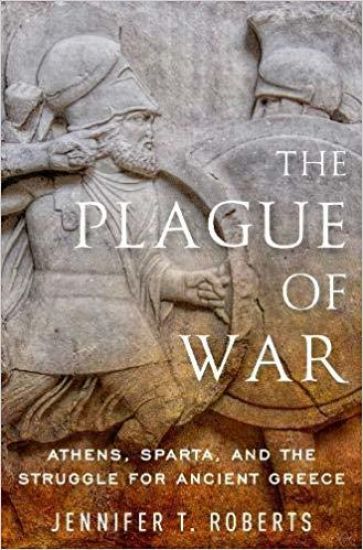
The Plague of War

The Plague of War

Jennifer T. Roberts

Oxford University Press Inc
2019
nidottu
In 431 BC, the long simmering rivalry between the city-states of Athens and Sparta erupted into open warfare, and for more than a generation the two were locked in a life-and-death struggle. The war embroiled the entire Greek world, provoking years of butchery previously unparalleled in ancient Greece. Whole cities were exterminated, their men killed, their women and children enslaved. While the war is commonly believed to have ended with the capture of the Athenian navy in 405 and the subsequent starvation of Athens, fighting in Greece would continue for several decades. Sparta's authority was challenged in the so-called Corinthian War (395-387) when Persian gold helped unite Athens with Sparta's former allies. The war did not truly end until, in 371, Thebes' crack infantry resoundingly defeated Sparta at Leuctra, forever shattering the myth of Spartan military supremacy. Jennifer Roberts' rich narrative of this famous conflict is the first general history to tell the whole story, from the war's origins down to Sparta's defeat at Leuctra. In her masterful account, this long and bloody war affected every area of life in Athens, exacerbated divisions between rich and poor in Sparta, and sparked civil strife throughout the Greek world. Yet despite the biting sorrows the fighting occasioned, it remains a gripping saga of plots and counter-plots, murders and lies, thrilling sea chases and desperate overland marches, missed opportunities and last-minute reprieves, and, as the war's first historian Thucydides had hoped, lessons for a less bellicose future. In addition, Roberts considers the impact of the war on Greece's cultural life, including the great masterworks of tragedy and comedy performed at this time and, most infamously, the trial and execution of Socrates. A fast-paced narrative of one of antiquity's most famous clashes, The Plague of War is a must-read for history enthusiasts of all ages.
Imagining Religious Communities

Imagining Religious Communities

Jennifer B. Saunders

Oxford University Press Inc
2019
sidottu
Imagining Religious Communities tells the story of the Gupta family through the personal and religious narratives they tell as they create and maintain their extended family and community across national borders. Based on ethnographic research, the book demonstrates the ways that transnational communities are involved in shaping their experiences through narrative performances. Jennifer B. Saunders demonstrates that narrative performances shape participants' social realities in multiple ways: they define identities, they create connections between community members living on opposite sides of national borders, and they help create new homes amidst increasing mobility. The narratives are religious and include epic narratives such as excerpts from the Ramayana as well as personal narratives with dharmic implications. Saunders' analysis combines scholarly understandings of the ways in which performances shape the contexts in which they are told, indigenous comprehension of the power that reciting certain narratives can have on those who hear them, and the theory that social imaginaries define new social realities through expressing the aspirations of communities. Imagining Religious Communities argues that this Hindu community's religious narrative performances significantly contribute to shaping their transnational lives.
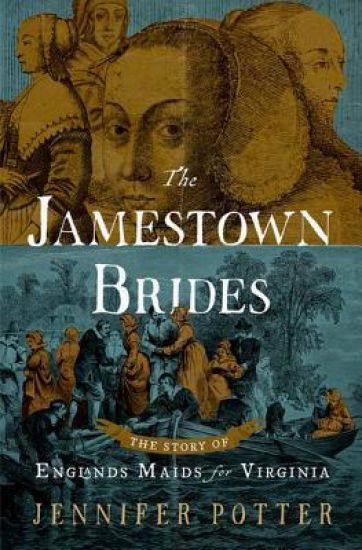
The Jamestown Brides: The Story of England's Maids for Virginia
Jamestown, England's first real foothold in the New World, was fraught with danger -- from starvation and disease to violent skirmishes between colonists and the native populations. Mortality rates were impossibly high: Six out of seven settlers died within the first few years. How clear these and other perils were made to the fifty-six young women who left their homes and boarded ships in England in 1621, nearly fifteen years after Jamestown's founding, is not known. But we do know who they were. Their ages ranged from sixteen to twenty-eight, and they were deemed "young and uncorrupt." Each had a bride price of 150 pounds of tobacco set by the Virginia Company, which funded their voyage. Though the women had all gone of their own free will, they were to be sold into marriage, generating a profit for investors and helping ensure the colony's long-term viability. Without letters or journals (young women from middling classes had not generally been taught to write), Jennifer Potter turned to the Virginia Company's merchant lists -- which were used as a kind of sales catalog for prospective husbands -- as well as censuses, court records, the minutes of Virginia's General Assemblies, letters to England from their male counterparts, and other such accounts of the everyday life of the early colonists. In The Jamestown Brides, she spins a fascinating tale of courage and survival, exploring the women's lives in England before their departure and their experiences in Jamestown. Some were married before the ships left harbor. Some were killed in an attack by the native population only months after their arrival. A few never married at all. In telling the story of these "Maids for Virginia" Potter sheds light on life for women in early modern England and in the New World.
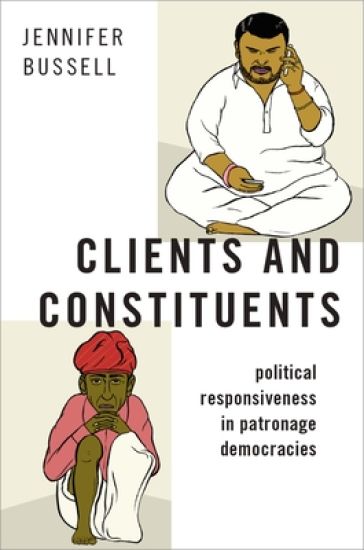
Clients and Constituents

Clients and Constituents

Jennifer Bussell

Oxford University Press Inc
2019
sidottu
Scholars of distributive politics often emphasize partisanship and clientelism. However, as Jennifer Bussell demonstrates in Clients and Constituents, legislators in "patronage democracies" also provide substantial constituency service: non-contingent, direct assistance to individual citizens. Bussell shows how the uneven character of access to services at the local level-often due to biased allocation on the part of local intermediaries-generates demand for help from higher-level officials. The nature of these appeals in turn provides incentives for politicians to help their constituents obtain public benefits. Drawing on a new cross-national dataset and extensive evidence from India-including sustained qualitative shadowing of politicians, novel elite and citizen surveys, and an experimental audit study with a near census of Indian state and national legislators-this book provides a theoretical and empirical examination of political responsiveness in developing countries. It highlights the potential for an under-appreciated form of democratic accountability, one that is however rooted in the character of patronage-based politics.
Clients and Constituents

Clients and Constituents

Jennifer Bussell

Oxford University Press Inc
2019
nidottu
Scholars of distributive politics often emphasize partisanship and clientelism. However, as Jennifer Bussell demonstrates in Clients and Constituents, legislators in "patronage democracies" also provide substantial constituency service: non-contingent, direct assistance to individual citizens. Bussell shows how the uneven character of access to services at the local level-often due to biased allocation on the part of local intermediaries-generates demand for help from higher-level officials. The nature of these appeals in turn provides incentives for politicians to help their constituents obtain public benefits. Drawing on a new cross-national dataset and extensive evidence from India-including sustained qualitative shadowing of politicians, novel elite and citizen surveys, and an experimental audit study with a near census of Indian state and national legislators-this book provides a theoretical and empirical examination of political responsiveness in developing countries. It highlights the potential for an under-appreciated form of democratic accountability, one that is however rooted in the character of patronage-based politics.