Kirjojen hintavertailu. Mukana 11 244 527 kirjaa ja 12 kauppaa.

Kirjahaku

Etsi kirjoja tekijän nimen, kirjan nimen tai ISBN:n perusteella.

1000 tulosta hakusanalla Jeremy Dibble

Other Pasts, Different Presents, Alternative Futures

Other Pasts, Different Presents, Alternative Futures

Jeremy Black

Indiana University Press
2015
pokkari
What if there had been no World War I or no Russian Revolution? What if Napoleon had won at Waterloo in 1815, or if Martin Luther had not nailed his complaints to the church door at Wittenberg in 1517, or if the South had won the American Civil War? The questioning of apparent certainties or "known knowns" can be fascinating and, indeed, "What if?" books are very popular. However, this speculative approach, known as counterfactualism, has had limited impact in academic histories, historiography, and the teaching of historical methods. In this book, Jeremy Black offers a short guide to the subject, one that is designed to argue its value as a tool for public and academe alike. Black focuses on the role of counterfactualism in demonstrating the part of contingency, and thus human agency, in history, and the salutary critique the approach offers to determinist accounts of past, present, and future.
Geopolitics and the Quest for Dominance

Geopolitics and the Quest for Dominance

Jeremy Black

Indiana University Press
2015
sidottu
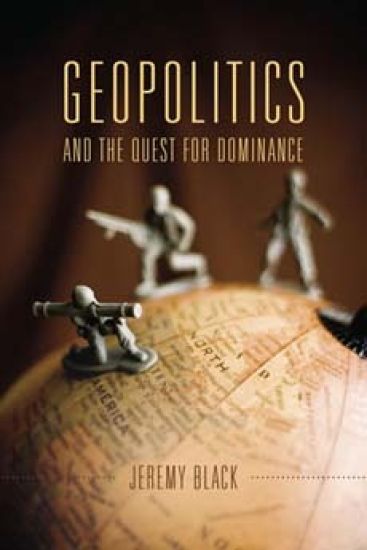
History and geography delineate the operation of power, not only its range but also the capacity to plan and the ability to implement. Approaching state strategy and policy from the spatial angle, Jeremy Black argues that just as the perception of power is central to issues of power, so place, and its constraints and relationships, is partly a matter of perception, not merely map coordinates. Geopolitics, he maintains, is as much about ideas and perception as it is about the actual spatial dimensions of power. Black's study ranges widely, examining geography and the spatial nature of state power from the 15th century to the present day. He considers the rise of British power, geopolitics and the age of Imperialism, the Nazis and World War II, and the Cold War, and he looks at the key theorists of the latter 20th century, including Henry Kissinger, Francis Fukuyama and Samuel P. Huntington, Philip Bobbitt, Niall Ferguson, and others.
Geopolitics and the Quest for Dominance

Geopolitics and the Quest for Dominance

Jeremy Black

Indiana University Press
2015
pokkari
History and geography delineate the operation of power, not only its range but also the capacity to plan and the ability to implement. Approaching state strategy and policy from the spatial angle, Jeremy Black argues that just as the perception of power is central to issues of power, so place, and its constraints and relationships, is partly a matter of perception, not merely map coordinates. Geopolitics, he maintains, is as much about ideas and perception as it is about the actual spatial dimensions of power. Black's study ranges widely, examining geography and the spatial nature of state power from the 15th century to the present day. He considers the rise of British power, geopolitics and the age of Imperialism, the Nazis and World War II, and the Cold War, and he looks at the key theorists of the latter 20th century, including Henry Kissinger, Francis Fukuyama and Samuel P. Huntington, Philip Bobbitt, Niall Ferguson, and others.
Plotting Power

Plotting Power

Jeremy Black

Indiana University Press
2017
sidottu
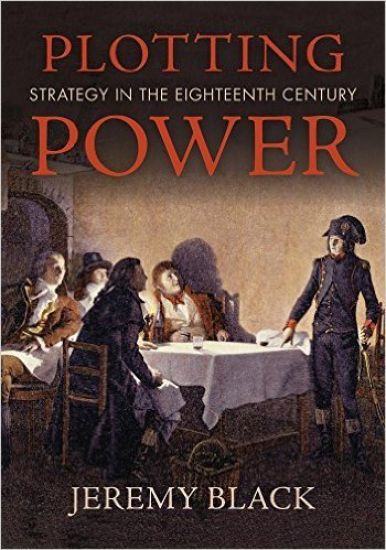
Military strategy takes place as much on broad national and international stages as on battlefields. In a brilliant reimagining of the impetus and scope of eighteenth-century warfare, historian Jeremy Black takes us far and wide, from the battlefields and global maneuvers in North America and Europe to the military machinations and plotting of such Asian powers as China, Japan, Burma, Vietnam, and Siam. Europeans coined the term "strategy" only two centuries ago, but strategy as a concept has been practiced globally throughout history. Taking issue with traditional military historians, Black argues persuasively that strategy was as much political as battlefield tactics and that plotting power did not always involve outright warfare but also global considerations of alliance building, trade agreements, and intimidation.
A History of Britain

A History of Britain

Jeremy Black

Indiana University Press
2017
sidottu
In 2016, Britain stunned itself and the world by voting to pull out of the European Union, leaving financial markets reeling and global politicians and citizens in shock. But was Brexit really a surprise, or are there clues in Britain's history that pointed to this moment? In A History of Britain: 1945 to the Brexit, award-winning historian Jeremy Black reexamines modern British history, considering the social changes, economic strains, and cultural and political upheavals that brought Britain to Brexit. This sweeping and engaging book traces Britain's path through the destruction left behind by World War II, Thatcherism, the threats of the IRA, the Scottish referendum, and on to the impact of waves of immigration from the European Union. Black overturns many conventional interpretations of significant historical events, provides context for current developments, and encourages the reader to question why we think the way we do about Britain's past.
A History of Britain

A History of Britain

Jeremy Black

Indiana University Press
2017
pokkari
In 2016, Britain stunned itself and the world by voting to pull out of the European Union, leaving financial markets reeling and global politicians and citizens in shock. But was Brexit really a surprise, or are there clues in Britain's history that pointed to this moment? In A History of Britain: 1945 to the Brexit, award-winning historian Jeremy Black reexamines modern British history, considering the social changes, economic strains, and cultural and political upheavals that brought Britain to Brexit. This sweeping and engaging book traces Britain's path through the destruction left behind by World War II, Thatcherism, the threats of the IRA, the Scottish referendum, and on to the impact of waves of immigration from the European Union. Black overturns many conventional interpretations of significant historical events, provides context for current developments, and encourages the reader to question why we think the way we do about Britain's past.
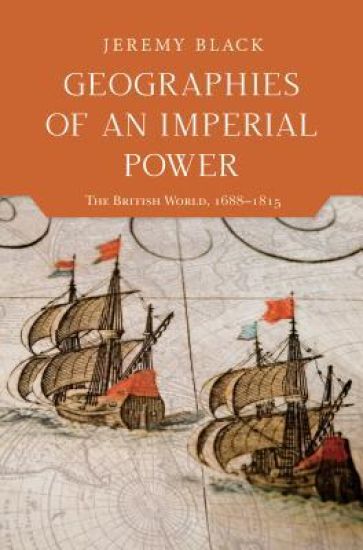
Geographies of an Imperial Power

Geographies of an Imperial Power

Jeremy Black

Indiana University Press
2018
sidottu
From explorers tracing rivers to navigators hunting for longitude, spatial awareness and the need for empirical understanding were linked to British strategy in the 1700s. This strategy, in turn, aided in the assertion of British power and authority on a global scale. In this sweeping consideration of Britain in the 18th century, Jeremy Black explores the interconnected roles of power and geography in the creation of a global empire. Geography was at the heart of Britain's expansion into India, its response to uprisings in Scotland and America, and its revolutionary development of railways. Geographical dominance was reinforced as newspapers stoked the fires of xenophobia and defined the limits of cosmopolitan Europe as compared to the "barbarism" beyond. Geography provided a system of analysis and classification which gave Britain political, cultural, and scientific sovereignty. Black considers geographical knowledge not just as a tool for creating a shared cultural identity but also as a key mechanism in the formation of one of the most powerful and far-reaching empires the world has ever known.
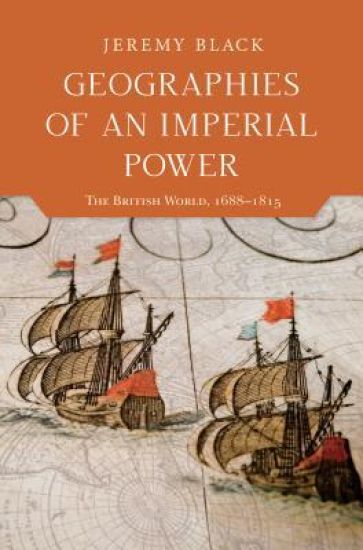
Geographies of an Imperial Power

Geographies of an Imperial Power

Jeremy Black

Indiana University Press
2018
pokkari
From explorers tracing rivers to navigators hunting for longitude, spatial awareness and the need for empirical understanding were linked to British strategy in the 1700s. This strategy, in turn, aided in the assertion of British power and authority on a global scale. In this sweeping consideration of Britain in the 18th century, Jeremy Black explores the interconnected roles of power and geography in the creation of a global empire. Geography was at the heart of Britain's expansion into India, its response to uprisings in Scotland and America, and its revolutionary development of railways. Geographical dominance was reinforced as newspapers stoked the fires of xenophobia and defined the limits of cosmopolitan Europe as compared to the "barbarism" beyond. Geography provided a system of analysis and classification which gave Britain political, cultural, and scientific sovereignty. Black considers geographical knowledge not just as a tool for creating a shared cultural identity but also as a key mechanism in the formation of one of the most powerful and far-reaching empires the world has ever known.
Charting the Past

Charting the Past

Jeremy Black

Indiana University Press
2018
sidottu
Eighteenth-century England was a place of enlightenment and revolution: new ideas abounded in science, politics, transportation, commerce, religion, and the arts. But even as England propelled itself into the future, it was preoccupied with notions of its past. Jeremy Black considers the interaction of history with knowledge and culture in eighteenth-century England and shows how this engagement with the past influenced English historical writing. The past was used as a tool to illustrate the contemporary religious, social, and political debates that shaped the revolutionary advances of the era. Black reveals this "present-centered" historical writing to be so valued and influential in the eighteenth-century that its importance is greatly underappreciated in current considerations of the period. In his customarily vivid and sweeping approach, Black takes readers from print shop to church pew, courtroom to painter's studio to show how historical writing influenced the era, which in turn gave birth to the modern world.
Charting the Past

Charting the Past

Jeremy Black

Indiana University Press
2018
pokkari
Eighteenth-century England was a place of enlightenment and revolution: new ideas abounded in science, politics, transportation, commerce, religion, and the arts. But even as England propelled itself into the future, it was preoccupied with notions of its past. Jeremy Black considers the interaction of history with knowledge and culture in eighteenth-century England and shows how this engagement with the past influenced English historical writing. The past was used as a tool to illustrate the contemporary religious, social, and political debates that shaped the revolutionary advances of the era. Black reveals this "present-centered" historical writing to be so valued and influential in the eighteenth-century that its importance is greatly underappreciated in current considerations of the period. In his customarily vivid and sweeping approach, Black takes readers from print shop to church pew, courtroom to painter's studio to show how historical writing influenced the era, which in turn gave birth to the modern world.
The Covered Bridges of Monroe County

The Covered Bridges of Monroe County

Jeremy Boshears

Indiana University Press
2019
pokkari
The covered bridge has long been a symbol of Indiana's past, evoking feelings of romance and nostalgia. These feats of engineering span the rivers and streams that crisscross the county. Jeremy Boshears' photographs capture the beauty of the bridges dotting the riverbanks of Monroe County. With 121 color photographs, The Covered Bridges of Monroe County will appeal to everyone who treasures these iconic structures.
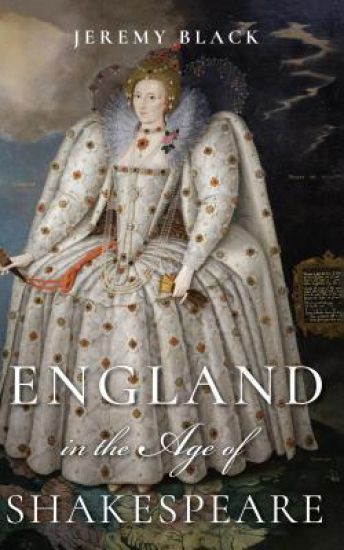
England in the Age of Shakespeare

England in the Age of Shakespeare

Jeremy Black

Indiana University Press
2019
sidottu
How did it feel to hear Macbeth's witches chant of "double, double toil and trouble" at a time when magic and witchcraft were as real as anything science had to offer? How were justice and forgiveness understood by the audience who first watched King Lear; how were love and romance viewed by those who first saw Romeo and Juliet? In England in the Age of Shakespeare, Jeremy Black takes readers on a tour of life in the streets, homes, farms, churches, and palaces of the Bard's era. Panning from play to audience and back again, Black shows how Shakespeare's plays would have been experienced and interpreted by those who paid to see them. From the dangers of travel to the indignities of everyday life in teeming London, Black explores the jokes, political and economic references, and small asides that Shakespeare's audiences would have recognized. These moments of recognition often reflected the audience's own experiences of what it was to, as Hamlet says, "grunt and sweat under a weary life." Black's clear and sweeping approach seeks to reclaim Shakespeare from the ivory tower and make the plays' histories more accessible to the public for whom the plays were always intended.
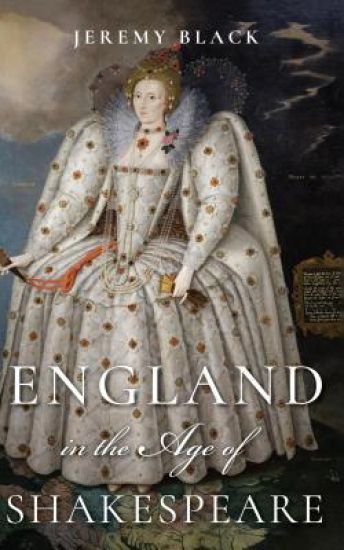
England in the Age of Shakespeare

England in the Age of Shakespeare

Jeremy Black

Indiana University Press
2019
pokkari
How did it feel to hear Macbeth's witches chant of "double, double toil and trouble" at a time when magic and witchcraft were as real as anything science had to offer? How were justice and forgiveness understood by the audience who first watched King Lear; how were love and romance viewed by those who first saw Romeo and Juliet? In England in the Age of Shakespeare, Jeremy Black takes readers on a tour of life in the streets, homes, farms, churches, and palaces of the Bard's era. Panning from play to audience and back again, Black shows how Shakespeare's plays would have been experienced and interpreted by those who paid to see them. From the dangers of travel to the indignities of everyday life in teeming London, Black explores the jokes, political and economic references, and small asides that Shakespeare's audiences would have recognized. These moments of recognition often reflected the audience's own experiences of what it was to, as Hamlet says, "grunt and sweat under a weary life." Black's clear and sweeping approach seeks to reclaim Shakespeare from the ivory tower and make the plays' histories more accessible to the public for whom the plays were always intended.
Tank Warfare

Tank Warfare

Jeremy Black

Indiana University Press
2020
sidottu
The story of the battlefield in the 20th century was dominated by a handful of developments. Foremost of these was the introduction and refinement of tanks. In Tank Warfare, prominent military historian Jeremy Black offers a comprehensive global account of the history of tanks and armored warfare in the 20th and 21st centuries. First introduced onto the battlefield during the World War I, tanks represented the reconciliation of firepower and mobility and immediately seized the imagination of commanders and commentators concerned about the constraints of ordinary infantry. The developments of technology and tactics in the interwar years were realized in the German blitzkrieg in World War II and beyond. Yet the account of armor on the battlefield is a tale of limitations and defeats as well as of potential and achievements. Tank Warfare examines the traditional narrative of armored warfare while at the same time challenging it, and Black suggests that tanks were no "silver bullet" on the battlefield. Instead, their success was based on their inclusion in the general mix of weaponry available to commanders and the context in which they were used.
England in the Age of Austen

England in the Age of Austen

Jeremy Black

Indiana University Press
2021
sidottu
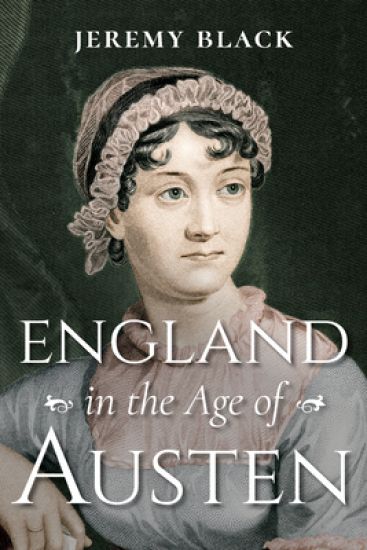
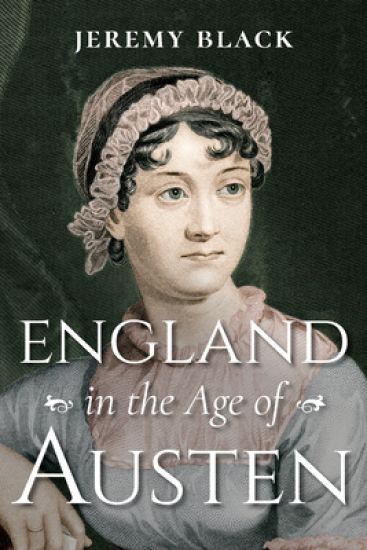
Dedicated fans of Jane Austen's novels will delight in accompanying historian Jeremy Black through the drawing rooms, chapels, and battlefields of the time in which Austen lived and wrote. In this exceedingly readable and sweeping scan of late 18th- and early 19th-century Britain, Black provides a historical context for a deeper appreciation of classic novels such as Pride and Prejudice, Emma, and Sense and Sensibility. While Austen's novels bring to life complex characters living in intimate surroundings, England in the Age of Austen provides a fuller account of what the village, the church, and the family home would really have been like. In addition to seeing how Austen's own reading helped her craft complex characters like Emma, Black also explores how recurring figures in the novels, such as George III or Fanny Burney, provide a focus for a historical discussion of the fiction in which they appear. Jane Austen's world was the source of her works and the basis of her readership, and understanding that world gives fans new insights into the multifaceted narratives she created.
England in the Age of Austen

England in the Age of Austen

Jeremy Black

Indiana University Press
2021
pokkari
Dedicated fans of Jane Austen's novels will delight in accompanying historian Jeremy Black through the drawing rooms, chapels, and battlefields of the time in which Austen lived and wrote. In this exceedingly readable and sweeping scan of late 18th- and early 19th-century Britain, Black provides a historical context for a deeper appreciation of classic novels such as Pride and Prejudice, Emma, and Sense and Sensibility. While Austen's novels bring to life complex characters living in intimate surroundings, England in the Age of Austen provides a fuller account of what the village, the church, and the family home would really have been like. In addition to seeing how Austen's own reading helped her craft complex characters like Emma, Black also explores how recurring figures in the novels, such as George III or Fanny Burney, provide a focus for a historical discussion of the fiction in which they appear. Jane Austen's world was the source of her works and the basis of her readership, and understanding that world gives fans new insights into the multifaceted narratives she created.
Profit Margins

Profit Margins

Jeremy Groskopf

Indiana University Press
2021
pokkari
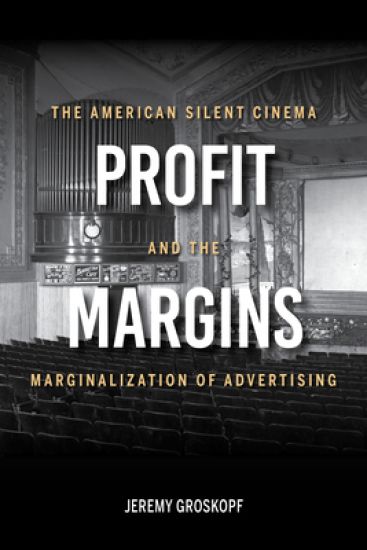
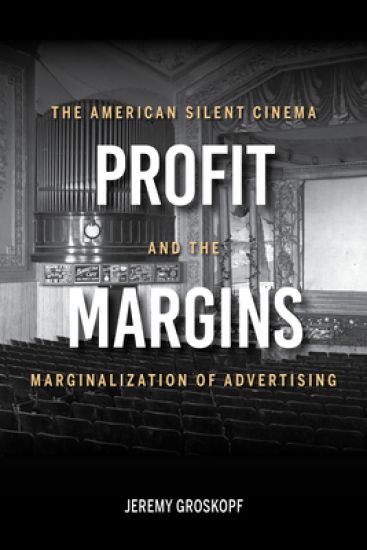
Between the advent of print advertising and the dawn of radio came cinema ads. These ads, aimed at a captive theater audience, became a symbol of the developing binary between upper-class film consumption and more consumerist media. In Profit Margins, Jeremy Groskopf examines how the ad industry jockeyed for direct advertisement space in American motion pictures. In fact, advertisers, who recognized the import of film audiences, fought exhibitors over what audiences expected in a theater outing. Looking back at these debates in four case studies, Groskopf reveals that advertising became a marker of class distinctions in the cinema experience as the film industry pushed out advertisers in order to create a space free of ads. By restricting advertising, especially during the rise of high-class, palatial theaters, the film industry continued its ongoing effort to ascend the cultural hierarchy of the arts. An important read for film studies and the history of marketing, Profit Margins exposes the fascinating truth surrounding the invention of cinema advertising techniques and the resulting rhetoric of class division.
Profit Margins

Profit Margins

Jeremy Groskopf

Indiana University Press
2021
sidottu
Between the advent of print advertising and the dawn of radio came cinema ads. These ads, aimed at a captive theater audience, became a symbol of the developing binary between upper-class film consumption and more consumerist media. In Profit Margins, Jeremy Groskopf examines how the ad industry jockeyed for direct advertisement space in American motion pictures. In fact, advertisers, who recognized the import of film audiences, fought exhibitors over what audiences expected in a theater outing. Looking back at these debates in four case studies, Groskopf reveals that advertising became a marker of class distinctions in the cinema experience as the film industry pushed out advertisers in order to create a space free of ads. By restricting advertising, especially during the rise of high-class, palatial theaters, the film industry continued its ongoing effort to ascend the cultural hierarchy of the arts. An important read for film studies and the history of marketing, Profit Margins exposes the fascinating truth surrounding the invention of cinema advertising techniques and the resulting rhetoric of class division.
A Brief History of History

A Brief History of History

Jeremy Black

INDIANA UNIVERSITY PRESS
2023
sidottu
In A Brief History of History, acclaimed historian Jeremy Black seeks to reinvigorate and redefine our ideas about history. The stories we tell about the past are a crucial aspect of all cultures. However, while the traditional storytelling process—what we think of as "history" in the proper sense—is useful, it is also misleading, not least because it leads to the repetition of bias and misinformation. Black suggests that the conventional idea of history and historians is constructed too narrowly, as it fails to engage with the broad nature of lived experience. By focusing on a singular idea or story within the history being explored, we fail to understand the interconnectivity of the everyday experience. A Brief History of History challenges accepted norms of the historical perspective and offers a view of human history that will surprise many and (perhaps) infuriate some. But above all, it is a history of historians written for this moment in time, a time when the traditional Eurocentric approach to history now appears wholly inappropriate.
A History of Britain

A History of Britain

Jeremy Black

INDIANA UNIVERSITY PRESS
2024
pokkari
The British vote to leave the European Union stunned everyone 2016, but was it really a surprise? In this revised and updated edition of A History of Britain: 1945 Through Brexit, award-winning historian Jeremy Black expands his reexamination of modern British history to include the Brexit process, the tumultuous administrations of Theresa May and Boris Johnson, the spectacular failure of Liz Truss, and the early days of Rishi Sunak's premiership. This sweeping and engaging book traces Britain's path through the destruction left behind by World War II, Thatcherism, the threats of the IRA, the Scottish referendum, and on to the impact of waves of immigration from the European Union. A History of Britain: 1945 Through Brexit overturns many conventional interpretations of significant historical events, provides context for current developments, and encourages the reader to question why we think the way we do about Britain's past.