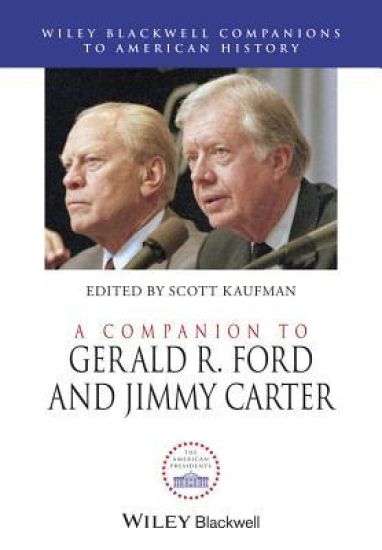
With 30 historiographical essays by established and rising scholars, this Companion is a comprehensive picture of the presidencies and legacies of Gerald Ford and Jimmy Carter. Examines important national and international events during the 1970s, as well as presidential initiatives, crises, and legislationDiscusses the biography of each man before entering the White House, his legacy and work after leaving office, and the lives of Betty Ford, Rosalynn Carter, and their familiesCovers key themes and issues, including Watergate and the pardon of Richard Nixon, the Vietnam War, neoconservatism and the rise of the New Right, and the Iran hostage crisisIncorporates presidential, diplomatic, military, economic, social, and cultural historyUses the most recent research and newly released documents from the two Presidential Libraries and the State Department
With 30 historiographical essays by established and rising scholars, this Companion is a comprehensive picture of the presidencies and legacies of Gerald Ford and Jimmy Carter. Examines important national and international events during the 1970s, as well as presidential initiatives, crises, and legislationDiscusses the biography of each man before entering the White House, his legacy and work after leaving office, and the lives of Betty Ford, Rosalynn Carter, and their familiesCovers key themes and issues, including Watergate and the pardon of Richard Nixon, the Vietnam War, neoconservatism and the rise of the New Right, and the Iran hostage crisisIncorporates presidential, diplomatic, military, economic, social, and cultural historyUses the most recent research and newly released documents from the two Presidential Libraries and the State Department
The United States was a country in transition and turmoil in the year, 1969. Civil unrest resounded throughout the country as college students protested the war in Vietnam. An American astronaut stepped on the moon for the first time and Richard Nixon became President. It was the year of the Manson Family killings, Woodstock, Chappaquiddick, and the My Lai Massacre.Many communities struggled to maintain their identity amidst the changing landscape. A group of boys growing up in Towson, Maryland had no such difficulties. Shielded in their tight community, the boys bask in the innocence of youth until the reality of a changing world invades their lives. Jimmy Mac and his friends are forced to confront this evil while clinging to the pure joy of boyhood.
July 30, 2025 marks the 50th anniversary of Jimmy Hoffa's disappearance... "Back then, there wasn't nobody in this country who didn't know who Jimmy Hoffa was." -- Frank Sheeran (played by Robert DeNiro) in Martin Scoresese's film The Irishman - New York Times Bestseller -- #1 True Crime Bestseller The inspiration for the major motion picture, THE IRISHMAN. "The best Mafia book I ever read, and believe me, I read them all." -- Steven Van Zandt "Charles Brandt has solved the Hoffa mystery." -- Professor Arthur Sloane, author of Hoffa "Sheeran's confession that he killed Hoffa in the manner described in the book is supported by the forensic evidence, is entirely credible, and solves the Hoffa mystery." -- Michael Baden M.D., former Chief Medical Examiner of the City of New York "It's all true." -- New York Police Department organized crime homicide detective Joe Coffey "Gives new meaning to the term 'guilty pleasure.''' -- The New York Times Book Review **Includes an Epilogue and a Conclusion that detail substantial post-publication corroboration of Frank Sheeran's confessions to the killings of Jimmy Hoffa and Joey Gallo. "I heard you paint houses" are the first words Jimmy Hoffa ever spoke to Frank "the Irishman" Sheeran. To paint a house is to kill a man. The paint is the blood that splatters on the walls and floors. In the course of nearly five years of recorded interviews, Frank Sheeran confessed to Charles Brandt that he handled more than twenty-five hits for the mob, and for his friend Hoffa. He also provided intriguing information about the Mafia's role in the murder of JFK. Sheeran learned to kill in the US Army, where he saw an astonishing 411 days of active combat duty in Italy during World War II. After returning home he became a hustler and hit man, working for legendary crime boss Russell Bufalino. Eventually Sheeran would rise to a position of such prominence that in a RICO suit the US government would name him as one of only two non-Italians in conspiracy with the Commission of La Cosa Nostra, alongside the likes of Anthony "Tony Pro" Provenzano and Anthony "Fat Tony" Salerno. When Bufalino ordered Sheeran to kill Hoffa, the Irishman did the deed, knowing that if he had refused he would have been killed himself. Charles Brandt's page-turner has become a true crime classic.
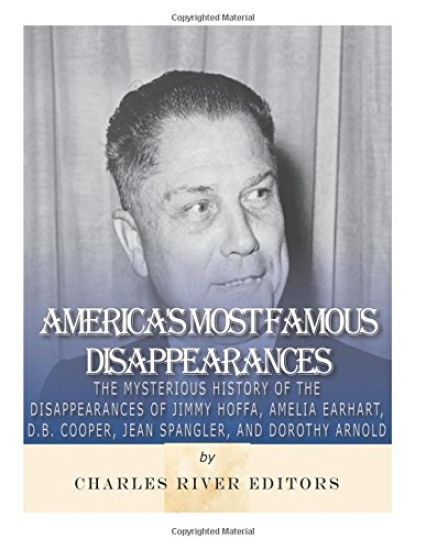
*Includes pictures *Discusses the popular theories behind each mystery *Includes online resources and a bibliography for further reading It was the great mystery of its time and still reads like an episode of "Law and Order" today. In December 1910, a wealthy young woman, thought to be sheltered and above reproach, goes missing shortly after being seen in broad daylight on Fifth Avenue in New York City. The police are called in and begin to question those closest to her, only to have her father, a wealthy manufacturer, insist it must be foul play and that his daughter was on good terms with her entire family. Likewise, he claims that though she was in her mid-20s and in the prime of life, she had no serious romantic attachments. The mother tearfully backs these claims up. While the story was certainly fit for a gripping thriller, it was all too true for Dorothy Arnold and her family. Arnold was a young, well-known socialite whose disappearance was front page news on the East Coast in the early 20th century. By the mid-1930s, Amelia Earhart was one of the most famous women in the world. The American pilot had set a number of altitude and distance records, but she wanted to attempt a circumnavigation of the world. After an ill-fated first attempt, Earhart and Fred Noonan set off on another attempt, creating one of the 20th century's most enduring mysteries. Earhart and Noonan were to land on Howland Island, 1700 miles southwest of Hawaii, but radio transmissions ceased between the plane and authorities on the ground the morning of July 2, 1937. Earhart and Noonan had disappeared, never to be seen again, despite one of the nation's largest and costliest manhunts to date. The mysterious case of actress and dancer Jean Spangler remains one of the most enduring such riddles in the annals of Hollywood crime. The nature of the case itself still evokes a public fascination many decades after her disappearance. Spangler found herself in southern California as a beautiful actress and dancer trying to land movie roles, a common story among the many young women gravitating to American entertainment centers from more conservative towns and cities. As a high-profile celebrity event, Spangler's case does not match the sensationalism attributed to figures such as Amelia Earhart, who sought to circumnavigate the globe by air, the political importance of union boss Jimmy Hoffa, or the fate of Judge Crater, a likely victim of the New York underworld. However, the Spangler story differs in that it carries no dearth of rational possibilities or relevant clues with which to accommodate all of the leading theories. On November 24, 1971, there was little to suggest that the skies above the Pacific Northwest would produce one of the greatest mysteries in American history and a criminal investigation that is still ongoing over 40 years later. However, on the day before Thanksgiving, a man calling himself Dan Cooper boarded Northwest Orient Flight 305 from Portland to Seattle and sat in the rear of the cabin. The identity of the thief who ransomed hostages and then jumped out of a plane with the money that night remains unknown. In fact, his ultimate fate is a mystery, and over 40 years after he jumped out of that plane, the FBI doesn't know much more than it did in 1971. Jimmy Hoffa, once described by Bobby Kennedy as the second most powerful man in America, was a union boss who evoked both respect and fear, and he continues to be a legendary figure who often crops up in conversation and media over 40 years after his disappearance. While it was an open secret that Hoffa had shady connections, the success of his leadership allowed supporters to overlook them. To this day, authorities are still searching for him (or presumably his remains), having been overloaded with false and dead-end leads throughout the decades.
The first picture book about the inspiring life of humanitarian Jimmy Carter, the thirty-ninth president of the United States and a Nobel Prize winner--from Alabama Spitfire author Bethany Hegedus. This nonfiction picture book is an excellent choice to share during homeschooling, in particular for children ages 4 to 6. It's a fun way to learn to read and as a supplement for activity books for children.Even before Jimmy Carter became president, he knew the value of hard work. Living on his family's peanut farm, Jimmy saw how hard work yielded strong results.At least it did for some people. But growing up in the segregated South, Jimmy also saw firsthand how white people and black people were not treated equally. None of it was right. None of it was fair.So Jimmy created a list of Good Mental Habits to help him navigate life's challenges. The list guided his thoughts and actions and helped him fight for change, whether working with civil rights leaders to end racial discrimination in his home state of Georgia, helping to negotiate peace in the Middle East, or building homes for the poor through Habitat for Humanity.From the statehouse to the White House and beyond, Jimmy has worked to make change for all people, devoting decades to public service and becoming one of the most respected humanitarians of our time. It's hard work, but it's worth it.
Staying healthy is important. Fitness instructors like Jimmy help people to look after themselves and focus on their health and fitness. Project X Hero Academy Non-fiction is an inspirational reading series about real-life heroes.
*Includes pictures. *Includes actors' quotes about their careers. *Includes bibliographies. In 1999, the American Film Institute released its list of the 50 greatest Hollywood stars of the 20th century, and selecting the 10 best actors out of the bunch was certainly a tall task. The competition was so stacked that men like Gary Cooper and John Wayne were not even among the Top 10. So who were the Top 10 men selected by the AFI? One man has long been considered the greatest male star. From the time he first became a leading man, Humphrey Bogart's screen image has resonated with viewers more than perhaps any other actor. His persona as a tough guy who manages to maintain his sense of virtue no matter how compromising the situation features in some of the most famous films ever made, including Casablanca (1942), The Maltese Falcon (1941), and Key Largo (1949). Movie stars are revered for their ability to captivate audiences, and perhaps no actor has done it as well as Cary Grant, the epitome of the suave, debonair actor who may have been rivaled only by dancer extraordinaire Fred Astaire. Grant offered a version of the male actor that stood in stark contrast with the gangster heroes and hard-boiled film noir detectives that populated the screen throughout his career. If the list was reconstructed today, it is entirely possible that Stewart would rank first. Not only have movies such as It's a Wonderful Life (1946) and Vertigo (1958) continued to gain in popularity even into the 21st century, but Stewart has come to embody an accessible image of American values that is easy for everyone to embrace. Over the course of his long, prolific career, Marlon Brando was considered perhaps the greatest actor of the 20th century as well as one of the most complicated and misunderstood. Uniquely able to be both emotionally charged and technically constrained in the same performance, he single-handedly changed the direction of not only the American style of acting, influencing successors such as Robert De Niro, Al Pacino and even Johnny Depp, but the acting profession on a global scale. Virtually all famous actors are regaled by the public, but even still, Fred Astaire occupies a privileged position in American pop culture. The specific films in which Astaire acted may not be especially famous in their own right, but Astaire's dancing prowess invariably creates a lasting impact on viewers. Among all of Hollywood's iconic leading men, arguably none proved as versatile at acting as Henry Fonda, whose career spanned six decades and earned him Academy Awards for roles in various genres. A lot of Fonda's success could be attributed to the fact that he could convincingly play the all-American man that everybody in the nation adored and/or wanted to be. Best known for his role in Gone with the Wind (1939), Clark Gable had a unique appeal that captivated Depression-era audiences; while Cary Grant offered a sophisticated charm and Fred Astaire was tied to the musical genre, Gable brought an air of sophistication that was less comical than that of Grant and appealed to both genders, unlike Astaire. Ultimately, it was portraying tough guys and gangsters in the 1930s that turned James Cagney into a massive Hollywood star. In movies like The Public Enemy (which included the infamous "grapefruit scene") and White Heat, Cagney convincingly played criminals that brought Warner to the forefront of Hollywood After joining MGM in 1935, Tracy catapulted to fame with one of the most impressive runs in Hollywood history, winning Oscars for Best Actor in 1938 and 1939 after already being nominated in 1937. Charlie Chaplin was the first true film star, and he managed to do so even when films were still silent. He has been honored with too many awards to count, and the fact that his name remains instantly recognizable nearly a century after his first film is a testament to his influence
First published in 1879, this book contains volume V of "Aunt Jo's Scrap-Bag", a six-volume collection of classic children's stories by American author Louisa May Alcott (1832 - 1888). Alcott was an American short story writer, novelist, and poet most famous for writing the novel "Little Women", as well as its sequels "Little Men" and "Jo's Boys". She grew up in New England and became associated with numerous notable intellectuals of her time, including Nathaniel Hawthorne, Ralph Waldo Emerson, Henry Wadsworth Longfellow, and Henry David Thoreau. The stories include: "Jimmy's Cruise in the Pinafore", "Two Little Travellers", "A Jolly Fourth", "Seven Black Cats", "Rosa's Tale", "Lunch", "A Bright Idea", "How they Camped Out", "My Little School-Girl", "What a Shovel Did", "Clams", "Kitty's Cattle Show", and "What Becomes of the Pins". This charming collection of classic children's literature is perfect for young minds and would make for ideal bedtime reading material. Many vintage books such as this are becoming increasingly scarce and expensive. We are republishing this volume now in an affordable, modern, high-quality edition complete with the original text and artwork.
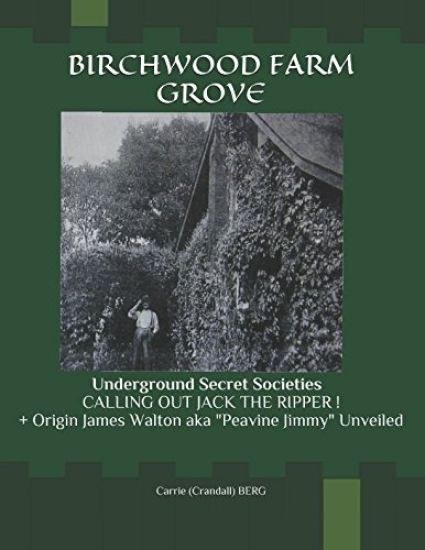
This book is an original creation a 33-year Quest into BIRCHWOOD FARM revealing a secret-history; new evidence in scripophily form (secret-stock certificate's) complex and comprehensive material that may or may not at times, contradict conventional history. Seeking answers to our questions we embark on a treasure hunt scavenging clues for research. A treasury amassed after compiling tangible objects, of these two paper artifacts (stock certificate's) kept back in a surreptitious way, foreshadow the Reality of a financial conspiracy, a Hidden Corp. In 1914 secret stocks #18:19 were issued to James Breen, a smelting/mining adept sought-after by money men, including two hotel bros. Ben and Billy and 3 Copper King's Clark Daly and Heinze. We have yet to find the others, the unseen power elite shareholders who as a group owned Birchwood Farm. The duo stocks expose secrets along the way leading to the financial stock market paradox/bank panic. Appearances can be deceiving not obvious at first. Under closer scrutiny the stocks provide tangible evidence hidden behind a fa ade of a farmhouse, where Ben entertained Friends at his private club under the guise of the Norman Ranch, situated opposite Spokane House drawing attention away from a tight-knit Corp., that you're not supposed to know about. In so doing they have missed the boat. The fact is the better-known Hudson Bay Co. incorporated in 1670 overshadows the BFC. (The two companies were not concurrent.) BIRCHWOOD FARM formed into a legal corporation in 1914 organized by the power of three, in the midst of tight-lipped pioneer players who got in the powerhouse through the back door, where the best thinkers at the time racked their brains working in the shadows of a farmhouse, historically linked financially through the Secret Societies, the Spokane Mining Men's Club, Hotel Spokane Stock Exchange, Spokane Club, Newspapers/Media, Commerce, Politics, Bohemian Grove Skull & Bones Society Knights of the Golden Circle, Federal Reserve, BFC & WWP Land Co's. Realize that most if not all in this were Freemasons who value secrecy above all else bound together by oaths of protection. Also since no one has solved the riddle of a stranger in 2010 we were summoned to moonlight in addition to our research. We shine light that leads to the identity of a squatter perpetually bound to a strange iconic building a focal point identified as the James Pea vine Jimmy Walton threshing barn to be found facing the HBC site. The Co. takes center-stage surrounded by the Riverside State Park Nine Mile Falls, WA. James Walton has been wrapped in secrecy a repeated Clich for his portrayal of Pea vine Jimmy a western cultural icon. It was as if no one had searched for him. After years of misleading directions in our quest in the end we track Pea vine Jimmy Here and now we reveal James Walton's obscure ORIGIN ending the misconceptions. A mythical narrative understates his hidden past. Theirs much more to Pea vine Jimmy than what meets the eye The research focuses on two low profile Innkeepers James and Ben who lodge in the same territory at the same time upon sacred Native grounds. The Pea vine Jimmy threshing barn is just a stone's throw from the Birchwood Lodge. Yet oddly enough by all accounts these two harbingers did not know one another. Stranger still theirs a serial killer, dubbed Jack the Ripper. While certain persons herein are not to blame, they did live concurrent during the multiple murders set in Whitechapel London in 1888. Lastly theirs Ed who let the cat out of the bag with two secret stocks whilst keeping bound an untold amount. It's a wonder that the stocks have survived the test of time despite the fact that others have been destroyed. Two paper relics originate from a sacred place of rituals and fishing a time of conflict between Native's and colonists in the midst of the Spokane and Little Rivers where legendary fishing have long since disappeared.