Kirjahaku
Etsi kirjoja tekijän nimen, kirjan nimen tai ISBN:n perusteella.
1000 tulosta hakusanalla John L. Hash
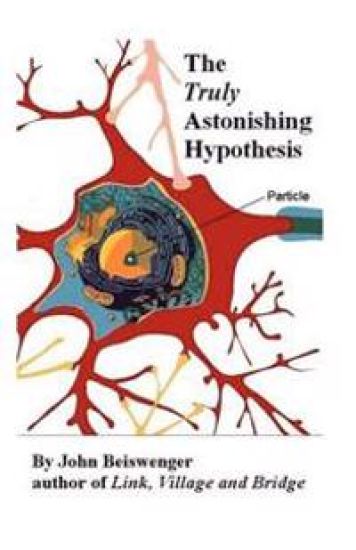
The Truly Astonishing Hypothesis
John L. Beiswenger
Createspace Independent Publishing Platform
2010
nidottu

Andersonville Diary; Escape, and List of Dead: With Name, company, Regiment, Date of Death and Number of Grave in Cemetery
John L. Ransom
Createspace Independent Publishing Platform
2012
nidottu
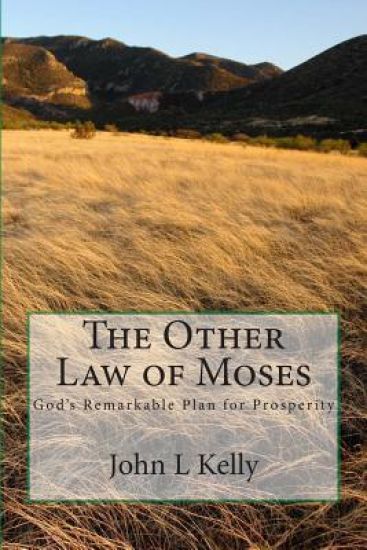
The Other Law of Moses: God's Remarkable Plan for Prosperity
John L. Kelly
Createspace Independent Publishing Platform
2012
nidottu

Faint Tappings at the Wrong Window
John L. G. Pratt
Createspace Independent Publishing Platform
2012
nidottu
Composer John Newell offers a collection of fifty three short chants and mantras for use in personal meditation and prayer. Many are also useful for group worship. The chants arose from and are wedded to their brief texts. A number of these are original with John; others you will find to be familiar from the Psalms and other writings of the Judeo-Christian tradition. Some are based upon well known Buddhist mantra texts. Accompaniment is optional, and may be helpful in some cases, especially in group singing. In a few of the chants you'll notice that John couldn't resist writing out simple chordal accompaniments. In fact John most often sings them without accompaniment, and that is generally how they first came to him. Merely speaking the words is another and equally effective option. When singing the chants you should choose a key or pitch range that is comfortable for you, generally using your low to medium voice register. The chants are notated in several different ways. Some of them are more metrical and have time signatures. Others have no time signatures; and some use only black and white noteheards (indicating short and long notes), in a simplified chant notation. John's approach in each chant was to notate it in manner that made the most sense at the time. The repeats are ad libitum. Obviously much of the power of chanting comes from the repetition. Experiment with what is comfortable for you. The chants are organized according to their purpose in a meditation or prayer session: entering the presence or taking refuge, giving praise, evoking blessing and compassion, seeking assistance and intercession, and giving thanks. John has recorded the chants and mantras; audio files are are available for purchase and download at the iTunes Store, Amazon, and other web sites.

The inaugural flight of Emirates Airlines new Boeing 797 departs from Kuala Lumpur at midnight bound for Brisbane carrying a select crew and only twenty one passengers, all invited celebrities. Three hours into the flight the passengers are awakened to news that the aircraft has been hijacked. They are debating storming the flight deck when the aircraft crashes into the Timor Sea near a small island. The aircraft breaks up but a few souls survive, a German LPGA star, a Brazilian formula one champion, an Australian tennis star, a retired Japanese diplomat, an Emirates executive, an Irish martial arts star, two American movie stars, an American businessman and one of the flight attendants, a young Malay woman. They struggle ashore and other than two in desperate need of medical care, the wait for rescue may be a vacation in paradise until one of the survivors tells them rescuers will not know where to look because the hijacker flew below radar for hundreds of miles and evidence points to the emergency locator transmitters being disabled. Instead of paradise they discover the island is used by ruthless pirates. The survivors have come ashore without so much as a pocket knife to defend themselves from the pirates and an enemy that even the pirates fear, Abu Sayyaf, the terrorist group responsible for the hijacking.
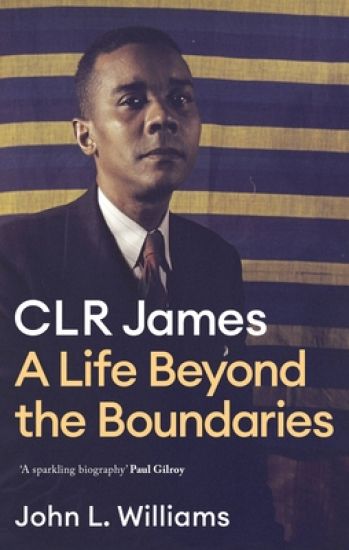
Historian, revolutionary and cricket writer, CLR James was one of the truly radical voices of the twentieth century. Born in Trinidad in the final days of the Victorian era, he debated with Trotsky, played cricket with Constantine, was published by Leonard and Virginia Woolf, inspired Kwame Nkrumah, and was a profound influence on the British Black Power movement. And yet by the late 1970s, CLR James was all but forgotten. The books he had written over the past half century were nearly all out of print. There were a few circles in which his name rang a bell: serious students of Black history; obsessive cricket fans. But that was it. When he died in Brixton in 1989, CLR James was internationally famous - lauded as the greatest of Black British intellectuals: the 'Black Plato', according to The Times. The ideas he put forward in his own time - of the importance of identity alongside class, of rebellion coming from below, of the leading roles of Black people, women and youth in political struggle - have gradually made their way to the forefront of our political thinking. His two great books, The Black Jacobins and Beyond a Boundary, still have the power to change readers' understanding of the world today. But while CLR James's work has been much examined, his long and remarkable life story has often been overlooked. For the first time, in a biography full of original research, human drama and keen insight, John L. Williams unveils the rich and compelling story of an intellectual giant. In doing so, he firmly establishes the importance of CLR James for the twenty-first century - if Black Britain has had a presiding genius, it remains CLR James.
Historian, revolutionary and cricket writer, CLR James was one of the truly radical voices of the twentieth century. Born in Trinidad in the final days of the Victorian era, he debated with Trotsky, played cricket with Constantine, was published by Leonard and Virginia Woolf, inspired Kwame Nkrumah, and was a profound influence on the British Black Power movement. And yet by the late 1970s, CLR James was all but forgotten. The books he had written over the past half century were nearly all out of print. There were a few circles in which his name rang a bell: serious students of Black history; obsessive cricket fans. But that was it.When he died in Brixton in 1989, CLR James was internationally famous - lauded as the greatest of Black British intellectuals: the 'Black Plato', according to The Times.The ideas he put forward in his own time - of the importance of identity alongside class, of rebellion coming from below, of the leading roles of Black people, women and youth in political struggle - have gradually made their way to the forefront of our political thinking. His two great books, The Black Jacobins and Beyond a Boundary, still have the power to change readers' understanding of the world today.But while CLR James's work has been much examined, his long and remarkable life story has often been overlooked. For the first time, in a biography full of original research, human drama and keen insight, John L. Williams unveils the rich and compelling story of an intellectual giant. In doing so, he firmly establishes the importance of CLR James for the twenty-first century - if Black Britain has had a presiding genius, it remains CLR James.

Clarke examines the role of North American and European armed forces in support of civil authorities in domestic contingencies. He seeks to answer the question of what roles are - and are not - appropriate for contemporary armed forces in carrying out task and functions within national borders. The book takes as its starting point, two key elements in the North American and European security debate: the decline of both the external threats to most North American and European states and that of budgetary resources available for defense. These twin declines are coupled with a desire on the part of civil leaders to engage the military in more domestic tasks and the desire of senior military leaders to preserve force structure, resulting in a dynamic in which civil leaders will ask their militaries to do more, and military leaders will be more inclined to say yes. As such, this book focuses on the enormous increase in the provision of non-military services and support asked of North American and European military establishments. Looking at the historical context for how North America's and Europe’s armed forces have been employed in the past, this book establishes guidelines for their employment in the future.
100 Ideas for Secondary Teachers: Teaching Philosophy and Ethics
John L. Taylor
Bloomsbury Education
2014
nidottu
No matter what you teach, there is a 100 Ideas title for you!The 100 Ideas series offers teachers practical, easy-to-implement strategies and activities for the classroom. Each author is an expert in their field and is passionate about sharing best practice with their peers.Each title includes at least ten additional extra-creative Bonus Ideas that won't fail to inspire and engage all learners._______________How do you teach a subject that has no ‘right’ answers? Philosophical and ethical concepts can be overwhelming to students who have not encountered them before, and complex arguments can be difficult to navigate. John L. Taylor's book will help you to engage your class and have them reading, writing, talking and thinking philosophically. Starting with introductory ideas such as 'a guided tour of philosophy land', the book moves on to ideas for stimulating and managing student discussions and debates, guidance for effective research, and methods to support students with their essays, presentations and projects. There are also tips for getting the best out of quieter students, and ideas for taking philosophy beyond the classroom. Hashtags and websites providing resources to enliven your classes are included throughout the book.
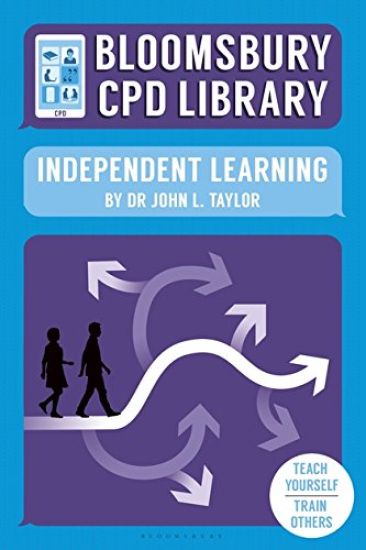
Bloomsbury CPD Library: Independent Learning
John L. Taylor; Bloomsbury CPD Library
Bloomsbury Education
2018
nidottu
Independent learning is an ideal which many teachers aspire to but find difficult to achieve. This book provides ten training plans that enable you to easily deliver hours of CPD sessions in your school. All presentations and hand-outs are provided in the book and online, making Bloomsbury CPD Library: Independent Learning all you need to help your students think independently, for a richer learning experience, and to impress inspectors.It is common for school inspectors to comment on the need for students to learn more independently, and from higher education admissions officers and employers there is a constant call for students to be better equipped to be able to learn and think for themselves. Students themselves enjoy and benefit from lessons in which they are given the opportunity to begin to take charge of the learning process, particularly when there is space for them to explore and inquire into topics that grab their attention. At the same time, there is enormous pressure on schools to ‘teach to the test’, leading many teachers to feel that they have to play safe and cannot risk giving their students genuine responsibility for their own learning, lest results suffer. Critics also argue that students need to be taught directly, as the capacity for meaningful inquiry is not one that most students possess, and even when it is present, the open-ended nature of the inquiry process can make learning inefficient.In this book, John L. Taylor shows how the rhetoric about independent learning can be turned into a practical reality. The book explores the foundations of effective learning and demonstrates how it is possible to implement an approach to learning which encourages students to learn to think for themselves. It shows how by teaching students to think better, teachers can ensure that they both succeed in jumping assessment hurdles and also enjoy a richer, more meaningful educational experience.
D. N. A. is an acronym that stands for " Distinct New Adam". This book clearly exposes the Biblical truth that there are actually "two distinct" species of Human Beings on planet Earth. Those who are "in" Adam and those who are "in" Christ. Once biblical Christianity is correctly defined and understood, this fact can be appreciated. The Humanity of Adam, the first man, is a cursed humanity because of the original sin of Adam. All naturally born human beings inherently, are under this curse without but one recourse of escape, to be born again. God's judgment is applicable to all human beings universally speaking regardless of their religious preference or practice. God, has provided the only escape from Adam's cursed humanity by established a New Humanity in Christ Jesus. Christianity is not a "RELIGION" instead it is profoundly and uniquely a "Humanity Transformation". By having sincere faith in the person and works of Jesus Christ a person is literally transposed out of Adam's humanity and into the New Humanity of Jesus Christ. In Christ Humanity there is no curse or condemnation. All religious debates, disputes and controversies regarding the preeminence of Christianity, above all of man's religious concepts, can absolutely be dispelled once the true definition of Christianity is finally understood.

Memoirs of a River Rat: A Tribute To The American Way of Life
John L. Forbes
Createspace Independent Publishing Platform
2012
nidottu
A Guide to Scaffold Use in the Construction Industry: OSHA 3150 2002 (Revised)
John L. Henshaw
Createspace Independent Publishing Platform
2012
nidottu
High Stakes Fantasy: An Alternative Reality Sports Thriller
John L. Nunes
Createspace Independent Publishing Platform
2012
nidottu