Kirjojen hintavertailu. Mukana 11 244 527 kirjaa ja 12 kauppaa.

Kirjahaku

Etsi kirjoja tekijän nimen, kirjan nimen tai ISBN:n perusteella.

1000 tulosta hakusanalla John Perry

John Henry Newman Sermons 1824-1843
From 1824 to 1843 Newman was an active clergyman of the Church of England; during these years he entered the pulpit about 1,270 times. He published 217 of the sermons which he wrote during these years; a further 246 sermons survive in manuscript in the Archives of the Birmingham Oratory, some only as fragments, some simply as sermon abstracts, but the majority as full texts. When completed, this series of the sermons will consist of five volumes. Volume IV contains thirty-nine sermons covering a period of sixteen years from the time when John Henry was still an Evangelical to the period immediately leading up to his departure from the Church of England. Part I contains twelve sermons on the Church, preached over a thirteen-year period from 1824 to 1837. Five of these belong to the twenty months spent as Curate of the old church of St Clement's and the other seven while Vicar of St Mary's, including the first sermon he ever preached on High Church principles. Part II contains a miscellany of twenty-seven sermons preached between 1828 and 1840. They range from five sermons on the Incarnate Christ; one to commemorate the dedication of the new church at Littlemore; one on Rome and Antichrist, two on behalf of the Church Missionary Society and the Society for the Propagation of the Gospel; two to mark the deaths of George IV and his former classic master, Walter Meyers; one also to commemorate the anniversary of the execution of Charles I.
John Henry Newman Sermons 1824-1843
From 1824 to 1843, Newman was an active clergyman in the Church of England. Throughout these twenty years, he entered the pulpit about 1,270 times and wrote about 600 sermons. Of these, he eventually published 217 sermons which he had written and delivered; a further 246 sermons survive in manuscript form in the Archives of the Birmingham Oratory. Volume V marks the second and final stage of a project which began with the publication of the first volume of his celebrated The Letters and Diaries of John Henry Newman in 1961, concluding 32 volumes later in 2008. Volume I of his unpublished Anglican sermons was published in 1991; Volume II in 1993; Volume III in 2010; Volume IV in 2011. Volume V contains 51 sermons plus 62 sermon abstracts, all but 2 of which belong to the 20 months when he was Curate of St Clement's, Oxford, from June 1824 until April 1826. During his tenure there, he composed 150 sermons; approximately one quarter of his Anglican output. Part I begins with the first sermon he ever preached and concludes with his farewell sermon. They demonstrate to what extent Newman was an Evangelical on first entering Anglican orders. Part II contains 2 charity sermons preached after resigning the curacy; one on the virtue of almsgiving for the purpose of raising funds for unemployed workers affected by the Stock Market crash of 1825; the other on National Schools and their close connection with the Anglican Church.
John Henry Newman Sermons 1824-1843: Volume II: Sermons on Biblical History, Sin and Justification, the Christian Way of Life, and Biblical Theology
From 1824 to 1843 Newman was an active clergyman of the Chruch of England; during these years he entered the pulpit about 1,270 times. Newman published 217 of the sermons which he wrote during these years; a further 246 sermons survive in manuscript in the Archives of the Birmingham Oratory, some only as fragments but the majority as full texts. Volume I was published in 1991; the series will consist of five volumes in all. This volume presents 58 previously unpublished sermons of John Henry Newman. Those preached in his early days as Vicar of St Mary's Oxford include a series of sermons devoted to Biblical history and contain some searching moral portraits of patriarchs and kings. Another series of sermons on the Epistle to the Romans with subsequent extensive revisions reveals the development of Newman's views on Justification and Faith leading up to the Lectures on Justification published in 1838. Of the sermons surviving from St Clement's, 1824-1826, when Newman held Evangelical views, the present volume contatins a number of practical sermons dealing with details of Christian living. These are followed by sermons devoted to Biblical theology in which Newman among other issues explores various aspects of the Jewish religion as presented in the Old Testament. As many of these sermons were revised and subsequently preached again, they are important for an undrestanding of the growth of Newman's spiritual theology.
The Letters and Diaries of John Henry Newman: Volume VII: Editing the British Critic January 1839 - December 1840
John Henry Newman (1801-90) was at the height of his position in the Church of England in 1839, when he first began to feel doubts concerning the claims of the Anglican Church. His Editorship of the British Critic took up a great deal of time but he was greatly encouraged by its increasing sales. Uncomfortable with his position as Vicar of St Mary's, Oxford, Newman was considering giving up the living at the end of 1840. This volume covers a significant period in Newman's life, with a background of social ferment and political tension: the Corn Laws, Chartism, an inexperienced monarch, weak government, and foreign problems. Contemporary writers such as Carlyle attracted Newman's attention, and university reform was a live issue.
The Letters and Diaries of John Henry Newman: Volume VIII: Tract 90 and the Jerusalem Bishopric
John Henry Newman (1801-90) was brought up in the Church of England in the Evangelical tradition. An Oxford graduate and Fellow of Oriel College, he was appointed Vicar of St Mary's Oxford in 1828; from 1839 onwards he began to have doubts about the claims of the Anglican Church and in 1845 he was received into the Roman Catholic Church. He was made a Cardinal in 1879. His influence on both the restoration of Roman Catholicism in England and the advance of Catholic ideas in the Church of England was profound. Volume VIII covers a turbulent period in Newman's life with the publication of Tract 90. His attempt to show the compatibility of the 39 Articles with Catholic doctrine caused a storm both in the University of Oxford and in the Church. He and others were horrified by the establishment of a joint Anglo-Prussian Bishopric in Jerusalem, considering it an attempt to give Apostolical succession to an heretical church. In 1842 he moved away from the hubbub of Oxford life to nearby Littlemore.
John Locke

John Locke

Clarendon Press
2007
nidottu
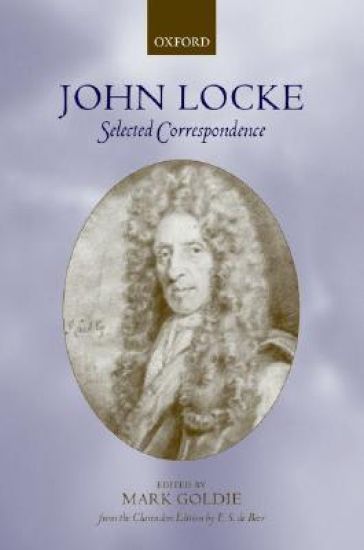
John Locke (1632-1704) was a prolific correspondent and left behind him over 3,600 letters, a collection almost unmatched in pre-modern times. A man of insatiable curiosity and wide social connections, his letters open up the cultural, social, intellectual, and political worlds of the later Stuart age. Spanning half a century, they mark the transition from the era of revolutionary Puritanism to the dawn of the Enlightenment. Locke is chiefly known as a philosopher, a theorist of empiricism in his Essay Concerning Human Understanding, a theorist of liberalism in his Two Treatises of Government, and a theorist of religious toleration in his Letter concerning Toleration. But his interests extended further still, to education, medicine, finance, theology, empire, and the natural world. He was a Fellow of the early Royal Society. He received letters from scholars in Paris and Amsterdam, from colonial administrators in Virginia, from aristocrats and shopkeepers, from children, from tenants, from politicians, from philosophic women, from astronomers, chemists, and physicists. He is one of the first people whose correspondence is as far flung as North America, India, and China. A friend of Anglican archbishops and of freethinking anticlericals, of Isaac Newton and Robert Boyle, of William Molyneux the 'virtuoso' of Dublin, of Jean LeClerc of Amsterdam, and of Damaris Masham, Locke stood in the midst of the 'Republic of Letters'. This book brings together 245 of the most important and revealing letters. Half of them are letters written by Locke (twelve per cent of the total number surviving), the other half are letters written to him. If Locke's place is already secure among those who explore philosophy and political ideas, these letters will give Locke a new presence among those who are interested in the social and cultural worlds of seventeenth-century Britain.
John Calvin's Ideas

John Calvin's Ideas

Paul Helm

Oxford University Press
2006
nidottu
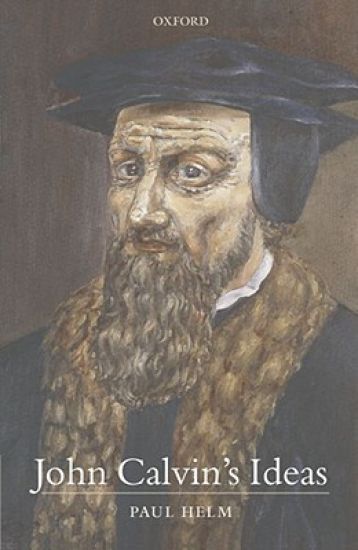
This is a major study of the theological thought of John Calvin, which examines his central theological ideas through a philosophical lens, looking at issues in Metaphysics, Epistemology, and Ethics. The study, the first of its kind, is concerned with how Calvin actually uses philosophical ideas in his work as a theologian and biblical commentator. The book also includes a careful examination of those ideas of Calvin to which the Reformed Epistemologists appeal, to find grounds and precedent for their development of `Reformed Epistemology', notably the sensus divinitatis and the internal testimony of the Holy Spirit.
John Donne in the Nineteenth Century

John Donne in the Nineteenth Century

Dayton Haskin

Oxford University Press
2007
sidottu
In 1906, having been assigned Izaak Walton's Life of Donne to read for his English class, a Harvard freshman heard a lecture on the long disparaged 'metaphysical' poets. Years later, when an appreciation of these poets was considered a consummate mark of a modernist sensibility, T. S. Eliot was routinely credited with having 'discovered' Donne himself. John Donne in the Nineteenth Century tracks the myriad ways in which 'Donne' was lodged in literary culture in the Romantic and Victorian periods. The early chapters document a first revival of interest when Walton's Life was said to be 'in the hands of every reader'; they explore what Wordsworth and Coleridge contributed to the conditions for the 1839 publication of the only edition ever called The Works, which reprinted the sermons of 'Dr Donne'. Later chapters trace a second revival, when admirers of the biography, turning to the prose letters and the poems to supplement Walton, discovered that his hero's writings entail the sorts of controversial issues that are raised by Browning, by the 'fleshly school' of poets, and by self-consciously 'decadent' writers of the fin de siècle. The final chapters treat the spread of the academic study of Donne from Harvard, where already in the 1880s he was the anchor of the seventeenth-century course, to other institutions and beyond the academy, showing that Donne's status as a writer eclipsed his importance as the subject of Walton's narrative, which Leslie Stephen facetiously called 'the masterpiece of English biography'.
The Complete Works of John Milton: Volume VI

The Complete Works of John Milton: Volume VI

John Milton

Oxford University Press
2013
sidottu
This is the fourth volume to be published in Oxford's 11-volume edition of the Complete Works of John Milton, the first complete scholarly edition for nearly 100 years. It brings together (for the first time in a single volume) Milton's English writing in prose on the political issues that exercised him throughout his life - civil and religious liberty, republicanism and the constitution of a free commonwealth, the rights and duties of citizens, resistance of tyranny and the role of military force in securing national stability. The eleven pieces here presented in chronological order, from The Tenure of Kings and Magistrates (1649) to Milton's last prose work, his translation of the proclamation announcing the election of John Sobieski as King of Poland (1674), articulate his responses to the unprecedented events of the seventeenth century - civil war, regicide, the Commonwealth, Cromwellian rule, the Restoration of monarchy and the restored Stuart regime -- events which shaped the social, political and religious structures of modern Britain. They do so with unrivalled polemical and rhetorical skill, instinct with revolutionary fervour and political idealism. Each title is freshly edited from newly examined and collated copies of either the first and subsequent seventeenth-century editions or of the manuscript record to give the most accurate and authoritative texts. A headnote to each analyses and discusses (often with new evidence) its composition, production and reception. A very substantial general introduction sets the writings in the context of European intellectual history and of contemporary British controversy and polemic. References and allusions to events and to texts are elucidated by full and detailed annotation and commentary which takes full account of recent Milton scholarship but also often draws on original research. Taken together, these features constitute the definitive edition of these texts for the 21st century. Both editors are established seventeenth-century scholars with expertise particularly in the political and religious literature of the Civil War, Interregnum and Restoration periods.
John the Evangelist and Medieval German Writing

John the Evangelist and Medieval German Writing

Annette Volfing

Oxford University Press
2001
sidottu
The saint and visionary author John the Evangelist becomes the focus of spiritual and literary discussion in a great range of Middle High German writings, many of them not previously examined by scholars. These include not just sermons and devotional literature (sometimes aimed specifically at women in religious orders), but also narrative romance in verse and 'Meisterlieder', the metrically intricate didactic poetry of the later part of the period. Paying particular attention to the theme of 'imitatio' - the extent to which the saint is presented as a suitable role-model for different categories of reader - Annette Volfing reveals the considerable variations in the literary uses of John in different genres. The strength of the book depends partly on the fact that it draws attention to a body of largely unknown literary texts, and partly on the fact that its analysis involves the juxtaposition of genres normally considered in isolation. Above all, it provides a coherent overview of a theme of central importance to the history of Western spirituality.