

Kirjahaku
Etsi kirjoja tekijän nimen, kirjan nimen tai ISBN:n perusteella.
1000 tulosta hakusanalla John Stuart
Written in 1861 and published eight years later, this influential essay by the great English philosopher and economist is still relevant and its arguments significant. Believing that the subjugation of women was primarily political and psychological in origin, Mill urged the establishment of "complete equality in all legal, political, social, and domestic relations between men and women." Arguing for both legal reforms and a social revolution, he focuses on women's exclusion from the political process, their lack of any rights in marriage, and the benefits to be obtained by their liberation. Moreover, if they are to share the freedoms enjoyed by men, equal opportunities for employment and education for women are also necessary. For its time, the work was radical and far-reaching in its demands; but despite its repeated emphasis on forms of oppression and recognition of the difficulties endured by women, it is essentially an optimistic work maintaining a firm belief that increased equality and liberty for women were inevitable. Carefully researched and clearly expressed with great logic and consistency, the book remains a landmark in the struggle for human rights. In this inexpensive edition, it will certainly be welcomed by feminists but will also appeal to anyone interested in the philosophical, human, and social issues underlying the idea of freedom and equality for all people, regardless of gender.
In his classic essay Utilitarianism, John Stuart Mill outlines the basic principle of utilitarianism-that one's actions should be guided towards outcomes that create the greatest good for the greatest numbers of people.

In his classic essay Utilitarianism, John Stuart Mill outlines the basic principle of utilitarianism-that one's actions should be guided towards outcomes that create the greatest good for the greatest numbers of people.
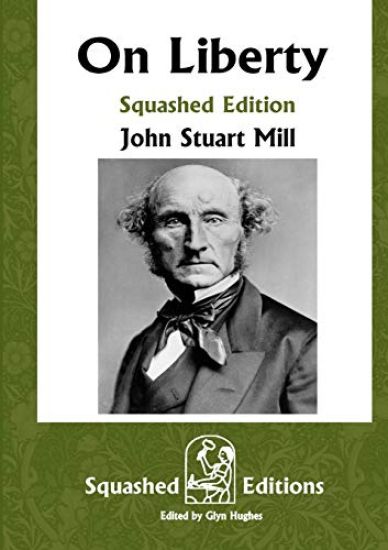
The Squashed edition of On Liberty by John Stuart Mill. Abridged from the original text to read in an hour or so. Rigorously educated by his father James Mill (the co-founder (with Jeremy Bentham) of Utilitarianism) John Stuart grew to suffer horrid depression over an upbringing which had forced classical literature, logic, political economy, history and mathematics down him before he was fourteen. He lived modestly as a clerk to the East India Company, but wrote profusely on political and philosophical matters. In Utilitarianism he states that actions are right if they bring about happiness and wrong if they bring the reverse. In On Liberty, written with his beloved wife, who died before its completion, he moved away from the Utilitarian notion that individual liberty was necessary for economic and governmental efficiency and advanced the classical defense of individual freedom as a value in itself. Squashed editions are precise abridgements - the original ideas, in their own words, the full beam of the book, the quotable quotes and all the famous lines, but neatly honed down to the length of a readable short story. "Like reading the bible without all the begats" - Prof. Jim Curtis

A System Of Logic, Ratiocinative And Inductive
John Stuart Mill
Createspace Independent Publishing Platform
2018
nidottu
This book makes no pretense of giving to the world a new theory of the intellectual operations. Its claim to attention, if it possess any, is grounded on the fact that it is an attempt, not to supersede, but to embody and systematize, the best ideas which have been either promulgated on its subject by speculative writers, or conformed to by accurate thinkers in their scientific inquiries.
Considerations on Representative Government
John Stuart Mill
Createspace Independent Publishing Platform
2018
nidottu
The book presents the concept of representative government, the ideal form of government. Mill suggests that representative bodies such as parliaments and senates are best suited to be places of public debate on the various opinions held by the population and to act as watchdogs of the professionals who create and administer laws and policy.
Principles of Political Economy
John Stuart Mill
Createspace Independent Publishing Platform
2018
nidottu
The work applies Mill's ethical system of utilitarianism to society and the state. Mill attempts to establish standards for the relationship between authority and liberty. He emphasizes the importance of individuality which he conceived as a prerequisite to the higher pleasures-the summum bonum of Utilitarianism. Furthermore, Mill criticized the errors of past attempts to defend individuality where, for example, democratic ideals resulted in the "tyranny of the majority". Among the standards established in this work are Mill's three basic liberties of individuals, his three legitimate objections to government intervention, and his two maxims regarding the relationship of the individual to society "which together form the entire doctrine of Mill's] Essay." On Liberty was a greatly influential and well received work, although it did not go without criticism.
Principles of Political Economy
John Stuart Mill
Createspace Independent Publishing Platform
2018
nidottu
An experience of five years with Mr. Mill's treatise in the class-room not only convinced me of the great usefulness of what still remains one of the most lucid and systematic books yet published which cover the whole range of the study, but I have also been convinced of the need of such additions as should give the results of later thinking, without militating against the general tenor of Mr. Mill's system; of such illustrations as should fit it better for American students, by turning their attention to the application of principles in the facts around us; of a bibliography which should make it easier to get at the writers of other schools who offer opposing views on controverted questions; and of some attempts to lighten those parts of his work in which Mr. Mill frightened away the reader by an appearance of too great abstractness, and to render them, if possible, more easy of comprehension to the student who first approaches Political Economy through this author.
Utilitarianism is philosopher John Stuart Mill's defense and advocacy of utilitarian ethics. First appearing in three magazine articles, this essay was first gathered into a single book in 1863. While Mill discusses utilitarian ethical principles in some of his other writings such as On Liberty and The Subjection of Women, Utilitarianism is Mill's only major discussion of the theory's fundamental grounds.
A System Of Logic, Ratiocinative And Inductive
John Stuart Mill
Createspace Independent Publishing Platform
2018
nidottu
This book makes no pretense of giving to the world a new theory of the intellectual operations. Its claim to attention, if it possess any, is grounded on the fact that it is an attempt, not to supersede, but to embody and systematize, the best ideas which have been either promulgated on its subject by speculative writers, or conformed to by accurate thinkers in their scientific inquiries.

The subject of this Essay is not the so-called Liberty of the Will, so unfortunately opposed to the misnamed doctrine of Philosophical Necessity; but Civil, or Social Liberty: the nature and limits of the power which can be legitimately exercised by society over the individual. A question seldom stated, and hardly ever discussed, in general terms, but which profoundly influences the practical controversies of the age by its latent presence, and is likely soon to make itself recognised as the vital question of the future. It is so far from being new, that in a certain sense, it has divided mankind, almost from the remotest ages; but in the stage of progress into which the more civilised portions of the species have now entered, it presents itself under new conditions, and requires a different and more fundamental treatment. The struggle between Liberty and Authority is the most conspicuous feature in the portions of history with which we are earliest familiar, particularly in that of Greece, Rome, and England. But in old times this contest was between subjects, or some classes of subjects, and the government. By liberty, was meant protection against the tyranny of the political rulers. The rulers were conceived (except in some of the popular governments of Greece) as in a necessarily antagonistic position to the people whom they ruled. They consisted of a governing One, or a governing tribe or caste, who derived their authority from inheritance or conquest, who, at all events, did not hold it at the pleasure of the governed, and whose supremacy men did not venture, perhaps did not desire, to contest, whatever precautions might be taken against its oppressive exercise. Their power was regarded as necessary, but also as highly dangerous; as a weapon which they would attempt to use against their subjects, no less than against external enemies.
This expanded edition of John Stuart Mill's Utilitarianism includes the text of his 1868 speech to the British House of Commons defending the use of capital punishment in cases of aggravated murder. The speech is significant both because its topic remains timely and because its arguments illustrate the applicability of the principle of utility to questions of large-scale social policy.

On Liberty by John Stuart Mill. On Liberty is a philosophical work by the English philosopher John Stuart Mill, originally intended as a short essay. The work, published in 1859, applies Mill's ethical system of utilitarianism to society and the state. Mill attempts to establish standards for the relationship between authority and liberty. He emphasizes the importance of individuality, which he conceived as a prerequisite to the higher pleasures-the summum bonum of utilitarianism. Furthermore, Mill criticizes the errors of past attempts to defend individuality where, for example, democratic ideals resulted in the "tyranny of the majority". Among the standards established in this work are Mill's three basic liberties of individuals, his three legitimate objections to government intervention, and his two maxims regarding the relationship of the individual to society.

Considerations on Representative Government
John Stuart Mill
Createspace Independent Publishing Platform
2018
nidottu
The book presents the concept of representative government, the ideal form of government. Mill suggests that representative bodies such as parliaments and senates are best suited to be places of public debate on the various opinions held by the population and to act as watchdogs of the professionals who create and administer laws and policy.
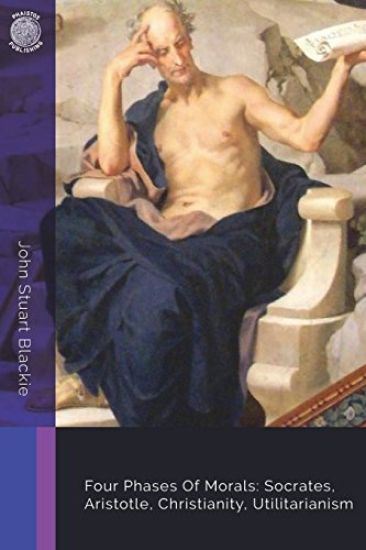
Four Phases Of Morals: Socrates, Aristotle, Christianity, Utilitarianism
John Stuart Blackie
Createspace Independent Publishing Platform
2018
nidottu
Four Phases Of Morals: Socrates, Aristotle, Christianity, Utilitarianism is a classic.

John Stuart Mill's resolute dedication to the cause of freedom inspired this 1859 treatise. Discussed and debated from time immemorial, the concept of personal liberty went without codification until the publication of this enduring work which applies an ethical system of utilitarianism to society and the state which to this day remains well known and studied. Mills (1806-1873), a British economist, philosopher, and ethical theorist whose argument does not focus on "the so-called Liberty of the Will...but Civil, or Social Liberty: the nature and limits of the power which can be legitimately exercised by society over the individual" asks and answers provocative questions relating to the boundaries of social authority and individual sovereignty. He declares that there is "one very simple principle" regarding the use of coercion in society -- one may only coerce others either to defend oneself or to defend others from harm. Mill puts forth his basic argument in favor of liberty for the individual as long as it harms no one else. Setting forth the value of liberty of opinion and liberty of action, he emphasizes the importance of individuality versus the "tyranny of the majority" and highlights the positive effects of liberty on all people and on society, as freedom enables progress and prevents social stagnation. He details the appropriate level of authority society ought to have over the individual society's obligation to protect people incapable of exercising their own freedom. On Liberty remains one of the most influential studies on the nature of individual liberty and its role in a democratic society.