Kirjojen hintavertailu. Mukana 11 717 486 kirjaa ja 12 kauppaa.

Kirjahaku

Etsi kirjoja tekijän nimen, kirjan nimen tai ISBN:n perusteella.

1000 tulosta hakusanalla Jorge Marchetti

Faith and Fascism

Faith and Fascism

Jorge Dagnino

Palgrave Macmillan
2017
sidottu
This is a study of the Federazione Universitaria Cattolica Italiana (FUCI) between 1925 and 1943, the organisation of Catholic Action for the university sector. The FUCI is highly significant to the study of Catholic politics and intellectual ideas, as a large proportion of the future Christian Democrats who ruled the country after World War II were formed within the ranks of the federation. In broader terms, this is a contribution to the historiography of Fascist Italy and of Catholic politics and mentalities in Europe in the mid- twentieth century. It sets out to prove the fundamental ideological, political, social and cultural influences of Catholicism on the making of modern Italy and how it was inextricably linked to more secular forces in the shaping of the nation and the challenges faced by an emerging mass society. Furthermore, the book explores the influence exercised by Catholicism on European attitudes towards modernisation and modernity, and how Catholicism has often led the way in the search for a religious alternative modernity that could countervail the perceived deleterious effects of the Western liberal version of modernity.
Squatter Citizen

Squatter Citizen

Jorge E. Hardoy; David Satterthwaite

Routledge
2017
sidottu
'one of the best contemporary statements of what is occurring in the growth of urban places in the Third World' Environment and Planning 'a book that should enjoy a wide appeal: as a plea for adoption of the 'popular approach'; as a text for student use; and as an accessible and stimulating guide to the urban problems of developing countries' Progress in Human Geography 'a very readable book, containing a lot of well documented information The book is especially relevant for interested lay people but many professionals will benefit from having a copy on the bookshelf' Third World Planning Review The true planners and builders of Third World cities are the poor. They organize, plan and build with no help from professionals. Drawing on their own skills, making the best use of limited resources and forming their own community organizations, they account for most new city housing. But the city, which thrives on their cheap labour, rejects them. Their houses are deemed illegal, because they do not conform to regulations and they are called 'squatters', because they cannot afford to buy sites legally. Their right to water, education and health care, even to vote, are often denied. This book challenges many common assumptions about the urban Third World - for example that urban citizens live in very large cities and that cities are growing rapidly, or that city dwellers benefit from 'urban bias' in government and aid policies. It is about the lives of the 'squatter citizens' and the problems they face in their struggle for survival.
Asphaltenes

Asphaltenes

Jorge Ancheyta; Fernando Trejo; Mohan Singh Rana

CRC Press
2017
nidottu
During the upgrading of heavy petroleum, asphaltene is the most problematic impurity since it is the main cause of catalyst deactivation and sediments formation. Exploring many aspects related to asphaltenes composition and conversion, Asphaltenes: Chemical Transformation during Hydroprocessing of Heavy Oils highlights the various changes that these heavy and complex molecules undergo during catalytic hydroprocessing. After defining and characterizing asphaltene structure, the book examines the composition of petroleum and the processes and catalysts for upgrading heavy oils. It then details the characterization of asphaltenes after hydroprocessing and the effect of reaction conditions on their structures. The authors also analyze the deactivation and characterization of spent hydroprocessing catalysts as well as the role played by asphaltenes. They cover sediments formation during hydroprocessing and the role of asphaltenes on it. The final chapters describe the hydrocracking and kinetics of asphaltenes and the fractionation of heavy crudes and asphaltenes.Due to the increasing production of heavy crude oils, asphaltene has become one of the most studied molecules. This book provides a deep understanding of how asphaltenes transform during hydroprocessing, offering insight on designing catalysts and processing for the upgrading of heavy oils.
Contacting the Autistic Child

Contacting the Autistic Child

Jorge Ahumada; Luisa C. Busch de Ahumada

Routledge
2017
sidottu
Amid long-standing controversy on their causes, which most regard as neurological, and despite their increasing social impact, there has been scant progress in the therapy of the autistic spectrum disorders. Currently fashionable attempts at treatment through behavioural-cognitive focal approaches do not seek resolution, only re-education and rehabilitation. Contacting the Autistic Child explores the clinical process in the early psychoanalytic treatment of autistic children. Organised around five detailed clinical case studies, and drawing on the ideas of major clinicians in child analysis such as Tustin, Winnicott and Alvarez, this book sets out a clear programme for working with and understanding autistic children in a psychoanalytic setting, with a particular focus on issues of clinical technique but also conceptual matters. Working on the notion that autistic disorders come to be – as Winnicott and Tustin saw it – from an early rupture of the affective communication between baby and mother, this book aims at reinstating such communication in the child-analyst interaction. By way of detailed description of what goes on in the analytic link, the authors strive to make the reader share in what goes on in the clinical setting, evincing how, though at times excruciatingly hard on the therapist, resolution is attainable. Once the "primal dialogue" – to use René Spitz’s terms – is reinstated in a stable way in session, it flows by itself into the family ambience. The clinical accounts of this book make the argument that psychoanalysis, carried along Tustin’s technical lines, and subject to the proviso that treatment starts early, preferably in the first three years of life, is the treatment of choice for autistic spectrum disorders. The strong methodological narrative is important and notable in light of the doubts, criticism and uncertainty that have surrounded the psychoanalytic treatment of autism. This novel, highly detailed narrative of five successful early treatments aims to help dispel the pessimism pervading the field and help to redress the lives of many more children. Contacting the Autistic Child will appeal to psychoanalysts and psychoanalytic psychotherapists endeavouring to obtain results in a major area lacking resolutive approaches.
Contacting the Autistic Child

Contacting the Autistic Child

Jorge Ahumada; Luisa C. Busch de Ahumada

Routledge
2017
nidottu
Amid long-standing controversy on their causes, which most regard as neurological, and despite their increasing social impact, there has been scant progress in the therapy of the autistic spectrum disorders. Currently fashionable attempts at treatment through behavioural-cognitive focal approaches do not seek resolution, only re-education and rehabilitation. Contacting the Autistic Child explores the clinical process in the early psychoanalytic treatment of autistic children. Organised around five detailed clinical case studies, and drawing on the ideas of major clinicians in child analysis such as Tustin, Winnicott and Alvarez, this book sets out a clear programme for working with and understanding autistic children in a psychoanalytic setting, with a particular focus on issues of clinical technique but also conceptual matters. Working on the notion that autistic disorders come to be – as Winnicott and Tustin saw it – from an early rupture of the affective communication between baby and mother, this book aims at reinstating such communication in the child-analyst interaction. By way of detailed description of what goes on in the analytic link, the authors strive to make the reader share in what goes on in the clinical setting, evincing how, though at times excruciatingly hard on the therapist, resolution is attainable. Once the "primal dialogue" – to use René Spitz’s terms – is reinstated in a stable way in session, it flows by itself into the family ambience. The clinical accounts of this book make the argument that psychoanalysis, carried along Tustin’s technical lines, and subject to the proviso that treatment starts early, preferably in the first three years of life, is the treatment of choice for autistic spectrum disorders. The strong methodological narrative is important and notable in light of the doubts, criticism and uncertainty that have surrounded the psychoanalytic treatment of autism. This novel, highly detailed narrative of five successful early treatments aims to help dispel the pessimism pervading the field and help to redress the lives of many more children. Contacting the Autistic Child will appeal to psychoanalysts and psychoanalytic psychotherapists endeavouring to obtain results in a major area lacking resolutive approaches.
Hybrid Drawing Techniques for Interior Design
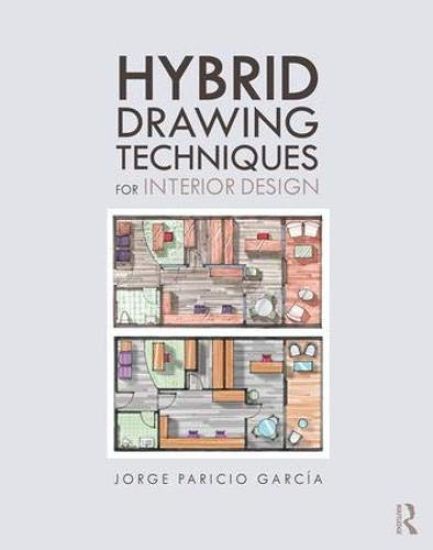
Hybrid Drawing Techniques for Interior Design shows you a flexible and productive design workflow that starts with hand drawing and moves on to digital techniques. In this book, digital and freehand images are displayed side-by-side, so that you can choose at every step which method is best for your desired effect. You will also learn how to draw freehand using a digital tablet, and how to render perspective views, elevations and floor plans. This book includes more than 400 color images and practice exercises that can be referenced online.
Hybrid Drawing Techniques for Interior Design
Hybrid Drawing Techniques for Interior Design shows you a flexible and productive design workflow that starts with hand drawing and moves on to digital techniques. In this book, digital and freehand images are displayed side-by-side, so that you can choose at every step which method is best for your desired effect. You will also learn how to draw freehand using a digital tablet, and how to render perspective views, elevations and floor plans. This book includes more than 400 color images and practice exercises that can be referenced online.
Multivariate Statistical Methods

Multivariate Statistical Methods

Jorge A. Navarro Alberto

CRC Press
2017
sidottu
Multivariate Statistical Methods: A Primer provides an introductory overview of multivariate methods without getting too deep into the mathematical details. This fourth edition is a revised and updated version of this bestselling introductory textbook. It retains the clear and concise style of the previous editions of the book and focuses on examples from biological and environmental sciences. The major update with this edition is that R code has been included for each of the analyses described, although in practice any standard statistical package can be used. The original idea with this book still applies. This was to make it as short as possible and enable readers to begin using multivariate methods in an intelligent manner. With updated information on multivariate analyses, new references, and R code included, this book continues to provide a timely introduction to useful tools for multivariate statistical analysis.
Cuba

Cuba

Jorge Salazar-Carrillo; Andro Nodarse-Leon

Routledge
2017
nidottu
This book is a study of Cuba's economic development under communism over the last fifty-five years. The authors find that Cuba's socioeconomic development has gone backward since the Cuban Revolution in 1959. The authors conclude that Fidel Castro's revolution has been an economic disaster for Cuba.The book first outlines Cuba's economic position prior to the revolution. It reviews Cuba's rankings with respect to Gross Domestic Product (GDP) per capita in the 1950s and examines the strength of pre-Castro Cuba's foreign reserves and the health of its monetary system. It also presents pre-Castro Cuba's investments in health care and education and documents the island's development potential in the 1950s. The last few chapters describe the precipitous decline in all of these areas of Cuba's economy under Castro.Despite the socioeconomic catastrophe of the Castro years, the authors envision a post-Castro Cuba, where this book can provide a benchmark to measure the developmental success that the Cuban work-ethic and entrepreneurial spirit can generate in a free-market system.
Cuba's Second Economy

Cuba's Second Economy

Jorge Perez-Lopez

Routledge
2018
nidottu
Without doubt, Cuba is facing its most serious economic challenge in nearly thirty-five years of revolutionary rule. There is consensus that as the official, centrally planned economy has faltered, ordinary citizens eke out a living only by engaging in under-the-table, unrecorded, and mostly illegal activities. In fact, this "second economy" is growing by leaps and bounds. This volume sketches the contours of the very complex phenomenon of the second economy of socialist Cuba, and discusses its evolution over time, as well as the role that it may play in the transition to a market economy on the island.The economic crisis of the 1990s has propelled the second economy from behind the scenes to center stage. Not only have black markets mushroomed, but second economy activities connected to the free-market that the Castro government has traditionally discouraged or even prosecuted are now being incorporated into the government's own economic strategy. Self-employment, cultivation of individual plots, and the use of foreign currencies to buy or sell goods, are now promoted with considerable enthusiasm by the leadership.Perez-Lopez examines different ways of thinking about unregulated economic activities that have been set forth in the literature and concludes that the concept of the second economy is the most appropriate for Cuba. He brings together available information from a multitude of sources on the manifestations of the second economy in Cuba and of its operation. Cuba's Second Economy is a timely study of an economic system in crisis. It will be of interest to economists, political scientists, policymakers, and Latin America area scholars.
Comparative Paradiplomacy

Comparative Paradiplomacy

Jorge Schiavon

Routledge
2018
sidottu
Studying paradiplomacy comparatively, this book explains why and how sub-state governments (SSG) conduct their international relations (IR) with external actors, and how federal authorities and local governments coordinate, or not, in the definition and implementation of the national foreign policy.Sub-state diplomacy plays an increasingly influential international role as regions, federal states, provinces and cities seek to promote trade, investments, cooperation and partnership on a range of issues. This raises interesting new questions about the future of the state system. Schiavon conducts a comparative study of paradiplomacy in 11 federal systems which are representative of all the regions of the world, stages of economic development and degree of consolidation of their democratic institutions (Argentina, Australia, Belgium, Brazil, Canada, Germany, India, Mexico, Russia, South Africa and the United States). The author constructs a typology to measure and explain paradiplomacy based on domestic political institutions, especially constitutional provisions relating foreign affairs and the intergovernmental mechanisms for foreign policy decision making and implementation.This comparative, systematic and theoretically based analysis of paradiplomacy between and within countries will be of interest to scholars and students of comparative politics, diplomacy, foreign policy, governance and federalism, as well as practitioners of diplomacy and paradiplomacy around the world.
The Media Commons and Social Movements

The Media Commons and Social Movements

Jorge Saavedra Utman

Routledge
2018
sidottu
What does it mean to have a voice in a formal democracy operating under neoliberal guidelines and with an almost entirely private media system? How can the people gain their voice and engage in a dialogue with hegemonic actors and discourses?In this book, Jorge Saavedra Utman examines the role of media and communicative practices during one of the largest social mobilizations in Latin America in the last 30 years: Chile’s 2011 students’ movement. Saavedra Utman observes the eye-catching, subversive, but also intimate practices that, in a country with a liberal democracy and neoliberal policies, allowed people to speak up and become political actors from grassroots positions. Presenting rich qualitative data that is sourced from interviews and focus groups with activists, he introduces a fresh perspective on the study of media and communications and social movements. Saavedra Utman paints a clearer picture of contentious events since 2011 - like the Arab Spring and Occupy – to understand the relevance of media and communications in contemporary quests for participation and democracy.Promising to be an important book, The Media Commons and Social Movements represents a significant contribution to our understanding of communicative dimensions of protest and social change.
Sovereignty Conflicts and International Law and Politics
Many conflicts throughout the world can be characterized as sovereignty conflicts in which two states claim exclusive sovereign rights for different reasons over the same piece of land. It is increasingly clear that the available remedies have been less than successful in many of these cases, and that a peaceful and definitive solution is needed. This book proposes a fair and just way of dealing with certain sovereignty conflicts. Drawing on the work of John Rawls in A Theory of Justice, this book considers how distributive justice theories can be in tune with the concept of sovereignty and explores the possibility of a solution for sovereignty conflicts based on Rawlsian methodology. Jorge E. Núñez explores a solution of egalitarian shared sovereignty, evaluating what sorts of institutions and arrangements could, and would, best realize shared sovereignty, and how it might be applied to territory, population, government, and law.