
Kirjahaku
Etsi kirjoja tekijän nimen, kirjan nimen tai ISBN:n perusteella.
1000 tulosta hakusanalla Jr. Hubbard
The Journal of Richard Henry Dana, Jr., Volume III
Harvard University Press
1968
sidottu

The Journal of Richard Henry Dana, Jr., Volume I
Harvard University Press
1968
sidottu
The Journal of Richard Henry Dana, Jr., Volume II
Harvard University Press
1968
sidottu

Ancestors and Descendants of Asahel, Jr. and Mary (Smedley) Foote
Judith Bennett Wilson
J B Wilson and Associates
2016
nidottu
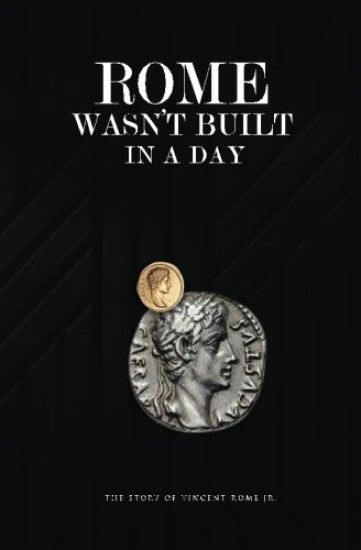
Rome Wasn't Built In A Day: The Story Of Vincent Rome Jr
Vincent Rome
Sow Publishing Group, LLC
2016
nidottu
Rome Wasn't Built in A Day tells the story aboutconvicted counterfeiter Vincent Rome, Jr. who by usinga bleaching method washed genuine U.S. $5 billschanging the denomination to U.S. $100 bills, manufacturing and selling well over $1,000,000 in andaround the Atlanta area. Written in his own words, hetells his story leading up to the day of his arrest in thisSworn Affidavit to the people. Stating that, he giveswhat he can in his story without incriminating othersand further incriminating himself, but when it comes tothis crime in which he was convicted of, maybe he givesmore than what most expect. Fore... there's adisclosure that reads: This book contains detailed information about a Federalcrime that was committed, which is public record. By nomeans does the author wish for this information to beused for illegal purposes. The crime, Title 18 U.S.C.471/Counterfeiting, carries a maximum prison term of20 years, fine up to $250,000, and restitution to all itsvictims. As a citizen of the United States it's yourresponsibility to know and abide by its laws. If you breakthe law, "you and you alone", will be held responsible
The Presidency of James Earl Carter, Jr.
Burton I. Kaufman; Scott Kaufman
University Press of Kansas
2006
sidottu
He has been called America's greatest ex-president, a man who lost the White House after one term but went on to become a respected spokesman for peace and human rights. Burton Kaufman's book on the Carter years was hailed as the best account of his administration. This new edition probes more deeply into Jimmy Carter's approach to the presidency and the issues that he faced. It features more information on his foreign and environmental policies and expanded coverage of his personal background - both his upbringing and naval career - along with insights into his wife's activist role. Drawing on Carter's previously unavailable ""Handwriting File"", as well as on new oral histories and Carter's own books, Burton and Scott Kaufman show the ways in which Carter had the opportunity - but failed - to be a successful transitional president. By the fall of 1978, he had become a more effective leader than during the first part of his presidency but could not undo his earlier mistakes and continued to make serious errors of political judgment. Weighing achievements such as the Alaska Land Bill with shortcomings such as disarray within the White House and strained relations with Congress, the authors re-examine the world events that shaped Carter's presidency, from Koreagate and the Cuban boatlift to the Camp David accords and the Iran hostage crisis. They explore bureaucratic infighting over his human rights policies, describing how the administration's position changed with greater emphasis on security issues after 1979; they also examine the issue of arms control in the light of newly opened Soviet archives and argue that the Vance-Brzezinski dispute was more profound than had originally been thought. In the final analysis, the Kaufmans fault Carter for not crafting a coherent message that would offer the American people a vision on which to build a base of support and assure his success. As his reputation as an ex-president continues to grow, this updated book offers an even better understanding of his White House years.
The Presidency of James Earl Carter, Jr.
Burton I. Kaufman; Scott Kaufman
University Press of Kansas
2006
nidottu
He has been called America's greatest ex-president, a man who lost the White House after one term but went on to become a respected spokesman for peace and human rights. Burton Kaufman's book on the Carter years was hailed as the best account of his administration. This new edition probes more deeply into Jimmy Carter's approach to the presidency and the issues that he faced. It features more information on his foreign and environmental policies and expanded coverage of his personal background - both his upbringing and naval career - along with insights into his wife's activist role. Drawing on Carter's previously unavailable ""Handwriting File"", as well as on new oral histories and Carter's own books, Burton and Scott Kaufman show the ways in which Carter had the opportunity - but failed - to be a successful transitional president. By the fall of 1978, he had become a more effective leader than during the first part of his presidency but could not undo his earlier mistakes and continued to make serious errors of political judgment. Weighing achievements such as the Alaska Land Bill with shortcomings such as disarray within the White House and strained relations with Congress, the authors re-examine the world events that shaped Carter's presidency, from Koreagate and the Cuban boatlift to the Camp David accords and the Iran hostage crisis. They explore bureaucratic infighting over his human rights policies, describing how the administration's position changed with greater emphasis on security issues after 1979; they also examine the issue of arms control in the light of newly opened Soviet archives and argue that the Vance-Brzezinski dispute was more profound than had originally been thought. In the final analysis, the Kaufmans fault Carter for not crafting a coherent message that would offer the American people a vision on which to build a base of support and assure his success. As his reputation as an ex-president continues to grow, this updated book offers an even better understanding of his White House years.

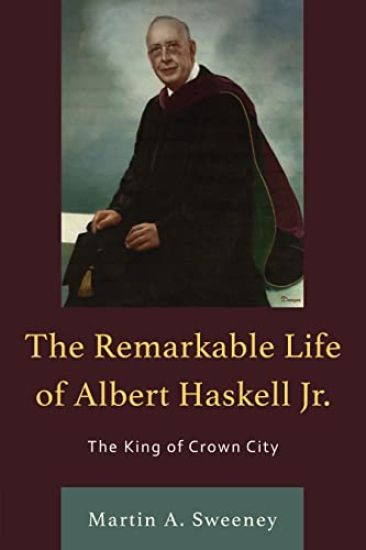
The Remarkable Life of Albert Haskell, Jr.
Martin A. Sweeney
UNIVERSITY PRESS OF AMERICA
2023
nidottu
The Remarkable Life of Albert Haskell, Jr.: The King of Crown City is the first comprehensive portrait of the Cortland, New York schoolboy who forged a path of his own that garnered him a reputation in New York State and the Northeast of the nation as an accomplished lawyer, politician, banker, civic organizer, supporter of higher education, and promoter of industrial expansion.As a district attorney, Haskell crossed paths with the prohibition government agents, murderers, white slavers, members of the “Black Hand” gang, and the Ku Klux Klan. He successfully prosecuted those who were part of a tubercular cattle scandal. As a state assemblyman, he was an advocate for the state’s dairy farmers during the violent milk strikes in the 1930s. Haskell co-founded a chapter of Rotary International in 1919 and played a pivotal role in the 1950s in making the place of his birth “the typewriter capital of the world.” Based on a trove of scrapbooks assembled by Haskell through his lifetime and kept by his grandchildren, this biography reveals exactly why Haskell’s life of integrity and public service merits the title of “King of ‘Crown City.’”
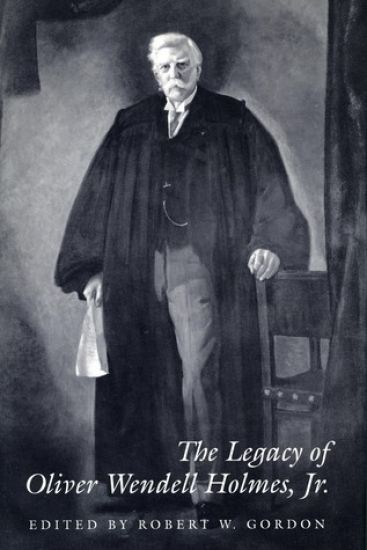
The Legacy of Oliver Wendell Holmes, Jr
Stanford University Press
1992
sidottu
A Stanford University Press classic.

Medieval Studies in Honor of Urban Tigner Holmes, Jr.
The University of North Carolina Press
1965
nidottu
This volume is composed of articles by former students of Professor Holmes and presented to him in his sixty-fifth year. Most of the essays deal with medieval subjects or subjects very closely associated with the Middle Ages.
A Celebration of John F. Nash Jr.
Duke University Press
1996
sidottu
This collection celebrates the pathbreaking work in game theory and mathematics of John F. Nash Jr., winner of the 1994 Nobel Prize in Economics. Nash’s analysis of equilibria in the theory of non-cooperative games has had a major impact on modern economic theory. This book, also published as volume 81 of the Duke Mathematical Journal, includes an important, but previously unpublished paper by Nash; the proceedings of the Nobel seminar held in Stockholm on December 8, 1994 in his honor; and papers by distinguished mathematicians and economists written in response to and in honor of Nash’s pioneering contributions to those fields. In 1950, when he was 22 years old, Nash presented his key idea-the Nash equilibrium-in the Ph.D. thesis he submitted to the Mathematics Department at Princeton University. In that paper, he defined a new concept of equilibrium and used methods from topology to prove the existence of an equilibrium point for n-person, finite, non-cooperative games, that is, for games in which the number of possible strategies are limited, no communication is allowed between the players, and n represents the number of players. The Nash equilibrium point is reached when none of the players can improve their position by changing strategies. By taking into account situations involving more than two players, specifically the general n-player game, Nash built significantly on the previous work of John Von Neumann and Oskar Morgenstern.Contributors. Abbas Bahri, Eric A. Carlen, Ennio De Giorgi, Charles Fefferman, Srihari Govidan, John C. Harsanyi, H. Hoffer, Carlos E. Kenig, S. Klainerman, Harold F. Kuhn, Michael Loss, William F. Lucas, M. Machedon, Roger B. Myerson, Raghavan Narasimhan, John F. Nash Jr., Louis Nirenberg, Jill Pipher, ZeÉv Rudnick, Peter Sarnak, Michael Shub, Steve Smale, Robert Wilson, K. Wysocki, E. Zehnder
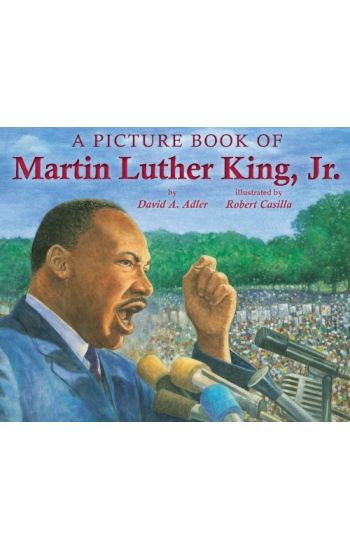
The Political Philosophy of Martin Luther King, Jr.
Hanes Walton
Praeger Publishers Inc
1971
sidottu
Studies the nature and development of Dr. King's political ideas and his contributions to modern political thought

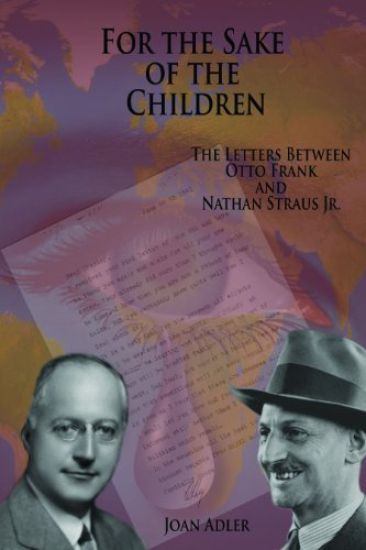
For the Sake of the Children: The Letters Between Otto Frank and Nathan Straus Jr.
Joan Adler
Joan Adler
2013
sidottu
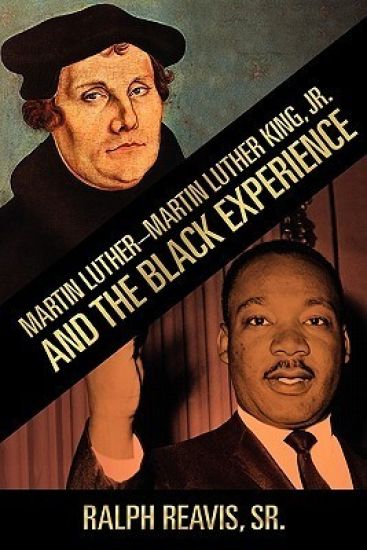
Martin Luther-Martin Luther King, Jr. and the Black Experience
Sr. Ralph Reavis
AUTHORS PUBLISHER
2010
nidottu