

Kirjahaku
Etsi kirjoja tekijän nimen, kirjan nimen tai ISBN:n perusteella.
1000 tulosta hakusanalla Judith Cook

During the past decade governments around the globe have introduced institutional mechanisms to promote the advancement of women, including measures to increase women's political participation rates and to incorporate women's interests into policy-making. Why have they done so? How successful have these initiatives been? What are the emerging agendas facing gender equality advocates now?In the New Politics of Gender Equality Judith Squires examines the origins, evolution and key features of three strategies that have been employed across the world in pursuit of gender equality – quotas, policy agencies and gender mainstreaming. The author critically examines each strategy to see how far they transform political institutions and agendas and to what extent they lead rather to the assimilation of women in male-defined structures. Squires argues that a multi-pronged approach, drawing on democratic rather than technocratic strategies, offers the best potential for advancing gender equality. She highlights too the limitations of approaches that ignore inequalities among women and the challenges of developing equality initiatives to address multiple and cross-cutting inequalities between groups.Judith Squires is Professor of Political Theory, University of Bristol. She has written, researched and published widely in the field of gender politics and gender equality.

During the past decade governments around the globe have introduced institutional mechanisms to promote the advancement of women, including measures to increase women's political participation rates and to incorporate women's interests into policy-making. Why have they done so? How successful have these initiatives been? What are the emerging agendas facing gender equality advocates now?In the New Politics of Gender Equality Judith Squires examines the origins, evolution and key features of three strategies that have been employed across the world in pursuit of gender equality – quotas, policy agencies and gender mainstreaming. The author critically examines each strategy to see how far they transform political institutions and agendas and to what extent they lead rather to the assimilation of women in male-defined structures. Squires argues that a multi-pronged approach, drawing on democratic rather than technocratic strategies, offers the best potential for advancing gender equality. She highlights too the limitations of approaches that ignore inequalities among women and the challenges of developing equality initiatives to address multiple and cross-cutting inequalities between groups.Judith Squires is Professor of Political Theory, University of Bristol. She has written, researched and published widely in the field of gender politics and gender equality.

Crime News in Modern Britain
Judith Rowbotham; Kim Stevenson; Samantha Pegg
Palgrave Macmillan
2013
sidottu
Drawing together examples from broadsheet and tabloid newspapers this account of English crime reportage takes readers from the late eighteenth century to the present day. In the post-Leveson world, it is a timely and engaging contextualisation of the history of printed crime news and investigative journalism.

Interprofessional Working in Health and Social Care
Judith Thomas; Katherine Pollard; Derek Sellman
Red Globe Press
2014
nidottu
There will always be a need for professionals to work collaboratively if they are to provide the highest standard of care. Interprofessional working encourages practitioners to understand the roles of other professionals and to learn from each other, as well as from service users and carers, to ensure the full benefit of this collaboration is realised. It is an essential element of both education and practice for today's professionals. Interprofessional Working in Health and Social Care discusses the rationale, skills and conditions required for interprofessional working. In addition, it provides an overview of the roles and perspectives of different health professionals across a broad rangeof expertise: education, housing, medicine, midwifery, nursing, occupational therapy, physiotherapy, police, probation, radiography, social work and youth work. The second edition:• Offers a broad variety of case studies from a range of fi elds and settings. • Includes a new chapter dedicated to interprofessional working with service usersand carers. • Looks forward, offering brand new content on new and emerging roles such asspecialist paramedics and approved mental health practitioners. This book is a valuable tool for students and practitioners across the health and social care discipline, employing engaging case studies and reflective activities to support learning about interprofessional and interagency collaboration. Erratum: please note the term 'Approved Mental Health Practitioner' has been used in error, instead of 'Approved Mental Health Professional'. This will be corrected as soon as possible on the next reprint and the e-book version has been corrected.



Rwanda Primary English 4 Teacher's Book Revised Edition
Judith Greet
Macmillan Education
2009
nidottu

Analyzes the themes and techniques used in Merrill's most important poems, and suggests the influences which shaped his work.

New species are discovered every day-and cataloguing all of them has grown into a nearly insurmountable task worldwide. Now, this definitive reference manual acts as a style guide for writing and filing species descriptions. New collecting techniques and new technology have led to a dramatic increase in the number of species that are discovered. Explorations of unstudied regions and new habitats for almost any group of organisms can result in a large number of new species discoveries-and hence the need to be described. Yet there is no one source a student or researcher can readily consult to learn the basic practical aspects of taxonomic procedures. Species description can present a variety of difficulties: Problems arise when new species are not given names because their discoverers do not know how to write a formal species description or when these species are poorly described. Biologists may also have to deal with nomenclatural problems created by previous workers or resulting from new information generated by their own research. This practical resource for scientists and students contains instructions and examples showing how to describe newly discovered species in both the animal and plant kingdoms. With special chapters on publishing taxonomic papers and on ecology in species description, as well as sections covering subspecies, genus-level, and higher taxa descriptions, Describing Species enhances any writer's taxonomic projects, reports, checklists, floras, faunal surveys, revisions, monographs, or guides. The volume is based on current versions of the International Codes of Zoological and Botanical Nomenclature and recognizes that systematics is a global and multicultural exercise. Though Describing Species has been written for an English-speaking audience, it is useful anywhere Taxonomy is spoken and will be a valuable tool for professionals and students in zoology, botany, ecology, paleontology, and other fields of biology.

New species are discovered every day-and cataloguing all of them has grown into a nearly insurmountable task worldwide. Now, this definitive reference manual acts as a style guide for writing and filing species descriptions. New collecting techniques and new technology have led to a dramatic increase in the number of species that are discovered. Explorations of unstudied regions and new habitats for almost any group of organisms can result in a large number of new species discoveries-and hence the need to be described. Yet there is no one source a student or researcher can readily consult to learn the basic practical aspects of taxonomic procedures. Species description can present a variety of difficulties: Problems arise when new species are not given names because their discoverers do not know how to write a formal species description or when these species are poorly described. Biologists may also have to deal with nomenclatural problems created by previous workers or resulting from new information generated by their own research. This practical resource for scientists and students contains instructions and examples showing how to describe newly discovered species in both the animal and plant kingdoms. With special chapters on publishing taxonomic papers and on ecology in species description, as well as sections covering subspecies, genus-level, and higher taxa descriptions, Describing Species enhances any writer's taxonomic projects, reports, checklists, floras, faunal surveys, revisions, monographs, or guides. The volume is based on current versions of the International Codes of Zoological and Botanical Nomenclature and recognizes that systematics is a global and multicultural exercise. Though Describing Species has been written for an English-speaking audience, it is useful anywhere Taxonomy is spoken and will be a valuable tool for professionals and students in zoology, botany, ecology, paleontology, and other fields of biology.

Lesbianism in literature has been dealt with rather indirectly in the past. Editors have led readers to the "artistry" of a work containing lesbianism, emphasizing instead the literary history and historical context of the work rather than the representations of lesbianism. The editor for Colette's The Pure and the Impure, for instance, affirms that Colette has a knowledge of a "strange sisterhood," but assures readers she has never strayed from the "normal." In the groundbreaking A Lure of Knowledge, Judith Roof demonstrates that representations of lesbian sexuality occupy specific locations or positions in the arguments, subject matter, and rhetoric of Western European and American literary criticism. She examines the political context of representations: how lesbian sexuality is used as a signifier an why it appears when and where it does. Roof argues that attempts to depict or explain lesbian sexuality spur anxieties about knowledge and identity. In reaction to and denial of these anxieties, lesbian sexuality is represented in film, literature, theory, and criticism as foreplay, as simulated heterosexuality, as erotic excess, as joking inauthenticity, as artful compromise, or as masculine mask in a specific repertoire of neutralization and evasion. Challenging the heterosexism of film theory and feminist theory, this book analyzes the rhetorical use of lesbian sexuality. Roof explores a range of discourses, from the woks of such authors as Anais Nin, Olga Broumas, Julia Kristeva, Jane Rule, Luce Iriguray, and Sigmund Freud, to films such as Emmanuelle, Desert Hearts, Entre Nous, and I've Heard the Mermaids Singing, to professional tennis.
Lesbianism in literature has been dealt with rather indirectly in the past. Editors have led readers to the "artistry" of a work containing lesbianism, emphasizing instead the literary history and historical context of the work rather than the representations of lesbianism. The editor for Colette's The Pure and the Impure, for instance, affirms that Colette has a knowledge of a "strange sisterhood," but assures readers she has never strayed from the "normal." In the groundbreaking A Lure of Knowledge, Judith Roof demonstrates that representations of lesbian sexuality occupy specific locations or positions in the arguments, subject matter, and rhetoric of Western European and American literary criticism. She examines the political context of representations: how lesbian sexuality is used as a signifier an why it appears when and where it does. Roof argues that attempts to depict or explain lesbian sexuality spur anxieties about knowledge and identity. In reaction to and denial of these anxieties, lesbian sexuality is represented in film, literature, theory, and criticism as foreplay, as simulated heterosexuality, as erotic excess, as joking inauthenticity, as artful compromise, or as masculine mask in a specific repertoire of neutralization and evasion. Challenging the heterosexism of film theory and feminist theory, this book analyzes the rhetorical use of lesbian sexuality. Roof explores a range of discourses, from the woks of such authors as Anais Nin, Olga Broumas, Julia Kristeva, Jane Rule, Luce Iriguray, and Sigmund Freud, to films such as Emmanuelle, Desert Hearts, Entre Nous, and I've Heard the Mermaids Singing, to professional tennis.

Interpreting Pre-Quaternary Climate from the Geologic Record
Judith Totman Parrish
Columbia University Press
1998
sidottu
Within the geological science of paleoclimatology, the earth's pre-Quaternary period--more than two million years ago-has been studied systematically only since the 1960's, when geologists started to take seriously the concept that the continents have changed position on the earth's surface. In the decades since, the study of pre-Quaternary paleoclimatology has expanded greatly. A wide variety of methods have been developed to study pre-Quaternary climates, but until now, no single text has sought to synthesize those methods. Judith Totman Parrish's text offers a much-needed entry point into the literature. While a number of previous books have dealt with climate models and paleoclimate, this is the first to offer a sustained exploration of the methods that are the foundation of any interpretation of earth processes. Focusing primarily on the description and analysis of paleoclimatic indicators-signals of a particular climate--this valuable reference work offers detailed explanations of biotic and lithologic indicators in the marine and terrestrial realms and includes case histories of paleoclimatic studies. The most up-to-date and comprehensive volume on the subject, Interpreting Pre-Quaternary Climatefrom the Geologic Record will be an important resource for students and scientists alike. Parrish's focus on the established, underexploited, and controversial methods bring to light a spectrum of potential new avenues of research in this field.

Interpreting Pre-Quaternary Climate from the Geologic Record
Judith Totman Parrish
Columbia University Press
2001
pokkari
Within the geological science of paleoclimatology, the earth's pre-Quaternary period--more than two million years ago-has been studied systematically only since the 1960's, when geologists started to take seriously the concept that the continents have changed position on the earth's surface. In the decades since, the study of pre-Quaternary paleoclimatology has expanded greatly. A wide variety of methods have been developed to study pre-Quaternary climates, but until now, no single text has sought to synthesize those methods. Judith Totman Parrish's text offers a much-needed entry point into the literature. While a number of previous books have dealt with climate models and paleoclimate, this is the first to offer a sustained exploration of the methods that are the foundation of any interpretation of earth processes. Focusing primarily on the description and analysis of paleoclimatic indicators-signals of a particular climate--this valuable reference work offers detailed explanations of biotic and lithologic indicators in the marine and terrestrial realms and includes case histories of paleoclimatic studies. The most up-to-date and comprehensive volume on the subject, Interpreting Pre-Quaternary Climatefrom the Geologic Record will be an important resource for students and scientists alike. Parrish's focus on the established, underexploited, and controversial methods bring to light a spectrum of potential new avenues of research in this field.
Roof's ambitious, wide-ranging book links narrative theory, theories of sexuality, and gay and lesbian theory to explore the place of homosexuality, and specifically the lesbian, in the tradition of western narrative. According to Freud, perversions are the necessary obstacles in a heroic plot of normal heterosexual development; and homosexuality is the nineteenth century's classic case of perversion. Roof builds on Freud to illustrate that a structural understanding of narrative enforces a heterosexual paradigm, a sense of meaning that provides psychological stability for the reader. Looking at film, television, and lesbian novels, Roof explores how ideas of narrative and sexuality inform, determine, and reproduce one another. She identifies the paradigmatic lesbian story, its unvarying repetition, and how it might be recast. Understanding identification as a narrative practice, and narrative as typically heterosexual and reproductive, Roof shows how sexuality and narrative must be disentangled to alter oppressive social practices.Come As You Are marks a significant contribution to lesbian and gay studies, psychoanalytic theory, and feminism.

Roof's ambitious, wide-ranging book links narrative theory, theories of sexuality, and gay and lesbian theory to explore the place of homosexuality, and specifically the lesbian, in the tradition of western narrative. According to Freud, perversions are the necessary obstacles in a heroic plot of normal heterosexual development; and homosexuality is the nineteenth century's classic case of perversion. Roof builds on Freud to illustrate that a structural understanding of narrative enforces a heterosexual paradigm, a sense of meaning that provides psychological stability for the reader. Looking at film, television, and lesbian novels, Roof explores how ideas of narrative and sexuality inform, determine, and reproduce one another. She identifies the paradigmatic lesbian story, its unvarying repetition, and how it might be recast. Understanding identification as a narrative practice, and narrative as typically heterosexual and reproductive, Roof shows how sexuality and narrative must be disentangled to alter oppressive social practices.Come As You Are marks a significant contribution to lesbian and gay studies, psychoanalytic theory, and feminism.

In this hard-hitting analysis of the war on poverty, Judith Russell charges that since FDR's New Deal, the U.S. government has introduced many public policies attempting to address poverty, yet it has failed to produce coherent programs to combat it. Focusing on the genesis of the Economic Opportunity Act of 1964, the core of Presidents Kennedy and Johnson's antipoverty crusade, Russell asserts that the war on poverty could have been an inclusive policy of government-sponsored jobs programs, but it failed to confront the deep-rooted problems endemic to American poverty. While the macroeconomic strategies devised by the Keynesian Council of Economic Advisors in 1963 and 1964 eventually rejected proposed jobs programs to combat unemployment, Russell argues that this was the wrong strategy for fighting the structural unemployment at the center of hard-core poverty. At the same time, liberal policymakers ignored direct calls for jobs programs emanating from black Americans who were disproportionately affected by structural unemployment. Without these programs at the center of the war on poverty, it was doomed to fail. Drawing on a plethora of archival sources, including the Kennedy and Johnson Presidential Libraries, and interviews and a ten-year correspondence with former Secretary of Labor W. Willard Wirtz, this forceful examination brings a fresh perspective to a key era in American economic policymaking and to contemporary policy debates.

In this hard-hitting analysis of the war on poverty, Judith Russell charges that since FDR's New Deal, the U.S. government has introduced many public policies attempting to address poverty, yet it has failed to produce coherent programs to combat it. Focusing on the genesis of the Economic Opportunity Act of 1964, the core of Presidents Kennedy and Johnson's antipoverty crusade, Russell asserts that the war on poverty could have been an inclusive policy of government-sponsored jobs programs, but it failed to confront the deep-rooted problems endemic to American poverty. While the macroeconomic strategies devised by the Keynesian Council of Economic Advisors in 1963 and 1964 eventually rejected proposed jobs programs to combat unemployment, Russell argues that this was the wrong strategy for fighting the structural unemployment at the center of hard-core poverty. At the same time, liberal policymakers ignored direct calls for jobs programs emanating from black Americans who were disproportionately affected by structural unemployment. Without these programs at the center of the war on poverty, it was doomed to fail. Drawing on a plethora of archival sources, including the Kennedy and Johnson Presidential Libraries, and interviews and a ten-year correspondence with former Secretary of Labor W. Willard Wirtz, this forceful examination brings a fresh perspective to a key era in American economic policymaking and to contemporary policy debates.
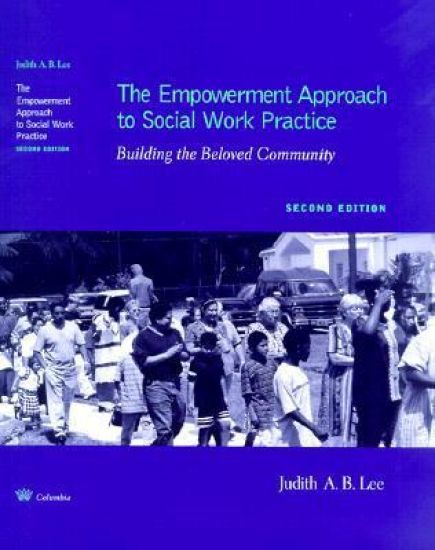
First published in 1994, this book was hailed as a cutting-edge, theory-driven report from the front-line trenches in the battle for social justice. Both clinical and community oriented and written from a global perspective, it presents clients speaking for themselves alongside reports of prominent social work educators. This new edition puts greater emphasis on "how-to" skills in working with people toward their own empowerment and stresses multiculturalism. A new chapter identifies worldwide issues of oppression such as abuse of women and children and neglect of the mentally ill.