Kirjojen hintavertailu. Mukana 12 016 292 kirjaa ja 12 kauppaa.

Kirjahaku

Etsi kirjoja tekijän nimen, kirjan nimen tai ISBN:n perusteella.

1000 tulosta hakusanalla Julio E. Normey-Rico

The Representation of the Political in Selected Writings of Julio Cortázar
OrIoff shows that Cortázar did not become a political writer as a result of the Cuban Revolution, as is often claimed, but rather that the representation of the political was present in Cortázar's very first writings. The book analyses the evolution of the representation of distinct political elements throughout Cortázar's writings, mainly with reference to the novels and the so-called collage books, which have so far received only limited critical attention. The author also alludes to some short stories and refers to many of Cortázar's non-literary texts. Through this chosen corpus, the book follows a thematic thread, showing that politics was present in Cortázar's fiction from his very first writings, and not - as he himself tended to claim - only following his conversion to socialism. The study aims to show that contrary to what many critics have argued, this political conversion did not divide the writer into an irreconcilable before and after - the apolitical versus the political - but rather it simply shifted the emphasis of the representation of the political that already existed in Cortázar's writings. Carolina Orloff is an independent scholar working on research projects in the UK and in Argentina.

Questions of the Liminal in the Fiction of Julio Cortazar
The great Argentinian writer Julio Cortazar (1914-84) was immersed in one of the most vibrant and revolutionary intellectual scenes of the last century, the Paris of the 1950s and 60s. Yet his often highly cerebral work has never received the close philosophical attention it deserves. Moran's book fills this critical lacuna. Rather than indiscriminately applying 'theory' to Cortazar, it aims to show that his work both engages with and often foreshadows many of the problems which were to become central to so-called poststructuralist philosophy and poetics. This study demonstrates that Cortazar remains enduringly, problematically modern.
Raumstruktur und Handlung in Luna de lobos von Julio Llamazares
Studienarbeit aus dem Jahr 2006 im Fachbereich Romanistik - Spanische Sprache, Literatur, Landeskunde, Note: 2,3, Bayerische Julius-Maximilians-Universit t W rzburg, Sprache: Deutsch, Abstract: 1. Biographische Daten zu Julio Llamazares Julio Llamazares wurde 1955 in Vegami n, einem kleinen asturischen Dorf geboren. Heute lebt er als Schriftsteller und Journalist in Madrid. Zun chst arbeitete er als Journalist f r das Radio, das spanische Fernsehen und diverse Zeitungen. 1979 gab er seinen ersten Gedichtband mit dem Titel La lentitud de los bueyes heraus. Nachdem Julio Llamazares einen zweiten Gedichtband, Memoria de la nieve, verfasste, wandte er sich der Erz hlliteratur zu. Sein Roman Luna de lobos ber den spanischen B rgerkrieg machte ihn in Spanien bekannt. Der nachfolgende Roman, La lluvia amarilla von 1988, handelt von dem Abwandern spanischer Dorfbewohner in die St dte. Das Au ergew hnliche an den Werken Llamazares ist auf der einen Seite seine Themenwahl und auf der andern Seite seine Art die Themen darzustellen. Llamazares ist einer der wenigen Autoren, der sich mit dem Sterben der spanischen Bergregionen befasst und dies in seinen Romanen thematisiert. In Luna de lobos w hlt er eine untypische Herangehensweise an das Thema B rgerkrieg. Seine Erz hlweise und seine Sprache sind klar und deutlich, er heroisiert weder noch monumentalisiert Llamazares das Geschehene und die Personen. (http: //www.literaturfestival.com/bios1_1_6_451.html)
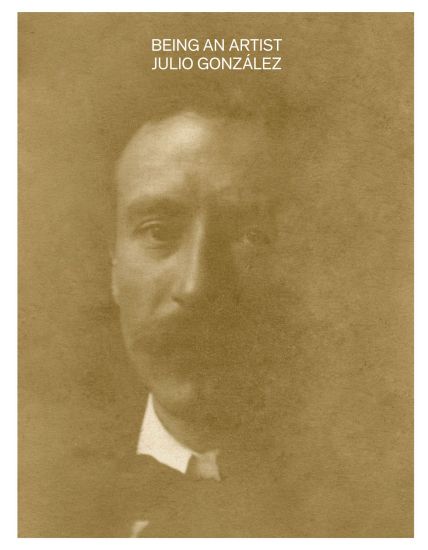
Being an Artist. Julio González

Being an Artist. Julio González

Juan José Lahuerta

Editorial Tenov S.L.
2023
sidottu
A richly illustrated catalog, with biography, of artist Julio González. The sculptures of Julio González (1876–1942) were shown at MoMA in 1956, and our understanding of his influence on modern art has grown steadily since. This lavishly illustrated book offers a new, highly nuanced account of González’s life, work, and legacy. Beginning with González’s complex family relationships, Juan José Lahuerta explores the tensions involved as González sought to combine his craft with efforts to become a painter, as the Romantic, bohemian mentality of the late nineteenth century had idealized. Lahuerta also explores the importance of González’s relationships with Picasso and other contemporaries, which helps us understand how, in the 1930s, his naïve artist’s urge was replaced by a radical urge to make art that would break every taboo related to tradition, craft, and material. The second section of the book offers a stunning presentation of the new exhibition of the Julio González collection at the Institut Valencià d'Art Modern. The book will serve as a milestone in our understanding of González’s work and influence.
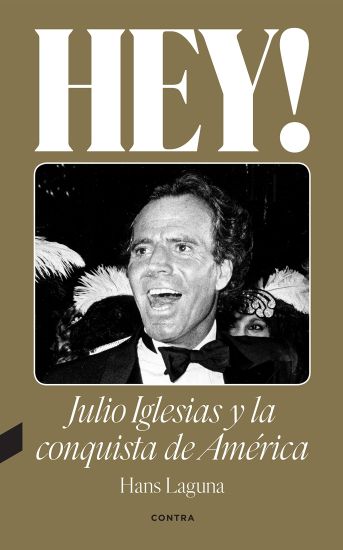
Hey! Julio Iglesias Y La Conquista de América / Hey! Julio Iglesias and the Conquest of America: Volume 1
Julio Iglesias es un icono kitsch, un personaje de la prensa rosa, un gal n machista y un baladista para la tercera edad. Pero Iglesias es tambi n el cantante vivo que m s discos ha vendido en la historia de la m sica junto a Madonna y Elton John, y fue el primer artista no anglosaj n que consigui triunfar a lo grande en los Estados Unidos. Durante varias d cadas, fue adem s un sex symbol para millones de mujeres en todo el planeta. Julio, pues, se merec a un an lisis que explicara su relevancia social m s all del meme en que ha acabado convertido. El eje central de este ensayo, profusamente documentado e ilustrado, es el exitoso plan de Iglesias para conquistar el mercado estadounidense a mediados de los a os ochenta. Adem s de detallar los mecanismos que propiciaron esta gesta, el relato aborda otros temas como su estatus de celebridad, su encarnaci n del mito del latin lover, su particular estilo vocal o la construcci n de su marca personal, que se anticip a las estrategias de las estrellas globales del pop en la era de internet. Por ltimo, el libro se ocupa de los claroscuros de su figura y de los costes personales que hay que pagar por alcanzar la fama. Julio Iglesias is a kitsch icon, a tabloid character, a macho heartthrob and a balladeer for the elderly. But Iglesias is also the best-selling living singer in the history of music, along with Madonna and Elton John, and he was the first non-Anglo-Saxon artist to make it big in the United States. For several decades, he was also a sex symbol for millions of women around the world. Julio, therefore, deserved an analysis that would explain his social relevance beyond the meme he has become. The central axis of this essay, profusely documented and illustrated, is Iglesias' successful plan to conquer the U.S. market in the mid-1980s. In addition to detailing the mechanisms that led to this feat, the story addresses other issues such as his celebrity status, his incarnation of the Latin lover myth, his particular vocal style and the construction of his personal brand, which anticipated the strategies of global pop stars in the Internet era. Finally, the book deals with the chiaroscuros of his figure and the personal costs of achieving fame.
El Intersticio Como Fundamento Poético En La Obra de Julio Cortázar
En el presente trabajo se plantea la pregunta por la presencia de lo poetico en la obra del escritor argentino Julio Cortazar. Se intenta fundamentar el caracter poetico de la prosa cortazariana mas alla de una mera clasificacion generica. Para ello introducimos el concepto de intersticio o de lo intersticial. El intersticio es una instancia posibilitadora de sentido en la medida en que implica una suspension o cuestionamiento de la realidad dada. Lo intersticial, precisamente por escabullirse a un sentido fijo, se manifiesta textualmente a traves de diversas estructuras o modalidades: quiasma, signo vacio, espera y heterotopia. El grueso del trabajo consiste en mostrar estas estructuras operando en cinco textos cortazarianos: Alto el Peru, Territorios, El examen, 62. Modelo para armar y Autonautas de la cosmopista.
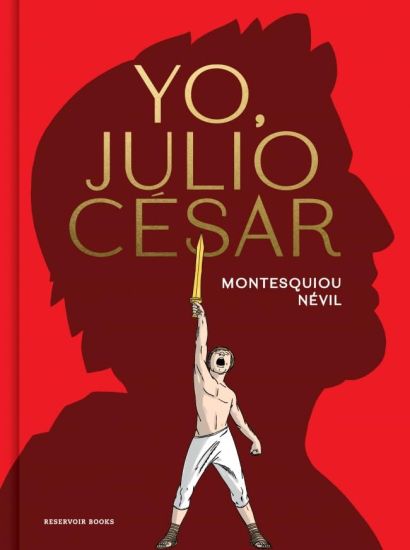
Yo, Julio César / I, Julius Caesar

Yo, Julio César / I, Julius Caesar

Alfred de Montesquiou

Reservoir Books
2026
sidottu
La vida de Julio C sar contada por s mismo. La novela gr fica m s completa jam s dibujada sobre el hombre m s poderoso de la Antigua Roma: 32 historiadores, 16 pa ses y tres a os de investigaci n. C mo fue posible que Julio, un adolescente de constituci n fr gil y sin dinero, se convirtiera en C sar, el hombre m s poderoso del mundo? C mo pudo derrotar a todos sus enemigos y luego morir a manos de sus amigos? Construida sobre un impresionante edificio de investigaci n hist rica, esta biograf a --contada en primera persona por su protagonista-- refleja v vidamente el incre ble destino de una figura nica. ENGLISH DESCRIPTION The life of Julius Caesar told by Caesar himself. The most complete graphic novel ever drawn about the most powerful man of Ancient Rome: 32 historians, 16 countries, and three years of research. How was it possible that Julius, a teenager with a fragile constitution and no money, became Caesar, the most powerful man in the world? How could he defeat all his enemies and then die at the hands of his friends? Built on an impressive foundation of historical research, this biography, told in the first person by its protagonist--vividly reflects the incredible destiny of a unique figure.
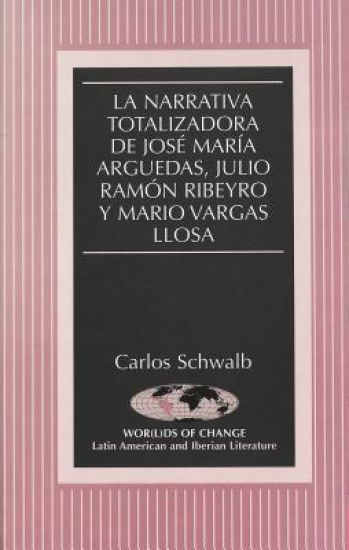
La Narrativa Totalizadora de Jose Maria Arguedas, Julio Ramon Ribeyro y Mario Vargas Llosa
El libro es un estudio de la llamada novela total, en boga en Latinoamerica durante las decadas del sesenta y setenta. Se analizan sus presupuestos ideologicos y artisticos a la vez que las razones que llevan a su cuestionamiento o abandono en la novelistica mas reciente. Segun el autor, este cambio refleja el colapso de las utopias de unidad o totalidad, caracteristicos de la modernidad, y el fin del papel del escritor latinoamericano como portavoz del todo social. El libro se centra en el analisis de la narrativa de tres autores peruanos, en particular de tres novelas que ilustran la crisis de las visiones totalizadoras en el Peru El zorro de arriba y el zorro de abajo, de Jose Maria Arguedas; Los geniecillos dominicales, de Julio Ramon Ribeyro, e Historia de Mayta, de Mario Vargas Llosa.
Place and Displacement in the Narrative Worlds of Jorge Luis Borges and Julio Cortazar
"Place and Displacement in the Narrative Worlds of Jorge Luis Borges and Julio Cortazar "engages the notions of place and displacement as heuristic devices for literary analysis of Borges's and Cortazar's narratives. It maps out these authors' visions of place and displacement in some of their most famous texts; locates the 'place' of Borges's texts within Cortazar's fictional universe; and delineates new routes in communication between different literary traditions, and philosophical and anthropological discourses. This book also suggests that the challenge of a strict opposition between place and displacement in Borges's and Cortazar's works is both representative and emblematic of a continuum of Latin American literature."