Kirjojen hintavertailu. Mukana 11 717 486 kirjaa ja 12 kauppaa.

Kirjahaku

Etsi kirjoja tekijän nimen, kirjan nimen tai ISBN:n perusteella.

1000 tulosta hakusanalla Ken Booth

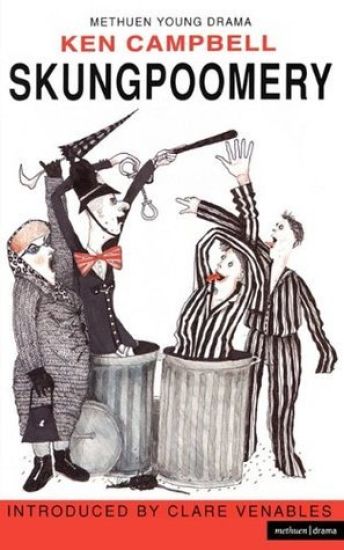
Skungpoomery

Skungpoomery

Ken Campbell

Methuen Drama
1993
nidottu
"I don't think there is a more hilariously anarchic talent on the loose in British theatre" (The Times) Life for the amazing Faz and his twitty assistant Twoo, has become listless and lacking in sparkle. That is, until Faz invents skungpoomery or "thinking up a word and then doing it. "Examples of skungpoomery are: "shankfinerbling" (going up to someone's legs and finerbling them with your nose) or "whangbungkling" (firing off bunklies into the air with the aid of a ruler) or even "bunkjamjarmering" (smearing strawberry jam on your pyjamas and doing a bunk into the street). And so saying, Faz and Twoo bunjamjarmer into the world outside, a world now a-glitter with excitement and adventure - thanks to skungpoomery. First produced for audiences of 7-13 year olds by the Nottingham Playhouse Roundabout Company, and subsequently by the Richmond Orange Tree."The only time I feel like dusting down the term "genius", in the pure sense of an influential demonic character, is when I'm confronted by a great Ken Campbell show." (Michael Coveney, Observer)
Making Scenes 1: Short Plays for Young Actors

Making Scenes 1: Short Plays for Young Actors

Ken Campbell; Christopher Hampton; Judith Johnson; Gregory Motton

Methuen Drama
1995
nidottu
Four short plays for young actors Making Scenes 1 is an exciting selection of plays commissioned by the Royal National Theatre for the BT National Connections festival for young actors in 1995.Each play includes Production Notes, dealing with setting and staging, costume, lighting and casting. Also included are a set of questions and exercises for workshop classes.
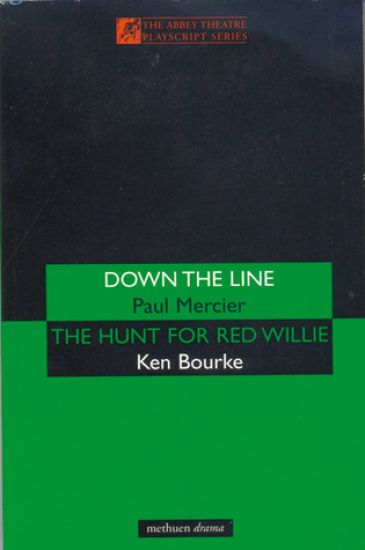
'Down The Line' & 'The Hunt For Red Willie'

'Down The Line' & 'The Hunt For Red Willie'

Ken Bourke; Paul Mercier

Methuen Drama
2000
nidottu
Two new plays that premiered on the Peacock Stage at the Abbey Theatre in 2000Down the Line: Dubliners Eve and James Walsh have reared four children. Almost. They have a son who took off to London, a daughter who can't go any further than the front gates without feeling homesick, a younger son orbiting the planet and a younger daughter who is the family's last great hope. A warm and irresistible story of suburban family life by the author of the award-winning Dublin Trilogy, Down the Line premièred on the Peacock Stage of the Abbey Theatre on 28 September 2000.THE HUNT FOR RED WILLIEOn a remote stretch of bog in County Donegal in 1829, a local landlord meets his end while in pursuit of the notorious Red Willie. Foul play is suspected and the hunt is on. A farcical romp that casts a warm side-long glance at some of the classic plays of Irish theatre, The Hunt for Red Willie premiered on the Peacock Stage of the Abbey Theatre on 23 November 2000.
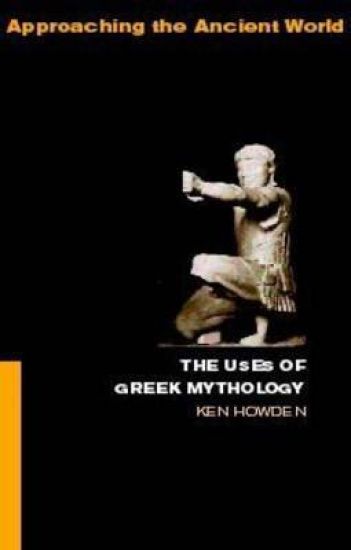
The Uses of Greek Mythology

The Uses of Greek Mythology

Ken Dowden

Routledge
1992
nidottu
In an innovative sequence of topics, Ken Dowden explores the uses Greeks made of myth and the uses to which we can put myth in recovering the richness of their culture. Most aspects of Greek life and history - including war, religion and sexuality - which are discernable through myth, as well as most modern approaches, are given a context in a book which is designed to be useful, accessible and stimulating.
The Gulf Conflict and International Relations
This book provides a comprehensive analysis and review of the major events and the leading actors of the Gulf War. Copies of key documents and essential factual information build up a picture of the realities of war in the Middle East but the material is set in a strong theoretical framework. This allows the author to see the conflict within the context of the international system and to relate it to the changes of the post-cold-war world.Matthews looks at the shifts in international order which dictated the nature of the international response to the war, but also at the new conditions created by the war itself. What scope is there for Arab socialism after the fall of European socialism? Has the conflict made Israel stronger or weaker? Can the UN be entrusted with the post of global peace-keeper?
Reading the Vampire

Reading the Vampire

Ken Gelder

Routledge
1994
sidottu
Insatiable bloodlust, dangerous sexualities, the horror of the undead, uncharted Trannsylvanian wildernesses, and a morbid fascination with the `other': the legend of the vampire continues to haunt popular imagination.Reading the Vampire examines the vampire in all its various manifestations and cultural meanings. Ken Gelder investigates vampire narratives in literature and in film, from early vampire stories like Sheridan Le Fanu's `lesbian vampire' tale Carmilla and Bram Stoker's Dracula, the most famous vampire narrative of all, to contemporary American vampire blockbusters by Stephen King and others, the vampire chronicles of Anne Rice, `post-Ceausescu' vampire narratives, and films such as FW Murnau's Nosferatu and Bram Stoker's Dracula.Reading the Vampire embeds vampires in their cultural contexts, showing vampire narratives feeding off the anxieties and fascinations of their times: from the nineteenth century perils of tourism, issues of colonialism and national identity, and obsessions with sex and death, to the `queer' identity of the vampire or current vampiric metaphors for dangerous exchanges of bodily fluids and AIDS.
Reading the Vampire

Reading the Vampire

Ken Gelder

Routledge
1994
nidottu
Insatiable bloodlust, dangerous sexualities, the horror of the undead, uncharted Trannsylvanian wildernesses, and a morbid fascination with the `other': the legend of the vampire continues to haunt popular imagination.Reading the Vampire examines the vampire in all its various manifestations and cultural meanings. Ken Gelder investigates vampire narratives in literature and in film, from early vampire stories like Sheridan Le Fanu's `lesbian vampire' tale Carmilla and Bram Stoker's Dracula, the most famous vampire narrative of all, to contemporary American vampire blockbusters by Stephen King and others, the vampire chronicles of Anne Rice, `post-Ceausescu' vampire narratives, and films such as FW Murnau's Nosferatu and Bram Stoker's Dracula.Reading the Vampire embeds vampires in their cultural contexts, showing vampire narratives feeding off the anxieties and fascinations of their times: from the nineteenth century perils of tourism, issues of colonialism and national identity, and obsessions with sex and death, to the `queer' identity of the vampire or current vampiric metaphors for dangerous exchanges of bodily fluids and AIDS.
Telling Sexual Stories

Telling Sexual Stories

Ken Plummer

Routledge
1994
sidottu
First published in 2004. The world has become cluttered with sexual stories. From child abuse scandals to lesbian and gays coming out; from Anita Hill and Clarence Thomas to the travails of Michael Jackson; from sexual surveys to therapy groups - sexual talk has become more and more evident.This book explores the rites of a sexual story-telling culture. Taking three major examples - rape stories, coming-out stories, recovery stories - it examines the nature of these newly emerging narratives and the socio-historical conditions which have given rise to them. It looks at the rise of the women's movement, the lesbian and gay movement and the 'recovery' movement as harbingers of significant social change that encourage the telling of new stories. In a powerful concluding section, the book turns to the wider concern of how story telling may be changing in a postmodern culture and how central it may be in the creation of a participatory democratic political culture.Ken Plummer illustrates how 'the narrative turn' of cultural studies may be taken up within sociology. He suggests that a sociology of stories asks different questions about stories from those posed within cultural studies. Telling Sexual Stories is a major contribution to our understanding of sexuality and the cultures of intimacy.
Telling Sexual Stories

Telling Sexual Stories

Ken Plummer

Routledge
1994
nidottu
First published in 2004. The world has become cluttered with sexual stories. From child abuse scandals to lesbian and gays coming out; from Anita Hill and Clarence Thomas to the travails of Michael Jackson; from sexual surveys to therapy groups - sexual talk has become more and more evident.This book explores the rites of a sexual story-telling culture. Taking three major examples - rape stories, coming-out stories, recovery stories - it examines the nature of these newly emerging narratives and the socio-historical conditions which have given rise to them. It looks at the rise of the women's movement, the lesbian and gay movement and the 'recovery' movement as harbingers of significant social change that encourage the telling of new stories. In a powerful concluding section, the book turns to the wider concern of how story telling may be changing in a postmodern culture and how central it may be in the creation of a participatory democratic political culture.Ken Plummer illustrates how 'the narrative turn' of cultural studies may be taken up within sociology. He suggests that a sociology of stories asks different questions about stories from those posed within cultural studies. Telling Sexual Stories is a major contribution to our understanding of sexuality and the cultures of intimacy.
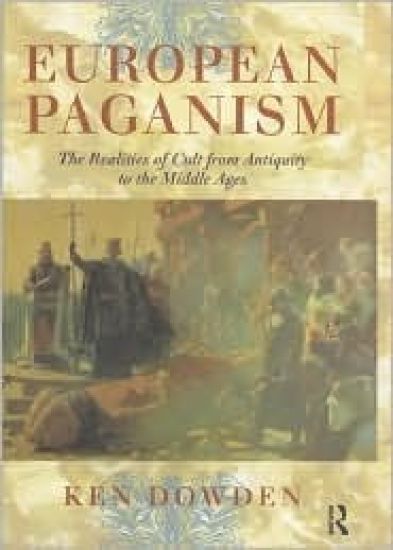
European Paganism

European Paganism

Ken Dowden

Routledge
1999
sidottu
European Paganism provides a comprehensive and accessible overview of ancient pagan religions throughout the European continent.Before there where Christians, the peoples of Europe were pagans. Were they bloodthirsty savages hanging human offerings from trees? Were they happy ecologists, valuing the unpolluted rivers and mountains? In European Paganism Ken Dowden outlines and analyses the diverse aspects of pagan ritual and culture from human sacrifice to pilgrimage lunar festivals and tree worship. It includes:a 'timelines' chart to aid with chronologymany quotations from ancient and modern sources translated from the original language where necessary, to make them accessiblea comprehensive bibliography and guide to further reading
Economy-Environment-Development-Knowledge
As we approach the end of the second millennium, we find ourselves in times of radical social change. Orthodox explanations of the economy, the environment and the development process are unable to provide coherent policies for such issues as employment creation, environmental degradation and social progress.Economy-Environment-Development-Knowledge provides alternative perspectives on these fundamental aspects of human existence. Economists, environmentalists, and development theorists have so far been unable to agree on the most successful prescriptions to address problems. To understand, contrast and compare alternative understandings of economic, environmental and development issues, we need to be aware why theorists conceptualise the process of social experience so differently.Part 1 of Economy-Environment-Development-Knowledge addresses the subjective preference, cost-of-production and abstract labour theories of values in economics; Part 2 explains egocentrism, ecocentrism and socioecocentrism as competing theoretical perspectives in environmental theory; Part 3 highlights modernisation theory, structuralist theory and class struggle as ways to account for the process of development and Part 4 examines the generation of knowedge through positivism, paradigms and praxis, legitimating competing perspectives in economics, environmentalist and development. The book concludes by considering why different people find alternative explanations more or less plausible.By addressing the disagreements between theorists, Economy-Environment-Development-Knowledge provides a unique basis to contrast and compare the plethora of theories of, and policies for, economic prosperity, environmental sustainability and social progress.
Economy-Environment-Development-Knowledge
As we approach the end of the second millennium, we find ourselves in times of radical social change. Orthodox explanations of the economy, the environment and the development process are unable to provide coherent policies for such issues as employment creation, environmental degradation and social progress.Economy-Environment-Development-Knowledge provides alternative perspectives on these fundamental aspects of human existence. Economists, environmentalists, and development theorists have so far been unable to agree on the most successful prescriptions to address problems. To understand, contrast and compare alternative understandings of economic, environmental and development issues, we need to be aware why theorists conceptualise the process of social experience so differently.Part 1 of Economy-Environment-Development-Knowledge addresses the subjective preference, cost-of-production and abstract labour theories of values in economics; Part 2 explains egocentrism, ecocentrism and socioecocentrism as competing theoretical perspectives in environmental theory; Part 3 highlights modernisation theory, structuralist theory and class struggle as ways to account for the process of development and Part 4 examines the generation of knowedge through positivism, paradigms and praxis, legitimating competing perspectives in economics, environmentalist and development. The book concludes by considering why different people find alternative explanations more or less plausible.By addressing the disagreements between theorists, Economy-Environment-Development-Knowledge provides a unique basis to contrast and compare the plethora of theories of, and policies for, economic prosperity, environmental sustainability and social progress.
Tackling Truancy in Schools
First Published in 2004. This pack on tackling truancy in schools is specifically written for use by teachers and for other caring professionals in the field, such as, education welfare officers, education social workers and educational psychologists. It brings together in twenty-four concise units the latest knowledge and good practice in the prevention and combating of truancy and other forms of non-attendance at school. Some units focus on understanding the causes and issues involved in truancy while others focus on the Government’s latest initiatives. The ideas contained in the units are specifically designed to help schools, LEAs and other caring professionals meet the Government’s new targets for reducing truancy. In order to help readers make the best use of the pack and its materials: each unit begins by providing a summary of its contents; each unit ends with a range of professional development questions or tasks which can be undertaken during training events. The pack can be read alongside Ken Reid’s book Truancy and Schools, also published by Routledge.
Truancy and Schools

Truancy and Schools

Ken Reid

Routledge
1999
nidottu
At present about one million pupils truant from their schools on a daily basis and this book examines why they do it. The numerous reasons for truanting discussed are: * disadvantageous home backgrounds * problems with settling in socially at school * poor performance in school * experiencing bullying in school * not coping with the transition from primary to secondary schooling. This book focuses on the social, psychological and educational causes of truancy. It examines recent research and gives many examples of good practice while also detailing the latest solutions for tackling this problem. The text is for teachers, heads of year and department heads, senior school managers, education welfare officers, social workers, educational psychologists, parents and all those with an interest in educational policy and practice.
The Right to Learn

The Right to Learn

Ken Brown

Routledge
2001
sidottu
The concept of the 'learning society' brings to mind access to education for all and a culture of lifelong learning. But government interventions in education such as the National Curriculum and standardized tests have only served to consolidate the connection between learning and schooling. Schools, furthermore, now have to juggle an increasingly diverse and incompatible range of tasks, providing equal opportunities while catering for individual needs and hitting academic attainment targets while preparing pupils for life in the global workplace. In this climate, what is the future for a democratic system of education? This important book aims to encourage debate about alternative ways of providing education, and discusses how these are being practiced now in Britain, Europe and the USA. Taking the issue of human rights and access as a central theme, the author examines the current state of education provision and the possibilities for its future. This book will be of interest to specialists in education, politics and philosophy, and also to those seeking alternative ways of educating their children.
The Right to Learn

The Right to Learn

Ken Brown

Routledge
2001
nidottu
The concept of the 'learning society' brings to mind access to education for all and a culture of lifelong learning. But government interventions in education such as the National Curriculum and standardized tests have only served to consolidate the connection between learning and schooling. Schools, furthermore, now have to juggle an increasingly diverse and incompatible range of tasks, providing equal opportunities while catering for individual needs and hitting academic attainment targets while preparing pupils for life in the global workplace. In this climate, what is the future for a democratic system of education? This important book aims to encourage debate about alternative ways of providing education, and discusses how these are being practiced now in Britain, Europe and the USA. Taking the issue of human rights and access as a central theme, the author examines the current state of education provision and the possibilities for its future. This book will be of interest to specialists in education, politics and philosophy, and also to those seeking alternative ways of educating their children.
Human Thermal Environments

Human Thermal Environments

Ken Parsons

CRC Press
2002
nidottu
Our responses to our thermal environment have a considerable effect on our performance and behavior, not least in the realm of work. There has been considerable scientific investigation of these responses and formal methods have been developed for environmental evaluation and design. In recent years these have been developed to the extent that detailed national and international standards of practice have now become feasible. This new edition of Ken Parson's definitive text brings us back up to date. He covers hot, moderate and cold environments, and defines these in terms of six basic parameters: air temperature, radiate temperature, humidity, air velocity, clothing worn, and the person's activity. There is a focus on the principles and practice of human response, which incorporates psychology, physiology and environmental physics with applied ergonomics. Water requirements, computer modeling and computer-aided design are brought in, as are current standards. Special populations, such as the aged or disabled and specialist environments such as those found in vehicles are also considered. This book continues to be the standard text for the design of environments for humans to live and work safely, comfortably and effectively, and for the design of materials which help the same people cope with their environments.
Modeling and Simulation Based Life-Cycle Engineering

Modeling and Simulation Based Life-Cycle Engineering

Ken Chong; Harold S. Morgan; Sunil Saigal; Stefan Thynell

CRC Press
2001
sidottu
Advances in computational power have facilitated the development of simulations unprecedented in their computational size, scope of technical issues, spatial and temporal resolution, complexity and comprehensiveness. As a result, complex structures from airplanes to bridges can be almost completely based on model-based simulations. This book gives a state-of-the-art account of modeling and simulation of the life cycle of engineered systems, covering topics of design, fabrication, maintenance and disposal. Providing comprehensive coverage of this rapidly emerging field, Modeling and Simulation-Based Life Cycle Engineering is essential reading for civil, mechanical and manufacturing engineers. It will also appeal to students and academics in this area.
Piling Engineering

Piling Engineering

Ken Fleming; Austin Weltman; Mark Randolph; Keith Elson

CRC Press
2008
sidottu
Piling is a fast moving field and recent years have seen major advances in theory, methods, testing procedures and equipment. Some of these changes have been driven by the need for economies and efficiency, reduced spoil production and new methods of pile bore support. Advances in theoretical analyses allow pile design to be refined so that piles and pile groups perform to better advantage.This third edition of the well established book has been comprehensively updated. It provides an accessible and well-illustrated account of design techniques, methods of testing and analysis of piles, with a marked emphasis on practice but with design methods that incorporate the most recent advances in piling theory. Piling Engineering is written for geotechnical engineers, consultants and foundation contractors. It is also a useful reference for academics and advanced students on courses in piling, practical site investigation and foundation design and construction.
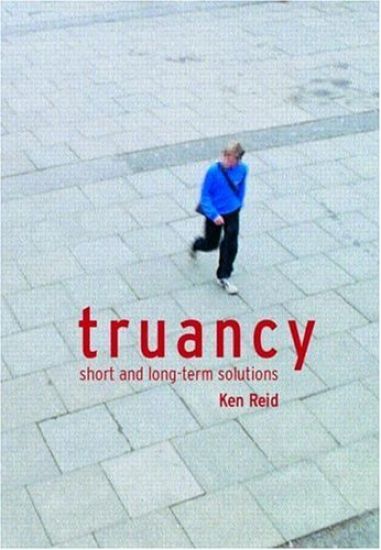
Truancy

Truancy

Ken Reid

Routledge
2002
nidottu
Truancy: Short and Long-term Solutions is a practical and accessible guide to dealing with the problem of truancy and non-attendance. It is the first book on the issue to actively focus on solutions to the problem, rather than the causes.Full of practical examples of the latest ways in which schools, teachers, education welfare officers and LEAs try to overcome their attendance difficulties. Ken Reid identifies nearly 120 short-term solutions as well as several long-term strategic approaches. The book also considers parental-condoned absenteeism, alternative curriculum schemes and mentoring, while the final chapter presents some strategic issues which policy-makers and politicians need to overcome.This book provides all teachers, deputy heads, head teachers, education welfare staff, social workers, learning mentors and other caring professionals with a repository of up-to-date ideas and solutions. It is essential reading for anyone involved in addressing the challenge of truancy.