Kirjahaku
Etsi kirjoja tekijän nimen, kirjan nimen tai ISBN:n perusteella.
1000 tulosta hakusanalla Laney Kaye
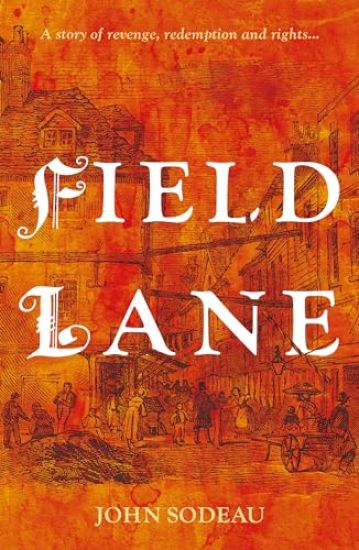
Charley Bates was an outsider. Always the third wheel to the Artful Dodger and Oliver Twist’s double-act in Fagin’s gang. Then he became the redeemed thief who managed to turn himself into ‘the merriest young grazier in the whole of Northamptonshire.’ But would he remain on the straight and narrow or go back to his criminal ways? What he needed was a mission to keep himself honest. And then he got one: a chance to bring justice to bear on a villain from his past, Monks, the half-brother of Oliver Twist. Getting even would mean a trip from the Thames to the Mississippi and help from old friends to right the wrongs done by the ‘creature’ as Charley thought of him. Field Lane reflects a 19th century world filled with social injustice, slavery, drug abuse and Royal privilege. Its fictional characters become intertwined with real-life historical figures such as the Duchess of Kent (the mother of Queen Victoria), the scientist Michael Faraday and Sam Clemens, the boy who would become Mark Twain. At the climax justice is indeed served in line with Charles Dickens’ wish. But by whom?
Ever since Jay Coal's best friend saved his life in high school, he's harbored a secret love. But Angel is straight, and his thrilling work as a movie stuntman takes him all over the world while Jay has never left Pine Cove. When Angel finally comes back to town, a suspicious work accident leaves him in the dark, and only Jay can light the way.It's a second chance for Angel Shields. Trustworthy Jay helps him recover from the accident, and Angel starts to see him in a different light. But are these feelings of attraction new? Or has he always had a secret crush on his best friend? Thanks to the accident, Angel can't trust his own memories to tell him. Maybe all that matters is how he feels now?Their life-long friendship is at risk if they make a move, but this chemistry is unforgettable. With more dangers ahead than answers, will they even get the chance to explore this love that's waiting for them down the end of memory lane?Book Five of Pine Cove. Memory Lane is a steamy, standalone MM romance novel with a guaranteed HEA and absolutely no cliffhanger.
Life is sublime in the idyllic suburb of New York City. Recent divorcee, Karen Daily and her two kids have for the first time in years found joy as they settle into the close-knit community of Savage Lane. Neighbours, Mark and Deb Berman, have been so supportive as she moves on in life: teaching at the local school and even dating...
Available for the first time in paperback, Robert O’Byrne’s landmark biography of Hugh Lane remains the essential work on this enigmatic art dealer and patron. From his birth in Cork in 1875, to London, South Africa and Dublin, Hugh Lane is primarily remembered for establishing Dublin’s Municipal Gallery of Modern Art, the first known public gallery of modern art in the world. He never married and, though rumoured to have been homosexual, never had a documented relationship with a man. He was also a person of great social energy who befriended and sometimes crossed swords with the leading cultural figures of his day: Yeats, Gregory, Orpen, Augustus John, Rodin, Beerbohm, and many others. Robert O’Byrne writes with clarity and insight about a man who, since his untimely death on R.M.S. Lusitania in 1915, has been something of a mystery.
A golf course, a pet cemetery and a suite fit for royalty: welcome to Polesden Lacey, former home of the indomitable and controversial socialite, Maggie Greville (also known as Mrs Ronnie), and country retreat for the Edwardian eras rich and famous. This guidebook uncovers the life of Mrs Greville and the experiences of those who visited and worked for her at Polesden Lacey. Find out what life was like for her army of servants; marvel at the glittering gold Saloon, where weekend guests were entertained by renowned London acts; and discover what the Duke and Duchess of York (later King George VI and Queen Elizabeth) got up to on their honeymoon here. Additional features include an extensive guide to Polesden Laceys gardens, and in-depth information on some of Mrs Grevilles most important collections, such as her Fabergé objects, and paintings.
London, 1914. Two young women dream of breaking free from tradition and obligation; they know that suffragettes are on the march and that war looms, but at 35 Park Lane, Lady Masters, head of a dying industrial dynasty, insists that life is about service and duty.Below stairs, housemaid Grace Campbell is struggling. Her family in Carlisle believes she is a high earning secretary, but she has barely managed to get work in service - something she keeps even from her adored brother. Asked to send home more money than she earns, Grace is in trouble.As third housemaid she waits on Miss Beatrice, the youngest daughter of the house, who, fatigued with the social season, is increasingly drawn into Mrs Pankhurst's captivating underground world of militant suffragettes. Soon Bea is playing a dangerous game that will throw her in the path of a man her mother wouldn't let through the front door.Then war comes and it is not just their secrets - now on a collision course - that will change their lives for good.Brilliantly capturing a deeply fascinating period of British life in which the normal boundaries of behaviour were overturned and the social hierarchy could no longer be taken for granted, Park Lane is as gripping and intense as Frances Osborne's number one bestselling The Bolter.
A descriptive run through all we chase to become whole as humans. The end point of finding ourselves and God.
The story of the building of an iconic mid-century housing estate, that is often seen as the model for housing architecture. Fully illustrated with commissioned photography of the interiors and exteriors, archive images and newly commissioned writing by leading architectural historians, plus interviews with people on the estate to capture their story. Following World War II, the population in the City of London plummeted, and with a duty to provide housing for those working in the area – such as nurses, policemen and doctors – the City Corporation commissioned architect Geoffry Powell in 1952 to design the Golden Lane Estate. Powell invited Christoph Bon and Jo Chamberlin to join him in developing a detailed design for the Estate. They would later become Chamberlin, Powell & Bon, working on world-renowned projects such as the Barbican Estate and the University of Leeds. Golden Lane Estate, now Grade II and Grade II* listed is often cited as being a model estate. With its high level of detailing, use of materials, colour, its humane scale, thoughtfulness of space, light, communal spaces, leisure facilities and integrated shops, it is exemplary, particularly for social housing. It was deemed as a success from the off and remains popular today, with many original tenants and/or their families still choosing to live there. What sets the estate apart is the sense of community and neighbourliness which is promoted by the architecture and design.
At 47, Mr. F?s working life on London?s Skin Lane is one governed by calm, precision and routine. So when he starts to have frightening, recurring nightmares, he does his best to ignore them. The images that appear in his dream are disturbing ? Mr. F can't for the life of him think where they have come from. After all, he's a perfectly ordinary middle-aged man. As London?s crooked backstreets begin to swelter in the long, hot summer of 1967, Mr. F?s nightmare becomes an obsession. A chance encounter adds a face to the body that nightly haunts him, and the torments of his sweat-drenched nights lead him ? and the reader ? deeper into a terrifying labyrinth of rage, desire and shame. Part fairy-tale, part compelling evocation of a now-lost London, Neil Bartlett's critically-acclaimed third novel is his fiercest piece of writing yet: cruel, erotic, and tender.
Plantation Place is an innovative work of contemporary architecture in the heart of the City of London. Within the context of this new development is an artwork that forms part of a carefully arranged architectural mix of new and old. The illuminated screen of Time and Tide, a collaboration between Arup Associates and Simon Patterson - his first permanently sited installation in a public place - is a welcome mediation between the 'ancient' city of Wren's church and the modern development of Plantation Place. Plantation Lane: Time and Tide celebrates this significant new art work and highlights the relationship between architecture and art within the public realm. It is beautifully illustrated in colour, with photographs and drawings depicting the effects of a gigantic lunar illustration within this linear, narrow lane, surrounded by the ancient history of London and the corporate architecture of London's financial district. Plantation Lane: Time and Tide will inspire developers, architects, artists - in fact anyone who believes that the fusion of art and architecture within the public realm is an essential part of the creation of high quality environments. Jay Merrick, Architecture Correspondent of The Independent, looks at the significance of Plantation Lane within the wider genre of public art, and discusses the challenge for developers and architects to provide a great deal more than folds and cubes of architectural wallpaper composed of glass, steel and ferro-concrete; Declan O'Carroll, Principal at Arup Associates and leader of the conceptual design of Plantation Lane, reflects on the collaborative process between the architects and Patterson, and considers how this giant, luminous, planar artwork sits snugly within the lane as a welcome mediation between the 'ancient' city of Wren's church, and the modern development of Plantation Place; and Andrea Schlieker, curator for British Land's public spaces, places Time and Tide in the context of Patterson's wider oeuvre, and compares the installation, his first on such a grand scale, with some of his previous work, such as The Great Bear.
Memory Lane Leeds: Volume 1
DB Publishing
2013
nidottu
A collection of pictorial memories of Leeds from the archives of "The Yorkshire Evening Post".
World-class athletics was something that happened overseas, not in Australia. And then, on 13 December 1952, John Landy ran a mile at Melbourne's Olympic Park in 4 minutes 2.1 seconds. In those few minutes he re-ignited the race for the sub-four minute mile and inspired a generation of Australian athletes to challenge the world at distances from 880 yards to the marathon.
At midnight on the historic night of July 29, 1971, High Priest Anton LaVey sat down with journalist Jack Fritscher in the dramatic sanctuary of his Church of Satan in San Francisco to speak frankly about the role of the Satanic Church and Satanism in the ongoing revolution around sex, race, and gender. This seminal interview, conducted in the fifth Satanic Year, is the first and earliest in-depth interview given by Anton LaVey whose Satanic Bible was published only two years before in 1969. Marcello Truzzi wrote in Fate magazine: "This is the most candid and informative interview that Anton LaVey has given anyone for publication to date."LaVey and Fritscher hit it off. LaVey responds graciously, humorously, and definitively about how and why he founded his Church while he addresses American religions, white wicca, the Manson Family, and the death of Jayne Mansfield. He sets the record straight declaring to Fritscher that he played the Devil in Roman Polanski's Rosemary's Baby.Growing more golden over the past fifty years, this interview has entered the classic "Canon of Satanic Literature" in the Church of Satan. Certainly, the candid conversation catches one of the most intriguing men of the 20th century around the moment when the Swinging 1960s became the Titanic 1970s that helped shaped the myth, magic, and mysticism of our new century. Here is the truth of what Anton LaVey said. He himself frequently endorsed the accuracy. This is the original question and answer format of the interview.
Richly illustrated in full colour, this book surveys Michael Landy's earliest work, including lesser-known sculptures – such as Sovereign shown at Freeze in 1988 – to large-scale installations Market, Closing Down Sale and Scrapheap Services. Other works discussed in detail include the infamous Break Down, where Landy destroyed all 7,227 of his possessions in a department store on Oxford Street, London; Semi-detached, where Landy constructed a full-scale model of his family home at Tate Britain, London; and the project H2NY where Landy made 168 drawings based on a Jean Tinguely sculpture. With over 800 colour illustrations and four newly commissioned texts, this volume provides a comprehensive insight into Landy's work
A collection of 41 stories, all under a thousand words