The Louis Vuitton label was founded by Vuitton in 1854 in Paris. In 1858, Vuitton introduced his flat-topped trunks with Trianon canvas, making them lightweight and airtight. Louis Vuitton' s graphic symbols, including quatrefoils and flowers (as well as the LV monogram), were based on the trend of using Japanese Mon designs in the late Victorian era. The company is still known for its signature monogram bags today. Louis Vuitton has evolved into one of the world' s most celebrated fashion houses - synonymous with classic design, elegance, luxury and quality. Louis Vuitton - beloved by the great, the good and the uber glamorous - boasts an instantly recognisable signature style all of its own. This book, beautifully illustrated with images of some of the world' s iconic fashion items, charts the story of Louis Vuitton' s origins and how the brand became the influential, innovative haute-couture power house it is today.
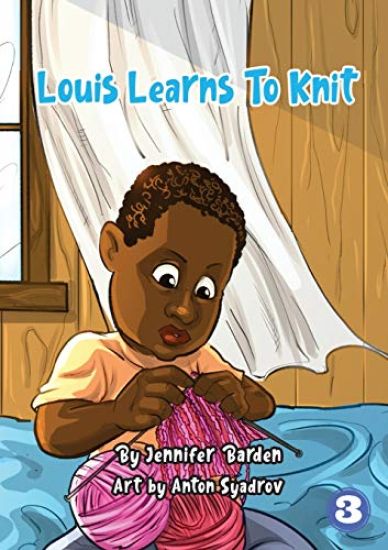
Louis and his grandma love to knit. This will be an extra special birthday for Louis Луї ті його бабуся обожнюють в'язати. Це буде дійсно особливий День народження для Луї Your purchase of this book supports Library For All in its mission to make knowledge available to all, equally.
Louis Bunce: Dialogue with Modernism explores and assesses the art and life of the iconic Pacific Northwest modernist painter and printmaker who engaged with American and European modern art from Surrealism to Post-Modernism. Based in Portland, Oregon, Louis Bunce maintained strong ties with artists of the New York School, counting Jackson Pollock as colleague and friend. In his fifty-year career, Bunce (1907-1983) created a wide-ranging body of work that both reflects and illuminates twentieth-century modernism. He pioneered serigraphy as a fine art in the Northwest and as a painter infused painterly abstraction with references to the topography and light of the Northwest.
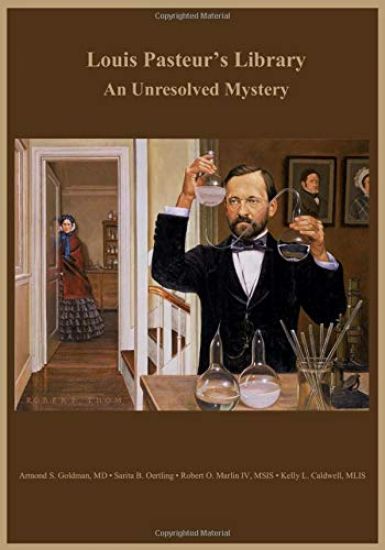
This book is the tale of the mystery of Louis Pasteur and his Library, how he arose from humble beginnings to become the founder of the sciences of microbiology and immunology, how his library was divided and sold to four Americans, none of whom were microbiologists or immunologists but famous in their own rights. The dispersal of la Biblioth que de Louis Pasteur to the United States, which occurred in the 1960s and 1970s was virtually unknown in France or other countries except for the bibliophiles who purchased and treasured them.In the book, the authors recount the sequence of events that led to the locations of parts of la Biblioth que in the Huntington Library in San Mateo, California, The University of Alabama in Birmingham, The University of Texas in Austin, and the University of Texas Medical Branch in Galveston. The lives of the bibliophiles are also recounted.Now that la Biblioth que de Louis Pasteur has been reassembled, it will be possible for scholars in the fields of medical science and history to learn more about the character of Louis Pasteur and how he was able to make the discoveries that became the basis of modern-day microbiology and immunology.Yet many mysteries concerning Pasteur and his Biblioth que remain to be resolved. For instance, how was la Biblioth que protected during the German occupation of France during World War II? Indeed, it is hoped that some readers will have information that bears on those unanswered questions.
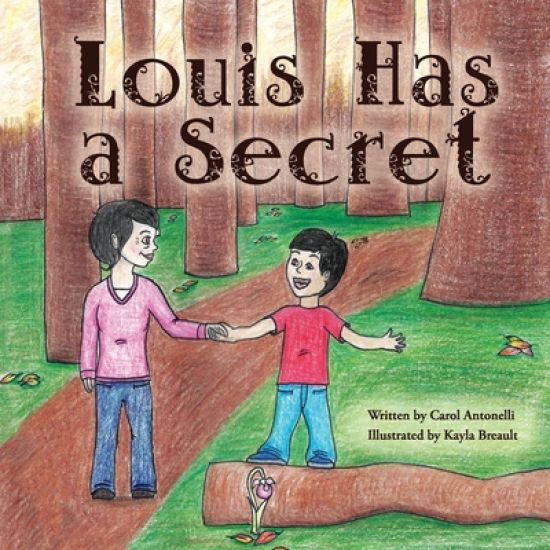
Louis and his grandmother like to walk in the woods together. One day, Louis discovers something wondrous that he can hardly believe. He can't wait to show his grandmother. But will she believe him?
Now available on the HALLOW APP Sister Miriam James Heidland recently narrated this Marian Consecration translation for Hallow, the #1 Catholic Meditation, Prayer & Sleep App in the world. Popes and Saints have called this single greatest book of Marian spirituality ever written. In a newly translated day-by-day format, follow St. Louis de Montfort's classic work on the spiritual way to Jesus Christ though the Blessed Virgin Mary. Beloved by countless souls, this book sums up, not just the majesty of the Blessed Mother, but the entire Christian life. St. Louis de Montfort calls this the "short, easy, secure, and perfect" path to Christ. It is the way chosen by Jesus, Himself. This new translation strives to be ever-faithful to St. Louis de Montfort's classic work, while also avoiding unfamiliar phrases and terms. Thee's and thou's are a beautiful version of the English language, but might sometimes feel foreign. Scott Smith hopes that this beautiful new translation will bring St. Louis de Montfort's life-changing Marian consecration to even more people.
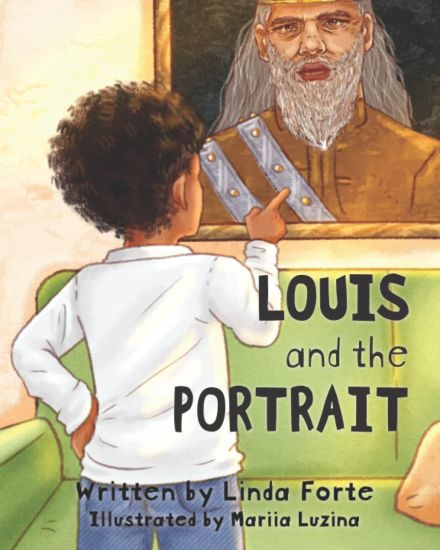
Meet Louis, a mischievous little boy who lives in the time of horses and buggies. Louis likes doing things his way, even if it gets him in trouble.In Louis and the Portrait, Louis' mama brings home a striking painting of a soldier who just won't stop looking at him. As the portrait continues to stare, Louis decides he must do something Kids of all ages will enjoy this tale of a battle between a boy and a painting hanging on the living room wall as they wonder who will ultimately win.
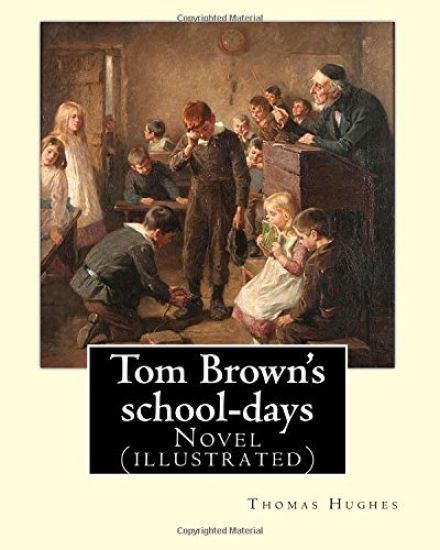
The story is set in the 1830s at Rugby School, a public school for boys. Hughes attended Rugby School from 1834 to 1842. The novel was originally published as being "by an Old Boy of Rugby", and much of it is based on the author's experiences. Tom Brown is largely based on the author's brother George Hughes. George Arthur, another of the book's main characters, is generally believed to be based on Arthur Penrhyn Stanley. The fictional Tom's life also resembles the author's, in that the culminating event of his school career was a cricket match. 3] The novel also features Dr Thomas Arnold (1795-1842), who was the actual headmaster of Rugby School from 1828 to 1841. Tom Brown's School Days has been the source for several film and television adaptations. It also influenced the genre of British school novels, which began in the nineteenth century, and led to fictional depictions of schools such as Billy Bunter's Greyfriars School, Mr Chips' Brookfield, St. Trinian's, and Harry Potter's Hogwarts. A sequel, Tom Brown at Oxford, was published in 1861.Tom Brown is energetic, stubborn, kind-hearted and athletic, rather than intellectual. He follows his feelings and the unwritten rules of the boys. The early chapters of the novel deal with his childhood at his home in the Vale of White Horse. Much of the scene setting in the first chapter is deeply revealing of Victorian England's attitudes towards society and class, and contains a comparison of so-called Saxon and Norman influences on England. This part of the book, when young Tom wanders the valleys freely on his pony, serves as a contrast with the hellish experiences in his first years at school. His first school year is at a local school. His second year starts at a private school, but due to an epidemic of fever in the area, all the school's boys are sent home, and Tom is transferred mid-term to Rugby School. On his arrival, the eleven-year-old Tom Brown is looked after by a more experienced classmate, Harry "Scud" East. Tom's nemesis at Rugby is the bully Flashman. The intensity of the bullying increases, and, after refusing to hand over a sweepstake ticket for the favourite in a horse race, Tom is deliberately burned in front of a fire. Tom and East defeat Flashman with the help of Diggs, a kind, comical, older boy. In their triumph they become unruly........ Edmund Joseph Sullivan (1869-1933), usually known as E. J. Sullivan, was a British book illustrator who worked in a style which merged the British tradition of illustration from the 1860s with aspects of Art Nouveau. Louis John Rhead (November 6, 1857 - July 29, 1926) was an English-born American artist, illustrator, author and angler who was born in Etruria, Staffordshire, England. He emigrated to the United States at the age of twenty-four. William Dean Howells ( March 1, 1837 - May 11, 1920) was an American realist novelist, literary critic, and playwright, nicknamed "The Dean of American Letters". He was particularly known for his tenure as editor of The Atlantic Monthly, as well as for his own prolific writings, including the Christmas story "Christmas Every Day" and the novels The Rise of Silas Lapham and A Traveler from Altruria.... Thomas Hughes QC (20 October 1822 - 22 March 1896) was an English lawyer, judge, politician and author. He is most famous for his novel Tom Brown's School Days (1857), a semi-autobiographical work set at Rugby School, which Hughes had attended. It had a lesser-known sequel, Tom Brown at Oxford (1861). Hughes had numerous other interests, in particular as a Member of Parliament, in the British co-operative movement, and in a settlement in Tennessee reflecting his values.....
Louis Joseph Vance (September 19, 1879-December 16, 1933) was an American novelist, born in Washington, D. C., and educated in the preparatory department of the Brooklyn Polytechnic Institute. He wrote short stories and verse after 1901, then composed many popular novels. His character "Michael Lanyard", also known as "The Lone Wolf", was featured in eight books and 24 films between 1914 and 1949, and also appeared in radio and television series. Vance was separated from his wife (whom he had married in 1898 and who had borne him a son in 1899) when he was found dead in 1933. He was in a burnt armchair inside his New York apartment. A cigarette had ignited some benzene (used for cleaning his clothes or for his broken jaw) that he had on his body, and he had been intoxicated at the time of death. He had recently returned from the West Indies, where he had gathered material for a new book. The death was ruled accidental.
Louis Joseph Vance (September 19, 1879-December 16, 1933) was an American novelist, born in Washington, D. C., and educated in the preparatory department of the Brooklyn Polytechnic Institute. He wrote short stories and verse after 1901, then composed many popular novels. His character "Michael Lanyard", also known as "The Lone Wolf", was featured in eight books and 24 films between 1914 and 1949, and also appeared in radio and television series. Vance was separated from his wife (whom he had married in 1898 and who had borne him a son in 1899) when he was found dead in 1933. He was in a burnt armchair inside his New York apartment. A cigarette had ignited some benzene (used for cleaning his clothes or for his broken jaw) that he had on his body, and he had been intoxicated at the time of death. He had recently returned from the West Indies, where he had gathered material for a new book. The death was ruled accidental.
Come along on an adventure to another world with Louis Drake, Rachel Murrow, and Raleigh Francis. From his backyard they go through the grove to school. But they have been targeted and forced to make a choice in front of the cave.Will they choose the discovery that awaits them? They do, and they find themselves amongst intelligent creatures who are under attack by predators. They all fight to protect a social equilibrium. As everyone searches for the Element of Disequilibrium, a line is drawn between the power hungry vs the pure in a fight for the future of both this world and Earth.
Les r gences d'Anne d'Autriche et de Philippe d'Orl ans ont eu des fortunes historiques tr s diff rentes, malgr les similitudes qu'ont entre eux tous les gouvernements nouveaux, faibles, contest s et forc ment corrupteurs. La faveur publique s'est attach e l'une autant qu'elle a manqu l'autre, et les victoires de la premi re ont t mises dans un jour clatant, pendant que les succ s politiques laborieusement pr par s par la seconde demeuraient touff s sous le d go t inspir par l'accumulation de tous les scandales. C'est travers les moeurs du temps qu'on a jug l'oeuvre des hommes, disposition qu'il ne faut pas regretter, puisqu'il est bon de faire payer aux personnages publics au prix de leur renomm e la ran on de leurs vices, et qu'en pareil cas l'injustice m me sa moralit ...
Louis Tracy (1863 - 1928) was a British journalist, and prolific writer of fiction. He used the pseudonyms Gordon Holmes and Robert Fraser, which were at times shared with M. P. Shiel, a collaborator from the start of the twentieth century. He was born in Liverpool to a well-to-do middle-class family. At first he was educated at home and then at the French Seminary at Douai. Around 1884 he became a reporter for a local paper - 'The Northern Echo' at Darlington, circulating in parts of Durham and North Yorkshire; later he worked for papers in Cardiff and Allahabad. During 1892-1894 he was closely associated with Arthur Harmsworth, in 'The Sun' and 'The Evening News and Post'
Louis Tracy (1863 - 1928) was a British journalist, and prolific writer of fiction. He used the pseudonyms Gordon Holmes and Robert Fraser, which were at times shared with M. P. Shiel, a collaborator from the start of the twentieth century. He was born in Liverpool to a well-to-do middle-class family. At first he was educated at home and then at the French Seminary at Douai. Around 1884 he became a reporter for a local paper - 'The Northern Echo' at Darlington, circulating in parts of Durham and North Yorkshire; later he worked for papers in Cardiff and Allahabad. During 1892-1894 he was closely associated with Arthur Harmsworth, in 'The Sun' and 'The Evening News and Post'