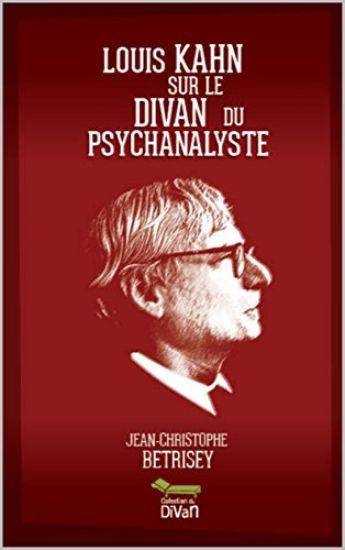
Allong sur le divan du psychanalyste, le c l bre architecte Louis Kahn nous livre des histoires inattendues de sa vie, de ses familles, de ses femmes et de sa vision de l'architecture. Sa personnalit complexe a influenc une grande partie de son oeuvre jusqu' son apog e spirituel grav dans le b ton et la brique Dacca au Bangladesh.Le lecteur se laissera emporter par un change proche du parl pour ainsi vivre de l'int rieur cette s ance unique chez l'analyste. Les dialogues sont profonds, directs et nous laissent entrevoir les contenus inconscients de Lou, un des architectes les plus influents du XX me, retrouv mort dans les toilettes de Pennsylvania Station New York en 1974.Le psychanalyste Jean-Christophe B trisey nous propose un ouvrage historique, fictif et original dans la nouvelle "Collection du Divan".
Louis XIV, by John Abbott, is a classic French history text detaling the life of King Louis XIV. We all live a double life: the external life which the world sees, and the internal life of hopes and fears, joys and griefs, temptations and sins, which the world sees not, and of which it knows but little. None lead this double life more emphatically than those who are seated upon thrones. Louis XIV (5 September 1638 - 1 September 1715), known as Louis the God-Given (Louis Dieudonn ), Louis the Great (Louis le Grand) or the Sun King (Roi Soleil), was a monarch of the House of Bourbon who reigned as King of France from 1643 until his death in 1715. Starting at the age of 4, his reign of 72 years and 110 days is the longest recorded of any monarch of a sovereign country in European history. 1] 2] In the age of absolutism in Europe, Louis XIV's France was a leader in the growing centralization of power. 3] Louis began his personal rule of France in 1661, after the death of his chief minister, the Italian Cardinal Mazarin. 4] An adherent of the concept of the divine right of kings, which advocates the divine origin of monarchical rule, Louis continued his predecessors' work of creating a centralized state governed from the capital. He sought to eliminate the remnants of feudalism persisting in parts of France and, by compelling many members of the nobility to inhabit his lavish Palace of Versailles, succeeded in pacifying the aristocracy, many members of which had participated in the Fronde rebellion during Louis' minority. By these means he became one of the most powerful French monarchs and consolidated a system of absolute monarchical rule in France that endured until the French Revolution. Louis encouraged and benefited from the work of prominent political, military, and cultural figures such as Mazarin, Colbert, Louvois, the Grand Cond , Turenne, and S bastien Le Prestre de Vauban, as well as Andr Charles Boulle, Moli re, Racine, Boileau, La Fontaine, Lully, Marais, Le Brun, Rigaud, Bossuet, Le Vau, Mansart, Charles and Claude Perrault, and Le N tre. Under his rule, the Edict of Nantes, which granted rights to Huguenots, was abolished. The revocation effectively forced Huguenots to emigrate or convert in a wave of dragonnades, which managed to virtually destroy the French Protestant minority. During Louis' reign, France was the leading European power, and it fought three major wars: the Franco-Dutch War, the War of the League of Augsburg, and the War of the Spanish Succession. There were also two lesser conflicts: the War of Devolution and the War of the Reunions. Warfare defined the foreign policy of Louis XIV, and his personality shaped his approach. Impelled "by a mix of commerce, revenge, and pique," Louis sensed that warfare was the ideal way to enhance his glory. In peacetime he concentrated on preparing for the next war. He taught his diplomats that their job was to create tactical and strategic advantages for the French military
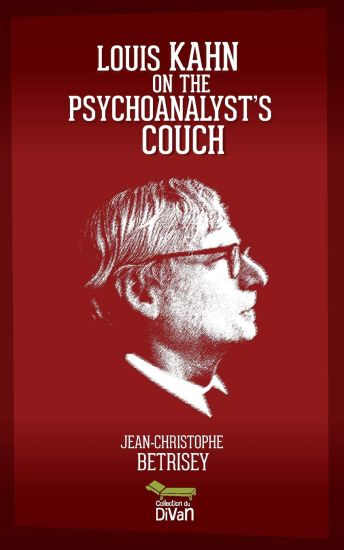
Stretched out on the psychoanalyst's couch, the famous architect Louis Kahn tells us surprising stories of his life, his families, his women and his architectural vision. His complex personality infl uenced a large part of his work and culminated in his spiritual peak which is engraved in the concrete and brick of Dhaka in Bangladesh. The reader will be carried away by an exchange akin to talking, thus experiencing live this unique session in the analyst's room. The dialogues are profound, direct, and allow us a glimpse into the unconscious mind of Lou, one of the most infl uential architects of the XXth century, who was found dead in the toilets of the Pennsylvania Railway Station in New York in 1974. The psychoanalyst Jean-Christophe B trisey offers us an historic, original and work of fiction in the new "Collection du Divan".
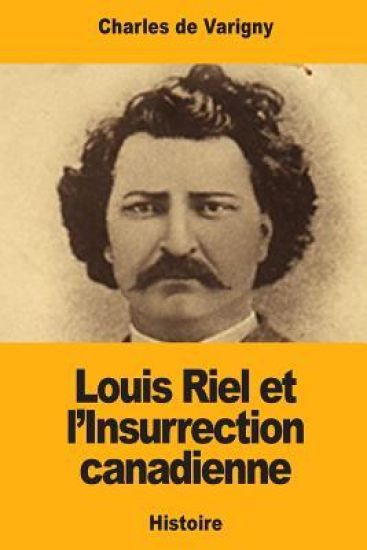
" Le 23 mars 1885, sir John Mac-Donald, premier ministre, annon ait au parlement canadien, r uni Ottawa, qu'une insurrection venait d' clater dans le territoire du nord-ouest. Six cents demi-blancs et un certain nombre d'Indiens, sous les ordres de Louis Riel, avaient pris les armes, d clarant qu'ils ne les d poseraient que quand le gouvernement aurait fait droit leurs justes r clamations. Camp s Prince-Albert, ils mena aient le fort Carlton; ma tres des stations t l graphiques, ils avaient coup les communications entre le Manitoba et la capitale. Sir John Mac-Donald ajoutait qu'il avait donn ordre de concentrer sur Carlton les brigades de police cheval et d'exp dier en h te de Winnipeg le 90e bataillon de carabiniers et une batterie d'artillerie. En outre, le major-g n ral Middleton se pr parait partir, avec des renforts, pour arr ter les progr s de l'insurrection..."
Louis Loeb (November 7, 186 - July 12, 1909) was a Jewish illustrator in the United States. In his time, he was one of the best known in his field.He was also a draftsman, a painter, and a lithographer. Biography edit] Born in Cuyahoga County, Ohio to Alexander Loeb, a dry goods merchant, Louis Loeb worked at a Cleveland lithography firm from age 14 onwards, 2] later taking evening classes in sketching at the Cleveland Art Club. 2] 4] In 1885, he worked at a lithography firm in New York City, with his evenings spent at the Art Students League. In 1889 he went to Paris to study, under Lefebvre, Constant, and G r me, giving up lithography. After three years he returned to New York, where in 1893 he started work for The Century Magazine as an illustrator. For the next few years, up until 1900, he was to travel to and from Europe, both for study and in the course of his work for The Century. During the remainder of his life, he stayed in the U.S., dying in Canterbury, New Hampshire................ Israel Zangwill (21 January 1864 - 1 August 1926) was a British author at the forefront of cultural Zionism during the 19th century, and was a close associate of Theodor Herzl. He later rejected the search for a Jewish homeland and became the prime thinker behind the territorial movement. Early life and education: Zangwill was born in London on 21 January 1864, in a family of Jewish immigrants from the Russian Empire. His father, Moses Zangwill, was from what is now Latvia, and his mother, Ellen Hannah Marks Zangwill, was from what is now Poland. He dedicated his life to championing the cause of people he considered oppressed, becoming involved with topics such as Jewish emancipation, Jewish assimilation, territorialism, Zionism, and women's suffrage. His brother was novelist Louis Zangwill. Zangwill received his early schooling in Plymouth and Bristol. When he was nine years old, Zangwill was enrolled in the Jews' Free School in Spitalfields in east London, a school for Jewish immigrant children. The school offered a strict course of both secular and religious studies while supplying clothing, food, and health care for the scholars; presently one of its four houses is named Zangwill in his honour. At this school he excelled and even taught part-time, eventually becoming a full-fledged teacher. While teaching, he studied for his degree from the University of London, earning a BA with triple honours in 1884. Writings: He had already written a tale entitled The Premier and the Painter in collaboration with Louis Cowen, when he resigned his position as a teacher owing to differences with the school managers and ventured into journalism. He initiated and edited Ariel, The London Puck, and did miscellaneous work for the London press. Zangwill's work earned him the nickname "the Dickens of the Ghetto." He wrote a very influential novel Children of the Ghetto: A Study of a Peculiar People (1892). The use of the metaphorical phrase "melting pot" to describe American absorption of immigrants was popularised by Zangwill's play The Melting Pot, 4] a success in the United States in 1909-10. When The Melting Pot opened in Washington D.C. on 5 October 1909, former President Theodore Roosevelt leaned over the edge of his box and shouted, "That's a great play, Mr. Zangwill, that's a great play." In 1912 Zangwill received a letter from Roosevelt in which Roosevelt wrote of the Melting Pot "That particular play I shall always count among the very strong and real influences upon my thought and my life...".........................
The set is 1903, Upper Class London, Lady Dyke disappears. A close friend of her husband Mr. Claude Bruce, an eminent Barrister, vows to solve this mysterious disappearance. Be prepared for twists and turns as the plot unravels... " A brilliant convoluted Victorian crime novel " Fist published in 1905, this is the original classic novel written by master detective novelist Louis Tracy.
*Includes pictures *Includes quotes about Pasteur's life and work *Includes online resources and a bibliography for further reading "Do not let yourself be tainted with a barren skepticism." - Louis Pasteur While it would be impossible to name every individual who has contributed to the ever-advancing field of science, it almost goes without saying that one of the most important was Louis Pasteur, father of microbiology and modern immunology. Apart from propelling the field of vaccination to new heights, this visionary scientist would also revolutionize a significant part of the beverage industry, and highlight the importance of sterilization. These are only some of the extraordinary achievements on Louis' glaring r sum , one so well-rounded and extensive that it beggars belief. Like many other polymaths, this inspirational figure has become an unwitting incendiary, and he has attracted his fair share of critics over the years. Though undoubtedly one of the greatest intellectuals to have ever graced the world of science, Louis was also a conveniently private man steeped in scandal, fraudulence, and secrecy, which only makes his story all the more riveting. In 1995, which UNESCO declared "The Year of Pasteur," Louis Pasteur's name was posthumously disgraced on an international stage as a controversy ensued that would have certainly caused him to roll in his grave. Pasteur had remained a secretive man until the day of his death, even ordering his family members to hold onto his private journals and never disclose them to anyone. Most chalked it up to the man's introversion, and his secrets might have indeed died with him if not for his last surviving descendant, who donated the scientist's notes to the French National Library in the 1970s. Not only did Louis oversell some of his findings, he had, as it appears, unabashedly lied about the results of his experiments, and he has since been accused of stealing credit for some of his work. Concerning his rabies trials with the diseased mutts, for example, it was revealed that only 30 - a fraction of what Louis had reported - had been examined, and at least a third of them died from their illnesses. Most distressing of all, the "foolproof" vaccine he injected into the dogs was not the same vaccine he used on Joseph Meister, which meant that he had exposed the child to an untested treatment. On top of "regularly violat ing] the standard conception of the scientific method," as Princeton University historian Gerald Geison puts it, Pasteur's work on anthrax, he claims, "is a clear example of scientific misconduct by the current definition." Rumor has it that Jean-Joseph Henri Toussaint, a local veterinarian, was conducting research on the bacterium at the same time, but Toussaint used a chemical formula he personally designed instead of oxygen. Enraptured by the progress he was making, Toussaint visited Pasteur and made the mistake of confiding in him the recipe for the chemical formula. Before Toussaint knew it, Pasteur had appropriated his formula, and began using it in his public experiments. At the end of the day, whether or not Louis Pasteur is fully deserving of all the credit he's received is still a matter of dispute, but one truth is incontestable. Pasteur revolutionized biology and ushered it into the modern era, and the institute erected in his honor continues to bring about tremendous advances that are slowly, but surely making the world a better place. Louis Pasteur: The Life and Legacy of the Legendary French Scientist Recognized as the Father of Microbiology examines the career that made Pasteur one of the 19th century's foremost scientists. Along with pictures of important people, places, and events, you will learn about Louis Pasteur like never before.
*Includes pictures *Includes quotes about Pasteur's life and work *Includes online resources and a bibliography for further reading "Do not let yourself be tainted with a barren skepticism." - Louis Pasteur While it would be impossible to name every individual who has contributed to the ever-advancing field of science, it almost goes without saying that one of the most important was Louis Pasteur, father of microbiology and modern immunology. Apart from propelling the field of vaccination to new heights, this visionary scientist would also revolutionize a significant part of the beverage industry, and highlight the importance of sterilization. These are only some of the extraordinary achievements on Louis' glaring r sum , one so well-rounded and extensive that it beggars belief. Like many other polymaths, this inspirational figure has become an unwitting incendiary, and he has attracted his fair share of critics over the years. Though undoubtedly one of the greatest intellectuals to have ever graced the world of science, Louis was also a conveniently private man steeped in scandal, fraudulence, and secrecy, which only makes his story all the more riveting. In 1995, which UNESCO declared "The Year of Pasteur," Louis Pasteur's name was posthumously disgraced on an international stage as a controversy ensued that would have certainly caused him to roll in his grave. Pasteur had remained a secretive man until the day of his death, even ordering his family members to hold onto his private journals and never disclose them to anyone. Most chalked it up to the man's introversion, and his secrets might have indeed died with him if not for his last surviving descendant, who donated the scientist's notes to the French National Library in the 1970s. Not only did Louis oversell some of his findings, he had, as it appears, unabashedly lied about the results of his experiments, and he has since been accused of stealing credit for some of his work. Concerning his rabies trials with the diseased mutts, for example, it was revealed that only 30 - a fraction of what Louis had reported - had been examined, and at least a third of them died from their illnesses. Most distressing of all, the "foolproof" vaccine he injected into the dogs was not the same vaccine he used on Joseph Meister, which meant that he had exposed the child to an untested treatment. On top of "regularly violat ing] the standard conception of the scientific method," as Princeton University historian Gerald Geison puts it, Pasteur's work on anthrax, he claims, "is a clear example of scientific misconduct by the current definition." Rumor has it that Jean-Joseph Henri Toussaint, a local veterinarian, was conducting research on the bacterium at the same time, but Toussaint used a chemical formula he personally designed instead of oxygen. Enraptured by the progress he was making, Toussaint visited Pasteur and made the mistake of confiding in him the recipe for the chemical formula. Before Toussaint knew it, Pasteur had appropriated his formula, and began using it in his public experiments. At the end of the day, whether or not Louis Pasteur is fully deserving of all the credit he's received is still a matter of dispute, but one truth is incontestable. Pasteur revolutionized biology and ushered it into the modern era, and the institute erected in his honor continues to bring about tremendous advances that are slowly, but surely making the world a better place. Louis Pasteur: The Life and Legacy of the Legendary French Scientist Recognized as the Father of Microbiology examines the career that made Pasteur one of the 19th century's foremost scientists. Along with pictures of important people, places, and events, you will learn about Louis Pasteur like never before.
Louis XVI et Marie-Antoinette . Par le cher F.-N. de Foulaines. Leurs testaments, leurs defenses, ...Date de l'edition originale: 1829Ce livre est la reproduction fidele d une uvre publiee avant 1920 et fait partie d une collection de livres reimprimes a la demande editee par Hachette Livre, dans le cadre d un partenariat avec la Bibliotheque nationale de France, offrant l opportunite d acceder a des ouvrages anciens et souvent rares issus des fonds patrimoniaux de la BnF.Les uvres faisant partie de cette collection ont ete numerisees par la BnF et sont presentes sur Gallica, sa bibliotheque numerique.En entreprenant de redonner vie a ces ouvrages au travers d une collection de livres reimprimes a la demande, nous leur donnons la possibilite de rencontrer un public elargi et participons a la transmission de connaissances et de savoirs parfois difficilement accessibles.Nous avons cherche a concilier la reproduction fidele d un livre ancien a partir de sa version numerisee avec le souci d un confort de lecture optimal. Nous esperons que les ouvrages de cette nouvelle collection vous apporteront entiere satisfaction.Pour plus d informations, rendez-vous sur www.hachettebnf.fr
Recit de la translation de Louis-Philippe-Joseph, duc d'OrleansDate de l'edition originale: 1827Ce livre est la reproduction fidele d une uvre publiee avant 1920 et fait partie d une collection de livres reimprimes a la demande editee par Hachette Livre, dans le cadre d un partenariat avec la Bibliotheque nationale de France, offrant l opportunite d acceder a des ouvrages anciens et souvent rares issus des fonds patrimoniaux de la BnF.Les uvres faisant partie de cette collection ont ete numerisees par la BnF et sont presentes sur Gallica, sa bibliotheque numerique.En entreprenant de redonner vie a ces ouvrages au travers d une collection de livres reimprimes a la demande, nous leur donnons la possibilite de rencontrer un public elargi et participons a la transmission de connaissances et de savoirs parfois difficilement accessibles.Nous avons cherche a concilier la reproduction fidele d un livre ancien a partir de sa version numerisee avec le souci d un confort de lecture optimal. Nous esperons que les ouvrages de cette nouvelle collection vous apporteront entiere satisfaction.Pour plus d informations, rendez-vous sur www.hachettebnf.fr
Louis. Tome 1 / par Theodore GibertonDate de l'edition originale: 1831Ce livre est la reproduction fidele d une uvre publiee avant 1920 et fait partie d une collection de livres reimprimes a la demande editee par Hachette Livre, dans le cadre d un partenariat avec la Bibliotheque nationale de France, offrant l opportunite d acceder a des ouvrages anciens et souvent rares issus des fonds patrimoniaux de la BnF.Les uvres faisant partie de cette collection ont ete numerisees par la BnF et sont presentes sur Gallica, sa bibliotheque numerique.En entreprenant de redonner vie a ces ouvrages au travers d une collection de livres reimprimes a la demande, nous leur donnons la possibilite de rencontrer un public elargi et participons a la transmission de connaissances et de savoirs parfois difficilement accessibles.Nous avons cherche a concilier la reproduction fidele d un livre ancien a partir de sa version numerisee avec le souci d un confort de lecture optimal. Nous esperons que les ouvrages de cette nouvelle collection vous apporteront entiere satisfaction.Pour plus d informations, rendez-vous sur www.hachettebnf.fr