Cur Deus Homo, Dissertatio De Motivo Incarnationis, Auctore R. P. Hilaris Parisiensi, O.f.m. Cap... is a theological treatise by Hilaire de Paris exploring the reasons for the Incarnation. Written in Latin, this dissertation delves into fundamental questions of Christian doctrine, examining the divine motivation behind God becoming human. It provides a detailed exposition of theological arguments concerning the necessity and purpose of the Incarnation within the broader framework of Christian belief. This work offers valuable insights into historical theological discourse and remains relevant for students and scholars interested in the philosophical and religious underpinnings of Christian theology. This work has been selected by scholars as being culturally important, and is part of the knowledge base of civilization as we know it. This work was reproduced from the original artifact, and remains as true to the original work as possible. Therefore, you will see the original copyright references, library stamps (as most of these works have been housed in our most important libraries around the world), and other notations in the work. This work is in the public domain in the United States of America, and possibly other nations. Within the United States, you may freely copy and distribute this work, as no entity (individual or corporate) has a copyright on the body of the work. As a reproduction of a historical artifact, this work may contain missing or blurred pages, poor pictures, errant marks, etc. Scholars believe, and we concur, that this work is important enough to be preserved, reproduced, and made generally available to the public. We appreciate your support of the preservation process, and thank you for being an important part of keeping this knowledge alive and relevant.
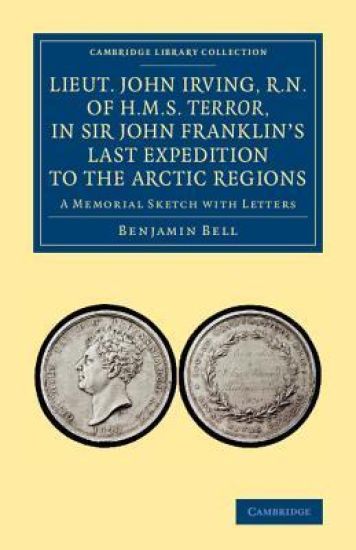
John Irving (1815–1847?) was a lieutenant on board H.M.S. Terror during Sir John Franklin's fateful expedition, and had the melancholy distinction of being the first identifiable body to be found by a subsequent search party - that of the US officer Frederick Schwatka - in 1878. Irving was identified by a silver medal, won for mathematics in 1830. His remains were brought back to Britain and reburied in his home town, Edinburgh, and at the request of Irving's father this 'memorial sketch', including some of the young lieutenant's letters to his family, was published in 1881 by Benjamin Bell (1810–83), great-grandfather of the surgeon Joseph Bell, Conan Doyle's model for Sherlock Holmes. As well as the touching memoir, the work includes details of the various search and rescue attempts, and a reconstructed chronology by Clements Markham of the Franklin expedition up to its disastrous end.
The 18th century was a wealth of knowledge, exploration and rapidly growing technology and expanding record-keeping made possible by advances in the printing press. In its determination to preserve the century of revolution, Gale initiated a revolution of its own: digitization of epic proportions to preserve these invaluable works in the largest archive of its kind. Now for the first time these high-quality digital copies of original 18th century manuscripts are available in print, making them highly accessible to libraries, undergraduate students, and independent scholars.Delve into what it was like to live during the eighteenth century by reading the first-hand accounts of everyday people, including city dwellers and farmers, businessmen and bankers, artisans and merchants, artists and their patrons, politicians and their constituents. Original texts make the American, French, and Industrial revolutions vividly contemporary.++++The below data was compiled from various identification fields in the bibliographic record of this title. This data is provided as an additional tool in helping to insure edition identification: ++++Huntington LibraryT013073London: printed by W. Bowyer and J. Nichols, 1773. 12p., plates; 4
Title: The Love Affairs of a Bibliomaniac. With an introduction by R. M. Field.]Publisher: British Library, Historical Print EditionsThe British Library is the national library of the United Kingdom. It is one of the world's largest research libraries holding over 150 million items in all known languages and formats: books, journals, newspapers, sound recordings, patents, maps, stamps, prints and much more. Its collections include around 14 million books, along with substantial additional collections of manuscripts and historical items dating back as far as 300 BC.The FICTION & PROSE LITERATURE collection includes books from the British Library digitised by Microsoft. The collection provides readers with a perspective of the world from some of the 18th and 19th century's most talented writers. Written for a range of audiences, these works are a treasure for any curious reader looking to see the world through the eyes of ages past. Beyond the main body of works the collection also includes song-books, comedy, and works of satire. ++++The below data was compiled from various identification fields in the bibliographic record of this title. This data is provided as an additional tool in helping to insure edition identification: ++++ British Library Field, Eugene; Field, Roswell Martin; 1896. xiii. 253 p.; 8 . 012627.ee.21.
Title: The Dutch Republics of South Africa; three letters to R. N. Fowler, Esq., M.P., and Charles Buxton, Esq., M.P.Publisher: British Library, Historical Print EditionsThe British Library is the national library of the United Kingdom. It is one of the world's largest research libraries holding over 150 million items in all known languages and formats: books, journals, newspapers, sound recordings, patents, maps, stamps, prints and much more. Its collections include around 14 million books, along with substantial additional collections of manuscripts and historical items dating back as far as 300 BC.The GENERAL HISTORICAL collection includes books from the British Library digitised by Microsoft. This varied collection includes material that gives readers a 19th century view of the world. Topics include health, education, economics, agriculture, environment, technology, culture, politics, labour and industry, mining, penal policy, and social order. ++++The below data was compiled from various identification fields in the bibliographic record of this title. This data is provided as an additional tool in helping to insure edition identification: ++++ British Library Chesson, William Frederick; 1871. 63 p.; 8 . 10096.dd.11.


![The Viking. a Novel. by M. R. [I.E. Margaret R. Cartmalt.]](/covers/9781241125677.jpg)
![The Love Affairs of a Bibliomaniac. [With an Introduction by R. M. Field.]](/covers/9781241401405.jpg)